High Strength Stretching Insulation Tape
CN → US| HS Code | Tariff Rate | Origin | Destination | Doc |
|---|---|---|---|---|
| 3919102010 | 40.8% | CN | US | Official Doc |
| 3919905020 | 40.8% | CN | US | Official Doc |
| 3926909989 | 22.8% | CN | US | Official Doc |
| 5604909000 | 40.0% | CN | US | Official Doc |
| 3926909905 | 22.8% | CN | US | Official Doc |
Product Images
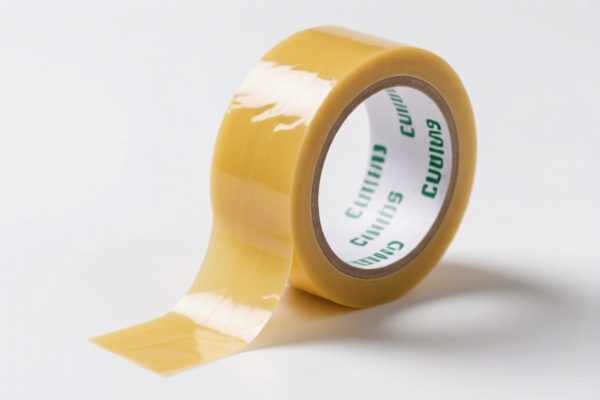
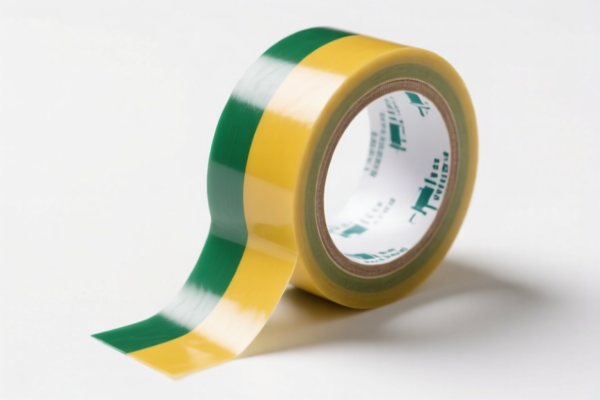
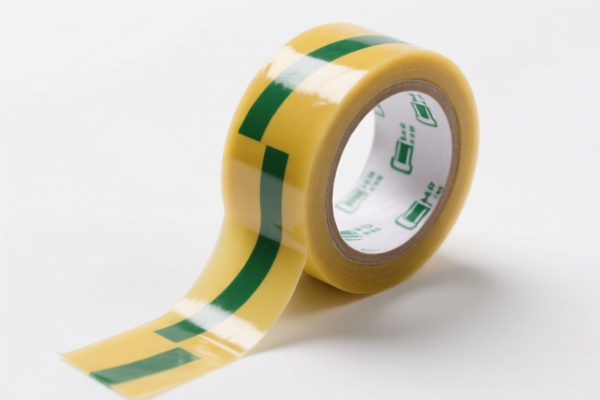
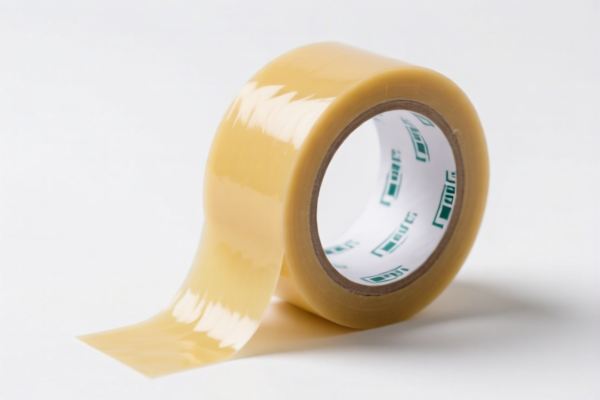
AI Analysis
🎗️ High Strength Stretching Insulation Tape (Electrical Tape)
🌐 HS Code Reference & Customs Clearance Guide | 2026 Latest Tariff Analysis | Professional-Level Strategy
📌 I. Product Definition & Classification: What Exactly Is "High Strength Stretching Insulation Tape"?
High Strength Stretching Insulation Tape, commonly known as electrical tape, is a flexible, self-fusing plastic strip (typically Polyvinyl Chloride - PVC or Polypropylene - PP) used primarily for insulating and protecting electrical wires, cables, and connections. It adheres to itself without the need for a separate adhesive backing (self-amalgamating) or has a strong pressure-sensitive adhesive.
In international trade, the classification depends heavily on its primary material (Plastic vs. Reinforced Fabric) and its functional form (Self-adhesive roll vs. Other plastic articles).
⚠️ Key Distinction Point:
- If it is a simple plastic roll acting as a self-adhesive band → Falls under Heading 3919 (Self-adhesive plates/sheets/film/roll/etc.).
- If it is reinforced with fibers or treated in a specific way that doesn't fit "self-adhesive" → May fall under 3919.90 or 3926.
- If it is considered a generic "plastic article" without specific adhesive properties → Falls under 3926.90.
📦 II. HS Code Classification Details (2026 Latest Tariff Authority Comparison)
| HS Code | Product Description | Applicable Scenario | Tax Rate (US Origin: China) | Legal Basis for Tax |
|---|---|---|---|---|
3919.10.20.10 |
High Strength Polypropylene Tape, Plastic Material, Self-Adhesive Roll | Standard electrical insulation tape, self-fusing or pressure-sensitive, primarily PP/PVC | 40.8% | Base: 5.8%, Section 301: 25%, Sec 122: 10% |
3919.90.50.20 |
High Strength Polypropylene Tape, Fiber-Reinforced Feature | Reinforced electrical tape, possibly with glass/carbon fiber backing for extra strength | 40.8% | Base: 5.8%, Section 301: 25%, Sec 122: 10% |
3926.90.99.89 |
High Strength Polypropylene Tape, General Plastic Article | Plastic articles not elsewhere specified, e.g., non-self-adhesive rolls or generic plastic strips | 22.8% | Base: 5.3%, Section 301: 7.5%, Sec 122: 10% |
5604.90.90.00 |
High Strength Polypropylene Tape, Plastic-Coated/Impregnated | Tape where plastic coats/impregnates fabric or other base material, not primarily self-adhesive plastic | 40.0% | Base: 5.0%, Section 301: 25%, Sec 122: 10% |
3926.90.99.05 |
High Strength Polypropylene Tape, Elastic/Band Property | Elastic bands or strips of plastic, specific subtype under "Other Plastic Articles" | 22.8% | Base: 5.3%, Section 301: 7.5%, Sec 122: 10% |
🔍 Critical Reminder:
- Most standard PVC or PP Electrical Insulation Tapes are correctly classified under 3919.10 (Self-adhesive rolls).
- If the tape is fiber-reinforced (e.g., fiberglass core with PP coating), it may shift to 3919.90 or 5604, but often still attracts the high 301 tariff (25%).
- Misclassification to 3926 (lower tariff) is risky if the product is clearly a self-adhesive roll, as CBP may challenge it under 3919.
💰 III. 2026 Latest Tariff Rate Breakdown (Including Surcharges & Policy Add-ons)
✅ Applicable Country: United States (US)
✅ Country of Origin: China (CN)
✅ Effective Time: November 10, 2025 onwards (including subsequent imports)
🎯 1. 3919.10.20.10 & 3919.90.50.20 —— Self-Adhesive Plastic Tapes (Most Common)
| Item | Content |
|---|---|
| Base MFN Rate | 5.8% (ad valorem) |
| Section 301 Tariff | +25.0% (USITC Footnote 9903.88.01) |
| Section 122 Tariff | +10.0% (IEEPA / Emergency Tariff) |
| Total Effective Rate | 40.8% |
| Tax Calculation | CIF Value × 40.8% |
| De Minimis Exemption | ❌ Not Eligible (deny_de_minimis applies to Section 301/122 goods) |
| Legal Path | USITC:3919.10.20.10 → FOOTNOTE:9903.88.01 → IEEPA:Sec122 |
📌 Explanation:
- Base Rate (5.8%): Standard Most-Favored-Nation (MFN) rate for self-adhesive plastic plates/sheets/film/rolls/bands.
- Section 301 (25%): Applies to all products from China under HTSUS 3919.10.20.10 and 3919.90.50.20.
- Section 122 (10%): Additional emergency tariff applied to certain Chinese imports.
- Total: 40.8%. This is a very high tariff, making cost optimization critical.
🎯 2. 3926.90.99.89 & 3926.90.99.05 —— Other Plastic Articles (Lower Tax Option)
| Item | Content |
|---|---|
| Base MFN Rate | 5.3% (ad valorem) |
| Section 301 Tariff | +7.5% (Reduced Section 301 rate for this subheading) |
| Section 122 Tariff | +10.0% |
| Total Effective Rate | 22.8% |
| Tax Calculation | CIF Value × 22.8% |
| De Minimis Exemption | ❌ Not Eligible (Section 301/122 still apply) |
| Legal Path | USITC:3926.90.99.89 → FOOTNOTE:301 Reduction → IEEPA:Sec122 |
📌 Explanation:
- If the tape is not considered a "self-adhesive roll" (e.g., it’s a non-adhesive plastic band or elastic strip), it may fall under 3926.
- The Section 301 rate is reduced to 7.5% for some 3926 subheadings, resulting in a 22.8% total rate.
- ⚠️ Risk: Misclassifying a clear self-adhesive tape (3919) as a generic plastic article (3926) can lead to audits, penalties, and back taxes.
🎯 3. 5604.90.90.00 —— Plastic-Coated Textiles/Fabrics
| Item | Content |
|---|---|
| Base MFN Rate | 5.0% |
| Section 301 Tariff | +25.0% |
| Section 122 Tariff | +10.0% |
| Total Effective Rate | 40.0% |
| Tax Calculation | CIF Value × 40.0% |
📌 Explanation:
- Applies if the tape is fundamentally a fabric (e.g., fiberglass, cotton) coated with plastic (PP/PVC).
- Still subject to 25% Section 301, so the tax benefit over 3919 is minimal.
🛠️ IV. Customs Clearance Practical Advice (Battle-Tested Pitfall Guide)
✅ 1. Required Documentation Checklist (Must-Have)
| Document | Mandatory? | Description |
|---|---|---|
| ✅ Product Specification Sheet | ✔️ | Material composition (PP/PVC), thickness, width, length, adhesive type (self-fusing vs. pressure-sensitive). |
| ✅ Product Photos | ✔️ | Clear images of the roll, label, and cross-section. Show if it’s self-amalgamating (no glue) or has an adhesive backing. |
| ✅ Commercial Invoice | ✔️ | Clearly state: "High Strength Polypropylene Insulation Tape, Self-Adhesive/Elastic, HS Code: [Insert Code]". |
| ✅ Certificate of Origin (CO) | ✔️ | Essential for determining origin. If not China, 301/122 tariffs may not apply. |
| ✅ Packaging List | ✔️ | Detail net/gross weight, number of rolls, dimensions. |
✅ 2. Declaration Tips (Key Mantra)
🔥 "Material First, Function Second, Adhesive Clearly Defined!"
| Scenario | Correct Declaration | Wrong Practice |
|---|---|---|
| Standard PVC/PP Electrical Tape | HS 3919.10.20.10, Description: "Self-adhesive plastic roll, for electrical insulation" |
Describing as "Rubber Tape" → Misclassification |
| Fiber-Reinforced Tape | HS 3919.90.50.20, Description: "Reinforced plastic tape, plastic material" |
Hiding fiber content → Potential fraud penalty |
| Non-Adhesive Elastic Band | HS 3926.90.99.05, Description: "Elastic plastic strip, non-adhesive" |
Calling it "Insulation Tape" when it has no adhesive → CBP rejection |
| Plastic-Coated Fabric Tape | HS 5604.90.90.00, Description: "Plastic-coated textile tape" |
Claiming it’s 100% plastic → Material mismatch |
✅ 3. Special Handling
| Situation | Advice |
|---|---|
| OEM/White Label | Provide manufacturer’s spec sheet. Ensure the chemical composition (PP vs PVC) matches the HS code. |
| Small Parcel (De Minimis) | ❌ Do Not Use for Section 301/122 goods. Packages <$800 from China are not exempt from these tariffs. |
| Origin Shifting | If sourced from Vietnam, Thailand, or Malaysia, you may avoid 301/122 tariffs. Ensure substantial transformation occurs. |
| Pre-Ruling Request | ✅ Highly Recommended. File an Advance Ruling with CBP to confirm the correct HS code and tariff rate. Saves time and disputes at border. |
🌍 V. Global Market Clearance Comparison (2026 Latest)
| Country/Region | Recommended HS Code | Tariff (China Origin) | Certification Required | Notes |
|---|---|---|---|---|
| 🇺🇸 USA | 3919.10.20.10 |
40.8% (40%+) | FCC (if electronic), RoHS | High tariff due to 301/122. |
| 🇨🇳 China | 3919.10.20.10 |
5.8% | CCC (if applicable) | Domestic market tariff is low. |
| 🇪🇺 EU | 3919.10.10 |
0% - 6.5% | CE, REACH | No major anti-dumping on this HS. |
| 🇬🇧 UK | 3919.10.10 |
0% - 6.5% | UKCA, REACH | Post-Brexit tariffs generally favorable. |
| 🇦🇺 Australia | 3919.10.10 |
5% | SAA Standards | Low tariff, simple clearance. |
📌 Conclusion:
- The USA is the most challenging market due to the cumulative 40.8% tariff.
- EU/UK/Australia are far more favorable, with tariffs ranging from 0-6.5%.
- Consider supply chain diversification (e.g., manufacturing in Vietnam) if targeting the US market to mitigate tariff costs.
📌 VI. Common Errors & Pitfall Guide (Lessons Learned)
❌ Error 1: Misdeclaring as "Rubber Tape" or "Adhesive Tape" without specifying material.
👉 Consequence: CBP may reclassify to a different heading with higher duties or anti-dumping penalties.
❌ Error 2: Claiming "De Minimis" ($800) for Section 301/122 goods.
👉 Consequence: Seizure of goods, fines, and loss of importer record number. Section 301/122 tariffs apply regardless of value.
❌ Error 3: Using HS 3926 for self-adhesive rolls to save tax.
👉 Consequence: CBP audits will likely reject this. Back taxes + interest + penalties. Self-adhesive = 3919.
✅ Correct Practice:
"High Strength Polypropylene Self-Adhesive Insulation Tape, Width: 18mm, Length: 10m, Color: Black, HS Code: 3919.10.20.10, Country of Origin: China"
🎯 VII. Conclusion: Professional Classification, Cost Efficiency, Risk Mitigation!
🎯 Remember the Mantra:
🔹 "Self-Adhesive = 3919, Tax 40.8%. Generic Plastic = 3926, Tax 22.8%. Don’t Mix!"
🔹 "Section 301 & 122 Apply to All Values. No De Minimis!"
🔹 "Origin Matters. Vietnam/Thailand Can Save You 40%!"
📌 Pro Tip:
If your tape is sourced from Vietnam, Mexico, Thailand, or Malaysia, you may qualify for IEEPA/Section 301 exemptions.
Recommend applying for an Advance Ruling from CBP before bulk shipment.
📣 Immediate Action:
📞 Contact a Professional Customs Broker + Provide Product Specs + Apply for HS Code Pre-Ruling
🚀 Ensure your High Strength Stretching Insulation Tape clears customs smoothly, efficiently, and profitably!
✨ Professional Customs Clearance Starts with Accurate Classification!
💼 Every cent of cost deserves precise calculation!
Customer Reviews
About HS Code Classification
The Harmonized System (HS) is an internationally standardized nomenclature developed by the World Customs Organization (WCO) to classify traded products. Over 200 countries use the HS system as the basis for customs tariffs, trade statistics, and import/export regulations.
Each HS code follows a hierarchical structure:
- Chapter (2 digits) — Broad category of goods (e.g., Chapter 84: Machinery and Mechanical Appliances)
- Heading (4 digits) — More specific grouping within the chapter
- Subheading (6 digits) — Internationally standardized breakdown, used by all WCO member countries
- National subdivisions (8-10 digits) — Country-specific extensions for further classification, such as US HTSUS 10-digit codes
Correct HS code classification is essential for smooth customs clearance, accurate duty payment, and compliance with trade regulations. Misclassification can lead to customs delays, overpayment of duties, or penalties.
When importing from CN to US, the applicable tariff rates may include:
- Most-Favored-Nation (MFN) rate — The standard duty rate applied to WTO members
- General rate — Applied to countries without trade agreements
- Trade remedy duties — Additional tariffs such as Section 301 (anti-dumping), Section 232 (national security), or countervailing duties
The information provided on this page is for reference purposes only. For official classification, please consult with your local customs authority or a licensed customs broker.