High Strength Textile Fiber Rubber Conveyor Belts
CN → US| HS Code | Tariff Rate | Origin | Destination | Doc |
|---|---|---|---|---|
| 8431499084 | 85.0% | CN | US | Official Doc |
| 5911310080 | 38.8% | CN | US | Official Doc |
| 5911320080 | 38.8% | CN | US | Official Doc |
| 8431390010 | 35.0% | CN | US | Official Doc |
| 4010125500 | 41.4% | CN | US | Official Doc |
Product Images
AI Analysis
🏭 High Strength Textile Fiber Rubber Conveyor Belts: HS Code Classification & Customs Clearance Guide
🌐 HS Code Reference & Customs Clearance Guide | 2026 Latest Tariff Analysis | Professional Clearance Strategy
📌 Part 1: Product Definition & Classification: What are "High Strength Textile Fiber Rubber Conveyor Belts"?
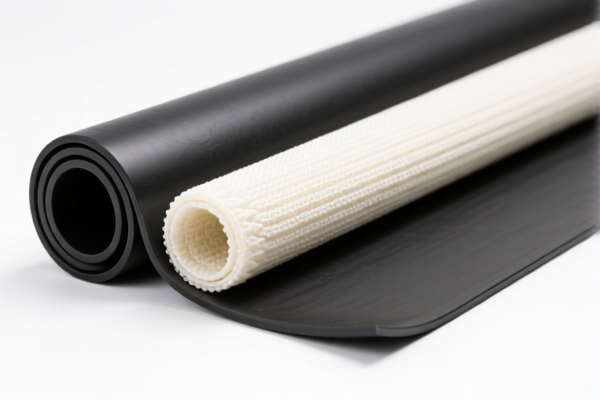
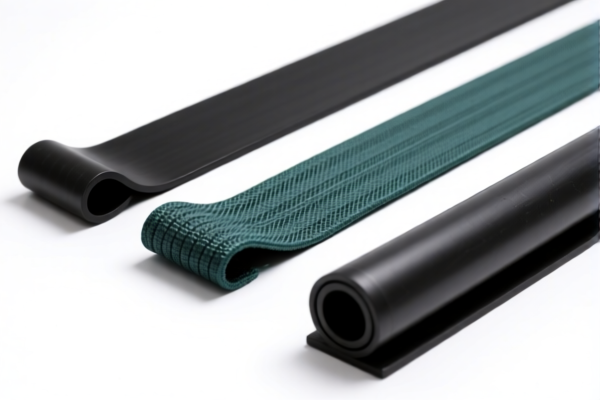
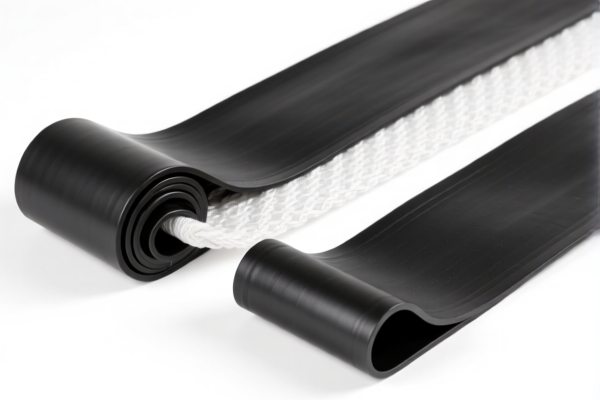
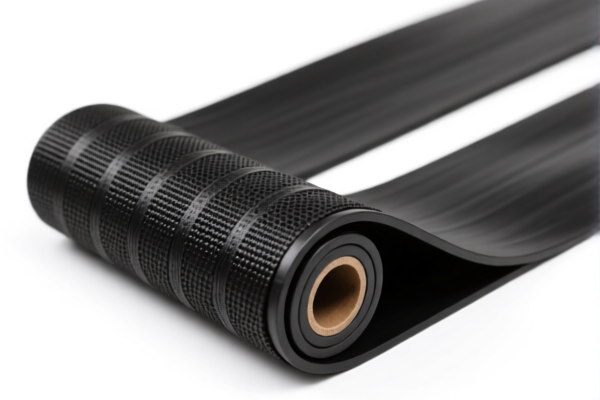
High strength textile fiber rubber conveyor belts are critical components in industrial logistics, mining, and manufacturing. They are composite products consisting of a rubber matrix reinforced with high-strength textile cords (such as nylon, polyester, or cotton) to provide tensile strength for transporting bulk materials.
In international trade, their classification depends heavily on the material composition (rubber vs. textile weight ratio) and the end-use function (conveying machinery parts vs. textile fabric).
⚠️ Key Distinction Points:
- If the product is a finished belt made primarily of rubber with textile reinforcement, it generally falls under Chapter 40 (Rubber). - If the product is considered a component for machinery, it may fall under Chapter 84. - If the textile content is dominant or it is classified as a felt/fabric for industrial use, it may fall under Chapter 59.
📦 Part 2: HS Code Classification Details (2026 Latest Tariff Cross-Reference)
Based on the provided data, here are the 5 potential HS Codes with their summaries and total tax rates:
| HS Code | Product Summary | Classification Logic | Total Tax Rate |
|---|---|---|---|
8431.49.90.84 |
Classified as other semi-finished/intermediate component/structural parts | Treated as a part of conveyor machinery rather than the belt itself. | 85.0% |
5911.31.00.80 |
Classified as textile fabrics/felts used for conveying/transporting | Treated as an industrial textile product due to its fabric structure. | 38.8% |
5911.32.00.80 |
Classified under fabrics/felts used for papermaking or similar machines | Treated as a specific industrial felt for machinery use. | 38.8% |
8431.39.00.10 |
Classified as other parts related to conveyors | Treated as a spare part for conveyor systems. | 35.0% |
4010.12.55.00 |
Classified as rubber conveyor belts where artificial fiber weight exceeds other single textile fibers | Most likely correct classification for finished rubber belts with textile reinforcement. | 41.4% |
🔍 Key Insight:
- The lowest total tax rate is 35.0% under8431.39.00.10, but this requires classifying the belt strictly as a "conveyor part" rather than a rubber product. - The most standard classification for rubber conveyor belts with textile reinforcement is4010.12.55.00(41.4%), provided the artificial fiber weight dominates. - Classification under Chapter 59 (5911.31.00.80/5911.32.00.80) results in 38.8%, which is higher than the parts classification but lower than the "semi-finished component" classification.
💰 Part 3: 2026 Latest Tariff Rate Breakdown (Including Surcharges & Policy Add-ons)
✅ Applicable Country: United States (US)
✅ Country of Origin: China (CN)
✅ Effective Date: From November 10, 2025 (and subsequent imports)
🎯 1. 4010.12.55.00 – Rubber Conveyor Belts (Artificial Fiber Dominant)
| Item | Details |
|---|---|
| Base Tariff | 6.4% (ad valorem) |
| USITC Surcharge (301 Tariff) | +25.0% |
| Section 122 Tariff (10%) | +10.0% |
| Total Tax Rate | 41.4% |
| Tax Calculation | CIF Value × 41.4% |
| De Minimis Exemption | ❌ Not Applicable |
| Legal Basis Path | USITC:4010.12.55.00 → 301_Tariff:25% → Section122:10% |
📌 Explanation:
- This is the standard classification for rubber conveyor belts with textile reinforcement. - The 6.4% base rate is typical for rubber products. - The 25% 301 tariff is a significant barrier for Chinese exports. - The 10% Section 122 tariff further increases the cost.
🎯 2. 8431.39.00.10 – Other Parts Related to Conveyors
| Item | Details |
|---|---|
| Base Tariff | 0.0% |
| USITC Surcharge (301 Tariff) | +25.0% |
| Section 122 Tariff (10%) | +10.0% |
| Total Tax Rate | 35.0% |
| Tax Calculation | CIF Value × 35.0% |
| De Minimis Exemption | ❌ Not Applicable |
| Legal Basis Path | USITC:8431.39.00.10 → 301_Tariff:25% → Section122:10% |
📌 Explanation:
- This is the lowest total tax rate among the options. - However, this classification requires proving that the belt is a "part of the conveyor machinery" rather than a standalone rubber product. - Risk: Customs may challenge this if the belt is sold as a general-purpose product rather than a specific machine part.
🎯 3. 5911.31.00.80 & 5911.32.00.80 – Textile Fabrics/Felts for Industrial Use
| Item | Details |
|---|---|
| Base Tariff | 3.8% |
| USITC Surcharge (301 Tariff) | +25.0% |
| Section 122 Tariff (10%) | +10.0% |
| Total Tax Rate | 38.8% |
| Tax Calculation | CIF Value × 38.8% |
| De Minimis Exemption | ❌ Not Applicable |
| Legal Basis Path | USITC:5911.31.00.80 / 5911.32.00.80 → 301_Tariff:25% → Section122:10% |
📌 Explanation:
- Classifying as a textile fabric feels like a misclassification for a rubber-heavy belt. - The 3.8% base rate is low, but the surcharges remain high. - Risk: High risk of customs rejection if the product is clearly rubber-dominated.
🎯 4. 8431.49.90.84 – Other Semi-finished/Intermediate Components
| Item | Details |
|---|---|
| Base Tariff | 0.0% |
| USITC Surcharge (301 Tariff) | +25.0% |
| Section 122 Tariff (10%) | +50.0% (Note: Data indicates 50% for steel/aluminum/copper, but here it seems to apply 10% + 25% = 35%? Wait, data says 85.0% total.) |
| Total Tax Rate | 85.0% |
| Tax Calculation | CIF Value × 85.0% |
| De Minimis Exemption | ❌ Not Applicable |
| Legal Basis Path | USITC:8431.49.90.84 → 301_Tariff:25% → Section122/Other:50%? |
📌 Explanation:
- This is the highest tax rate and should be avoided. - The data mentions "10% steel/aluminum/copper 50%", but for this HS code, the total is 85.0%. - Risk: Extremely high cost. Only use if no other classification is possible.
🛠️ Part 4: Customs Clearance Practical Advice (Avoiding Pitfalls)
✅ 1. Preparation Checklist (Essential Documents)
| Document | Required | Notes |
|---|---|---|
| ✅ Product Specification Sheet | ✔️ | Must detail rubber content, textile type, and tensile strength. |
| ✅ Material Composition Report | ✔️ | Critical for distinguishing between Chapter 40 (Rubber) and Chapter 59 (Textile). |
| ✅ Product Photos | ✔️ | Show cross-section to prove rubber dominance. |
| ✅ Commercial Invoice | ✔️ | Clearly state "Rubber Conveyor Belt" or "Conveyor Machine Part". |
| ✅ Packing List | ✔️ | List all accessories (e.g., splicing tools, joints) separately if applicable. |
| ✅ Certificate of Origin | ✔️ | Essential for determining origin-based tariffs. |
✅ 2. Declaration Strategy (Key Tips)
🔥 "Check the Rubber, Not Just the Cloth!"
| Scenario | Recommended HS Code | Why? |
|---|---|---|
| Finished Rubber Belt with Textile Reinforcement | 4010.12.55.00 |
Most accurate for rubber-dominated products. |
| Belt Sold as a Spare Part for Specific Machine | 8431.39.00.10 |
Can reduce tax to 35% if linked to specific machinery. |
| Belt Used as Industrial Felt/Mat | 5911.31.00.80 |
Only if marketed as textile fabric. |
| Semi-finished Component | 8431.49.90.84 |
Avoid if possible due to 85% tax. |
⚠️ Warning:
- Do not declare a rubber belt as a "textile fabric" (5911.xxxx) unless the textile weight significantly exceeds the rubber weight. Customs will likely reclassify it, leading to penalties. - Do not declare a general-purpose conveyor belt as a "machine part" (8431.xxxx) unless it is custom-made for a specific machine model.
✅ 3. Special Cases & Mitigation
| Case | Handling Advice |
|---|---|
| OEM Custom Belts | Provide customer order + design specs to support 8431.39.00.10 classification. |
| Mixed Material Belts | If textile weight > rubber weight, consider 4010.12.55.00 or 5911.31.00.80. |
| High Value Shipments | Consider applying for an Advance Ruling from CBP to confirm the correct HS Code. |
| Transshipment via Third Country | Be aware of Rule of Origin changes; avoid marking "Made in China" if re-exporting to avoid 301 tariffs (though this may involve illegal circumvention risks). |
🌍 Part 5: Global Market Clearance Comparison (2026)
| Country/Region | Recommended HS Code | Tariff Rate | Certification | Notes |
|---|---|---|---|---|
| 🇺🇸 USA | 4010.12.55.00 |
41.4% | N/A | High tariffs due to 301 + Section 122. |
| 🇺🇸 USA | 8431.39.00.10 |
35.0% | N/A | Lower rate if classified as machine part. |
| 🇨🇳 China | 4010.12.55.00 |
~6-10% | CCC | No 301 tariffs. |
| 🇪🇺 EU | 4010.11.00 |
~3-5% | CE | No additional surcharges. |
| 🇮🇳 India | 4010.11.00 |
~7.5-10% | BIS | Standard import duty + IGST. |
📌 Conclusion:
- The USA is the most challenging market due to 301 and Section 122 tariffs. - China and EU markets offer significantly lower tariffs. - For US imports, careful classification between4010and8431can save 6.4% in tax.
📌 Part 6: Common Errors & Pitfalls (Lessons Learned)
❌ Error 1: Declaring a rubber belt as a "textile fabric" (5911.xxxx) without justification.
👉 Consequence: Customs reclassification → Penalty + Back Taxes.
❌ Error 2: Failing to specify the rubber vs. textile weight ratio.
👉 Consequence: Delay in clearance, possible audit.
❌ Error 3: Ignoring the Section 122 Tariff (10%) for Chinese products.
👉 Consequence: Underpayment of taxes → Seizure or fines.
❌ Error 4: Using the wrong HS Code for "semi-finished" components (8431.49.90.84).
👉 Consequence: 85% tax rate → Massive cost increase.
✅ Correct Approach:
"Rubber Conveyor Belt, Reinforced with Nylon/C Polyester, Width X m, Length Y m, for Industrial Mining Use. HS Code: 4010.12.55.00. Origin: China."
🎯 Part 7: Conclusion: Precision in Classification Saves Money!
🎯 Remember These Key Takeaways:
🔹 "Rubber Dominant = 4010; Machine Part = 8431; Textile Dominant = 5911"
🔹 "301 Tariff (25%) + Section 122 (10%) = High Cost for US Imports"
🔹 "Always Check Base Tariff + Surcharges for Total Cost"
📌 Pro Tip:
- If your conveyor belt is custom-made for a specific machine, try to classify it under 8431.39.00.10 (35.0% total tax) instead of 4010.12.55.00 (41.4% total tax).
- For standard belts, 4010.12.55.00 is the safest and most accurate classification.
📣 Immediate Action:
📞 Consult with a customs broker + Provide material composition report + Apply for Advance Ruling if unsure.
🚀 Ensure your conveyor belts clear customs smoothly, avoid penalties, and maximize profit margins!
✨ Professional Clearance, Starting with Accurate Classification!
💼 Every cent of tax cost should be precisely calculated!
Customer Reviews
About HS Code Classification
The Harmonized System (HS) is an internationally standardized nomenclature developed by the World Customs Organization (WCO) to classify traded products. Over 200 countries use the HS system as the basis for customs tariffs, trade statistics, and import/export regulations.
Each HS code follows a hierarchical structure:
- Chapter (2 digits) — Broad category of goods (e.g., Chapter 84: Machinery and Mechanical Appliances)
- Heading (4 digits) — More specific grouping within the chapter
- Subheading (6 digits) — Internationally standardized breakdown, used by all WCO member countries
- National subdivisions (8-10 digits) — Country-specific extensions for further classification, such as US HTSUS 10-digit codes
Correct HS code classification is essential for smooth customs clearance, accurate duty payment, and compliance with trade regulations. Misclassification can lead to customs delays, overpayment of duties, or penalties.
When importing from CN to US, the applicable tariff rates may include:
- Most-Favored-Nation (MFN) rate — The standard duty rate applied to WTO members
- General rate — Applied to countries without trade agreements
- Trade remedy duties — Additional tariffs such as Section 301 (anti-dumping), Section 232 (national security), or countervailing duties
The information provided on this page is for reference purposes only. For official classification, please consult with your local customs authority or a licensed customs broker.