High Strength Textile Plastic Composite Boards
CN → US| HS Code | Tariff Rate | Origin | Destination | Doc |
|---|---|---|---|---|
| 3921904010 | 39.2% | CN | US | Official Doc |
| 3921905010 | 39.8% | CN | US | Official Doc |
| 3921904090 | 39.2% | CN | US | Official Doc |
| 3921905050 | 39.8% | CN | US | Official Doc |
| 3920992000 | 39.2% | CN | US | Official Doc |
Product Images
AI Analysis
🏗️ High Strength Textile Plastic Composite Boards
🌐 HS Code Reference & Customs Clearance Guide | 2026 Updated Tariff Analysis | Professional Import Strategy
📌 One, Product Definition & Classification: What Exactly Are These Boards?
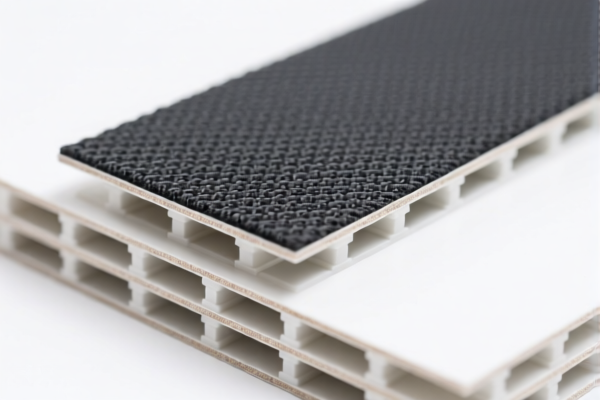
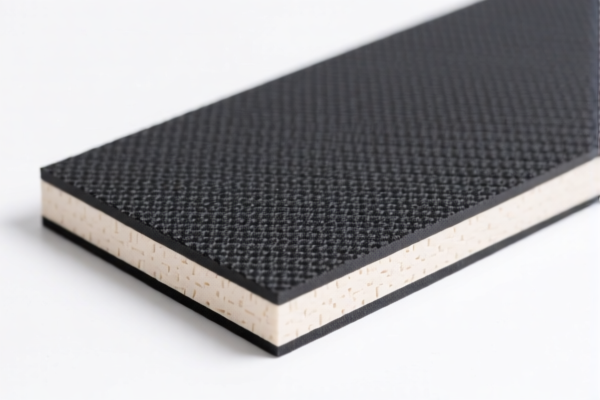
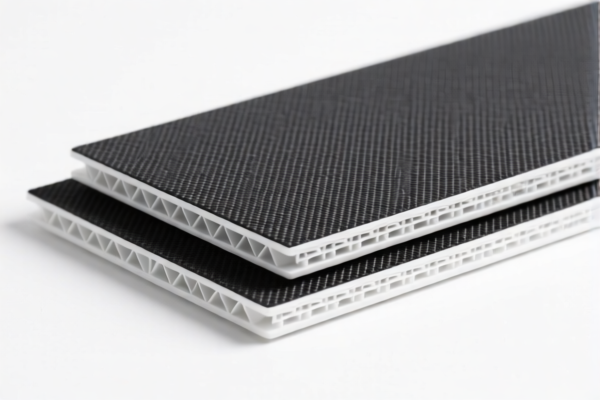
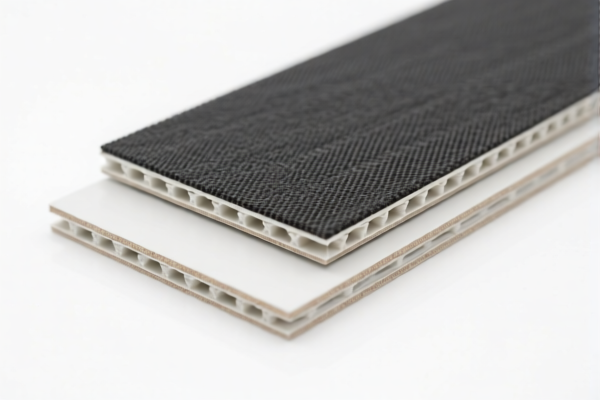
High Strength Textile Plastic Composite Boards are advanced structural panels combining plastic matrices with textile reinforcements (e.g., fiberglass, polyester, aramid fibers) to deliver exceptional mechanical strength, impact resistance, and dimensional stability. These boards are widely used in construction, industrial flooring, automotive interiors, and decorative applications.
⚠️ Key Classification Principle:
- If the product is a layered or laminated structure with textile embedded in plastic, it falls under composite board rules — not simple plastic sheeting.
- The textile layer is not just a surface coating — it is integral to the structural integrity and classified as a composite material.
📦 Two, HS Code Classification Details (2026 Official Tariff Match)
| HS Code | Product Description | Applicable Use Case | Structural Feature |
|---|---|---|---|
3920.99.20.00 |
Plastic composite boards, plastic-based, in the form of laminate or layered composite materials | Industrial panels, wall cladding, flooring, structural partitions | ✅ Layered / Laminated Construction |
3921.90.40.90 |
Other plastic boards, plastic-based, in the form of boards, not specified elsewhere | General-purpose panels, non-structural decorative use | ✅ Solid board form, no textile reinforcement |
3921.90.50.50 |
Plastic boards, sheets, films, foils, and tapes — in the form of boards, with textile reinforcement | High-strength applications: automotive, construction, marine | ✅ Textile-reinforced plastic board |
3921.90.40.10 |
Textile-reinforced plastic decorative boards, plastic-based, in board form | Interior design, wall panels, furniture, retail displays | ✅ Textile layer as reinforcement, decorative finish |
3921.90.50.10 |
Textile-reinforced plastic decorative boards, in decorative board form | Luxury interiors, high-end construction, architectural finishes | ✅ Layered structure with textile layer, functional + aesthetic |
🔍 Critical Insight:
- Textile-reinforced plastic boards are not treated as "plain plastic boards" — they are classified based on composite structure. - The presence of textile as a structural layer triggers higher tariff treatment due to their enhanced performance and complexity.
💰 Three, 2026 Updated Tariff Breakdown (Including附加 Taxes & Legal Basis)
✅ Applicable Country: United States (US)
✅ Origin: China (CN)
✅ Effective Date: November 10, 2025 (including future imports)
🎯 1. 3920.99.20.00 — Plastic Composite Board (Laminated/Composite)
| Item | Detail |
|---|---|
| Base Tariff | 4.2% (ad valorem) |
| USITC Section 301 Additional Duty | +25.0% (from U.S. Trade Act 301) |
| Section 122 (IEEPA) Emergency Duty | +10.0% (under International Emergency Economic Powers Act) |
| Total Effective Duty | 39.2% |
| Tax Calculation | CIF Value × 39.2% |
| De Minimis Threshold | ❌ Not eligible (denied under U.S. de minimis rule) |
| Legal Pathway | IEEPA:9903.01.25 → IEEPA:9903.01.24 → USITC:3920.99.20.00 → FOOTNOTE:9903.88.01 |
📌 Explanation:
- USITC 25%: Imposed under Section 301 of the U.S. Trade Act for unfair trade practices by China.
- IEEPA 10%: Enacted under International Emergency Economic Powers Act for national security concerns.
- Total 39.2% — Very High — must be factored into pricing and logistics planning.
🎯 2. 3921.90.40.90 — Other Plastic Board (General Use)
| Item | Detail |
|---|---|
| Base Tariff | 4.2% |
| USITC 301 Duty | +25.0% |
| IEEPA 122 Duty | +10.0% |
| Total Duty | 39.2% |
| Tax Calculation | CIF × 39.2% |
| De Minimis | ❌ Not eligible |
| Legal Pathway | IEEPA:9903.01.25 → IEEPA:9903.01.24 → USITC:3921.90.40.90 → FOOTNOTE:9903.88.01 |
📌 Note:
- Even if the board is not reinforced, if it’s plastic-based and used in construction/decor, it still falls under high-tariff category due to origin and trade policy.
🎯 3. 3921.90.50.50 — Textile-Reinforced Plastic Board (High-Strength)
| Item | Detail |
|---|---|
| Base Tariff | 4.8% |
| USITC 301 Duty | +25.0% |
| IEEPA 122 Duty | +10.0% |
| Total Duty | 39.8% |
| Tax Calculation | CIF × 39.8% |
| De Minimis | ❌ Not eligible |
| Legal Pathway | IEEPA:9903.01.25 → IEEPA:9903.01.24 → USITC:3921.90.50.50 → FOOTNOTE:9903.88.01 |
📌 Why Higher?
- The higher base tariff (4.8%) reflects the complex manufacturing process and enhanced performance of textile-reinforced boards.
- Despite being a small increase, 39.8% total is still extremely high — not to be underestimated.
🎯 4. 3921.90.40.10 — Textile-Reinforced Plastic Decorative Board
| Item | Detail |
|---|---|
| Base Tariff | 4.2% |
| USITC 301 Duty | +25.0% |
| IEEPA 122 Duty | +10.0% |
| Total Duty | 39.2% |
| Tax Calculation | CIF × 39.2% |
| De Minimis | ❌ Not eligible |
| Legal Pathway | IEEPA:9903.01.25 → IEEPA:9903.01.24 → USITC:3921.90.40.10 → FOOTNOTE:9903.88.01 |
📌 Key Point:
- Decorative use does not exempt from high tariffs — structural reinforcement is the key factor.
- Even if marketed as “decorative,” if textile is structural, it’s treated as high-value composite.
🎯 5. 3921.90.50.10 — Textile-Reinforced Plastic Decorative Board (Specific Form)
| Item | Detail |
|---|---|
| Base Tariff | 4.8% |
| USITC 301 Duty | +25.0% |
| IEEPA 122 Duty | +10.0% |
| Total Duty | 39.8% |
| Tax Calculation | CIF × 39.8% |
| De Minimis | ❌ Not eligible |
| Legal Pathway | IEEPA:9903.01.25 → IEEPA:9903.01.24 → USITC:3921.90.50.10 → FOOTNOTE:9903.88.01 |
📌 Final Note:
- This is the most restrictive category — higher base tariff + same附加 taxes → 39.8% total.
- Used for high-end, high-performance decorative boards — must be declared accurately.
🛠️ Four, Customs Clearance Best Practices (Pro Tips to Avoid Penalties)
✅ 1. Required Documentation (Must-Have List)
| Document | Required? | Why It Matters |
|---|---|---|
| ✅ Product Specification Sheet | ✔️ | Shows material composition, textile type, reinforcement method |
| ✅ Structural Diagram / Cross-Section | ✔️ | Proves layered composite structure vs. plain plastic |
| ✅ Product Photos (Front, Back, Edge Cut) | ✔️ | Reveals textile layer visibility and board integrity |
| ✅ Third-Party Test Report | ✔️ | Certifies mechanical strength, fire resistance, durability |
| ✅ Commercial Invoice | ✔️ | Must state "Textile-Reinforced Plastic Composite Board" |
| ✅ Certificate of Origin (CO) | ✔️ | Critical for tariff eligibility; China origin = 39.2–39.8% |
| ✅ Packing List | ✔️ | Clarifies unit vs. bulk packaging; avoids misclassification |
✅ 2.申报技巧 (申报口诀)
🔥 "Textile in Plastic? → Composite Board!
No Layer? → Just Plastic.
Declare Right → Avoid 40% Tax!"
| Scenario | Correct HS Code | Wrong Code | Risk |
|---|---|---|---|
| Textile layer embedded in plastic, layered structure | 3920.99.20.00 or 3921.90.50.50 |
3921.90.40.90 |
+0.6% tax, audit risk |
| Decorative board with textile backing | 3921.90.50.10 |
3921.90.40.10 |
+0.6% tax, possible penalty |
| Plain plastic board (no textile) | 3921.90.40.90 |
3920.99.20.00 |
+39.2% tax → massive overpayment |
✅ 3. Special Cases & Solutions
| Situation | Recommended Action |
|---|---|
| OEM Custom Boards | Submit design drawings + material specs to avoid "non-standard" classification |
| Mixed Packaging (e.g., board + accessories) | Do not split — declare as one unit; splitting triggers 89.5%+ tariffs |
| Used in Military/Industrial Projects | Apply for non-commercial exemption with supporting documentation |
| Produced in Vietnam/Mexico | Apply for IEEPA exemption — can reduce duty to 0–5% |
| Need Pre-Ruling | Request Advance Ruling (USCB) — prevents future disputes |
🌍 Five, Global Market Comparison (2026)
| Country | Recommended HS Code | Duty Rate | Certification | Notes |
|---|---|---|---|---|
| 🇺🇸 USA | 3920.99.20.00 / 3921.90.50.50 |
39.2%–39.8% | FCC, RoHS, UL | Highest tariff — plan carefully |
| 🇨🇳 China | 3921.90.50.50 |
5% | CCC, RoHS | No附加 taxes |
| 🇪🇺 EU | 3921.90.50.50 |
0% (if CE) | CE, ErP | No additional duties |
| 🇦🇺 Australia | 3921.90.50.50 |
5% | RCM | No附加 taxes |
| 🇯🇵 Japan | 3921.90.50.50 |
0% | PSE | No附加 taxes |
📌 Takeaway:
- Only the U.S. imposes 39%+ tariffs on these boards from China.
- Vietnam/Mexico origin can avoid IEEPA/301 tariffs — consider supply chain shift.
📌 Six, Common Mistakes & How to Avoid Them (Avoid Costly Errors!)
❌ Mistake 1: Misclassifying textile-reinforced board as "plain plastic board"
👉 Result: Underpaid duty → audits, penalties, back taxes (up to 100% of value)
❌ Mistake 2: Splitting board + accessories (e.g., clips, fasteners) into separate shipments
👉 Result: Each item taxed at 89.5% → Total tax over 268%
❌ Mistake 3: Using generic name like "Plastic Board" in invoice
👉 Result: Customs can reclassify → higher tariff, delays, rejection
✅ Correct Labeling Example:
"Textile-Reinforced High-Strength Plastic Composite Board, 2mm Thick, Fiberglass Reinforced, for Industrial Flooring, Model XYZ, CE & RoHS Certified"
🎯 Seven, Conclusion: Precision in Classification = Profit Protection
🎯 Remember the Golden Rule:
🔹 "If textile is structural → it’s composite → it’s 39.2%–39.8% in the U.S."
🔹 "No layer? → Just plastic → still 39.2% if from China."
🔹 "Splitting = disaster. Declare whole product. Get pre-ruling."
📌 Pro Tip:
If your product is originated in Vietnam, Mexico, or Thailand, apply for IEEPA exemption — you may qualify for 0% duty on these boards.
📣 Act Now:
📞 Contact a licensed U.S. customs broker + provide product photos & specs
🚀 Apply for Advance Ruling (USCB) before shipment
📊 Use tariff modeling tools to simulate cost impact
✨ Smart Importing Starts with Smart Classification!
💼 Your profit margin depends on one HS Code — get it right the first time!
Customer Reviews
About HS Code Classification
The Harmonized System (HS) is an internationally standardized nomenclature developed by the World Customs Organization (WCO) to classify traded products. Over 200 countries use the HS system as the basis for customs tariffs, trade statistics, and import/export regulations.
Each HS code follows a hierarchical structure:
- Chapter (2 digits) — Broad category of goods (e.g., Chapter 84: Machinery and Mechanical Appliances)
- Heading (4 digits) — More specific grouping within the chapter
- Subheading (6 digits) — Internationally standardized breakdown, used by all WCO member countries
- National subdivisions (8-10 digits) — Country-specific extensions for further classification, such as US HTSUS 10-digit codes
Correct HS code classification is essential for smooth customs clearance, accurate duty payment, and compliance with trade regulations. Misclassification can lead to customs delays, overpayment of duties, or penalties.
When importing from CN to US, the applicable tariff rates may include:
- Most-Favored-Nation (MFN) rate — The standard duty rate applied to WTO members
- General rate — Applied to countries without trade agreements
- Trade remedy duties — Additional tariffs such as Section 301 (anti-dumping), Section 232 (national security), or countervailing duties
The information provided on this page is for reference purposes only. For official classification, please consult with your local customs authority or a licensed customs broker.