High Strength Textile Reinforced Synchronous Belts
CN → US| HS Code | Tariff Rate | Origin | Destination | Doc |
|---|---|---|---|---|
| 4010354500 | 41.4% | CN | US | Official Doc |
| 5910001020 | 39.0% | CN | US | Official Doc |
| 4010364500 | 41.4% | CN | US | Official Doc |
| 5910009000 | 37.6% | CN | US | Official Doc |
| 5910001070 | 39.0% | CN | US | Official Doc |
Product Images
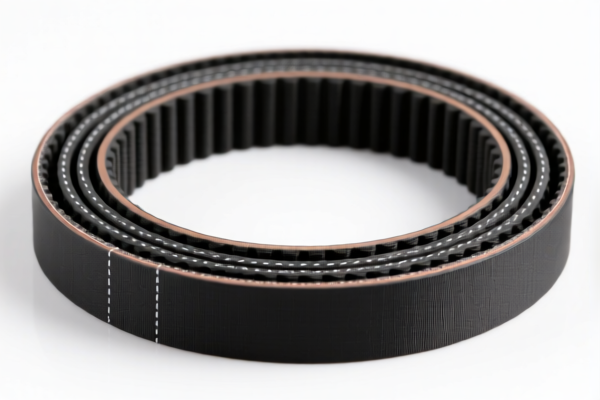


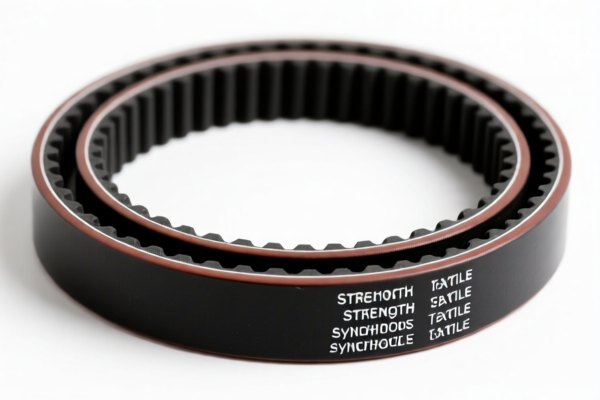
AI Analysis
🏗️ High Strength Textile Reinforced Synchronous Belts
🌐 HS Code Reference & Customs Clearance Guide | 2026 Latest Tariff Analysis | Professional Entry Strategies
📌 I. Product Definition & Classification: Do You Really Understand "Synchronous Belts"?
High Strength Textile Reinforced Synchronous Belts are critical transmission components in industrial machinery, characterized by their ability to transmit power without slip, combined with high tensile strength from textile (often synthetic fiber) reinforcement. In international trade, their classification hinges on two main factors: 1. Primary Material: Is the belt primarily rubber-based (even if reinforced) or primarily textile-based? 2. Function: Is it primarily for power transmission (synchronous) or conveyor purposes?
⚠️ Key Distinction:
- If the belt is primarily rubber (vulcanized rubber is the matrix) with textile cords for strength → It falls under Chapter 40 (Rubber). - If the belt is primarily textile/synthetic fiber constructed as a cohesive unit for transmission → It may fall under Chapter 59 (Impregnated Textile Products).
📦 II. HS Code Classification Details (2026 Latest Tariff Authority Comparison)
Based on the provided data, here are the four valid HS Codes for this product, categorized by material composition and specific type (Synchronous Belt vs. Conveyor Belt).
| HS Code | Product Description | Applicable Scenario | Material Basis |
|---|---|---|---|
4010.35.45.00 |
Textile Reinforced Synchronous Belt (Rubber-Based) | Industrial machinery transmission; rubber matrix with textile reinforcement. | ✅ Vulcanized Rubber (Inferred) |
5910.00.10.20 |
Textile Reinforced Synchronous Belt (Textile-Based) | Transmission belts made primarily of artificial fibers/textiles. | ✅ Artificial Fibers/Textile |
4010.36.45.00 |
Textile Reinforced Synchronous Belt (Rubber-Based) | Similar to 4010.35.45.00; industry standard for rubber synchronous belts. | ✅ Vulcanized Rubber (Inferred) |
5910.00.90.00 |
Textile Reinforced Conveyor Belt | Belts used for conveying materials, not power transmission. | ✅ Textile/Conveyor |
5910.00.10.70 |
Textile Reinforced Conveyor Belt (Other) | Other conveyor belts made of textile/synthetic materials. | ✅ Textile/Conveyor |
🔍 Critical Note:
- Synchronous Belts (for Power Transmission): Usually classified under 4010 if rubber-based, or 5910.00.10 if textile-based. - Conveyor Belts (for Material Handling): Classified under 5910.00.90 or 5910.00.10.70. - Misclassification Risk: Declaring a rubber-based synchronous belt as a textile conveyor belt (5910.00.90.00) can lead to severe penalties due to tax rate discrepancies and wrong duty calculation.
💰 III. 2026 Latest Tariff Rate Breakdown (Including Surtaxes & Policy Surcharges)
✅ Applicable Country: United States (US)
✅ Origin: China (CN)
✅ Effective Date: Includes imports from 2025 onwards (Subject to ongoing 301 & IEEPA measures)
🎯 1. 4010.35.45.00 & 4010.36.45.00 —— Rubber-Based Synchronous Belts
| Item | Details |
|---|---|
| Base Tariff Rate | 6.4% (Ad Valorem) |
| Section 301 Surtax | +25.0% (USITC Footnote 9903.88.01 series) |
| IEEPA Surtax | +10.0% (122-Section Tariff, targeting Chinese products) |
| Total Tariff Rate | 41.4% |
| Tax Calculation | CIF Value × 41.4% |
| De Minimis Exemption | ❌ Not Eligible (Deny De Minimis) |
| Legal Basis Path | IEEPA:9903.01.25 → IEEPA:9903.01.24 → USITC:4010.35.45.00 / 4010.36.45.00 |
📌 Explanation:
- The 6.4% base rate applies to rubber synchronous belts. - The 25% Section 301 tariff is a standard surcharge on many Chinese rubber products. - The 10% IEEPA tariff is an additional levy on specific Chinese imports. - Total: 41.4%. This is a high-duty category. Precise classification is vital to avoid overpayment or underpayment.
🎯 2. 5910.00.10.20 —— Textile-Based Synchronous Belts
| Item | Details |
|---|---|
| Base Tariff Rate | 4.0% (Ad Valorem) |
| Section 301 Surtax | +25.0% |
| IEEPA Surtax | +10.0% |
| Total Tariff Rate | 39.0% |
| Tax Calculation | CIF Value × 39.0% |
| De Minimis Exemption | ❌ Not Eligible (Deny De Minimis) |
| Legal Basis Path | IEEPA:9901.25 → IEEPA:9903.01.24 → USITC:5910.00.10.20 |
📌 Note:
- 4.0% base rate is lower than the rubber counterpart. - Total: 39.0%. Still high due to surtaxes, but 2.4% cheaper than the rubber-based classification. - Classification depends on proving the primary material is textile/fiber, not rubber.
🎯 3. 5910.00.90.00 —— Textile-Based Conveyor Belts
| Item | Details |
|---|---|
| Base Tariff Rate | 2.6% (Ad Valorem) |
| Section 301 Surtax | +25.0% |
| IEEPA Surtax | +10.0% |
| Total Tariff Rate | 37.6% |
| Tax Calculation | CIF Value × 37.6% |
| De Minimis Exemption | ❌ Not Eligible (Deny De Minimis) |
| Legal Basis Path | IEEPA:9901.25 → IEEPA:9903.01.24 → USITC:5910.00.90.00 |
📌 Note:
- Only applicable if the product is strictly a conveyor belt, NOT a synchronous power transmission belt. - Total: 37.6%. The lowest rate among the options, but misuse of this code for synchronous belts is a major compliance risk.
🎯 4. 5910.00.10.70 —— Other Textile Conveyor Belts
| Item | Details |
|---|---|
| Base Tariff Rate | 4.0% (Ad Valorem) |
| Section 301 Surtax | +25.0% |
| IEEPA Surtax | +10.0% |
| Total Tariff Rate | 39.0% |
| Tax Calculation | CIF Value × 39.0% |
| De Minimis Exemption | ❌ Not Eligible (Deny De Minimis) |
| Legal Basis Path | IEEPA:9901.25 → IEEPA:9903.01.24 → USITC:5910.00.10.70 |
📌 Note:
- Used for conveyor belts that do not fit other specific textile conveyor categories. - Total: 39.0%. Same as5910.00.10.20.
🛠️ IV. Customs Clearance Practical Advice (Real-World Pitfall Guide)
✅ 1. Required Documentation Checklist (All Must Be Provided)
| Document | Required | Description |
|---|---|---|
| ✅ Product Specification Sheet | ✔️ | Must detail material composition (Rubber vs. Textile ratio), tensile strength, tooth profile, and width/length. |
| ✅ Cross-Sectional Diagram | ✔️ | Crucial for proving whether rubber or textile is the primary structural matrix. |
| ✅ Product Photos | ✔️ | Clear images of the belt surface, backside, and any markings. |
| ✅ Commercial Invoice | ✔️ | Must clearly state: "Textile Reinforced Synchronous Belt" OR "Textile Conveyor Belt". Do not use vague terms like "Rubber Belt". |
| ✅ Packing List | ✔️ | Detailing weight, dimensions, and quantity. |
| ✅ Certificate of Origin (CO) | ✔️ | Required to confirm Chinese origin for surtax application. |
| ✅ Third-Party Test Report | ✔️ | ISO or industry-standard test report on material composition. |
✅ 2. Declaration Strategy (Key Mantra)
🔥 "Material First, Function Second: Rubber = 4010, Textile = 5910. Don't Mix!"
| Scenario | Correct HS Code | Wrong Declaration | Consequence |
|---|---|---|---|
| Rubber Base + Synchronous | 4010.35.45.00 / 4010.36.45.00 |
Declaring as 5910.00.90.00 |
Underpayment of 3.8% → Back taxes + Penalties |
| Textile Base + Synchronous | 5910.00.10.20 |
Declaring as 4010.35.45.00 |
Overpayment of 2.4% → Lost profit |
| Conveyor Belt (Textile) | 5910.00.90.00 |
Declaring as Synchronous Belt | Compliance Violation → Inspection Delay |
| Synchronous Belt (Rubber) | 4010.35.45.00 |
Declaring as 5910.00.90.00 |
Severe Penalty → Goods Held |
✅ 3. Special Handling Scenarios
| Scenario | Recommendation |
|---|---|
| OEM Custom Belts | Provide client order + design specs. Clarify if "textile reinforced" means rubber belt with textile cords (Chapter 40) or textile belt (Chapter 59). |
| Hybrid Materials | If the belt is 60% rubber and 40% textile by weight/volume, it likely falls under Chapter 40. Provide weight breakdown. |
| Multi-Purpose Belts | If a belt can be used for both conveyance and transmission, declare based on primary function. If dual-use, provide evidence of primary use. |
| Small Samples | ❌ No De Minimis Exemption. All shipments, even small ones, are subject to the full 37.6% - 41.4% tariff rate. |
🌍 V. Global Market Customs Comparison (2026 Latest)
| Country/Region | Recommended HS Code | Total Tariff (China Origin) | Key Certification | Notes |
|---|---|---|---|---|
| 🇺🇸 USA | 4010.35.45.00 / 5910.00.10.20 |
37.6% - 41.4% | No specific US cert required for entry | High tariffs due to Section 301 & IEEPA |
| 🇨🇳 China | 4010.35.45.00 / 5910.00.10.20 |
~4.0% - 6.4% | N/A | Low import duty, but high export demand |
| 🇪🇺 EU | 4010.35.45.00 / 5910.00.10.20 |
~4.0% - 6.0% | CE (if machinery component) | No anti-dumping surcharge for standard belts |
| 🇯🇵 Japan | 4010.35.45.00 / 5910.00.10.20 |
~5.0% - 6.0% | PSE (if electric equipment part) | No major surcharges |
📌 Conclusion:
- USA is the most challenging market due to the 41.4% total tariff rate for rubber-based synchronous belts. - EU & Japan offer significantly lower tariff burdens, making them more attractive for high-value exports.
📌 VI. Common Mistakes & Pitfall Guide (Lessons Learned)
❌ Mistake 1: Calling a rubber-based synchronous belt a "Conveyor Belt" to get the lower 37.6% rate.
👉 Result: Customs inspection reveals tooth profile (synchronous) → Reclassification to 41.4% + Penalty.
❌ Mistake 2: Ignoring the IEEPA 10% surcharge in cost calculation.
👉 Result: Profit margin erased by unanticipated 10% additional duty.
❌ Mistake 3: Using generic term "Rubber Belt" in invoice.
👉 Result: Customs officer arbitrarily chooses the highest possible code → Potential 41.4%.
✅ Correct Practice:
"High Strength Textile Reinforced Synchronous Belt, Vulcanized Rubber Base, Synthetic Fiber Cords, For Industrial Power Transmission, Model XYZ"
🎯 VII. Conclusion: Professional Declaration, Save Cost, Ensure Compliance
🎯 Remember the Mantra:
🔹 "Rubber Matrix = Chapter 40 (41.4%), Textile Matrix = Chapter 59 (37.6%-39.0%). Function Matters: Synchronous vs. Conveyor."
🔹 "No De Minimis! Every shipment pays tax. Precision in HS Code saves thousands!"
📌 Pro Tip:
If your belts are originated from Vietnam, Mexico, or Thailand, you may apply for IEEPA Exemption or lower Section 301 rates.
👉 Recommendation: Apply for Advance Ruling from US CBP to lock in the correct HS Code and tariff rate before shipment.
📣 Immediate Action:
📞 Contact a licensed customs broker + Provide Cross-Sectional Diagram + Apply for Advance Ruling.
🚀 Let your High Strength Textile Reinforced Synchronous Belts clear customs smoothly, maximize profit, and minimize risk!
✨ Professional Customs Clearance Starts with Accurate Classification!
💼 Every percentage point counts! Get it right the first time!
Customer Reviews
About HS Code Classification
The Harmonized System (HS) is an internationally standardized nomenclature developed by the World Customs Organization (WCO) to classify traded products. Over 200 countries use the HS system as the basis for customs tariffs, trade statistics, and import/export regulations.
Each HS code follows a hierarchical structure:
- Chapter (2 digits) — Broad category of goods (e.g., Chapter 84: Machinery and Mechanical Appliances)
- Heading (4 digits) — More specific grouping within the chapter
- Subheading (6 digits) — Internationally standardized breakdown, used by all WCO member countries
- National subdivisions (8-10 digits) — Country-specific extensions for further classification, such as US HTSUS 10-digit codes
Correct HS code classification is essential for smooth customs clearance, accurate duty payment, and compliance with trade regulations. Misclassification can lead to customs delays, overpayment of duties, or penalties.
When importing from CN to US, the applicable tariff rates may include:
- Most-Favored-Nation (MFN) rate — The standard duty rate applied to WTO members
- General rate — Applied to countries without trade agreements
- Trade remedy duties — Additional tariffs such as Section 301 (anti-dumping), Section 232 (national security), or countervailing duties
The information provided on this page is for reference purposes only. For official classification, please consult with your local customs authority or a licensed customs broker.