High Temperature Fluorine Rubber Gasket Raw Material
CN → US| HS Code | Tariff Rate | Origin | Destination | Doc |
|---|---|---|---|---|
| 3926904510 | 38.5% | CN | US | Official Doc |
| 3926904590 | 38.5% | CN | US | Official Doc |
| 4016935020 | 37.5% | CN | US | Official Doc |
| 4016931010 | 37.5% | CN | US | Official Doc |
Product Images
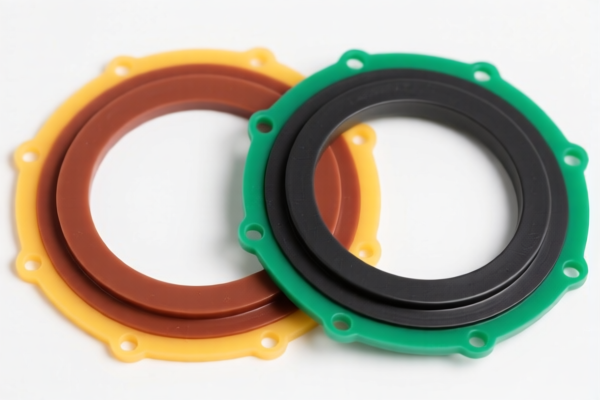
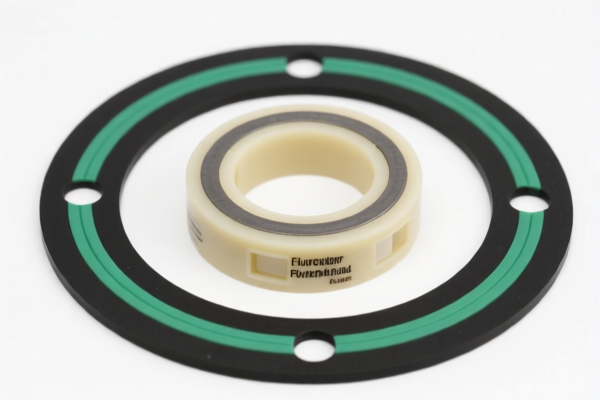
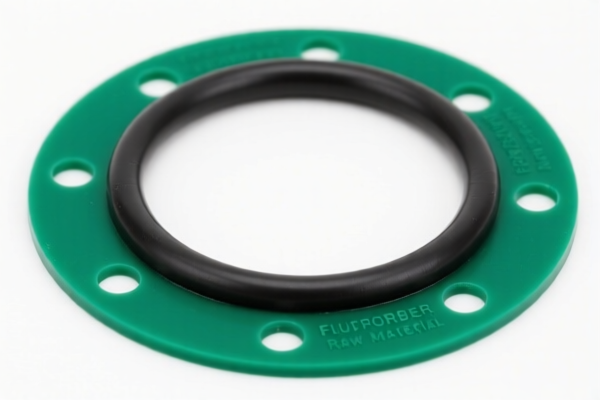
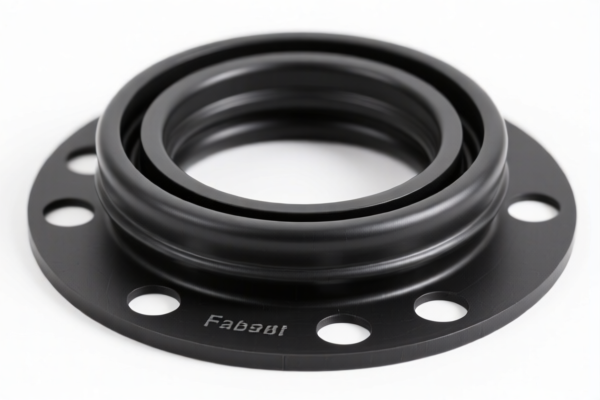
AI Analysis
🛡️ High Temperature Fluorine Rubber Gasket Raw Material (FKM/Viton)
🌐 HS Code Reference & Customs Clearance Guide | 2026 Latest Tariff Analysis | Professional Entry Strategy
📌 I. Product Definition & Classification: Do You Really Understand "Fluorine Rubber Gaskets"?
High-temperature fluorine rubber (commonly known as FKM or Viton) is a synthetic elastomer renowned for its resistance to heat, oil, and chemicals. In international trade, "gaskets, washers, and other seals" made of vulcanized rubber are strictly categorized based on their material composition and specific application.
The provided data covers two main material categories: 1. Vulcanized Rubber (Non-hard rubber): Includes standard FKM/FPM seals. These attract high tariffs (27.5%). 2. Plastics/Articles of Headings 3901-3914: Includes PTFE (Teflon) or other plastic-based seals. These attract 0% tariffs.
⚠️ Key Distinction Point:
- If the material is Vulcanized Rubber (e.g., FKM, NBR, EPDM) → It falls under Chapter 40.
- If the material is Plastic (e.g., PTFE, PVDF, PE) → It falls under Chapter 39.
- Specific Use: Automotive O-rings have a dedicated sub-heading within rubber seals.
📦 II. HS Code Classification Details (2026 Latest Tariff Authority Comparison)
| HS Code | Product Description | Material Type | Application/Notes | Tax Rate |
|---|---|---|---|---|
4016.93.50.20 |
Other articles of vulcanized rubber: Gaskets, washers, seals: Other Oil seals | Vulcanized Rubber (FKM, NBR, etc.) | Industrial oil seals, not specifically for automotive | 27.5% |
4016.93.10.10 |
Other articles of vulcanized rubber: Gaskets, washers, seals: Of a kind used in automotive goods: O-Rings | Vulcanized Rubber (FKM, NBR, etc.) | Automotive-specific O-rings (e.g., engine, transmission) | 27.5% |
3926.90.45.10 |
Articles of plastics: Gaskets, washers, seals: O-Rings | Plastic (PTFE, etc.) | Plastic O-rings (e.g., PTFE seals) | 0.0% |
3926.90.45.90 |
Articles of plastics: Gaskets, washers, seals: Other | Plastic (PTFE, etc.) | Plastic gaskets/washers (non-O-ring) | 0.0% |
🔍 Critical Reminder:
- "Fluorine Rubber" (FKM) is a rubber (elastomer), not a plastic. Therefore, it cannot be classified under HS Code3926...unless it is a pure plastic material like PTFE. - If you ship Fluorine Rubber (FKM) Gaskets, you MUST use Chapter 40 codes (4016.93...). - Misclassifying rubber gaskets as plastic (3926) is a major compliance risk and will lead to penalties.
💰 III. 2026 Latest Tariff Rate Breakdown (Including Surtaxes)
✅ Applicable Country: United States (US)
✅ Origin: China (CN) (Implied by the "Additional Tax" structure)
✅ Effective Time: Current 2026 Tariff Regime
🎯 1. 4016.93.50.20 & 4016.93.10.10 —— Vulcanized Rubber Gaskets (FKM/Viton)
Both rubber gasket codes share the same tax structure in the provided data:
| Item | Content |
|---|---|
| Base Duty Rate | 2.5% (Standard MFN Rate) |
| Additional Duty (Section 301) | +25.0% (Retaliatory/Trade War Surtax) |
| Total Effective Tax Rate | 27.5% |
| Tax Calculation | CIF Value × 27.5% |
| De Minimis Exemption | ❌ Not Applicable (High-value industrial parts) |
| Legal Basis Path | HTSUS:4016.93 → Section 301 Footnote |
📌 Explanation:
- Fluorine Rubber (FKM) is considered a high-performance industrial rubber. - The 27.5% total rate is a combination of the standard duty (2.5%) and the heavy Section 301 surcharge (25%). - This rate applies regardless of whether the gasket is for automotive (4016.93.10.10) or general industrial use (4016.93.50.20).
🎯 2. 3926.90.45.10 & 3926.90.45.90 —— Plastic Gaskets (PTFE/Teflon)
| Item | Content |
|---|---|
| Base Duty Rate | 0.0% |
| Additional Duty | 0.0% |
| Total Effective Tax Rate | 0.0% |
| Tax Calculation | CIF Value × 0% = $0 Duty |
| De Minimis Exemption | N/A (Already 0%) |
| Legal Basis Path | HTSUS:3926.90 |
📌 Explanation:
- If your "high temperature" requirement is met by PTFE (Teflon) rather than FKM rubber, you can achieve zero duty. - PTFE is a plastic/polymer, not vulcanized rubber.
🛠️ IV. Customs Clearance Practical Advice (Real-World Pitfall Avoidance)
✅ 1. Essential Documentation Checklist (Non-Negotiable)
| Document | Required? | Description |
|---|---|---|
| ✅ Material Specification Sheet | ✔️ | Must explicitly state: "Vulcanized Fluorine Rubber (FKM/FPM)" or "PTFE". Do not just say "Rubber". |
| ✅ Product Photos | ✔️ | Clear images of the gasket, including any part numbers and packaging. |
| ✅ Commercial Invoice | ✔️ | Must match the HS Code description exactly. |
| ✅ Packing List | ✔️ | Weight and dimensions for cargo calculation. |
| ✅ Certification | ✔️ | FDA, USP, or RoHS compliance if used in food/pharma industries. |
✅ 2. Declaration Strategy (Key Mantra)
🔥 “Material Determines Chapter: Rubber is Ch.40, Plastic is Ch.39. Auto O-Rings get their own sub-code!”
| Scenario | Correct HS Code | Incorrect Code | Consequence |
|---|---|---|---|
| FKM (Viton) Oil Seal | 4016.93.50.20 |
3926.90.45.90 |
27.5% Penalty + Back Taxes |
| FKM O-Ring for Car Engine | 4016.93.10.10 |
4016.93.50.20 |
Same Tax, but specific code preferred for automotive tracking |
| PTFE (Teflon) Gasket | 3926.90.45.90 |
4016.93.50.20 |
Saves 27.5% |
✅ 3. Special Cases & Handling
| Situation | Handling Advice |
|---|---|
| "Fluorine Rubber" vs. "Fluoroplastic" | FKM = Rubber (Ch.40, 27.5%). PTFE/FEP = Plastic (Ch.39, 0%). Ensure your material scientist confirms this. |
| Automotive vs. Industrial | If the gasket is exclusively for Chapter 87 vehicles, use 4016.93.10.10. For general machinery, use 4016.93.50.20. |
| Mixed Containers | If shipping both Rubber Gaskets and Plastic Gaskets in one container, they must be declared separately to avoid confusion and potential rejection of the entire shipment. |
🌍 V. Global Market Customs Comparison (2026 Latest)
| Country/Region | Recommended HS Code | Tariff (China Origin) | Certification | Notes |
|---|---|---|---|---|
| 🇺🇸 USA | 4016.93.50.20 (Rubber) |
27.5% | N/A | High surcharge due to Section 301. |
| 🇺🇸 USA | 3926.90.45.90 (Plastic) |
0.0% | N/A | Consider switching to PTFE if cost-sensitive. |
| 🇪🇺 EU | 4016.93.00 |
4% | REACH | No Section 301 equivalent. |
| 🇨🇳 China | 4016.93.00 |
0-5% | CCC (if applicable) | Low duty for import into China. |
| 🇯🇵 Japan | 4016.93.00 |
3% | PSE | Moderate duty. |
📌 Conclusion:
- The US market is the most expensive for rubber gaskets due to the 25% additional tariff. - Cost Optimization: If the application allows, switching from FKM (Rubber) to PTFE (Plastic) can save 27.5% in duties. However, FKM has better compression set properties, while PTFE has better chemical resistance. Choose based on technical need, not just tax.
📌 VI. Common Mistakes & Pitfall Guide (Lessons from Tears)
❌ Mistake 1: Calling FKM "Fluorine Plastic" to get 0% tax.
👉 Consequence: Customs will classify it as rubber, charge 27.5%, and issue a penalty for misdeclaration.
👉 Correct: Be honest about material. FKM is rubber.
❌ Mistake 2: Using generic "Gasket" without specifying "Oil Seal" or "O-Ring".
👉 Consequence: Customs may select the highest duty rate or request further inspection, delaying clearance by weeks.
👉 Correct: Specify "O-Ring" or "Oil Seal" and provide technical drawings.
❌ Mistake 3: Confusing "Hard Rubber" (Ebonite) with "Vulcanized Rubber".
👉 Consequence: Hard rubber has different codes (4016.99). FKM is not hard rubber.
👉 Correct: Ensure the declaration says "Vulcanized Rubber" not "Hard Rubber".
✅ Correct Declaration Example:
"O-Ring, Vulcanized Fluorine Rubber (FKM), Used in Automotive Engines, Model A-123, Black, 50mm OD"
→ HS Code:4016.93.10.10| Tax: 27.5%
✅ Correct Declaration Example (Plastic Alternative):
"Gasket, PTFE (Teflon) Sheet, Cut to Shape, Chemical Resistant"
→ HS Code:3926.90.45.90| Tax: 0.0%
🎯 VII. Conclusion: Professional Declaration, Save Costs, Ensure Smooth Clearance!
🎯 Remember the Mantra:
🔹 "Rubber is 27.5%, Plastic is 0%. Know your material before you ship!"
🔹 "FKM is Rubber, PTFE is Plastic. Don't mix them up in the invoice!"
📌 Tips:
- If your FKM gaskets are exclusively for automotive use, ensure the part number matches known automotive OEM codes to justify 4016.93.10.10.
- Pre-arrival Ruling: Consider applying for an Advance Ruling from US Customs if you are shipping large volumes of mixed gasket types. This provides legal certainty on the HS Code.
📣 Immediate Action:
📞 Contact your supplier: Confirm if the material is FKM (Rubber) or PTFE (Plastic).
📄 Update Invoice: Clearly state the material and product type (O-Ring/Oil Seal).
🚀 Optimize Supply Chain: If possible, use PTFE for non-high-pressure applications to save 27.5% in duties.
✨ Professional Clearance Starts with Precise Classification!
💼 Every cent of tax is worth calculating!
Customer Reviews
About HS Code Classification
The Harmonized System (HS) is an internationally standardized nomenclature developed by the World Customs Organization (WCO) to classify traded products. Over 200 countries use the HS system as the basis for customs tariffs, trade statistics, and import/export regulations.
Each HS code follows a hierarchical structure:
- Chapter (2 digits) — Broad category of goods (e.g., Chapter 84: Machinery and Mechanical Appliances)
- Heading (4 digits) — More specific grouping within the chapter
- Subheading (6 digits) — Internationally standardized breakdown, used by all WCO member countries
- National subdivisions (8-10 digits) — Country-specific extensions for further classification, such as US HTSUS 10-digit codes
Correct HS code classification is essential for smooth customs clearance, accurate duty payment, and compliance with trade regulations. Misclassification can lead to customs delays, overpayment of duties, or penalties.
When importing from CN to US, the applicable tariff rates may include:
- Most-Favored-Nation (MFN) rate — The standard duty rate applied to WTO members
- General rate — Applied to countries without trade agreements
- Trade remedy duties — Additional tariffs such as Section 301 (anti-dumping), Section 232 (national security), or countervailing duties
The information provided on this page is for reference purposes only. For official classification, please consult with your local customs authority or a licensed customs broker.