High Temperature Resistant Phosphate Binder
CN → US| HS Code | Tariff Rate | Origin | Destination | Doc |
|---|---|---|---|---|
| 381590 | 0.0% | CN | US | Official Doc |
| 382499 | 0.0% | CN | US | Official Doc |
| 3824999361 | 40.0% | CN | US | Official Doc |
| 3824999397 | 40.0% | CN | US | Official Doc |
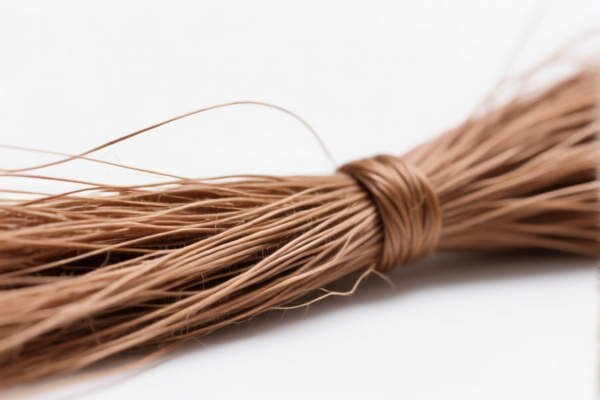
Product Images



AI Analysis
🧪 High Temperature Resistant Phosphate Binder (Chemical Binders for Industrial Refractory Use)
🌐 HS Code Reference & Customs Clearance Guide | 2026 Latest Tariff Analysis | Professional Compliance Strategy
📌 I. Product Definition & Classification: What Exactly Is a "Phosphate Binder"?
High Temperature Resistant Phosphate Binders are specialized chemical preparations used primarily in foundry, metallurgical, and ceramic industries. They serve as the "glue" that holds refractory bricks, foundry molds, and cores together under extreme heat.
In international trade, these products are narrowly defined by their chemical composition and specific industrial application. They are not general-purpose adhesives but are classified under chemical products of the chemical or allied industries.
Key Distinction: * Specific Phosphate-Based Mixtures: Mixtures consisting mainly of chemicals containing a phosphorus atom bonded to a methyl, ethyl, n-propyl, or isopropyl group (no other carbon atoms). These have a specific, narrow HS code. * General Industrial Binders: Broad category for "other prepared binders" or "chemical products not elsewhere specified," which includes phosphate binders used in high-temperature applications (refractory/ceramic) that do not fit the specific chemical structure above.
⚠️ Critical Classification Point:
- If the binder is a specific mixture where the phosphorus atom is bonded only to methyl, ethyl, n-propyl, or isopropyl groups →归入 3824.99.93.61
- If the binder is a general high-temperature phosphate preparation (refractory/ceramic/metallurgical) that does not fit the specific chemical structure above →归入 3824.99.93.97 or 3824.99 (General)
📦 II. HS Code Classification Details (2026 Latest Tariff Authority对照)
Based on the provided data, the classification depends on the precise chemical nature of the binder.
| HS Code | Product Description | Application Scenario | Chemical Specificity |
|---|---|---|---|
3824.99.93.61 |
Mixtures mainly of chemicals with P bonded to methyl, ethyl, n-propyl, or isopropyl groups (no other carbon atoms) | Specific organic phosphate binders for industrial use | ✅ Highly Specific (Strict chemical structure) |
3824.99.93.97 |
Other prepared binders for foundry molds/cores; other chemical products not elsewhere specified | General high-temperature phosphate binders, refractory binders, ceramic binders | ✅ General (Fits broad "other" category) |
3815.90 |
Other chemical products and preparations (including phosphate binders for high-temp applications like refractories) | High-temperature binders for ceramic/metallurgical uses | ✅ Broad (Note: Tax retrieval failed in source) |
3824.99 |
Other chemical products and preparations (industrial/technical, including high-temp resistant binders) | Specialized construction or refractory material binders | ✅ Broad (Note: Tax retrieval failed in source) |
🔍 Key Reminder:
-3824.99.93.61is for very specific organic phosphate mixtures. If your binder is a complex inorganic phosphate (e.g., orthophosphate, metaphosphate) used in refractories, it likely falls under3824.99.93.97("Other").
-3824.99and3815.90are broader categories. The provided data indicates tax retrieval errors for these, so priority should be given to the specific 10-digit codes (.61and.97) if applicable, as they have clear tax data.
💰 III. 2026 Latest Tariff Rate Details (Including Additional Taxes)
✅ Applicable Country: United States (US)
✅ Origin: China (CN)
✅ Effective Time: Current rates apply (2026 context)
🎯 1. 3824.99.93.61 —— Specific Phosphate Mixtures (Strict Chemical Definition)
| Item | Content |
|---|---|
| Base Tariff Rate | 5.0% (ad valorem) |
| Section 301 Additional Tariff | +25.0% (China-origin goods) |
| Total Tariff Rate | 30.0% |
| Tax Calculation | CIF Value × 30% |
| De Minimis Exemption | ❌ Not Applicable (Section 301 goods generally exclude de minimis) |
| Legal Basis | HTSUS: 3824.99.93.61 + USITC Footnote for Section 301 |
📌 Explanation:
- The 5% base duty is the standard MFN rate for "Other chemical products."
- The 25% additional duty is applied under Section 301 of the Trade Act of 1974 due to China's origin.
- Total 30% is a significant cost factor. Accurate classification is crucial to avoid misdeclaration penalties.
🎯 2. 3824.99.93.97 —— Other Prepared Binders (General High-Temp Phosphate)
| Item | Content |
|---|---|
| Base Tariff Rate | 5.0% (ad valorem) |
| Section 301 Additional Tariff | +25.0% (China-origin goods) |
| Total Tariff Rate | 30.0% |
| Tax Calculation | CIF Value × 30% |
| De Minimis Exemption | ❌ Not Applicable |
| Legal Basis | HTSUS: 3824.99.93.97 + USITC Footnote for Section 301 |
📌 Note:
- Despite being "Other," this code carries the same 30% total tariff as the specific chemical mix.
- This is the most likely classification for most industrial phosphate binders used in foundries or refractories, as they often contain complex inorganic salts not fitting the narrow.61definition.⚠️ Note on
3815.90&3824.99:
The source data indicates "Failed to retrieve tax information" for these broader codes.
- Risk: Do not use these codes for clearance without verifying current USITC/HTSUS data, as they may have different or unknown rates.
- Recommendation: Stick to3824.99.93.61or3824.99.93.97where tax data is confirmed.
🛠️ IV. Customs Clearance Practical Advice (Pitfall Avoidance Guide)
✅ 1. Document Checklist (Mandatory)
| Document | Required | Purpose |
|---|---|---|
| ✅ Product Specification Sheet | ✔️ | Details chemical composition, binding agents, and temperature resistance. |
| ✅ Safety Data Sheet (SDS) | ✔️ | Confirms hazardous nature (if any) and chemical identity. |
| ✅ Commercial Invoice | ✔️ | Must clearly state "High Temperature Resistant Phosphate Binder" and HS Code. |
| ✅ Certificate of Origin | ✔️ | Proves China origin (triggers 25% Section 301). |
| ✅ Packaging List | ✔️ | Shows net/gross weight, volume. |
| ✅ Test Report (Optional) | ✔️ | If challenged, provide proof of chemical structure to distinguish between .61 and .97. |
✅ 2. Declaration Tips (Key Mnemonics)
🔥 "Specify the Chemistry, Don't Guess the Code! 30% is the Truth."
| Scenario | Correct Declaration | Incorrect Declaration |
|---|---|---|
| Specific organic phosphate mix (P bonded to methyl/ethyl/etc.) | 3824.99.93.61 |
3824.99.93.97 → Potential under-declaration if strict chemistry doesn't match |
| General inorganic phosphate binder (Refractory/Foundry) | 3824.99.93.97 |
3815.90 → Risk of unknown tax rate |
| Foundry Mold Binder (General) | 3824.99.93.97 |
3506.91 (Glues) → WRONG CATEGORY (Chemical vs. Glue) |
| Refractory Cement Mix | 3824.99.93.97 |
2523.29 (Cements) → Only if no chemical binder is added; if chemical binder is key, it's Ch. 38 |
✅ 3. Special Handling
| Situation | Advice |
|---|---|
| OEM Custom Binders | Provide formulation summary to Customs Broker to justify .61 vs .97. |
| Mixed with Other Chemicals | If the mixture "consists mainly" of the specified phosphate, it still qualifies for .61. Otherwise, go to .97. |
| High-Value Shipments | Consider ISF (10+2) filing 24 hours before loading to avoid demurrage. |
| Hazmat Classification | If the binder is corrosive or flammable, include UN Number and Proper Shipping Name on the bill of lading. |
🌍 V. Global Market Comparison (2026 Latest)
| Country/Region | Recommended HS Code | Tariff (China Origin) | Certification | Notes |
|---|---|---|---|---|
| 🇺🇸 USA | 3824.99.93.97 |
30% (5% Base + 25% Sec 301) | None specific | High cost due to Section 301. |
| 🇨🇳 China | 3824.99 |
Varies (Exempt/Reduced) | None | Domestic trade often exempt. |
| 🇪🇺 EU | 3824.99 |
~5-6% | REACH Compliance | REACH registration may be required for phosphates. |
| 🇮🇳 India | 3824.99 |
Varies (Basic + SWS) | BIS Standard | Verify current Basic Customs Duty. |
📌 Conclusion:
- USA is the most costly market for these binders due to the 30% effective tariff.
- EU and India have moderate tariffs but strict chemical regulatory compliance (REACH in EU).
📌 VI. Common Mistakes & Pitfalls (Lessons Learned)
❌ Mistake 1: Classifying as "Glue" (Chapter 35)
👉 Consequence: Wrong chapter. Phosphate binders for foundry are chemical preparations (Chapter 38), not adhesives (Chapter 35).
👉 Penalty: Misclassification + Back Duties.
❌ Mistake 2: Assuming "Other" means lower tax
👉 Consequence: Both .61 and .97 carry 30% total tax. There is no benefit to miscoding.
❌ Mistake 3: Ignoring Section 301
👉 Consequence: Failing to declare China origin correctly can lead to penalties of 100% of the duty evaded.
❌ Mistake 4: Using Broad Codes (3815.90) without verified tax data
👉 Consequence: Customs may reject the declaration or assess unknown rates, causing delays.
✅ Correct Approach:
"High-Temperature Resistant Phosphate Binder, Refractory Grade, Chemical Preparation, China Origin, HS 3824.99.93.97"
🎯 VII. Conclusion: Precise Classification Saves Money!
🎯 Remember:
🔹 "Phosphate Binder = Ch. 38, Not Ch. 35!"
🔹 "30% Total Tax is Standard for China-Origin Chemical Binders."
🔹 "Use 3824.99.93.97 for most industrial phosphate binders."
📌 Pro Tip:
- For large volume imports, consider applying for a Binding Ruling from US CBP to lock in the HS Code.
- Ensure SDS is up-to-date and matches the chemical description on the invoice.
📣 Immediate Action:
📞 Consult a Customs Broker with Chapter 38 expertise.
🚀 Avoid surprises at US ports of entry!
✨ Professional Clearance Starts with Accurate Classification!
💼 Every percentage point of tariff impacts your bottom line!
Customer Reviews
About HS Code Classification
The Harmonized System (HS) is an internationally standardized nomenclature developed by the World Customs Organization (WCO) to classify traded products. Over 200 countries use the HS system as the basis for customs tariffs, trade statistics, and import/export regulations.
Each HS code follows a hierarchical structure:
- Chapter (2 digits) — Broad category of goods (e.g., Chapter 84: Machinery and Mechanical Appliances)
- Heading (4 digits) — More specific grouping within the chapter
- Subheading (6 digits) — Internationally standardized breakdown, used by all WCO member countries
- National subdivisions (8-10 digits) — Country-specific extensions for further classification, such as US HTSUS 10-digit codes
Correct HS code classification is essential for smooth customs clearance, accurate duty payment, and compliance with trade regulations. Misclassification can lead to customs delays, overpayment of duties, or penalties.
When importing from CN to US, the applicable tariff rates may include:
- Most-Favored-Nation (MFN) rate — The standard duty rate applied to WTO members
- General rate — Applied to countries without trade agreements
- Trade remedy duties — Additional tariffs such as Section 301 (anti-dumping), Section 232 (national security), or countervailing duties
The information provided on this page is for reference purposes only. For official classification, please consult with your local customs authority or a licensed customs broker.