High Temperature Resistant Polypropylene Raw Material
CN → US| HS Code | Tariff Rate | Origin | Destination | Doc |
|---|---|---|---|---|
| 3902300000 | 41.5% | CN | US | Official Doc |
| 3902100000 | 41.5% | CN | US | Official Doc |
| 3907915000 | 41.5% | CN | US | Official Doc |
| 3907995050 | 41.5% | CN | US | Official Doc |
| 3824999397 | 40.0% | CN | US | Official Doc |
Product Images
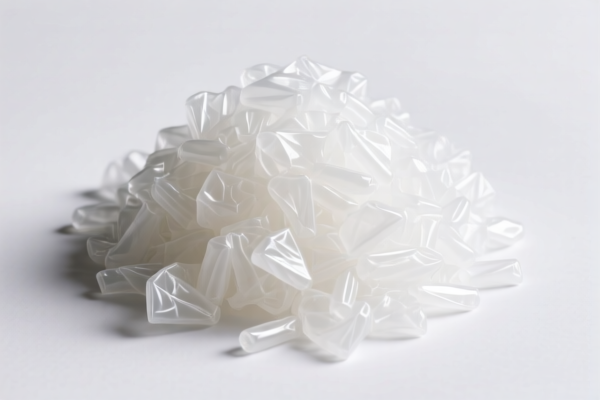

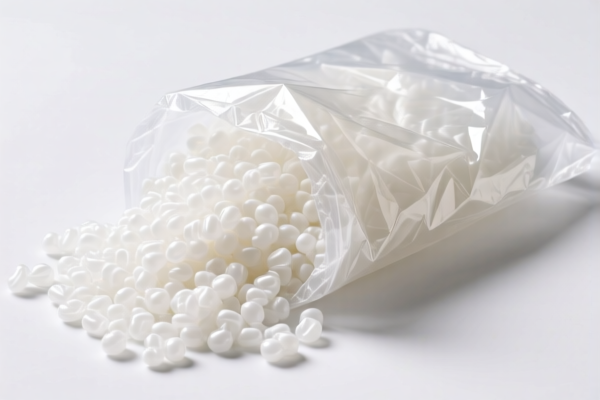

AI Analysis
🧪 High Temperature Resistant Polypropylene (PP) Raw Material
Chemical Class: Polyolefin / Polymer Resin
🌐 HS Code Reference & Customs Clearance Guide | 2026 Latest Tariff Analysis | Professional Entry Strategy
📌 I. Product Definition & Classification: Is it "PP" or "Polyester"?
High-temperature resistant Polypropylene (PP) raw materials are primarily used in automotive under-hood parts, electrical components, and industrial filtration due to their thermal stability. In international trade, the classification depends strictly on the chemical structure and physical form.
However, many suppliers mislabel high-temp resistant Polyester resins (often confused with PP due to similar applications) as Polypropylene, leading to severe misclassification risks.
⚠️ Critical Distinction Point:
- If the material is Polypropylene (chemically-C3H6-backbone) in primary shape → Chapter 39, Heading 3902.
- If the material is actually Polyester (chemically-COO-bonds, e.g., PET/PBT) despite being called "High Temp PP" in marketing → Chapter 39, Heading 3907.
- If it is a Chemical Preparation (additives, masterbatches, or blends not meeting pure resin definitions) → Chapter 38.
📦 II. HS Code Classification Matrix (2026 Latest Tariff Authority)
| HS Code | Product Description | Applicable Scenario | Key Identifier |
|---|---|---|---|
3902.30.00.00 |
Polypropylene, in primary forms (General) | Standard PP pellets, raw powder, general industrial use | ✅ Pure PP, Primary Form |
3902.10.00.00 |
Polypropylene, in primary forms (Special) | Specialty PP grades (e.g., high crystallinity, copolymer) for high-temp resistance | ✅ Specialty PP, Primary Form |
3907.91.50.00 |
Unsaturated Polyester Resins | If "High Temp" material is actually Polyester (UPR), often confused with PP | ❌ Misclassification Risk: Polyester, not PP |
3907.99.50.50 |
Other Polyesters in primary forms | PBT, PET resins marketed as "High Temp PP" by error | ❌ Misclassification Risk: Polyester, not PP |
3824.99.93.97 |
Chemical Products & Preparations | Blends, masterbatches, or additives where PP/Polyester is not the sole active ingredient | ⚠️ Preparation, not pure raw material |
🔍 Key Reminder:
- "Polypropylene" strictly falls under 3902.
- If the material is chemically Polyester (even if heat-resistant), it falls under 3907.
- Customs will verify via MSDS (Material Safety Data Sheet) and GC-MS (Gas Chromatography-Mass Spectrometry) tests. Do not rely solely on product names like "High Temp PP" if the chemical composition is Polyester.
💰 III. 2026 Latest Tariff Rate Details (Including Additional Duties)
✅ Applicable Country: United States (US)
✅ Country of Origin: China (CN)
✅ Effective Date: November 10, 2025 (and subsequent imports)
🎯 1. 3902.30.00.00 & 3902.10.00.00 —— Polypropylene (Primary Forms)
| Item | Content |
|---|---|
| Base Rate | 6.5% (ad valorem) |
| Section 301 Duty | +25% (USITC Footnote 9903.02.15/16) |
| 122 Clause Duty | +10% (Specific to chemical raw materials under US trade policy) |
| Total Rate | 41.5% |
| Tax Calculation | CIF Value × 41.5% |
| De Minimis Exemption | ❌ Not Applicable (deny_de_minimis) |
| Legal Path | Section 301:9903.02.15 → 122 Clause → USITC:3902.30.00.00 |
📌 Explanation:
- Base 6.5%: Standard MFN rate for PP in primary forms.
- Section 301 +25%: Imposed on Chinese-origin plastics and resins.
- 122 Clause +10%: Additional duty on specific chemical raw materials.
- Total 41.5%: This is a high-cost entry. Must be calculated into FOB/CIF pricing.
🎯 2. 3907.91.50.00 & 3907.99.50.50 —— Polyester Resins (High-Temperature Alternatives)
| Item | Content |
|---|---|
| Base Rate | 6.5% (ad valorem) |
| Section 301 Duty | +25% (USITC Footnote 9903.07.10) |
| 122 Clause Duty | +10% |
| Total Rate | 41.5% |
| Tax Calculation | CIF Value × 41.5% |
| De Minimis Exemption | ❌ Not Applicable |
| Legal Path | Section 301:9903.07.10 → 122 Clause → USITC:3907.91.50.00 |
📌 Note:
- If your product is Polyester (e.g., PBT/PET) instead of PP, the rate is the same (41.5%).
- Misdeclaring Polyester as PP does not reduce taxes and may lead to penalties.
🎯 3. 3824.99.93.97 —— Chemical Preparations (Blends/Additives)
| Item | Content |
|---|---|
| Base Rate | 5.0% (ad valorem) |
| Section 301 Duty | +25% (USITC Footnote 9903.04.20) |
| 122 Clause Duty | +10% |
| Total Rate | 40.0% |
| Tax Calculation | CIF Value × 40.0% |
| De Minimis Exemption | ❌ Not Applicable |
| Legal Path | Section 301:9903.04.20 → 122 Clause → USITC:3824.99.93.97 |
📌 Explanation:
- This rate applies if the product is a blend, masterbatch, or chemical preparation rather than pure resin.
- Savings: 1.5% lower than pure PP/Polyester (40% vs 41.5%), but requires proof of being a "preparation."
🛠️ IV. Customs Clearance Practical Advice (Avoid Pitfalls)
✅ 1. Documentation Checklist (Mandatory)
| Document | Required | Notes |
|---|---|---|
| ✅ MSDS (Material Safety Data Sheet) | ✔️ | Must clearly state chemical composition (PP vs. Polyester). |
| ✅ COA (Certificate of Analysis) | ✔️ | Shows polymerization degree, melting point, and chemical structure. |
| ✅ Product Photos | ✔️ | Clear shots of pellets/powder, packaging, and labels. |
| ✅ Commercial Invoice | ✔️ | Must specify "Polypropylene Resin" or "Polyester Resin" accurately. |
| ✅ Packing List | ✔️ | Net weight, gross weight, and package count. |
| ✅ Origin Certificate | ✔️ | If non-Chinese, claim preferential rates. |
✅ 2. Classification Strategy (Key Rules)
🔥 "Chemical Identity Over Marketing Name"
| Scenario | Correct HS Code | Risk |
|---|---|---|
| Pure Polypropylene (PP) Pellets | 3902.30.00.00 or 3902.10.00.00 |
Low (if correctly identified) |
| Polyester (PBT/PET) Resin | 3907.91.50.00 or 3907.99.50.50 |
High (if mislabeled as PP) |
| PP Masterbatch/Blend | 3824.99.93.97 |
Medium (requires proof of preparation) |
| Mislabeling Polyester as PP | ❌ Danger | Penalties + Back Taxes + Audit |
📌 Tip:
- Do not use "High Temp PP" as a technical description in the invoice. Use "Polypropylene Resin, Grade XYZ, Heat Deflection Temp 120°C".
- If the product is a blend, ensure it meets the definition of "Chemical Preparation" under HS Code 3824 to benefit from the 40% rate.
✅ 3. Special Handling Cases
| Case | Recommendation |
|---|---|
| OEM Custom Resin | Provide formulation sheet to prove it is a "preparation" (3824) if applicable. |
| Sample Shipments | Even small samples are subject to 41.5% tax. No de minimis exemption. |
| Mixed Containers | If PP and Polyester are mixed, customs may audit the entire shipment. Separate clearly. |
| Recycled PP | May have different environmental regulations. Ensure compliance with EPA and local laws. |
🌍 V. Global Market Comparison (2026 Latest)
| Country/Region | Recommended HS Code | Tariff (China Origin) | Certification | Notes |
|---|---|---|---|---|
| 🇺🇸 USA | 3902.30.00.00 |
41.5% | None | High duty due to Section 301 + 122 Clause |
| 🇨🇳 China | 3902.30.00.00 |
5.0% | None | No additional duties |
| 🇪🇺 EU | 3902.30.00.00 |
6.5% | REACH | No additional duties |
| 🇯🇵 Japan | 3902.30.00.00 |
5.0% | JIS | No additional duties |
| 🇻🇳 Vietnam | 3902.30.00.00 |
0-5% | None | Potential for lower rates if processed locally |
📌 Conclusion:
- USA is the highest-cost market due to layered tariffs.
- China, EU, Japan have standard, lower duties.
- Diversify supply chain if targeting the US market to mitigate 41.5% tariff impact.
📌 VI. Common Mistakes & Pitfalls (Lessons Learned)
❌ Mistake 1: Declaring Polyester as Polypropylene
👉 Consequence: Customs lab test reveals Polyester → 41.5% vs 41.5% (no tax savings) + Penalties + Delay.
❌ Mistake 2: Claiming "Masterbatch" to get 40% instead of 41.5%
👉 Consequence: If product is pure resin, customs will reclassify → Back Taxes + Interest.
❌ Mistake 3: Ignoring the 122 Clause
👉 Consequence: Underpayment → Audit and Fine.
❌ Mistake 4: Using vague descriptions like "Plastic Raw Material"
👉 Consequence: Customs assigns highest default rate → Delays and Uncertainty.
✅ Correct Approach:
"Polypropylene Resin, Homopolymer, Primary Form, Melting Point 160°C, HS Code 3902.30.00.00"
🎯 VII. Conclusion: Precise Classification Saves Money!
🎯 Remember the Rule:
🔹 "PP is 3902, Polyester is 3907, Blend is 3824."
🔹 "Total Tax: 41.5% for PP/Polyester, 40.0% for Preparations."
🔹 "No De Minimis, No Exemptions for China Origin."
📌 Pro Tip:
If you are exporting high-temp resistant resins to the US, consider:
1. Pre-ruling: Apply for an Advance Ruling from US Customs (CBP) to confirm HS code.
2. Supply Chain Optimization: Source from non-Chinese origins if possible to avoid Section 301 duties.
3. Documentation Excellence: Ensure MSDS and COA are 100% accurate to avoid lab tests.
📣 Act Now:
📞 Contact a licensed customs broker + Provide MSDS & COA + Verify HS Code
🚀 Clear Customs Smoothly, Reduce Costs, and Scale Your Business!
✨ Professional Customs Clearance Starts with Accurate Classification!
💼 Every Percent of Tax Matters!
Customer Reviews
About HS Code Classification
The Harmonized System (HS) is an internationally standardized nomenclature developed by the World Customs Organization (WCO) to classify traded products. Over 200 countries use the HS system as the basis for customs tariffs, trade statistics, and import/export regulations.
Each HS code follows a hierarchical structure:
- Chapter (2 digits) — Broad category of goods (e.g., Chapter 84: Machinery and Mechanical Appliances)
- Heading (4 digits) — More specific grouping within the chapter
- Subheading (6 digits) — Internationally standardized breakdown, used by all WCO member countries
- National subdivisions (8-10 digits) — Country-specific extensions for further classification, such as US HTSUS 10-digit codes
Correct HS code classification is essential for smooth customs clearance, accurate duty payment, and compliance with trade regulations. Misclassification can lead to customs delays, overpayment of duties, or penalties.
When importing from CN to US, the applicable tariff rates may include:
- Most-Favored-Nation (MFN) rate — The standard duty rate applied to WTO members
- General rate — Applied to countries without trade agreements
- Trade remedy duties — Additional tariffs such as Section 301 (anti-dumping), Section 232 (national security), or countervailing duties
The information provided on this page is for reference purposes only. For official classification, please consult with your local customs authority or a licensed customs broker.