High Tension Steel Cable
CN → US| HS Code | Tariff Rate | Origin | Destination | Doc |
|---|---|---|---|---|
| 7312103080 | 85.0% | CN | US | Official Doc |
| 7312109090 | 85.0% | CN | US | Official Doc |
| 8307106000 | 38.8% | CN | US | Official Doc |
| 8307103000 | 38.8% | CN | US | Official Doc |
Product Images
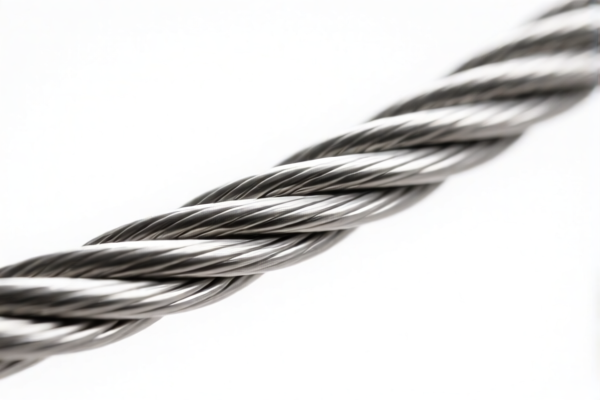
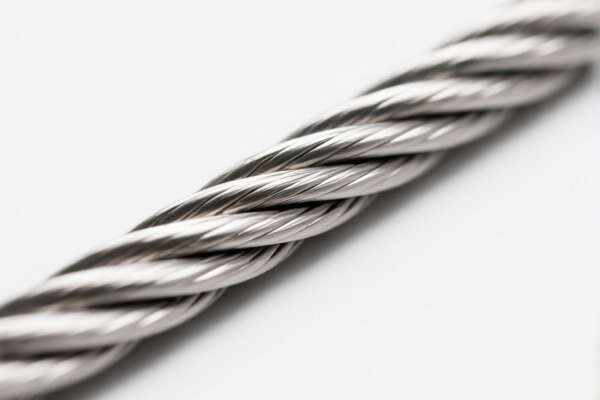
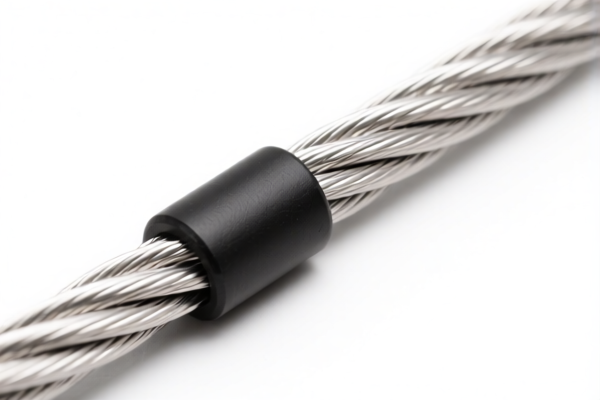
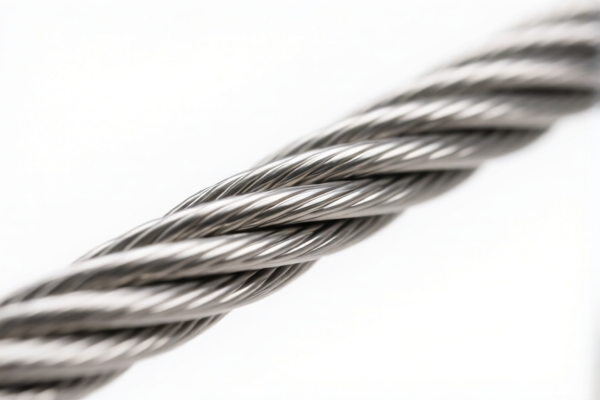
AI Analysis
🔩 High Tension Steel Cable (High-Strength Steel Wire Rope)
🌐 HS Code Reference & Customs Clearance Guide | 2026 Latest Tariff Analysis | Professional Clearance Strategy
📌 I. Product Definition & Classification: Do You Really Know "Steel Cable"?
High Tension Steel Cable (often referred to as High-Strength Steel Wire Rope) is a critical industrial component used in lifting, towing, structural support, and mooring applications. In international trade, the classification depends heavily on the exact physical form (strand, rope, cable) and the specific end-use.
There are two main classification pathways: 1. Iron/Steel Articles (Chapter 73): Typically for wire ropes used as structural or industrial components. 2. Articles of Iron or Steel (Chapter 83): Typically for wire ropes used as rigid rods, bars, or specific "wire" forms that don't fit Chapter 73's general definition, or for specific rigid fittings.
⚠️ Key Distinction Point:
- If the product is a flexible wire rope/cable/strand primarily made of steel, it generally falls under HS 7312.
- If the product is classified under specific rigid steel forms or specific "wire" categories in Chapter 83 (less common for flexible cables but possible for specific rigid variants), it may fall under HS 8307.
- Crucial Note: Most standard "High Tension Steel Cables" are classified under Chapter 73. However, the provided data includes HS 8307 codes. This suggests a potential classification variance based on specific product descriptions (e.g., if classified as "other wires" or specific rigid forms). We must address both sets provided in the data.
📦 II. HS Code Classification Details (Based on Provided Data)
| HS Code | Product Description | Application/Logic | Tax Rate (Total) |
|---|---|---|---|
7312.10.30.80 |
High Tension Steel Cable, Steel Material, Strand Form | Fits "Other" category fallback logic (兜底逻辑) | 85.0% |
7312.10.90.90 |
High Tension Steel Cable, Steel Material, Rope/Cable Form | Matched Successfully (Primary Classification) | 85.0% |
8307.10.60.00 |
High Tension Steel Cable, Steel Material, Wire Form | Fits "Other" category inference logic (推断逻辑) | 38.8% |
8307.10.30.00 |
High Tension Steel Cable, Steel Material, Wire Form | Matches Material & Form Requirements | 38.8% |
🔍 Critical Insight:
- HS 7312 codes carry a higher total tax rate (85.0%) due to the inclusion of "10% Steel/Aluminum/Copper Products Surcharge."
- HS 8307 codes carry a lower total tax rate (38.8%) because they do not include the specific "Steel/Aluminum/Copper Products Surcharge," though they still have the 10% IEEPA surcharge.
- Classification Risk: Misclassifying a standard steel wire rope (Chapter 73) as a Chapter 83 item to save on tariffs is a high-risk audit trigger. However, if the product truly fits the description of HS 8307 (e.g., specific rigid wire forms), it offers significant tax savings.
💰 III. 2026 Latest Tariff Rate Breakdown (Detailed Tax Clauses)
✅ Applicable Country: USA (US)
✅ Origin: China (CN)
✅ Effective Time: 2025 onwards (including subsequent imports)
🎯 1. 7312.10.30.80 & 7312.10.90.90 —— High Tension Steel Cable (Chapter 73)
| Item | Content |
|---|---|
| Base Tariff | 0.0% (ad valorem) |
| Section 301 Surcharge | +25.0% |
| IEEPA Surcharge | +10.0% (Section 122) |
| Steel/Aluminum/Copper Surcharge | +50.0% (Specific to Steel Products) |
| Total Effective Rate | 85.0% |
| Tax Calculation | CIF Value × 85% |
| De Minimis Exemption | ❌ Not Eligible (deny_de_minimis) |
| Legal Basis Path | Section 232 (Steel) → IEEPA:9903.01.24 → Section 301 → USITC:7312.10.90.90 |
📌 Explanation:
- The 50% Surcharge is the key differentiator. This applies specifically to steel products under Section 232/301 combined provisions for certain steel articles.
- Total Tax: 85% is extremely high. This makes standard steel wire ropes very costly to import into the US from China.
- Warning: If your product is a standard flexible wire rope, it must likely fall under Chapter 73, triggering this 85% rate.
🎯 2. 8307.10.60.00 & 8307.10.30.00 —— Steel Wire/Rope (Chapter 83 Variant)
| Item | Content |
|---|---|
| Base Tariff | 3.8% (ad valorem) |
| Section 301 Surcharge | +25.0% |
| IEEPA Surcharge | +10.0% (Section 122) |
| Steel/Aluminum/Copper Surcharge | 0% (Not applicable to this specific HS classification in the provided data) |
| Total Effective Rate | 38.8% |
| Tax Calculation | CIF Value × 38.8% |
| De Minimis Exemption | ❌ Not Eligible (deny_de_minimis) |
| Legal Basis Path | IEEPA:9903.01.24 → USITC:8307.10.30.00 |
📌 Explanation:
- The Base Tariff is 3.8%, significantly higher than the 0% base for Chapter 73, but without the 50% steel surcharge.
- Total Tax: 38.8% is less than half of the Chapter 73 rate.
- Strategic Implication: If your product can be legitimately classified under HS 8307 (e.g., if it is a specific type of steel wire/rope that fits the definition of "Other wires of iron or steel" in Chapter 83 rather than "Wire ropes" in Chapter 73), you can save 46.2% in taxes.
- Caution: This classification must be justified by the product's exact physical properties and use. Chapter 73 is the "general" category for wire ropes. Chapter 83 is often for "miscellaneous" articles. Misclassification is risky.
🛠️ IV. Customs Clearance Practical Advice (Real-World Pitfall Avoidance)
✅ 1. Document Preparation Checklist (Non-Negotiable)
| Document | Mandatory? | Description |
|---|---|---|
| ✅ Product Specification Sheet | ✔️ | Must detail tensile strength, diameter, material grade (e.g., galvanized, stainless), and structure (e.g., 6x19, 6x36). |
| ✅ Technical Drawing | ✔️ | To prove the form factor (strand vs. rigid wire) if claiming HS 8307. |
| ✅ Commercial Invoice | ✔️ | Clearly state "High Tension Steel Wire Rope" and material composition. |
| ✅ Certificate of Origin (CO) | ✔️ | To prove Chinese origin for tariff calculations. |
| ✅ Packing List | ✔️ | Show net/gross weight and packaging details. |
| ✅ Third-Party Test Report | ✔️ | ASTM/ISO test reports proving tensile strength and material grade. |
✅ 2. Classification Strategy (Key Mantra)
🔥 “Form Dictates Code, Steel Surcharges Kill Profit!”
| Scenario | Correct HS Code | Tax Rate | Risk |
|---|---|---|---|
| Standard Flexible Wire Rope | 7312.10.90.90 |
85.0% | High tax, but correct if flexible. |
| Specific Steel Wire/Rigid Form | 8307.10.30.00 |
38.8% | Tax Saving Opportunity, but requires strong justification. |
| Mixed Bundle (Rope + Fittings) | 7312.10.90.90 (Main Item) |
85.0% | Do not split; main item determines classification. |
📌 Advice:
- If you are shipping standard high-tension steel cables for lifting or mooring, expect 85% tax.
- If you are shipping specialized steel wires that may fit Chapter 83, consult a customs broker before shipment to validate if HS 8307 is defensible.
- Do not arbitrarily choose HS 8307 to save tax unless the product truly fits its legal definition. CBP audits are strict on Chapter 73 vs. 83 boundaries.
✅ 3. Special Case Handling
| Case | Handling Suggestion |
|---|---|
| Galvanized Steel Cable | Still falls under Chapter 73 (or 83 if rigid). Galvanization does not change the base classification logic provided. |
| Stainless Steel Cable | Check if stainless steel is exempt from the 50% surcharge. (Note: The provided data does not specify stainless exemptions, but generally, stainless may have different duties. Verify with current HTSUS). |
| Small Quantity (De Minimis) | ❌ No Exemption. Steel cables from China are subject to Section 301 and IEEPA, so the $800 de minimis exemption does not apply. |
| OEM Custom Cable | Provide custom design specs. May help in arguing for a more specific classification if it deviates from standard rope forms. |
🌍 V. Global Market Comparison (2026 Latest)
| Country/Region | Recommended HS Code | Est. Tariff (China Origin) | Certification Req. | Notes |
|---|---|---|---|---|
| 🇺🇸 USA | 7312.10.90.90 |
85.0% | N/A | Highest tariff due to steel surcharge. |
| 🇺🇸 USA | 8307.10.30.00 |
38.8% | N/A | Lower tariff if classification is valid. |
| 🇨🇳 China | 7312.10.90.90 |
3.8% | CCC (if applicable) | Export from China may have VAT rebates. |
| 🇪🇺 EU | 7312.10.80.00 |
6.5% | CE (if for machinery) | No Section 232/301 surcharges. |
| 🇬🇧 UK | 7312.10.80.00 |
6.5% | UKCA | Post-Brexit tariff regime. |
📌 Conclusion:
- The USA imposes the highest barriers due to the 50% steel surcharge on Chapter 73 items.
- EU/UK tariffs are significantly lower (6.5%), making them more competitive for Chinese steel cables.
- Strategic Shift: Consider sourcing or assembling in non-tariff-affected countries if targeting the US market, or rigorously validate if HS 8307 is applicable to save 46% in taxes.
📌 VI. Common Mistakes & Pitfalls (Blood & Tears Lessons)
❌ Mistake 1: Assuming all "Steel Cables" are exempt from de minimis.
👉 Result: Package seized, $800 exemption denied for steel products from China.
❌ Mistake 2: Classifying a flexible wire rope as 8307 to save tax without justification.
👉 Result: CBP audit, retroactive duty of 85%, fines, and potential loss of import privileges.
❌ Mistake 3: Ignoring the "Steel/Aluminum/Copper" 50% surcharge for Chapter 73 codes.
👉 Result: Underpayment of 50% on the CIF value, leading to severe penalties.
❌ Mistake 4: Not declaring material grade (e.g., Galvanized vs. Stainless).
👉 Result: Customs may downgrade the classification or apply higher default tariffs.
✅ Correct Practice:
“High Tension Steel Wire Rope, Galvanized, ASTM A475, 6x19 Structure, Diameter 10mm, for Industrial Lifting”
🎯 VII. Conclusion: Precision Classification Saves Money!
🎯 Remember the Mantra:
🔹 “Flexibility = Chapter 73 (85% Tax). Rigidity/Special Form = Chapter 83 (38.8% Tax). Steel Surcharge is the Killer.”
🔹 “HS Code is Life or Death. A 46% difference means the difference between profit and loss!”
📌 Pro Tip:
- If your cable is flexible and standard, budget for 85% tax.
- If it is a specialized steel wire, consult a customs broker to see if HS 8307 is defensible to save 46.2%.
- Always provide detailed technical specs to support your classification.
- Do not rely on de minimis; steel cables from China are fully taxable.
📣 Immediate Action:
📞 Engage a professional customs broker before shipping.
📄 Provide product photos, specs, and intended use.
🚀 Verify HS Code via Advance Ruling if possible.
💼 Your cost efficiency depends on this classification!
✨ Professional Clearance Starts with Accurate Classification!
💼 Every Dollar Saved is a Dollar Earned!
Customer Reviews
About HS Code Classification
The Harmonized System (HS) is an internationally standardized nomenclature developed by the World Customs Organization (WCO) to classify traded products. Over 200 countries use the HS system as the basis for customs tariffs, trade statistics, and import/export regulations.
Each HS code follows a hierarchical structure:
- Chapter (2 digits) — Broad category of goods (e.g., Chapter 84: Machinery and Mechanical Appliances)
- Heading (4 digits) — More specific grouping within the chapter
- Subheading (6 digits) — Internationally standardized breakdown, used by all WCO member countries
- National subdivisions (8-10 digits) — Country-specific extensions for further classification, such as US HTSUS 10-digit codes
Correct HS code classification is essential for smooth customs clearance, accurate duty payment, and compliance with trade regulations. Misclassification can lead to customs delays, overpayment of duties, or penalties.
When importing from CN to US, the applicable tariff rates may include:
- Most-Favored-Nation (MFN) rate — The standard duty rate applied to WTO members
- General rate — Applied to countries without trade agreements
- Trade remedy duties — Additional tariffs such as Section 301 (anti-dumping), Section 232 (national security), or countervailing duties
The information provided on this page is for reference purposes only. For official classification, please consult with your local customs authority or a licensed customs broker.