High Viscosity Fireproof Mortar
CN → US| HS Code | Tariff Rate | Origin | Destination | Doc |
|---|---|---|---|---|
| 6902201020 | 35.0% | CN | US | Official Doc |
| 2530908015 | 10.0% | CN | US | Official Doc |
| 2530908050 | 10.0% | CN | US | Official Doc |
| 3824500010 | 35.0% | CN | US | Official Doc |
| 3824500050 | 35.0% | CN | US | Official Doc |
Product Images
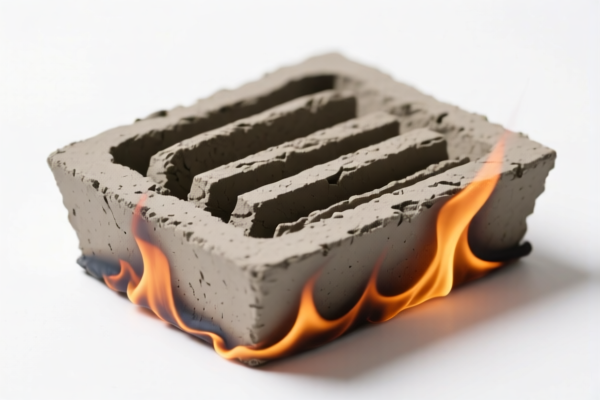
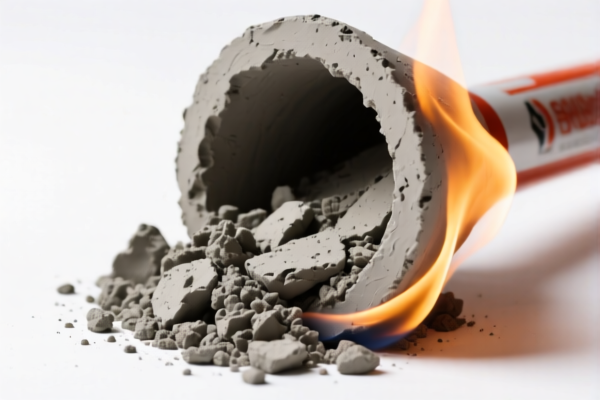
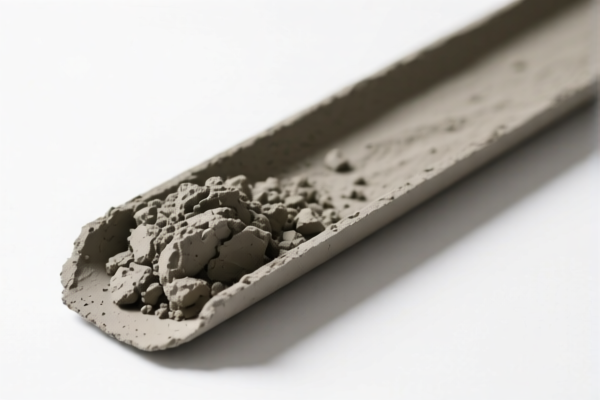

AI Analysis
🔥 High Viscosity Fireproof Mortar: HS Code Classification & US Customs Clearance Guide (2026)
🌐 HS Code Reference & Customs Strategy | 2026 Latest Tariff Analysis | Professional Clearance Protocol
📌 I. Product Definition & Classification: Is It "Refractory" or "Chemical"?
High Viscosity Fireproof Mortar is a specialized construction material used for sealing, coating, or bonding applications that require resistance to high temperatures. In international trade, the critical distinction lies in its primary function and composition:
- Refractory Materials (耐火材料): If the mortar is primarily composed of aluminum oxide (Al₂O₃) or other refractory aggregates and is designed for high-temperature insulation or structural integrity in kilns/furnaces. → HS Code 6902.20.10.20
- Mineral Products (矿物制品): If it is classified as a mixture of aluminum oxide/mineral compounds not primarily structured as a ceramic brick, often used for general fireproofing or chemical binding. → HS Code 2530.90.80.15
- Unspecified Minerals (未列名矿物质): If it contains bauxite or similar raw mineral materials without specific chemical refinement, falling under "Other mineral products." → HS Code 2530.90.80.50
- Chemical Preparations (化学制剂): If it is a specialized mortar for fireproof boards (non-refractory structural use) and is chemically engineered rather than purely mineral-based. → HS Code 3824.50.00.10 / 3824.50.00.50
⚠️ Critical Distinction Point:
- If the product is purely refractory (high Al₂O₃, for high heat) → 6902.20.10.20 (Higher Risk/Tariff).
- If the product is mineral-based (general fireproofing, less structured) → 2530.90.80.15 / 50 (Lower Risk/Tariff).
- If the product is chemical-based (for fireproof boards, non-structural refractory) → 3824.50.00.10/50 (High Risk/Tariff).
📦 II. HS Code Classification Matrix (2026 Latest Tariff Alignment)
| HS Code | Product Description | Key Characteristics | Typical Application |
|---|---|---|---|
6902.20.10.20 |
High Alumina Refractory Mortar | High Al₂O₃ content, classified as refractory ceramic material. | Kiln linings, furnace repairs, high-temp structural bonding. |
2530.90.80.15 |
Aluminum Oxide Mineral Mixture | Inorganic compound of aluminum oxide, not a finished refractory brick. | General fireproofing coating, industrial filler. |
2530.90.80.50 |
Unspecified Mineral Product | Contains bauxite or similar raw minerals; no specific chemical refinement. | Raw material mixing, non-specific mineral applications. |
3824.50.00.10 |
Fireproof Board Mortar (Chemical) | Chemical preparation, NOT a refractory material. | Bonding fireproof boards, non-structural fire resistance. |
3824.50.00.50 |
Fireproof Board Mortar (Chemical) | Alternative sub-heading for chemical preparations for fireproof boards. | Same as above, depending on specific chemical formulation. |
🔍 Key Reminder:
- "Fireproof" ≠ "Refractory". If it’s not designed for >1000°C structural use, avoid6902.
- Composition is King: High Al₂O₃ + Structural Intent =6902. Mineral Mix =2530. Chemical Bond =3824.
💰 III. 2026 US Tariff Rate Breakdown (Including Section 301 & IEEPA)
✅ Applicable Country: United States (US)
✅ Country of Origin: China (CN)
✅ Effective Date: Post-2025/11/10 (Includes subsequent imports)
🎯 1. 6902.20.10.20 – High Alumina Refractory Mortar
| Item | Details |
|---|---|
| Base Duty Rate | 0.0% (ad valorem) |
| Section 301 Duty | +25.0% (USITC Footnote 9903.88.01) |
| IEEPA Surcharge | +10.0% (Targeting China/HK products, effective 2025/11/10) |
| Total Duty Rate | 35.0% |
| Calculation Basis | CIF Value × 35% |
| De Minimis Exemption | ❌ Not Eligible (deny_de_minimis) |
| Legal Pathway | IEEPA:9903.01.25 → IEEPA:9903.01.24 → USITC:6902.20.10.20 → FOOTNOTE:9903.88.01 |
📌 Explanation:
- Despite being a "refractory ceramic," it is subject to the full 35% total tariff due to Section 301 and IEEPA provisions.
- This is the highest risk category if misclassified, as it attracts the maximum additional duties.
🎯 2. 2530.90.80.15 – Aluminum Oxide Mineral Mixture
| Item | Details |
|---|---|
| Base Duty Rate | 0.0% (ad valorem) |
| Section 301 Duty | 0.0% |
| IEEPA Surcharge | +10.0% |
| Total Duty Rate | 10.0% |
| Calculation Basis | CIF Value × 10% |
| De Minimis Exemption | ❌ Not Eligible (deny_de_minimis) |
| Legal Pathway | IEEPA:9903.01.25 → USITC:2530.90.80.15 |
📌 Advantage:
- Significant Savings: Only 10% vs. 35%.
- Justification: Must prove the product is an inorganic mineral compound rather than a structured refractory ceramic. Ideal for loose powders or non-ceramic mixes.
🎯 3. 2530.90.80.50 – Unspecified Mineral Product (Bauxite-based)
| Item | Details |
|---|---|
| Base Duty Rate | 0.0% (ad valorem) |
| Section 301 Duty | 0.0% |
| IEEPA Surcharge | +10.0% |
| Total Duty Rate | 10.0% |
| Calculation Basis | CIF Value × 10% |
| De Minimis Exemption | ❌ Not Eligible (deny_de_minimis) |
| Legal Pathway | IEEPA:9903.01.25 → USITC:2530.90.80.50 |
📌 Advantage:
- Same 10% Rate: Similar to2530.90.80.15.
- Justification: Best if the mortar contains significant amounts of bauxite or raw mineral aggregates without high-temperature sintering.
🎯 4. 3824.50.00.10 & 3824.50.00.50 – Fireproof Board Mortar (Chemical)
| Item | Details |
|---|---|
| Base Duty Rate | 0.0% (ad valorem) |
| Section 301 Duty | +25.0% (USITC Footnote 9903.88.01) |
| IEEPA Surcharge | +10.0% |
| Total Duty Rate | 35.0% |
| Calculation Basis | CIF Value × 35% |
| De Minimis Exemption | ❌ Not Eligible (deny_de_minimis) |
| Legal Pathway | IEEPA:9903.01.25 → IEEPA:9903.01.24 → USITC:3824.50.00.10/50 → FOOTNOTE:9903.88.01 |
📌 Warning:
- High Cost Again: These chemical preparations for fireproof boards are NOT exempt from Section 301.
- Why? They are classified as "Chemical Preparations" but are still targeted under trade restrictions.
- Use Case: Only if the product is clearly a chemical adhesive for boards, not a refractory material.
🛠️ IV. Customs Clearance Practical Advice (Pitfall Avoidance Guide)
✅ 1. Required Documentation Checklist (Mandatory)
| Document | Required | Notes |
|---|---|---|
| ✅ Product Specification Sheet | ✔️ | Must list chemical composition (e.g., % Al₂O₃), viscosity, and intended use (e.g., "for fireproof boards" vs. "for furnace lining"). |
| ✅ Material Safety Data Sheet (MSDS) | ✔️ | Confirms chemical vs. mineral nature. |
| ✅ Product Photos | ✔️ | Show packaging, labeling, and texture. Distinguish between "powder" and "paste." |
| ✅ Commercial Invoice | ✔️ | Must clearly state: "High Viscosity Fireproof Mortar, HS Code [XXX.XX]" and "Made in China". |
| ✅ Certificate of Origin (CO) | ✔️ | Required for IEEPA assessment. |
| ✅ Declaration of Non-Refractory Nature | ✔️ | If claiming 2530, provide a technical letter stating it is NOT a refractory ceramic material (HS 6902). |
✅ 2. Declaration Strategy (Key Keywords)
🔥 Golden Rule: "Define by Composition, Not Just Function!"
| Scenario | Correct Declaration | Incorrect Declaration | Consequence |
|---|---|---|---|
| High Al₂O₃, for furnaces | 6902.20.10.20: High Alumina Refractory Mortar |
"Fireproof Paste" | ✅ Correct (35%) |
| Mineral Mix, for coating | 2530.90.80.15: Aluminum Oxide Mineral Compound |
"Refractory Mortar" | ❌ Risk of Re-classification to 6902 → 35% |
| Bauxite-based, general use | 2530.90.80.50: Unspecified Mineral Product |
"Chemical Mortar" | ✅ Correct (10%) |
| Chemical bond, for boards | 3824.50.00.10: Fireproof Board Mortar (Chemical) |
"Mineral Mortar" | ❌ Risk of Misclassification |
📌 Pro Tip:
- If you want 10% duty, ensure your product description emphasizes "Mineral Compound" or "Unspecified Mineral" and avoids words like "Refractory Brick/Mortar" unless legally justifiable.
- If you use "Refractory" in the name, Customs will likely assign 6902.20.10.20 (35%).
✅ 3. Special Cases & Handling
| Situation | Handling Advice |
|---|---|
| Mixed Shipment | If one shipment contains both refractory (6902) and mineral (2530) mortars, declare separately. Do not combine under one HS code. |
| OEM Custom Formula | Provide a Letter of Guarantee from the manufacturer stating the exact % of Al₂O₃ and whether it is sintered (ceramic) or mixed (mineral). |
| Viscosity Labeling | High viscosity does not change HS code. It is a physical property. Focus on composition. |
| Fireproof vs. Refractory | "Fireproof" is a performance claim. "Refractory" is a material class. If it doesn't withstand >1000°C structurally, argue for 2530 or 3824. |
🌍 V. Global Market Comparison (2026 Update)
| Market | Recommended HS Code | Duty Rate | Key Certification | Notes |
|---|---|---|---|---|
| 🇺🇸 USA | 2530.90.80.15 or 50 |
10% | None | Best for 10% rate. Avoid 6902 unless necessary. |
| 🇨🇳 China | 2530.90.80.15 |
5% | None | Low entry barrier. |
| 🇪🇺 EU | 2530.90.80 |
6.5% | REACH | No Section 301/IEEPA. |
| 🇦🇺 Australia | 2530.90.80 |
5% | N/A | Competitive. |
| 🇯🇵 Japan | 2530.90.80 |
0-5% | JIS | Varies by specific sub-heading. |
📌 Conclusion:
- USA is the most costly market due to Section 301 and IEEPA.
- Strategic Choice: If your product allows, classify as Mineral Product (2530) to save 25% vs. Refractory (6902) or Chemical (3824).
📌 VI. Common Errors & Pitfalls (Blood Lessons)
❌ Error 1: Declaring "High Alumina Mortar" as 2530.90.80.15 when it is structurally refractory.
👉 Consequence: Customs audit → Re-classified to 6902.20.10.20 → Pay 35% instead of 10% + penalties.
❌ Error 2: Using "Fireproof Board Mortar" (3824) for a high-temp refractory product.
👉 Consequence: Misclassification → Goods seized or fined for false declaration.
❌ Error 3: Ignoring IEEPA Surcharge.
👉 Consequence: Even if Base Duty is 0%, the 10% IEEPA applies. Many brokers forget this.
❌ Error 4: Assuming "Mortar" is always 3824.
👉 Consequence: If it's mineral-based, 2530 is cheaper (10% vs 35%).
✅ Correct Approach:
"High Viscosity Mortar, Mineral Compound (Not Refractory), for Fireproof Coating, Made in China, HS Code: 2530.90.80.15"
🎯 VII. Conclusion: Smart Classification Saves 25%
🎯 Remember the Formula:
🔹 "Mineral Mix = 10% | Refratory/Chemical = 35%"
🔹 "If you can justify it as Mineral (2530), do it. It’s a $25,000 saving on every $100,000 shipment."
🔹 "Never use 'Refractory' in the description unless you are ready to pay 35%."
📌 Pro Tip:
If your product is non-chinese origin (e.g., Vietnam, Thailand), check for IEEPA Exemptions. You may qualify for 0-5% duty.
For US imports, always pre-clear HS Code with a licensed customs broker to avoid delays.
📣 Immediate Action:
📞 Contact your customs broker + Provide Composition Report + Request Advance Ruling for
2530.90.80.15
🚀 Save costs, clear customs, maximize profit!
✨ Professional Clearance Starts with Precision!
💼 Every Dollar of Tariff is Calculated!
Customer Reviews
About HS Code Classification
The Harmonized System (HS) is an internationally standardized nomenclature developed by the World Customs Organization (WCO) to classify traded products. Over 200 countries use the HS system as the basis for customs tariffs, trade statistics, and import/export regulations.
Each HS code follows a hierarchical structure:
- Chapter (2 digits) — Broad category of goods (e.g., Chapter 84: Machinery and Mechanical Appliances)
- Heading (4 digits) — More specific grouping within the chapter
- Subheading (6 digits) — Internationally standardized breakdown, used by all WCO member countries
- National subdivisions (8-10 digits) — Country-specific extensions for further classification, such as US HTSUS 10-digit codes
Correct HS code classification is essential for smooth customs clearance, accurate duty payment, and compliance with trade regulations. Misclassification can lead to customs delays, overpayment of duties, or penalties.
When importing from CN to US, the applicable tariff rates may include:
- Most-Favored-Nation (MFN) rate — The standard duty rate applied to WTO members
- General rate — Applied to countries without trade agreements
- Trade remedy duties — Additional tariffs such as Section 301 (anti-dumping), Section 232 (national security), or countervailing duties
The information provided on this page is for reference purposes only. For official classification, please consult with your local customs authority or a licensed customs broker.