High Viscosity Refractory Mortar
CN → US| HS Code | Tariff Rate | Origin | Destination | Doc |
|---|---|---|---|---|
| 3816002010 | 38.0% | CN | US | Official Doc |
| 3816002050 | 38.0% | CN | US | Official Doc |
Product Images
AI Analysis
🏭 High Viscosity Refractory Mortar
🌐 HS Code Reference & Customs Clearance Guide | 2026 Latest Tariff Analysis | Professional Clearance Strategy
📌 I. Product Definition & Classification: What Exactly is "High Viscosity Refractory Mortar"?
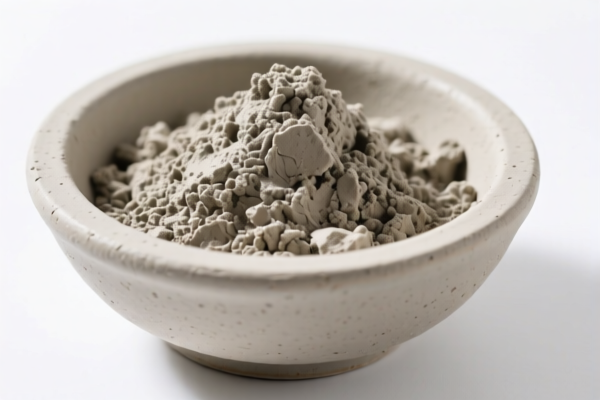
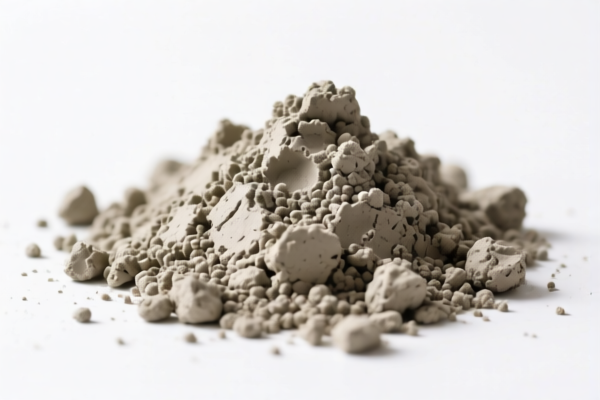
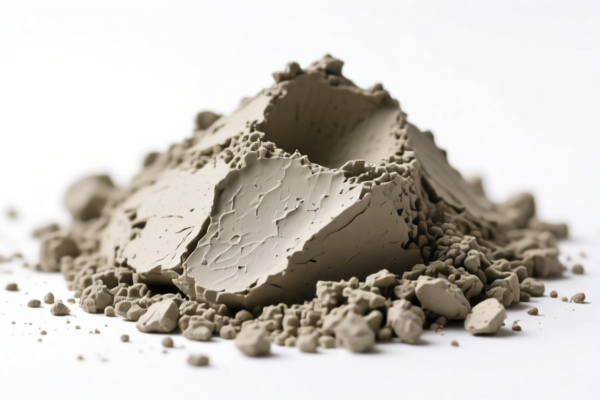
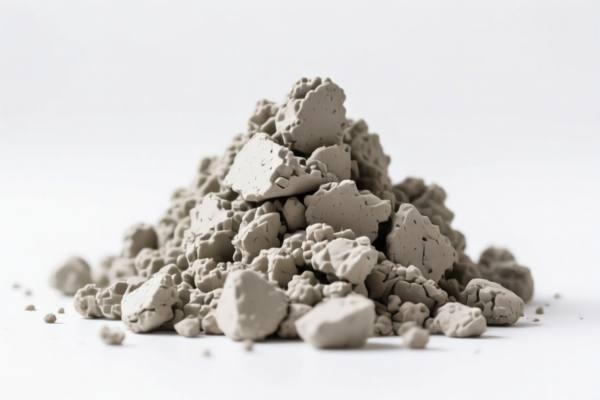
Refractory Mortars are specialized building materials used in high-temperature industrial applications (such as blast furnaces, kilns, and boilers). They are designed to bond refractory bricks together or line the interior of furnaces with a seamless, heat-resistant layer.
In international trade, "High Viscosity" refers to the physical consistency of the mortar (thick, paste-like, often ready-to-use or requiring minimal mixing water), distinguishing it from dry powders or low-viscosity slurries. However, for HS Code classification purposes, the physical state (viscosity) is less critical than the chemical composition and exclusions.
⚠️ Key Distinction Point:
- If the product contains dolomite ramming mix or specific clay-based refractory compositions NOT covered under Heading 3801, it falls under Chapter 3816.
- It is explicitly NOT a product of Heading 3801 (e.g., prepared binders for foundry molds).
- The classification hinges on whether it is "Other" (standard refractory cement/mortar) vs. specific excluded categories.
📦 II. HS Code Classification Details (2026 Latest Tariff Authority Comparison)
Based on the provided DATA, there are two primary HS Codes for this product category, differentiated by specific sub-descriptions under Heading 3816.
| HS Code | Product Description | Applicable Scenario | Tax Rate (US/CN) |
|---|---|---|---|
3816.00.20.10 |
Refractory cements, mortars, concretes and similar compositions, including dolomite ramming mix, other than products of heading 3801: Other Clay | Standard refractory mortars based on clay or similar non-specialized refractory bases. | 0.0% |
3816.00.20.50 |
Refractory cements, mortars, concretes and similar compositions, including dolomite ramming mix, other than products of heading 3801: Other Other | "Other" refractory materials not falling under "Other Clay." This often includes high-alumina, magnesia-chrome, or specialized high-viscosity mortars that do not fit the "Clay" descriptor. | 28.0% |
🔍 Critical Insight:
- The term "High Viscosity" itself does not automatically determine the HS code.
- You must determine the base material. If the mortar is primarily clay-based, it likely falls under3816.00.20.10.
- If it is a specialized refractory composition (e.g., high-alumina, zirconia, or other ceramic binders) that does not fit the "Clay" definition, it falls under3816.00.20.50.
- Misclassification Risk: Declaring a high-alumina mortar as "Clay" (3816.00.20.10) to save taxes will result in heavy penalties if audited.
💰 III. 2026 Latest Tariff Rate Breakdown (Detailed Tax Clauses)
✅ Applicable Country: United States (US)
✅ Origin: China (CN)
✅ Validity: Current rates as per provided DATA
🎯 1. HS Code 3816.00.20.10 —— Refractory Mortars (Other Clay)
| Item | Content |
|---|---|
| Base Tariff | 0.0% |
| Additional Tariff | 0.0% |
| Total Tariff Rate | 0.0% |
| Tax Calculation | CIF Value × 0% = $0 |
| De Minimis Eligibility | ✅ Yes (Generally, low-value shipments may qualify, but industrial bulk shipments require full declaration) |
| Legal Basis Path | HTSUS:3816.00.20.10 → Base Rate: 0% |
📌 Explanation:
- This code benefits from a 0% tariff rate, making it highly competitive for clay-based refractory products.
- No Section 301 tariffs or IEEPA surcharges are listed for this specific sub-code in the provided data.
- Recommendation: If your product is indeed clay-based, ensure your Certificate of Analysis (CoA) clearly states the clay content to justify this 0% rate.
🎯 2. HS Code 3816.00.20.50 —— Refractory Mortars (Other Other)
| Item | Content |
|---|---|
| Base Tariff | 3.0% |
| Additional Tariff | 25.0% |
| Total Tariff Rate | 28.0% |
| Tax Calculation | CIF Value × 28% |
| De Minimis Eligibility | ❌ No (High-value industrial goods; de minimis exemption does not apply) |
| Legal Basis Path | HTSUS:3816.00.20.50 → Base: 3.0% + Section 301: 25.0% |
📌 Explanation:
- The 25.0% additional tariff is typically attributed to Section 301 duties on Chinese goods.
- The 3.0% base tariff is the standard Most Favored Nation (MFN) rate.
- Combined Total: 28.0%. This is a significant cost factor.
- Warning: This code applies to refractory materials that are NOT classified under "Other Clay." If you use this code for a clay-based product, you may be overpaying. If you use3816.00.20.10for a non-clay product, you face fraud risks.
🛠️ IV. Customs Clearance Practical Advice (Avoiding Pitfalls)
✅ 1. Document Checklist (Non-Negotiable)
| Document | Required | Notes |
|---|---|---|
| ✅ Product Specification Sheet | ✔️ | Must detail chemical composition (e.g., % Al2O3, % SiO2, Clay content) |
| ✅ Material Safety Data Sheet (MSDS) | ✔️ | Required for handling and classification |
| ✅ Commercial Invoice | ✔️ | Must clearly state: "High Viscosity Refractory Mortar for Industrial Furnaces" |
| ✅ Certificate of Analysis (CoA) | ✔️ | Crucial: Proves the material composition (Clay vs. Other) to support HS Code selection |
| ✅ Packing List | ✔️ | Net weight/Gross weight, number of bags/containers |
| ✅ Brand/Model Number | ✔️ | Helps customs verify the product identity |
✅ 2. Declaration Tips (Key Mnemonic)
🔥 “Viscosity is physical, Composition is King. Clay = 0%, Other = 28%!”
| Scenario | Correct Declaration | Incorrect Declaration | Consequence |
|---|---|---|---|
| Clay-based mortar | 3816.00.20.10 |
3816.00.20.50 |
Overpayment of 28% |
| High-Alumina/Zirconia mortar | 3816.00.20.50 |
3816.00.20.10 |
Fraud/Penalty + Back Taxes + Interest |
| Dry Powder Mortar | Check Heading 3816 vs. 2523 | Confusing "Mortar" with "Cement" | Potential misclassification under Heading 2523 (Portland Cement) |
| Pre-mixed with Binders | Ensure it's not Heading 3801 | Declaring as 3801 | Incorrect exclusion; 3816 is correct for refractory use |
✅ 3. Special Circumstances
| Situation | Handling Advice |
|---|---|
| Mixed Shipment | If you ship both clay-based and high-alumina mortars, declare them separately with distinct HS Codes. Do not blend into one line item. |
| Sample Shipments | Even small quantities must be declared correctly. Do not use "Sample" as a reason to misclassify. |
| Dolomite Ramming Mix | Explicitly mentioned in the HS description. Ensure this is included in the product name if applicable. |
| Origin Labeling | Clearly mark "Made in China" on all packages to avoid origin-related scrutiny. |
🌍 V. Global Market Comparison (2026 Latest)
| Country/Region | Recommended HS Code | Tariff Rate | Certification | Notes |
|---|---|---|---|---|
| 🇺🇸 USA | 3816.00.20.10 (Clay) |
0.0% | None specific | Best rate if clay-based |
| 🇺🇸 USA | 3816.00.20.50 (Other) |
28.0% | None specific | High cost for non-clay |
| 🇪🇺 EU | 3816 00 90 | Varies | REACH | Generally lower duties than US |
| 🇨🇳 China | 3816 00 20 | 0% - 5% | N/A | Export-friendly |
| 🇮🇳 India | 3816 00 20 | ~10-15% | BIS | Higher than US for clay |
📌 Conclusion:
- The US market offers a 0% tariff for clay-based refractory mortars (3816.00.20.10), which is a major advantage.
- For non-clay specialized mortars, the 28% total tariff is a significant barrier. Consider supply chain adjustments or duty drawback programs if applicable.
📌 VI. Common Errors & Pitfalls (Blood & Tears Lessons)
❌ Error 1: Assuming "High Viscosity" means a different HS Code
👉 Result: No change in tariff. Viscosity is a physical property, not a chemical classification.
❌ Error 2: Declaring High-Alumina Mortar as "Clay" (3816.00.20.10) to save taxes
👉 Result: Customs audit → 28% back payment + 25% penalty + Interest.
❌ Error 3: Not providing a Certificate of Analysis (CoA)
👉 Result: Customs cannot verify composition → Goods detained or rejected.
❌ Error 4: Confusing Refractory Mortar with Portland Cement (Heading 2523)
👉 Result: Wrong classification → Delays and re-filing fees. Refractory mortars are specifically excluded from Heading 2523 if they meet 3816 criteria.
✅ Correct Approach:
“Refractory Mortar, High Viscosity, Based on [Material, e.g., Fire Clay], for Blast Furnace Lining, CoA Attached.”
🎯 VII. Conclusion: Professional Declaration, Cost Savings, Compliance
🎯 Remember the Mantra:
🔹 “Clay is 0%, Other is 28%. Composition is King, Viscosity is King’s Messenger.”
🔹 “HS Code Determines Tax, Tax Determines Profit. Declare Accurately, Avoid Audits.”
📌 Pro Tip:
If your refractory mortar is high-alumina or specialized, and the 28% tariff is too high, consult a customs broker about duty drawback or special manufacturing zones.
For clay-based mortars, ensure your CoA explicitly states "Fire Clay" to secure the 0% rate.
📣 Immediate Action:
📞 Contact your customs broker + Provide Certificate of Analysis (CoA) + Confirm Base Material
🚀 Ensure your High Viscosity Refractory Mortar clears customs smoothly, tax-efficiently, and without delays!
✨ Professional Clearance Starts with Precise Classification!
💼 Your Cost is Calculated Down to the Penny!
Customer Reviews
About HS Code Classification
The Harmonized System (HS) is an internationally standardized nomenclature developed by the World Customs Organization (WCO) to classify traded products. Over 200 countries use the HS system as the basis for customs tariffs, trade statistics, and import/export regulations.
Each HS code follows a hierarchical structure:
- Chapter (2 digits) — Broad category of goods (e.g., Chapter 84: Machinery and Mechanical Appliances)
- Heading (4 digits) — More specific grouping within the chapter
- Subheading (6 digits) — Internationally standardized breakdown, used by all WCO member countries
- National subdivisions (8-10 digits) — Country-specific extensions for further classification, such as US HTSUS 10-digit codes
Correct HS code classification is essential for smooth customs clearance, accurate duty payment, and compliance with trade regulations. Misclassification can lead to customs delays, overpayment of duties, or penalties.
When importing from CN to US, the applicable tariff rates may include:
- Most-Favored-Nation (MFN) rate — The standard duty rate applied to WTO members
- General rate — Applied to countries without trade agreements
- Trade remedy duties — Additional tariffs such as Section 301 (anti-dumping), Section 232 (national security), or countervailing duties
The information provided on this page is for reference purposes only. For official classification, please consult with your local customs authority or a licensed customs broker.