High Viscosity Transparent Tape
CN → US| HS Code | Tariff Rate | Origin | Destination | Doc |
|---|---|---|---|---|
| 3919102040 | 40.8% | CN | US | Official Doc |
| 3919905040 | 40.8% | CN | US | Official Doc |
| 3921904090 | 39.2% | CN | US | Official Doc |
| 5903102090 | 35.0% | CN | US | Official Doc |
| 3919102040 | 40.8% | CN | US | Official Doc |
Product Images
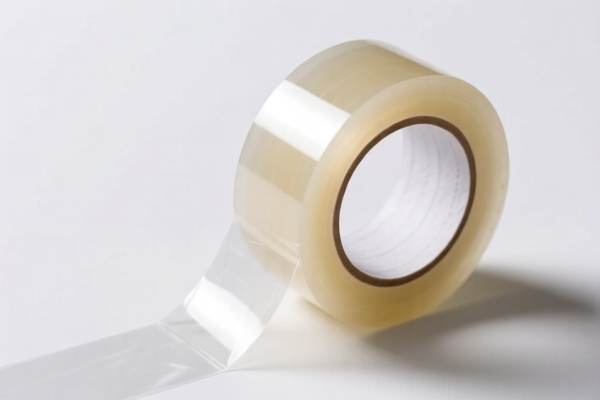
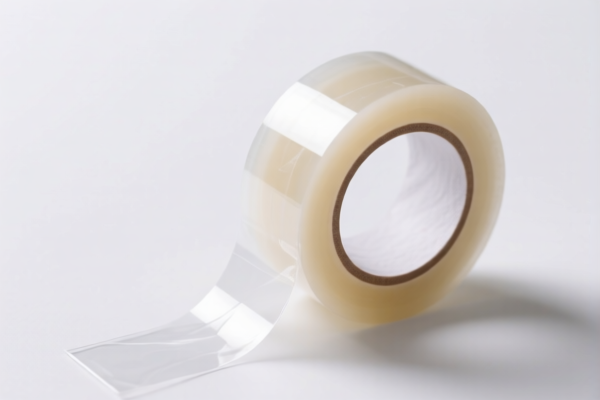
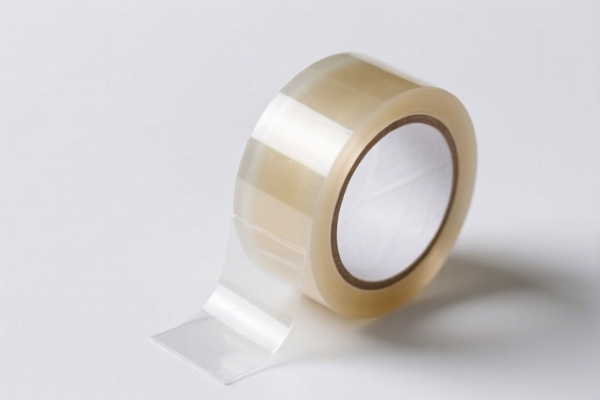
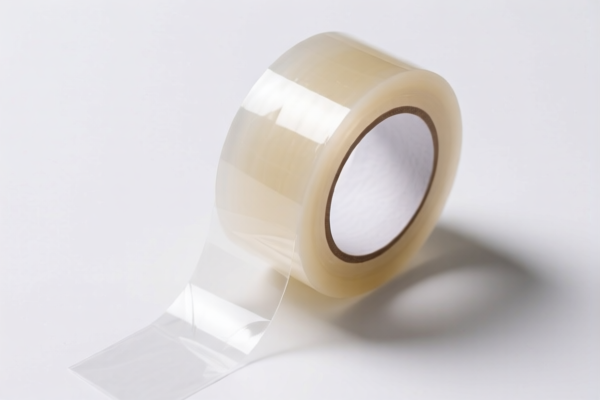
AI Analysis
📦 High Viscosity Transparent Tape: HS Code Classification & US Customs Clearance Guide (2026)
🌐 HS Code Reference & Customs Clearance Strategy | 2026 Latest Tariff Analysis | Professional Clearance Tactics
📌 I. Product Definition & Classification: What is "High Viscosity Transparent Tape"?
"High Viscosity Transparent Tape" typically refers to strong-adhesive clear tapes (such as heavy-duty packing tape, reinforced filament tape, or high-tack acrylic tapes). In international trade, the classification hinges on three core factors: 1. Material: Usually plastic (PP, PET, PVC) or paper backing with adhesive. 2. Form: Roll, flat, strip. 3. Function: Self-adhesive (no heat activation required).
⚠️ Key Distinction Point: - If the tape is primarily plastic-based and self-adhesive → Usually Chapter 39 (Plastics). - If the tape has a textile/fabric base coated with plastic → Possibly Chapter 59 (Impregnated Textiles) or Chapter 39 depending on the dominant material. - "High Viscosity" is a performance descriptor; it does not change the basic material classification unless it implies a specific industrial coating process distinct from standard adhesive tapes.
📊 II. HS Code Classification Details (2026 Latest Tariff Authority Comparison)
Based on the provided data, here are the four most relevant HS Codes for High Viscosity Transparent Tape, ranked by classification logic and tax efficiency.
| HS Code | Product Description | Classification Logic | Total Tax Rate |
|---|---|---|---|
| 3919.10.20.40 | Self-adhesive plates, sheets, film, tape, rolls & strips of plastics Transparent tape | ✅ Best Match: Explicitly matches "Transparent Tape" (塑料/透明胶带). High viscosity is a performance trait within this category. | 40.8% |
| 3919.90.50.40 | Self-adhesive plates, sheets, film, tape, rolls & strips of plastics Other (includes low-viscosity/performance descriptors) | ✅ Strong Match: "Transparent tape" is explicitly named in classification notes. "Low viscosity" in the note implies performance variations don't shift the code. | 40.8% |
| 3921.90.40.90 | Other plates, sheets, film, foil & strip, of plastics Other (Film/Strip) | ⚠️ Alternative: If classified as a "Plastic Film" rather than "Adhesive Tape". Matches material (PET/PP film) but may not capture the adhesive nature. | 39.2% |
| 5903.10.20.90 | Textile fabrics impregnated, coated, covered or laminated with plastics, PVC Other | ⚠️ Special Case: If the tape has a textile/fabric backing (e.g., packing tape with fabric reinforcement) and is plastic-coated. | 35.0% |
🔍 Key Insight: - 3919.10.20.40 is the most precise for standard clear plastic tapes. - 5903.10.20.90 is only applicable if the base material is textile/fabric, not pure plastic. - 3921.90.40.90 is a fallback if the adhesive function is secondary to the film property (rare for "tape").
💰 III. 2026 Latest Tariff Rate Breakdown (Including Surtaxes & Policy Add-ons)
✅ Applicable Country: United States (US)
✅ Origin: China (CN)
✅ Effective Date: November 10, 2025 (and subsequent imports)
🎯 1. 3919.10.20.40 – Self-adhesive Plastic Tape (Transparent)
| Item | Details |
|---|---|
| Base Tariff | 5.8% (Ad Valorem) |
| Section 301 Surcharge | +25.0% (USITC Footnote for Chinese plastics) |
| IEEPA Surcharge | +10.0% (China/HK specific, effective Nov 2025) |
| Total Tax Rate | 40.8% |
| Tax Calculation | CIF Value × 40.8% |
| De Minimis Exemption? | ❌ NO (Denied under Section 301/IEEPA) |
| Legal Basis Path | IEEPA:9903.01.25 → IEEPA:9903.01.24 → USITC:3919.10.20.40 → FOOTNOTE:301 |
📌 Explanation: - The 25% Section 301 tariff applies to most plastic products from China. - The 10% IEEPA is an additional national security-related surcharge on Chinese goods. - Total: 40.8% is a significant cost factor. Must be factored into pricing.
🎯 2. 3919.90.50.40 – Self-adhesive Plastic Tape (Other/Performance Variants)
| Item | Details |
|---|---|
| Base Tariff | 5.8% |
| Section 301 Surcharge | +25.0% |
| IEEPA Surcharge | +10.0% |
| Total Tax Rate | 40.8% |
| Tax Calculation | CIF Value × 40.8% |
| De Minimis Exemption? | ❌ NO |
| Legal Basis Path | IEEPA:9903.01.25 → IEEPA:9903.01.24 → USITC:3919.90.50.40 → FOOTNOTE:301 |
📌 Note: - Even if the tape is described as "low viscosity" or has specific performance traits, if it’s still a self-adhesive plastic tape, it often falls under this or 3919.10. - The tax rate is identical to 3919.10.20.40.
🎯 3. 3921.90.40.90 – Other Plastic Film/Strip
| Item | Details |
|---|---|
| Base Tariff | 4.2% |
| Section 301 Surcharge | +25.0% |
| IEEPA Surcharge | +10.0% |
| Total Tax Rate | 39.2% |
| Tax Calculation | CIF Value × 39.2% |
| De Minimis Exemption? | ❌ NO |
| Legal Basis Path | IEEPA:9903.01.25 → IEEPA:9903.01.24 → USITC:3921.90.40.90 → FOOTNOTE:301 |
📌 Caution: - This code offers a 1.6% savings compared to 3919 codes. - However, it must accurately reflect the product as a "plastic strip/film" rather than an "adhesive tape." Misclassification can lead to penalties.
🎯 4. 5903.10.20.90 – Textile Fabric Impregnated with Plastic
| Item | Details |
|---|---|
| Base Tariff | 0.0% |
| Section 301 Surcharge | +25.0% |
| IEEPA Surcharge | +10.0% |
| Total Tax Rate | 35.0% |
| Tax Calculation | CIF Value × 35.0% |
| De Minimis Exemption? | ❌ NO |
| Legal Basis Path | IEEPA:9903.01.25 → IEEPA:9903.01.24 → USITC:5903.10.20.90 → FOOTNOTE:301 |
📌 Critical Condition: - This is the lowest tax rate (35.0%). - BUT it only applies if the tape’s base is textile/fabric (e.g., cloth-backed tape, reinforced packaging tape with fabric) and then coated/impregnated with plastic. - If it’s pure plastic (PP/PET), this code is incorrect and risky.
🛠️ IV. Customs Clearance Practical Advice (Avoiding Pitfalls)
✅ 1. Documentation Checklist (Mandatory)
| Document | Required? | Notes |
|---|---|---|
| ✅ Product Spec Sheet | ✔️ | Must specify: Material (PP/PET/Fabric), Adhesive Type, Viscosity/Tack Level, Roll Dimensions. |
| ✅ Product Photos | ✔️ | Clear images of the tape roll, core, and cross-section (if fabric-backed). |
| ✅ Commercial Invoice | ✔️ | Description should be precise: "High Viscosity Transparent Plastic Tape" or "Fabric-Reinforced Plastic Tape." |
| ✅ Packing List | ✔️ | Net/Gross weight, quantity, package dimensions. |
| ✅ Certificate of Origin | ✔️ | Required for origin verification (China). |
| ✅ Material Composition Statement | ✔️ | Crucial to distinguish between 3919 (Pure Plastic) and 5903 (Textile-Based). |
✅ 2. Declaration Tips (Key Rules)
🔥 “Material Defines Code, Viscosity Defines Sub-type”
| Scenario | Correct HS Code | Risk |
|---|---|---|
| Pure Plastic Tape (PP/PET) | 3919.10.20.40 |
Low risk if described as "Transparent Tape." |
| Performance Variants (e.g., High-Tack) | 3919.90.50.40 |
Low risk; performance doesn’t change material class. |
| Fabric-Reinforced Tape | 5903.10.20.90 |
High Risk: Must prove textile base. If misclassified as pure plastic, tax is higher (40.8% vs 35.0%). |
| Plastic Film Without Adhesive | 3921.90.40.90 |
High Risk: If it’s adhesive, it should be 3919. Misclassification can lead to duty evasion claims. |
✅ 3. Special Cases
| Situation | Handling Advice |
|---|---|
| OEM/Private Label Tape | Provide brand authorization and product specs to avoid ambiguity. |
| Multi-Purpose Tape | Declare the primary function. If it’s for packing, use 3919. |
| Sample Imports | Still subject to 35-40.8% tariffs. De Minimis ($800) does NOT apply. |
| Bulk Industrial Supply | Ensure HS code matches the exact material composition. |
🌍 V. Global Market Comparison (2026)
| Country/Region | Recommended HS Code | Tariff (China Origin) | Certification | Notes |
|---|---|---|---|---|
| 🇺🇸 USA | 3919.10.20.40 |
40.8% | N/A | Highest cost due to Section 301 + IEEPA. |
| 🇨🇳 China | 3919.10.20.40 |
5-8% | N/A | Lower domestic/import tax. |
| 🇪🇺 EU | 3919.10.90 |
6.5% (approx) | REACH, RoHS | No Section 301; lower than US. |
| 🇬🇧 UK | 3919.10.90 |
6.5% (approx) | UKCA, RoHS | Post-Brexit rates similar to EU. |
| 🇦🇺 Australia | 3919.10.00 |
5% | N/A | Lower than US. |
📌 Conclusion: - The US market is the most expensive for Chinese-made transparent tapes due to layered tariffs (Base + 301 + IEEPA). - Diversify supply chains (e.g., Vietnam, Malaysia) to avoid IEEPA/301 surcharges if targeting the US.
📌 VI. Common Errors & Pitfalls (Lessons Learned)
❌ Error 1: Classifying Fabric-Reinforced Tape as 3919 (Plastic)
👉 Consequence: Underpaying tax (35% vs 40.8%). If caught, back taxes + penalties.
👉 Correct: Use 5903.10.20.90 with proof of textile base.
❌ Error 2: Classifying Adhesive Tape as 3921 (Non-adhesive Film)
👉 Consequence: Underpayment of base tariff. If caught, audits and penalties.
👉 Correct: Use 3919 for adhesive tapes.
❌ Error 3: Assuming De Minimis ($800) applies
👉 Consequence: Seizure of goods. Section 301 and IEEPA goods are excluded from De Minimis.
👉 Correct: Declare fully, even for small shipments.
❌ Error 4: Vague Description ("Tape")
👉 Consequence: Customs delays, additional scrutiny.
👉 Correct: Use precise terms: "Self-adhesive Transparent Plastic Tape, PP Material, High Viscosity."
✅ Best Practice:
“High Viscosity Transparent Self-Adhesive Tape, Polypropylene (PP) Film, Roll 48mm x 100m, Strong Adhesive, Model XYZ, Made in China”
🎯 VII. Conclusion: Precision Saves Money
🎯 Key Takeaways:
🔹 “Material is King”: Pure Plastic →
3919; Fabric-Backed →5903.
🔹 “No De Minimis”: All Chinese plastic tapes are subject to 35-40.8% tariffs in the US.
🔹 “Declare Accurately”: Vague descriptions lead to delays and penalties.
🔹 “Check Origin”: Non-Chinese origins (Vietnam, etc.) may avoid IEEPA surcharges.
📌 Pro Tip:
For large volumes, consider Advanced Rulings from US Customs to confirm HS code classification.
If possible, sourcing from non-China origins can save 10-15% in taxes.
📣 Action Item:
📞 Consult a Licensed Customs Broker
📋 Prepare Material Composition Proof
🚀 Plan for 35-40.8% Tariff Cost in Budget
✨ Precision Classification = Cost Savings & Smooth Clearance
💼 Every Penny Counts in International Trade
Customer Reviews
About HS Code Classification
The Harmonized System (HS) is an internationally standardized nomenclature developed by the World Customs Organization (WCO) to classify traded products. Over 200 countries use the HS system as the basis for customs tariffs, trade statistics, and import/export regulations.
Each HS code follows a hierarchical structure:
- Chapter (2 digits) — Broad category of goods (e.g., Chapter 84: Machinery and Mechanical Appliances)
- Heading (4 digits) — More specific grouping within the chapter
- Subheading (6 digits) — Internationally standardized breakdown, used by all WCO member countries
- National subdivisions (8-10 digits) — Country-specific extensions for further classification, such as US HTSUS 10-digit codes
Correct HS code classification is essential for smooth customs clearance, accurate duty payment, and compliance with trade regulations. Misclassification can lead to customs delays, overpayment of duties, or penalties.
When importing from CN to US, the applicable tariff rates may include:
- Most-Favored-Nation (MFN) rate — The standard duty rate applied to WTO members
- General rate — Applied to countries without trade agreements
- Trade remedy duties — Additional tariffs such as Section 301 (anti-dumping), Section 232 (national security), or countervailing duties
The information provided on this page is for reference purposes only. For official classification, please consult with your local customs authority or a licensed customs broker.