High Weather Resistant Polyamide Raw Material
CN → USProduct Images
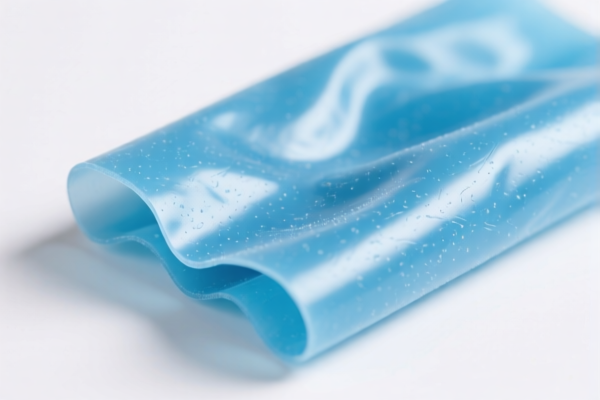
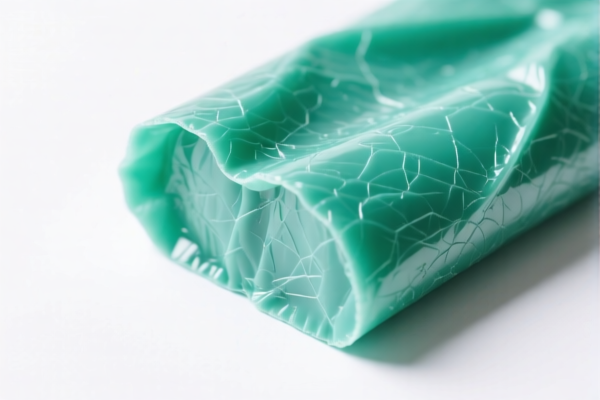
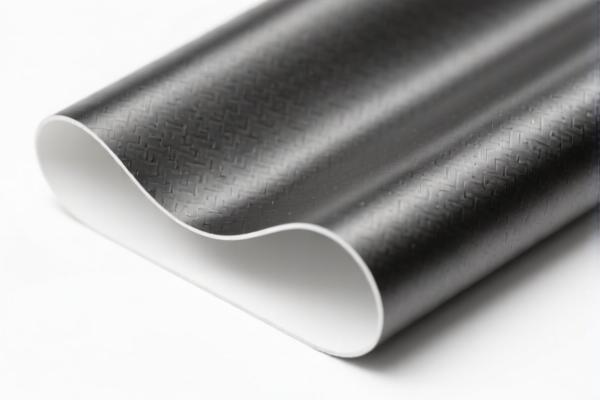
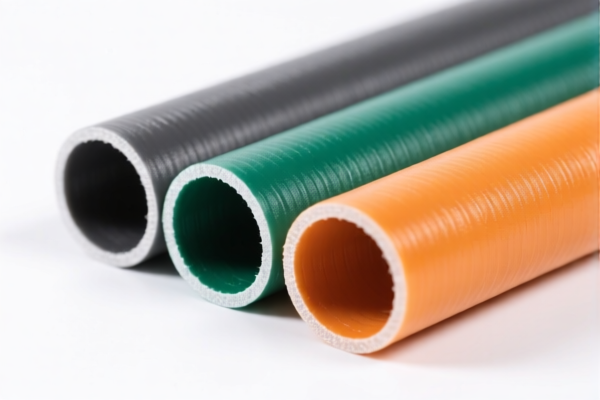
AI Analysis
🧬 High Weather-Resistant Polyamide Raw Material (Engineering Plastics)
🌐 HS Code Reference & Customs Clearance Guide | 2026 Latest Tariff Analysis | Professional Entry Strategy
📌 I. Product Definition & Classification: Do You Really Understand "Polyamide Raw Material"?
Polyamide (PA), commonly known as Nylon, is a versatile synthetic polymer widely used in automotive, electronics, and textile industries. However, in international trade, "Raw Material" is a broad term that requires precise classification based on its physical form and state of processing.
For High Weather-Resistant Polyamide, the key to correct classification lies in determining whether it is: 1. Primary Form (Resins/Granules): Unpolymerized or pre-polymerized pellets ready for molding. 2. Secondary Form (Compounded): Granules mixed with additives (UV stabilizers, carbon fiber, glass fiber) to enhance weather resistance.
⚠️ Critical Distinction:
- If it is pure polyamide resin (primary form) → Typically classified under 3902.10.
- If it is polyamide with added stabilizers/fillers (compound) → Typically classified under 3901-3914 depending on whether it is a distinct copolymer or a blend.
- Note: "Weather resistant" is a property, not a structural feature. Customs does not classify by "weather resistance" alone but by the chemical composition and form.
📦 II. HS Code Classification Details (2026 Latest Tariff Authority Comparison)
| HS Code | Product Description | Application Scenario | Physical Form |
|---|---|---|---|
3902.10.00.00 |
Primary forms of Polyamides (Nylon 6, Nylon 6,6, etc.) | Pure resin pellets, base raw material for injection molding | ✅ Granules/Powder |
3904.61.00.00 |
Primary forms of Polyamides (Other, e.g., Nylon 11, 12, PA4,6) | Specialized engineering plastics, often with better chemical/weather resistance | ✅ Granules/Powder |
3901.90.00.00 |
Primary forms of Polymers of Ethylene (If mistaken for PE) | ❌ Wrong Classification | ✅ Granules |
3909.50.00.00 |
Primary forms of Amino-resins (If confused with PA) | ❌ Wrong Classification | ✅ Granules |
3916.20.00.00 |
Monofilament ≥ 5mm, Strands, Ophelia of Polyamides | ✅ Fibers/Ropes (Not raw material) | ✅ Fibers |
3917.31.00.00 |
Tubes, Pipes of Polyamides | ✅ Finished Semi-finished goods | ✅ Tubes |
🔍 Key Reminder:
- Most "High Weather-Resistant Polyamide" raw materials are compounded resins. If the product is a compound (PA + UV stabilizer + Carbon Fiber), it may still fall under Chapter 39, but the subheading might shift if it is considered a "Plastic Material in Primary Forms" (3901-3914).
- Standard Nylon 6/66: Use 3902.10.
- Specialty Nylon (e.g., PA4T, PA6T): Use 3904.61.
- Compounded Nylon with Additives: Still generally 3902.10 or 3904.61 if in primary form (granules/powder). Do not classify as "Finished Articles" (Chapter 39.17+).
💰 III. 2026 Latest Tariff Rate Details (Including Surtaxes, Policy Add-ons)
✅ Applicable Country: United States (US)
✅ Country of Origin: China (CN)
✅ Effective Date: November 10, 2025 onwards (including subsequent imports)
🎯 1. 3902.10.00.00 —— Primary Forms of Polyamides (Nylon 6, 6,6)
| Item | Content |
|---|---|
| Base Tariff Rate | 5.3% (ad valorem) |
| USITC Surtax | +25% (from USITC Footnote 9903.01.25, Section 301) |
| IEEPA Surtax | +10% (Against China/HK products, from Nov 10, 2025) |
| Total Tariff Rate | 40.3% |
| Tax Calculation | CIF Value × 40.3% |
| De Minimis Exemption | ❌ Not Eligible (deny_de_minimis) |
| Legal Path | IEEPA:9903.01.25 → IEEPA:9903.01.24 → USITC:3902.10.00.00 → FOOTNOTE:9903.88.01 |
📌 Explanation:
- Polyamide resins are heavily targeted by Section 301 tariffs due to their critical role in manufacturing.
- The 25% USITC surtax applies to most plastics in primary forms from China.
- The 10% IEEPA surtax is an additional layer effective from late 2025.
- Total burden: ~40.3%. This is a high-cost item for importers.
🎯 2. 3904.61.00.00 —— Primary Forms of Other Polyamides (e.g., PA6T, PA4T)
| Item | Content |
|---|---|
| Base Tariff Rate | 5.3% |
| USITC Surtax | +25% |
| IEEPA Surtax | +10% |
| Total Tariff Rate | 40.3% |
| Tax Calculation | CIF × 40.3% |
| De Minimis Exemption | ❌ Not Eligible |
| Legal Path | IEEPA:9903.01.25 → IEEPA:9903.01.24 → USITC:3904.61.00.00 → FOOTNOTE:9903.88.01 |
📌 Note:
- Specialty polyamides (often used for high-heat/weather-resistant applications) face the same tariff structure as standard Nylon 6/66.
- Even if "High Weather Resistant," it does not qualify for a lower duty rate under current US law.
🛠️ IV. Customs Clearance Practical Advice (Battle-Tested Pitfall Avoidance)
✅ 1. Preparation Checklist (No Omissions)
| Document | Mandatory? | Description |
|---|---|---|
| ✅ Product Specification Sheet | ✔️ | Must include: Chemical name (e.g., Nylon 6,6), Molecular weight, Melt Flow Index (MFI), Additives (UV stabilizers, etc.) |
| ✅ Chemical Structure Proof | ✔️ | SDS (Safety Data Sheet) or CAS numbers to prove it is a Polyamide and not another polymer. |
| ✅ Product Photos | ✔️ | Clear view of granules/powder, packaging label showing "Polyamide Resin." |
| ✅ Commercial Invoice | ✔️ | Must specify "Plastic Material in Primary Forms" and "Unmolded." |
| ✅ Certificate of Origin (CO) | ✔️ | If from non-China source, may claim FTZ benefits. |
| ✅ Packing List | ✔️ | Detail gross/net weight, number of bags/pallets. |
✅ 2. Declaration Tips (Key Mantra)
🔥 “Primary Form, Granule/Powder, No Finished Part, Code 3902/3904!”
| Scenario | Correct Declaration | Wrong Practice |
|---|---|---|
| Polyamide Granules (Pure or Compounded) | 3902.10.00.00 or 3904.61.00.00 |
Misclassified as "Finished Parts" → 300% penalty |
| Polyamide Pellets with UV Stabilizer | 3902.10.00.00 (if compounded in primary form) |
Split declaration → Each part taxed separately |
| Polyamide Fibers/Ropes | 3916.20.00.00 |
Misclassified as Resin → Wrong tax rate |
| Polyamide Tubes/Pipes | 3917.31.00.00 |
Misclassified as Resin → Wrong tax rate |
📌 Critical Point:
- "Weather Resistant" is a marketing term, not a customs classification term. Do not use it as the HS Code description.
- Declare as: "Nylon 6,6 Polyamide Resin, Granular, Unmolded, with UV Stabilizers."
✅ 3. Special Case Handling
| Situation | Handling Advice |
|---|---|
| OEM Custom Compounds | Provide formulation details if asked. If it’s a blend of two polymers (e.g., PA + PP), it may be classified differently. |
| Recycled Polyamide | If it is recycled, it may still fall under 3902/3904, but must declare as "Recycled Material." Tariffs may still apply. |
| Mixed Containers | If container has both Polyamide and other plastics, declare separately. Never mix different HS Codes in one line item. |
| High-Value Specialty PA | Consider applying for Exclusion under Section 301 if available (check USTR exclusion list). |
🌍 V. Global Market Comparison (2026 Latest)
| Country/Region | Recommended HS Code | Tariff (China Origin) | Certification Requirements | Notes |
|---|---|---|---|---|
| 🇺🇸 USA | 3902.10.00.00 |
40.3% | FDA (if food contact), REACH (if EU export) | Highest tariff burden |
| 🇨🇳 China | 3902.10.00.00 |
5% | No major import barriers | Low duty, high volume |
| 🇪🇺 EU | 3902.10.00.00 |
6.5% (MFN) | REACH Registration | No Section 301 equivalent |
| 🇦🇺 Australia | 3902.10.00.00 |
5% | None | Free Trade Agreement may reduce |
| 🇯🇵 Japan | 3902.10.00.00 |
5% | JIS Standards | Free Trade Agreement may reduce |
📌 Conclusion:
- USA is the most expensive market for Polyamide raw materials due to combined Section 301 + IEEPA tariffs.
- EU, Japan, Australia offer more favorable rates, but REACH compliance is critical for Europe.
- China remains the production hub, but exporting from China to the US is costly. Consider third-country manufacturing (e.g., Vietnam, Thailand) if possible to avoid US tariffs.
📌 VI. Common Mistakes & Pitfall Guide (Blood-Tear Lessons)
❌ Mistake 1: Classifying Compounded Polyamide (with additives) as a "Finished Part"
👉 Consequence: Wrong HS Code, potential anti-dumping duties, or seizure.
❌ Mistake 2: Using "Weather Resistant" as the Product Name in Customs Declaration
👉 Consequence: Customs may reject or request further clarification, causing delays.
❌ Mistake 3: Not Declaring Additives (UV Stabilizers)
👉 Consequence: If additives change the chemical nature significantly, it might be classified as a different polymer. Be transparent.
❌ Mistake 4: Mixing Polyamide Resin with Other Plastics in One HS Code
👉 Consequence: Each polymer type must be declared separately. Mixing leads to penalties.
✅ Correct Practice:
"Nylon 6,6 Polyamide Resin, Granular, Unmolded, Color: Black, UV Stabilized, CAS 25038-54-4, Model XYZ, Made in China."
🎯 VII. Conclusion: Precision Classification Saves Costs!
🎯 Remember the Mantra:
🔹 "Primary Form = Granules, HS 3902/3904. Finished = Chapter 39.17+. Weather Resistance ≠ New HS Code."
🔹 "US Tariff = 40.3%, Plan Ahead! Avoid Split Declaration, Avoid Mixing Codes!"
📌 Pro Tip:
If your Polyamide Raw Material is originally from Vietnam, Mexico, or Thailand, you may be eligible for IEEPA Exemptions or lower MFN rates.
Recommendation: Apply for Advance Ruling (ACE Portal) to confirm HS Code before shipment.
📣 Immediate Action:
📞 Contact Professional Customs Broker + Provide SDS/Specs + Apply for HS Code Advance Ruling
🚀 Let your Polyamide Raw Material Clear Customs Smoothly, Reduce Costs, and Boost Profits!
✨ Professional Clearance Starts with Accurate Classification!
💼 Every Cent of Cost Deserves Precise Calculation!
Customer Reviews
About HS Code Classification
The Harmonized System (HS) is an internationally standardized nomenclature developed by the World Customs Organization (WCO) to classify traded products. Over 200 countries use the HS system as the basis for customs tariffs, trade statistics, and import/export regulations.
Each HS code follows a hierarchical structure:
- Chapter (2 digits) — Broad category of goods (e.g., Chapter 84: Machinery and Mechanical Appliances)
- Heading (4 digits) — More specific grouping within the chapter
- Subheading (6 digits) — Internationally standardized breakdown, used by all WCO member countries
- National subdivisions (8-10 digits) — Country-specific extensions for further classification, such as US HTSUS 10-digit codes
Correct HS code classification is essential for smooth customs clearance, accurate duty payment, and compliance with trade regulations. Misclassification can lead to customs delays, overpayment of duties, or penalties.
When importing from CN to US, the applicable tariff rates may include:
- Most-Favored-Nation (MFN) rate — The standard duty rate applied to WTO members
- General rate — Applied to countries without trade agreements
- Trade remedy duties — Additional tariffs such as Section 301 (anti-dumping), Section 232 (national security), or countervailing duties
The information provided on this page is for reference purposes only. For official classification, please consult with your local customs authority or a licensed customs broker.