High density Acrylic Sheet
CN → US| HS Code | Tariff Rate | Origin | Destination | Doc |
|---|---|---|---|---|
| 3921190090 | 41.5% | CN | US | Official Doc |
| 3921905050 | 39.8% | CN | US | Official Doc |
| 3926909989 | 22.8% | CN | US | Official Doc |
| 3926305000 | 22.8% | CN | US | Official Doc |
| 3920515090 | 41.5% | CN | US | Official Doc |
Product Images
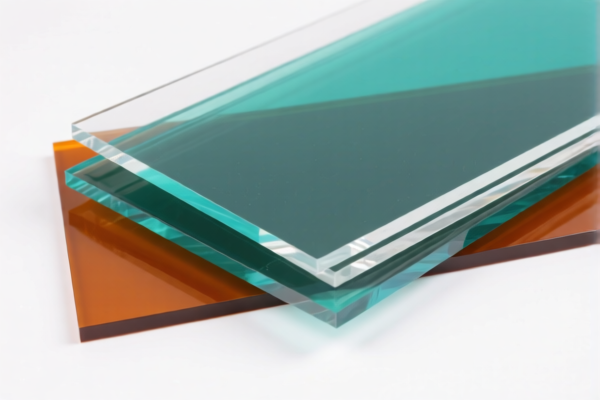

AI Analysis
🧊 High Density Acrylic Sheet (PMMA)
🌐 HS Code Reference & Customs Clearance Guide | 2026 Latest Tariff Analysis | Professional Clearance Strategy
📌 I. Product Definition & Classification: Do You Really Understand "Acrylic"?
High Density Acrylic Sheet, chemically known as Polymethyl Methacrylate (PMMA), is a transparent thermoplastic often used as a lightweight or shatter-resistant alternative to glass. In international trade, it falls under Chapter 39 (Plastics and Articles Thereof).
However, classification depends heavily on the specific subheading regarding its form (sheet, plate, film) and whether it is treated as a "general plastic sheet" or a "general plastic article." Misclassification can lead to significant tariff differences due to Section 301 (Trade War) tariffs and Section 122 tariffs.
⚠️ Key Distinction Point:
- If classified as a generic plastic sheet/plate (Chapter 39, Heading 3920 or 3921) → Higher Tax (41.5%).
- If classified as a general plastic article (Chapter 39, Heading 3926) → Lower Tax (22.8%).
- Crucial: The interpretation of "High Density" does not exempt it from Chapter 39; it remains a plastic sheet.
📦 II. HS Code Classification Details (2026 Latest Tariff Authority Comparison)
| HS Code | Product Description | Applicable Scenario | Tax Rate (Total) |
|---|---|---|---|
3921.19.00.90 |
Other plates, sheets, film, foil and strip, of plastics: Other: Other: Other | Acrylic (PMMA) classified as a general plastic sheet under Heading 3921. | 41.5% |
3921.90.50.50 |
Other plates, sheets, film, foil and strip: Other: Other | Acrylic matches "plates/sheets" morphology under Heading 3921. | 39.8% |
3926.90.99.89 |
Other articles of plastics and articles of other materials of heading 3901 to 3914 | Acrylic is a plastic (3901-3914); sheet is considered an "other article" not specifically listed. | 22.8% |
3926.30.50.00 |
Other articles of plastics: Articles of apparel and clothing accessories, including gloves: Other | Acrylic plastic sheet classified under Heading 3926 as a general plastic article. | 22.8% |
3920.51.50.90 |
Plates, sheets, film, foil and strip, of polymers of methyl methacrylate: Other: Other: Other | Specifically identifies PMMA (Acrylic) as a non-flame-retardant sheet under Heading 3920. | 41.5% |
🔍 Critical Reminder:
- Heading 3920/3921 vs. 3926:
- 3920/3921 are for plates, sheets, film, foil, and strip. If the acrylic is sold in this raw form, it often falls here.
- 3926 is for other articles of plastics. Some customs authorities may classify sheets here if they are cut to specific sizes or treated in a way that deviates from standard "sheet" definitions.
- Tax Difference: There is a ~19% tax gap between the 3921/3920 categories (41.5%) and the 3926 categories (22.8%).
💰 III. 2026 Latest Tariff Rate Breakdown (Including Surcharges & Policy Add-ons)
✅ Applicable Country: United States (US)
✅ Origin: China (CN)
✅ Effective Date: From November 10, 2025 (including subsequent imports)
🎯 1. 3921.19.00.90 & 3920.51.50.90 —— Plastic Sheets (PMMA/Acrylic)
| Item | Details |
|---|---|
| Base Tariff | 6.5% (Ad Valorem) |
| Section 301 Surcharge | +25.0% (USITC Footnote 9903.88.01) |
| Section 122 Tariff | +10.0% (Targeting China/HK products) |
| Total Tax Rate | 41.5% |
| Tax Calculation | CIF Value × 41.5% |
| De Minimis Exemption | ❌ Not Available (deny_de_minimis) |
| Legal Basis Path | Section 122: 19 USC 1673j → Section 301: 19 USC 2411 → USITC: 3921.19.00.90 |
📌 Explanation:
- "Section 301 25%": The core US-China trade war tariff on plastic sheets.
- "Section 122 10%": An additional 10% tariff applied to imports from China under Section 122 of the Trade Act of 1974.
- Total 41.5%: This is a very high tariff for raw materials. Importers must budget accordingly.
🎯 2. 3921.90.50.50 —— Other Plastic Sheets
| Item | Details |
|---|---|
| Base Tariff | 4.8% (Ad Valorem) |
| Section 301 Surcharge | +25.0% |
| Section 122 Tariff | +10.0% |
| Total Tax Rate | 39.8% |
| Tax Calculation | CIF Value × 39.8% |
| De Minimis Exemption | ❌ Not Available |
| Legal Basis Path | Section 122 → Section 301 → USITC: 3921.90.50.50 |
📌 Note:
- Slightly lower base rate (4.8%) compared to 6.5%, but still subject to the same surcharges.
- Total tax is 39.8%, which is 1.7% cheaper than the 3920/3921.19 categories.
🎯 3. 3926.90.99.89 & 3926.30.50.00 —— Other Plastic Articles
| Item | Details |
|---|---|
| Base Tariff | 5.3% (Ad Valorem) |
| Section 301 Surcharge | +7.5% |
| Section 122 Tariff | +10.0% |
| Total Tax Rate | 22.8% |
| Tax Calculation | CIF Value × 22.8% |
| De Minimis Exemption | ❌ Not Available |
| Legal Basis Path | Section 122 → Section 301 → USITC: 3926.90.99.89 |
📌 Critical Insight:
- Section 301 Surcharge is only 7.5% for Heading 3926, compared to 25% for 3920/3921.
- Total Tax is 22.8%, which is ~19% lower than the sheet categories.
- Risk: This classification relies on the argument that the acrylic sheet is an "other article" rather than a standard "sheet." Customs may challenge this if the product is clearly a standard sheet. Pre-ruling is highly recommended.
🛠️ IV. Customs Clearance Practical Advice (Battle-Tested Pitfall Guide)
✅ 1. Preparation Checklist (Essential Documents)
| Document | Must Provide | Description |
|---|---|---|
| ✅ Product Specification Sheet | ✔️ | Material: PMMA (Acrylic), Thickness, Dimensions, Density, Color, Transparency. |
| ✅ Technical Data Sheet (TDS) | ✔️ | Proof of "High Density" if claimed; physical properties (e.g., density > 1.18 g/cm³). |
| ✅ Product Photos (Clear) | ✔️ | Show the sheet’s surface finish (glossy/matte), edges, and any packaging. |
| ✅ Commercial Invoice | ✔️ | Clearly state "Acrylic Sheet (PMMA)" and avoid vague terms like "Plastic Board." |
| ✅ Packing List | ✔️ | Detail weight, dimensions, and number of sheets. |
| ✅ Certificate of Origin (CO) | ✔️ | Essential for proving Chinese origin (subject to tariffs). |
✅ 2. Declaration Strategy (Key Mnemonics)
🔥 "Material First, Form Second, Tariff Gap is Real!"
| Scenario | Correct Declaration | Wrong Approach |
|---|---|---|
| Standard Acrylic Sheet | 3920.51.50.90 or 3921.19.00.90 |
Classifying as 3926 without justification → Audit risk. |
| Cut-to-Size Acrylic | Consider 3926 if custom-fitted for a specific use |
Declaring as 3921 if it’s clearly a finished article. |
| High Density PMMA | Specify "PMMA" and "Density" in description | Just saying "Plastic Sheet" → Ambiguity, potential reclassification. |
| Rolls vs. Sheets | 3921 (Film/Sheet) |
3920 (Plates/Sheets) |
✅ 3. Special Circumstances Handling
| Situation | Handling Advice |
|---|---|
| Custom-Cut Acrylic | If the sheet is cut to a specific shape for a machine part, argue for 3926 to save ~19% tax. Provide design drawings. |
| Laminated Acrylic | If coated or laminated, it may still be 3921/3920. Check if the coating changes the essential character. |
| Recycled Acrylic | Ensure the description mentions "Recycled PMMA" if applicable, but tax rates remain similar. |
| Small Samples | Even small samples are subject to tariffs if clearly goods. No de minimis exemption. |
🌍 V. Global Main Market Clearance Comparison (2026 Latest)
| Country/Region | Recommended HS Code | Tariff (China Origin) | Certification Requirements | Notes |
|---|---|---|---|---|
| 🇺🇸 USA | 3926.90.99.89 (if valid) |
22.8% (Target) 41.5% (if misclassified) |
None specific for acrylic | Highest tariff risk. Try to justify 3926. |
| 🇨🇳 China | 3920.51.50.90 |
6.5% (Import) | None | Low import barrier. |
| 🇪🇺 EU | 3920.51.00.00 |
6.5% | REACH Compliance | No Section 301/122 equivalents. |
| 🇬🇧 UK | 3920.51.00.00 |
6.5% | UKCA (if applicable) | Post-Brexit rules apply. |
| 🇦🇺 Australia | 3920.51.00.00 |
5.0% | N/A | Low tariff, stable market. |
📌 Conclusion:
- USA is the only major market with punitive tariffs (25% + 10%).
- EU/UK/AU tariffs are low (~5-6.5%) and stable.
- Strategy for USA: If the acrylic is used in a specific application (e.g., signage, machine parts), argue for 3926 to reduce tariff from 41.5% to 22.8%.
📌 VI. Common Mistakes & Pitfall Guide (Lessons Learned)
❌ Mistake 1: Declaring "Acrylic Sheet" as "Glass Substitute"
👉 Consequence: Misclassification as 7019 (Glass) → Penalties + Back Taxes!
Acrylic is plastic (Chapter 39), not glass.
❌ Mistake 2: Using Generic Term "Plastic Board"
👉 Consequence: Customs will ask for clarification → Delay in Clearance.
Always specify PMMA or Polymethyl Methacrylate.
❌ Mistake 3: Ignoring Section 122 Tariff
👉 Consequence: Underestimating cost by 10%.
Total tax is not just 25%, but 25% + 10% + Base.
❌ Mistake 4: Assuming "High Density" Changes HS Code
👉 Consequence: No change in HS Code for density alone within PMMA sheets.
Density may affect value, but not the tariff rate directly.
✅ Correct Approach:
"PMMA Acrylic Sheet, High Density, 5mm Thickness, Clear, for Signage Use, HS 3926.90.99.89 (if applicable)"
🎯 VII. Conclusion: Professional Declaration, Save Money!
🎯 Remember the Mantra:
🔹 "PMMA is Plastic, Not Glass."
🔹 "3926 Saves 19% Tax, But Requires Justification."
🔹 "3920/3921 is Safe but Costs 41.5% in the US."
📌 Pro Tip:
If you are importing large volumes to the US, apply for a Pre-Ruling (Ruling Letter) from CBP to confirm whether your specific "High Density Acrylic Sheet" can be classified under 3926 to save the 18.7% tax difference.
📞 Contact a professional customs broker + Provide Product Details + Request CBP Ruling
🚀 Reduce Tax Burden, Ensure Smooth Clearance, Maximize Profit!
✨ Professional Clearance Starts with Precise Classification!
💼 Every percentage point of tax savings is pure profit!
Customer Reviews
About HS Code Classification
The Harmonized System (HS) is an internationally standardized nomenclature developed by the World Customs Organization (WCO) to classify traded products. Over 200 countries use the HS system as the basis for customs tariffs, trade statistics, and import/export regulations.
Each HS code follows a hierarchical structure:
- Chapter (2 digits) — Broad category of goods (e.g., Chapter 84: Machinery and Mechanical Appliances)
- Heading (4 digits) — More specific grouping within the chapter
- Subheading (6 digits) — Internationally standardized breakdown, used by all WCO member countries
- National subdivisions (8-10 digits) — Country-specific extensions for further classification, such as US HTSUS 10-digit codes
Correct HS code classification is essential for smooth customs clearance, accurate duty payment, and compliance with trade regulations. Misclassification can lead to customs delays, overpayment of duties, or penalties.
When importing from CN to US, the applicable tariff rates may include:
- Most-Favored-Nation (MFN) rate — The standard duty rate applied to WTO members
- General rate — Applied to countries without trade agreements
- Trade remedy duties — Additional tariffs such as Section 301 (anti-dumping), Section 232 (national security), or countervailing duties
The information provided on this page is for reference purposes only. For official classification, please consult with your local customs authority or a licensed customs broker.