High efficiency insecticide retail packaging
CN → US| HS Code | Tariff Rate | Origin | Destination | Doc |
|---|---|---|---|---|
| 3808615000 | 22.5% | CN | US | Official Doc |
| 3808625000 | 40.0% | CN | US | Official Doc |
| 3808915001 | 40.0% | CN | US | Official Doc |
| 3808520000 | 24.0% | CN | US | Official Doc |
Product Images
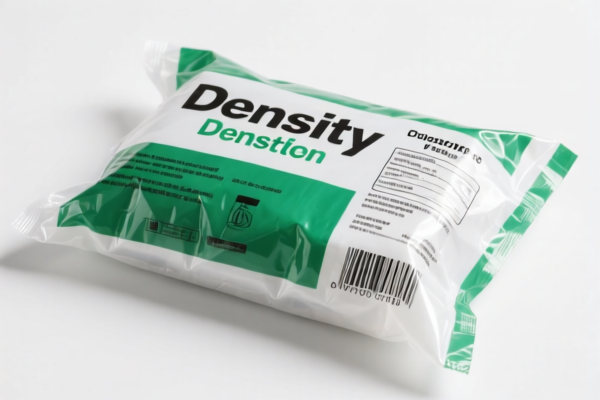
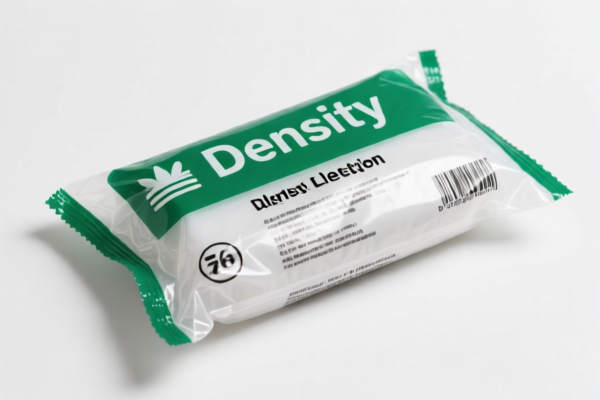
AI Analysis
🐛 Insecticide (High Efficiency, Retail Packaging)
🌐 HS Code Reference & Customs Clearance Guide | 2026 Latest Tariff Analysis | Professional Clearance Strategy
📌 I. Product Definition & Classification: What is "High Efficiency Insecticide"?
High Efficiency Insecticide (Retail Packaging) refers to chemical or biological preparations designed to destroy, repel, or mitigate harmful insects, packaged in forms ready for direct sale to end-users (e.g., sprays, dusts, baits, or aerosols). In international trade, these products fall primarily under Chapter 38: Miscellaneous Chemical Products, specifically Heading 38.08: Insecticides, rodenticides, fungicides, herbicides, anti-sprouting products and plant-growth regulators, disinfectants and similar products, put up in forms or packings for retail sale or as preparations or articles (for example, sulphur-treated bands, wicks, and candles, and flypapers).
⚠️ Key Classification Distinction:
- The critical factor is the HS Code subheading, which varies based on the active ingredient (e.g., organic compounds vs. inorganic compounds) and specific formulation.
- "Retail Packaging" is a mandatory condition for Chapter 38.08. Bulk industrial containers do not qualify here.
- "High Efficiency" typically implies synthetic organic compounds, often triggering higher scrutiny or different subheadings compared to traditional inorganic insecticides.
📦 II. HS Code Classification Details (2026 Latest Tariff Authoritative Comparison)
Based on the provided data, here are the four possible HS Codes for this product, ranked by tax efficiency and specificity.
| HS Code | Product Description | Applicability & Logic | Total Tax Rate |
|---|---|---|---|
3808.61.50.00 |
High-Efficiency Insecticides, Retail Packaged | Best Match for Organic Compounds. "High Efficiency" usually refers to synthetic organic insecticides. This code applies to retail-packaged organic insecticides not elsewhere specified. | 22.5% |
3808.52.00.00 |
Insecticides, Retail Packaged | Alternative for Organic Insecticides. This is a broader category for organic insecticides in retail forms. If the specific "high efficiency" subheading isn't available or applicable, this is the fallback. | 24.0% |
3808.62.50.00 |
Insecticides, Retail Packaged | High Tax Option. Likely applies to specific formulations or heavier retail packs where "high efficiency" doesn't fit 3808.61. Includes weight-based inference. |
40.0% |
3808.91.50.01 |
Other Insecticides (Non-Organic/Inorganic), Retail Packaged | Inorganic/Other Types. If the insecticide is inorganic (e.g., borax, zinc phosphate) or doesn't fit the organic categories, it falls here. "No material conflict" with inorganic compositions. | 40.0% |
🔍 Critical Note:
-3808.61.50.00is the most cost-effective for high-efficiency (organic) insecticides in retail packaging.
-3808.91.50.01is for inorganic insecticides. If your product contains borax, arsenic compounds, or other non-organic actives, this is the correct code.
- Misclassification between organic (3808.6x) and inorganic (3808.9x) can lead to audits, penalties, or back-tariffs.
💰 III. 2026 Latest Tariff Rate Breakdown (Including Additional Taxes & Policy Surcharges)
✅ Applicable Country: United States (US)
✅ Origin: China (CN)
✅ Effective Time: From November 10, 2025 (including subsequent imports)
✅ Policy Context: Includes Base Tariff, Section 301 Additional Tariff, and Section 122 Tariff.
🎯 1. 3808.61.50.00 — High-Efficiency Organic Insecticides, Retail Packaged
| Item | Content |
|---|---|
| Base Tariff | 5.0% |
| Section 301 Additional Tariff | 7.5% |
| Section 122 Tariff | 10.0% |
| Total Tax Rate | 22.5% |
| Tax Calculation | CIF Value × 22.5% |
| De Minimis Eligibility | ❌ No (Deny de minimis for certain chemical products under scrutiny) |
| Legal Basis Path | USITC:3808.61.50.00 → Section 301: Footnote 9903.88.01 → Section 122: 10% surcharge |
📌 Explanation:
- This is the most favorable rate for high-efficiency organic insecticides.
- The 10% Section 122 tariff is a specific surcharge on certain chemical imports from China, added on top of base and Section 301 rates.
- Total 22.5% is significantly lower than the 40% options. Properly classifying as "High-Efficiency Organic" (vs. generic or inorganic) is key to saving 17.5%-17.5% in tariffs.
🎯 2. 3808.52.00.00 — Organic Insecticides, Retail Packaged (General)
| Item | Content |
|---|---|
| Base Tariff | 6.5% |
| Section 301 Additional Tariff | 7.5% |
| Section 122 Tariff | 10.0% |
| Total Tax Rate | 24.0% |
| Tax Calculation | CIF Value × 24.0% |
| De Minimis Eligibility | ❌ No |
| Legal Basis Path | USITC:3808.52.00.00 → Section 301 → Section 122 |
📌 Note:
- Slightly higher base tariff (6.5% vs. 5.0%) than3808.61.50.00.
- Use this if the product is an organic insecticide but does not meet the specific criteria for "High-Efficiency" under3808.61.
🎯 3. 3808.62.50.00 & 3808.91.50.01 — High Tax Options
| Item | Content |
|---|---|
| Base Tariff | 5.0% |
| Section 301 Additional Tariff | 25.0% |
| Section 122 Tariff | 10.0% |
| Total Tax Rate | 40.0% |
| De Minimis Eligibility | ❌ No |
📌 Warning:
- These codes incur the maximum Section 301 tariff of 25%.
-3808.62.50.00may apply if the product is classified under a different organic subheading with higher scrutiny.
-3808.91.50.01applies to inorganic insecticides. If you are importing borax-based pest control, this is likely the correct code, but expect the 40% rate.
- Do not misdeclare inorganic products as organic to avoid penalties.
🛠️ IV. Customs Clearance Practical Advice (Battle-Tested Pitfall Avoidance Guide)
✅ 1. Required Documentation Checklist (Non-Negotiable)
| Document | Mandatory? | Description |
|---|---|---|
| ✅ MSDS / SDS (Safety Data Sheet) | ✔️ Critical | Must list active ingredients, concentrations, and hazard classifications. Customs uses this to verify HS Code. |
| ✅ Product Formula / Ingredient List | ✔️ Critical | Must specify if the insecticide is organic (e.g., pyrethroids, neonicotinoids) or inorganic (e.g., borates). |
| ✅ EPA Registration Number | ✔️ Mandatory for US | All pesticides sold in the US must have an EPA Registration Number. No EPA No. = Seizure. |
| ✅ Commercial Invoice | ✔️ | Must clearly state "Pesticide/Insecticide, Retail Packaged" and HS Code. |
| ✅ Packing List | ✔️ | Detail net/gross weight, quantity, and packaging type. |
| ✅ Bill of Lading / Air Waybill | ✔️ | Standard shipping documents. |
| ✅ Certificate of Origin | ✔️ | For Section 301 and Section 122 tariff calculations. |
✅ 2. Declaration Tips (Key Mantra)
🔥 “Know Your Active Ingredient, Declare the Right HS, EPA No. is King, Tax Drops in Half!”
| Scenario | Correct Declaration | Wrong Declaration |
|---|---|---|
| Organic, High-Efficiency (e.g., Cypermethrin) | 3808.61.50.00 + "High-Efficiency Insecticide, Organic, Retail Packaged, EPA No. XXXXX" |
Misdeclare as 3808.91.50.01 → 40% tax |
| Inorganic (e.g., Borax) | 3808.91.50.01 + "Inorganic Insecticide, Retail Packaged, EPA No. XXXXX" |
Misdeclare as 3808.61.50.00 → Risk of penalty + 40% tax |
| Bulk Industrial (Not Retail) | Not Chapter 38.08 (e.g., 3808.99) |
Declare as Retail → Clearance Delay/Rejection |
| Missing EPA No. | Do Not Import | Attempt to clear → Seizure & Fine |
✅ 3. Special Cases Handling
| Case | Handling Advice |
|---|---|
| OEM Private Label | Provide the EPA Registration Number of the registrant. If you are not the registrant, you need a letter of authorization from the EPA registrant. |
| Combined Products (e.g., Insecticide + Trap) | If the insecticide is the primary function, declare under 3808. If the trap is the main item, it may fall under 3926 (plastic traps). Check primary function. |
| Samples / Small Quantities | Still require EPA No. and proper HS Code. De Minimis does not apply to pesticides in the US. |
| High Volume / Strategic Stock | Consider applying for Advance Ruling from CBP to confirm the HS Code and tariff rate before shipment. |
🌍 V. Global Main Market Clearance Comparison (2026 Latest)
| Country/Region | Recommended HS Code | Tariff (China Origin) | Certification Requirements | Remarks |
|---|---|---|---|---|
| 🇺🇸 United States | 3808.61.50.00 |
22.5% (Organic) / 40% (Inorganic) | EPA Registration + MSDS | Strict enforcement. No EPA No. = Rejection. |
| 🇨🇳 China | 3808.91.50.01 |
5% - 9% | Pesticide Registration Certificate | Domestic registration required for sale. |
| 🇪🇺 European Union | 3808.94.00 |
0% - 6.5% | EU Pesticide Regulation (PPP) | Requires separate authorization in each member state. |
| 🇦🇺 Australia | 3808.91.50.01 |
5% | APVMA Approval | No approval = Cannot import. |
| 🇯🇵 Japan | 3808.93.00.00 |
0% - 5% | Ministry of Agriculture (MAFF) | Strict residue limits. |
📌 Conclusion:
- The US is the most tariff-sensitive and regulatory-complex market for insecticides.
- EPA Registration is non-negotiable.
- Correct HS Code classification (Organic vs. Inorganic) can save 17.5% in tariffs.
📌 VI. Common Errors & Pitfall Avoidance (Blood-Led Lessons)
❌ Error 1: Importing without an EPA Registration Number.
👉 Consequence: Seizure, Destruction, and Fines. Customs and EPA coordinate closely.
❌ Error 2: Misclassifying Inorganic insecticides (e.g., Borax) as Organic (3808.61).
👉 Consequence: Back-tariffs (40% vs. 22.5%) + Penalties + Audit Risk.
❌ Error 3: Declaring "Retail Packaging" for Bulk Containers (e.g., 200L Drums).
👉 Consequence: Incorrect HS Code → Clearance Delay or Rejection. Bulk items fall under different subheadings.
❌ Error 4: Omitting the Active Ingredient in the declaration.
👉 Consequence: Customs cannot verify the HS Code → Valuation Delay or Misclassification.
✅ Correct Approach:
"Insecticide, Cypermethrin-based, Retail Packaged Aerosol, EPA Reg. No. XXXXX-XXXX, Organic, MSDS Attached"
🎯 VII. Conclusion: Professional Declaration, Time-Saving, Cost-Effective
🎯 Remember the Mantra:
🔹 “EPA No. First, HS Code Second, Organic vs. Inorganic Matters, Tax Saves Big!”
🔹 “No EPA No = No Entry. Wrong HS = Big Bill.”
📌 Pro Tip:
- If your insecticide is high-efficiency organic, always aim for 3808.61.50.00 (22.5% total tariff).
- If it is inorganic, expect 3808.91.50.01 (40% total tariff).
- Apply for a CBP Advance Ruling if you are unsure about the classification. It provides legal certainty and avoids surprise bills.
📣 Immediate Action:
📞 Contact a Licensed Customs Broker + Ensure EPA Registration + Submit Accurate MSDS
🚀 Ensure Smooth Clearance, Avoid Seizure, Protect Your Margins!
✨ Professional Clearance Starts with Accurate Classification!
💼 Every Percent of Tax Matters!
Customer Reviews
About HS Code Classification
The Harmonized System (HS) is an internationally standardized nomenclature developed by the World Customs Organization (WCO) to classify traded products. Over 200 countries use the HS system as the basis for customs tariffs, trade statistics, and import/export regulations.
Each HS code follows a hierarchical structure:
- Chapter (2 digits) — Broad category of goods (e.g., Chapter 84: Machinery and Mechanical Appliances)
- Heading (4 digits) — More specific grouping within the chapter
- Subheading (6 digits) — Internationally standardized breakdown, used by all WCO member countries
- National subdivisions (8-10 digits) — Country-specific extensions for further classification, such as US HTSUS 10-digit codes
Correct HS code classification is essential for smooth customs clearance, accurate duty payment, and compliance with trade regulations. Misclassification can lead to customs delays, overpayment of duties, or penalties.
When importing from CN to US, the applicable tariff rates may include:
- Most-Favored-Nation (MFN) rate — The standard duty rate applied to WTO members
- General rate — Applied to countries without trade agreements
- Trade remedy duties — Additional tariffs such as Section 301 (anti-dumping), Section 232 (national security), or countervailing duties
The information provided on this page is for reference purposes only. For official classification, please consult with your local customs authority or a licensed customs broker.