High flow binder for casting
CN → US| HS Code | Tariff Rate | Origin | Destination | Doc |
|---|---|---|---|---|
| 3214100010 | 38.7% | CN | US | Official Doc |
| 3214100020 | 38.7% | CN | US | Official Doc |
| 3824100000 | 41.0% | CN | US | Official Doc |
| 3506915000 | 37.1% | CN | US | Official Doc |
| 3506990000 | 37.1% | CN | US | Official Doc |
Product Images


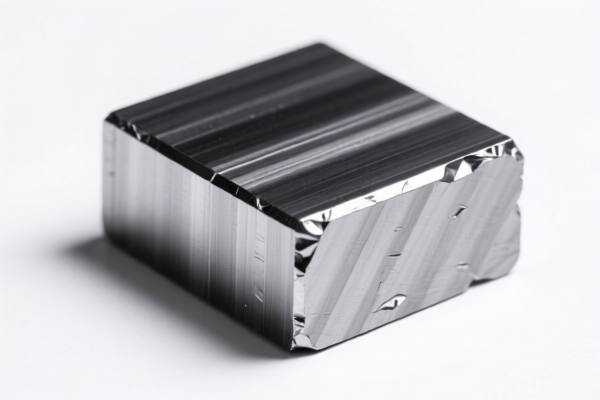
AI Analysis
🏭 High Flow Binder for Casting
🌐 HS Code Reference & Customs Clearance Guide | 2026 Latest Tariff Analysis | Professional Compliance Strategy
📌 I. Product Definition & Classification: What Exactly is a "High Flow Binder"?
A High Flow Binder for Casting is a specialized chemical compound used in foundry processes (sand casting, metal casting). Its primary function is to bind sand particles together to form molds or cores before molten metal is poured. The "High Flow" characteristic typically refers to its rheological properties (viscosity and pumpability), allowing it to be injected or mixed efficiently into sand systems.
In international trade, these binders are generally categorized based on their chemical composition (resins, polymers) or their specific industrial function (foundry mold bonding). Misclassification is a common risk, as customs officers may confuse them with general adhesives or sealants.
⚠️ Key Distinction:
- If it acts primarily as a mold/core binder in foundries → Likely 3824.10.00.00 or 3506.9x.
- If it is primarily a sealant, putty, or filling material → Likely 3214.10.
- Crucial Insight: The term "Casting" strongly points towards foundry applications, favoring 3824.10.00.00 as the most precise functional match, though 3506 codes are common alternatives for resin-based binders.
📦 II. HS Code Classification Details (2026 Latest Tariff Authoritative Comparison)
Based on the provided data, here are the potential HS Codes and their matching logic for "High Flow Binder for Casting":
| HS Code | Product Description | Matching Logic & Summary | Total Tax Rate |
|---|---|---|---|
3824.10.00.00 |
Modulated Binders for Mold or Core Makers | ✅ Best Match. The name "Casting Binder" aligns perfectly with "Modulated Binders for Mold or Core Makers." No material or functional conflict exists. | 41.0% |
3214.10.00.10 |
Sealants, Grouts, Mastics, etc. | Inferred from "Binder" as a sealing/filling agent. No material conflict with the "Sealants/Grouts" category under 3214.10. | 38.7% |
3214.10.00.20 |
Other Sealants, Grouts, Mastics | "Binder" fits the Mastics category. Inferred as a sealing/adhesive compound for casting processes. No material conflict. | 38.7% |
3506.91.50.00 |
Adhesives Based on Polymers (39.01–39.13) | "Casting" often involves resins/polymers. Fits the "Adhesive" description based on polymer materials (e.g., phenolic, furan resins). | 37.1% |
3506.99.00.00 |
Other Prepared Adhesives | "High-Performance Casting" property fits "Other Prepared Adhesives." No material/form conflict detected. | 37.1% |
🔍 Critical Note:
- 3824.10.00.00 is the most functionally accurate for foundry binders.
- 3506.91/99 codes are often used if the binder is primarily a synthetic resin adhesive.
- 3214 codes are less ideal unless the product is explicitly marketed as a sealant or grout rather than a core/mold binder.
💰 III. 2026 Latest Tariff Rate Breakdown (Including Surcharges & Policy Add-ons)
✅ Applicable Country: United States (US)
✅ Country of Origin: China (CN)
✅ Effective Date: November 10, 2025 (and onwards for subsequent imports)
🎯 1. 3824.10.00.00 —— Modulated Binders for Mold or Core Makers
| Item | Details |
|---|---|
| Base Duty Rate | 6.0% (Ad Valorem) |
| USITC Additional Duty | +25.0% (Under Section 301 Trade Act) |
| IEEPA Additional Duty | +10.0% (For Chinese/HK products, effective Nov 10, 2025) |
| Total Effective Rate | 41.0% |
| Tax Calculation | CIF Value × 41.0% |
| De Minimis Eligibility | ❌ Not Eligible (deny_de_minimis) |
| Legal Authority Path | IEEPA:9903.01.25 → IEEPA:9903.01.24 → USITC:3824.10.00.00 → FOOTNOTE:3824.10.00.00 |
📌 Explanation:
- The 25% USITC duty is the standard Section 301 tariff for most chemical intermediates and specialty products from China.
- The 10% IEEPA duty is a new surcharge targeting specific Chinese goods.
- Total 41% is significantly high. This is a high-tariff item. Proper classification is vital to avoid penalties.
🎯 2. 3214.10.00.10 & 3214.10.00.20 —— Sealants, Grouts, Mastics
| Item | Details |
|---|---|
| Base Duty Rate | 3.7% (Ad Valorem) |
| USITC Additional Duty | +25.0% |
| IEEPA Additional Duty | +10.0% |
| Total Effective Rate | 38.7% |
| Tax Calculation | CIF Value × 38.7% |
| De Minimis Eligibility | ❌ Not Eligible |
| Legal Authority Path | Similar to above, linked to Section 301 and IEEPA provisions. |
📌 Explanation:
- While the base duty is lower (3.7%), the total rate remains high due to the same surcharges.
- This classification might be considered if the binder is viscous enough to be classified as a mastic or putty, but it is less specific to "casting molds" than 3824.
🎯 3. 3506.91.50.00 & 3506.99.00.00 —— Prepared Adhesives (Polymer-Based)
| Item | Details |
|---|---|
| Base Duty Rate | 2.1% (Ad Valorem) |
| USITC Additional Duty | +25.0% |
| IEEPA Additional Duty | +10.0% |
| Total Effective Rate | 37.1% |
| Tax Calculation | CIF Value × 37.1% |
| De Minimis Eligibility | ❌ Not Eligible |
| Legal Authority Path | IEEPA:9901.25 → IEEPA:9903.01.24 → USITC:3506.xx |
📌 Explanation:
- This offers the lowest total tariff (37.1%) among the options.
- However, classification under 3506 requires proving that the product is primarily an adhesive based on polymers (e.g., furan, phenolic, or epoxy resins) and not specifically a "mold binder" (which is 3824).
- Risk: If customs determines it is a "mold binder," they will reclassify to 3824.10.00.00 (41.0%), leading to back taxes and penalties.
🛠️ IV. Customs Clearance Operational Advice (Practical Pitfall Avoidance Guide)
✅ 1. Required Documentation Checklist (Non-Negotiable)
| Document | Must Provide? | Notes |
|---|---|---|
| ✅ Technical Data Sheet (TDS) | ✔️ | Must specify viscosity, curing time, and intended use (e.g., "for sand mold core making"). |
| ✅ Safety Data Sheet (SDS) | ✔️ | Required for hazardous chemical handling; check for flammable or corrosive classifications. |
| ✅ Product Photos | ✔️ | Show packaging, labels, and physical form (liquid, powder, paste). |
| ✅ Commercial Invoice | ✔️ | Clearly state: "High Flow Binder for Sand Casting/Mold Making," not just "Adhesive." |
| ✅ Bill of Lading | ✔️ | Ensure weight and volume match invoice. |
| ✅ Certificate of Origin | ✔️ | To confirm Chinese origin for tariff calculation. |
✅ 2. Declaration Strategy (Key Mnemonics)
🔥 "Flow & Cast, Classify Right: 3824 for Molds, 3506 for Resin, Avoid 3214 Unless It's Sealant!"
| Scenario | Recommended HS Code | Reason |
|---|---|---|
| Used in Sand Casting for Molds/Cores | 3824.10.00.00 |
Most Accurate. Directly matches "Binders for Mold or Core Makers." |
| Resin-Based Adhesive (General Purpose) | 3506.91.50.00 |
Lowest Tax (37.1%). Only use if it can be justified as a general polymer adhesive, not a dedicated mold binder. |
| Sealant/Putty for Foundry Leaks | 3214.10.00.10/20 |
Use only if the product is marketed as a sealant, not a primary binding agent for sand. |
⚠️ Warning:
- Do not declare as "Adhesive" (3506) if the primary function is binding sand in a mold. Customs may reject this for being "misdescribed."
- 3824.10.00.00 is the safest classification from a legal standpoint, despite the higher rate (41.0%).
✅ 3. Special Situations & Handling
| Situation | Handling Advice |
|---|---|
| OEM Custom Binders | Provide customer specifications and formulation details to prove "modulated binder" status. |
| Powder vs. Liquid | "High Flow" usually implies liquid or paste. Ensure SDS reflects this. Powder binders may have different classifications. |
| Hazardous Materials | If the binder contains flammable solvents, ensure proper DG (Dangerous Goods) declaration and packaging. |
| Pre-Ruling Request | Strongly recommend applying for an Advance Ruling from US Customs (CBP) to confirm if 3824.10.00.00 or 3506 is acceptable for your specific product. |
🌍 V. Global Market Comparison (2026 Latest)
| Country/Region | Recommended HS Code | Tariff (China Origin) | Certification Requirements | Notes |
|---|---|---|---|---|
| 🇺🇸 USA | 3824.10.00.00 |
41.0% | SDS, EPA Registration (if applicable) | High tariffs apply. IEEPA + Section 301 active. |
| 🇨🇳 China | 3824.10.00.00 |
~6-10% | No major import barriers for raw materials | Lower base duty. |
| 🇪🇺 EU | 3824.10 |
~4-6% | REACH Compliance (SVHC check) | No additional surcharges like US. |
| 🇬🇧 UK | 3824.10 |
~4-6% | UK REACH | Post-Brexit rules apply. |
| 🇯🇵 Japan | 3824.10 |
~5-6% | JIS Standard | Low base tariff. |
📌 Conclusion:
- USA is the most challenging market for this product due to the 41% total tariff.
- EU/UK/Japan are much more favorable with base tariffs under 6%.
- Supply Chain Advice: Consider sourcing non-Chinese binders (e.g., from Vietnam, India, or EU) to avoid US surcharges if exporting to the US.
📌 VI. Common Errors & Pitfall Guide (Lessons Learned)
❌ Error 1: Declaring as "General Adhesive" (3506) to save tax.
👉 Consequence: Customs reclassifies to 3824.10.00.00 (41%) + Penalties + Back Taxes.
👉 Fix: Be honest about the "Mold/Core" application in documentation.
❌ Error 2: Ignoring IEEPA 10% Surcharges.
👉 Consequence: Underpayment by 10%.
👉 Fix: Include IEEPA in your cost calculation for all Chinese-origin chemical imports.
❌ Error 3: Mislabeling as "Paint" or "Coating."
👉 Consequence: Incorrect HS Code (e.g., 3208), leading to audits.
👉 Fix: Clearly state "Binder" and "Foundry Application."
❌ Error 4: Not providing SDS.
👉 Consequence: Customs holds shipment for safety review, causing demurrage charges.
👉 Fix: Have SDS ready before shipment departure.
✅ Correct Approach:
"High Flow Phenolic Resin Binder for Sand Core Making, Liquid Form, Non-Hazardous, UN1760 (if applicable), Model XYZ."
🎯 VII. Conclusion: Precision Classification, Cost Control, and Smooth Clearance
🎯 Key Takeaways:
🔹 "3824 is the King for Molds" – It’s the most legally accurate code for casting binders.
🔹 "3506 Saves 4%" – Only if you can legally justify it as a polymer adhesive, not a mold binder.
🔹 "41% is the US Reality" – Plan for high duties. Consider alternative sourcing for US-bound goods.
🔹 "SDS & TDS are Your Best Friends" – They prove the product’s nature and prevent delays.
📌 Pro Tip:
If your product contains furan or phenolic resins, ensure it complies with REACH (EU) and TSCA (US) chemical regulations.
For US imports, Apply for a CBP Advance Ruling to lock in the 3824.10.00.00 classification and avoid disputes.
📣 Immediate Action:
📞 Consult with a licensed customs broker.
📄 Prepare TDS and SDS.
🚀 Accurate Classification = Cost Savings + Peace of Mind!
✨ Professional Clearance Starts with Precision!
💼 Every Dollar Counts – Don’t Overpay on Tariffs!
Customer Reviews
About HS Code Classification
The Harmonized System (HS) is an internationally standardized nomenclature developed by the World Customs Organization (WCO) to classify traded products. Over 200 countries use the HS system as the basis for customs tariffs, trade statistics, and import/export regulations.
Each HS code follows a hierarchical structure:
- Chapter (2 digits) — Broad category of goods (e.g., Chapter 84: Machinery and Mechanical Appliances)
- Heading (4 digits) — More specific grouping within the chapter
- Subheading (6 digits) — Internationally standardized breakdown, used by all WCO member countries
- National subdivisions (8-10 digits) — Country-specific extensions for further classification, such as US HTSUS 10-digit codes
Correct HS code classification is essential for smooth customs clearance, accurate duty payment, and compliance with trade regulations. Misclassification can lead to customs delays, overpayment of duties, or penalties.
When importing from CN to US, the applicable tariff rates may include:
- Most-Favored-Nation (MFN) rate — The standard duty rate applied to WTO members
- General rate — Applied to countries without trade agreements
- Trade remedy duties — Additional tariffs such as Section 301 (anti-dumping), Section 232 (national security), or countervailing duties
The information provided on this page is for reference purposes only. For official classification, please consult with your local customs authority or a licensed customs broker.