High performance Radial Tire
CN → US| HS Code | Tariff Rate | Origin | Destination | Doc |
|---|---|---|---|---|
| 4011201015 | 39.0% | CN | US | Official Doc |
| 4012909000 | 37.7% | CN | US | Official Doc |
| 4013100020 | 38.7% | CN | US | Official Doc |
| 4011201005 | 39.0% | CN | US | Official Doc |
| 4012194000 | 39.0% | CN | US | Official Doc |
Product Images
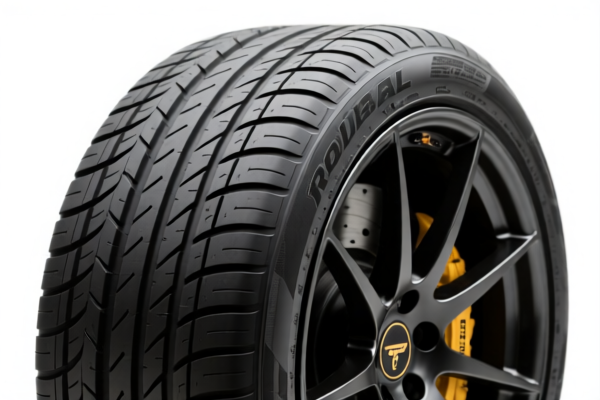
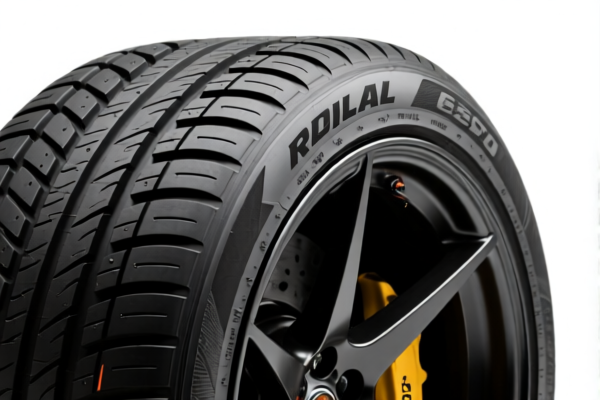
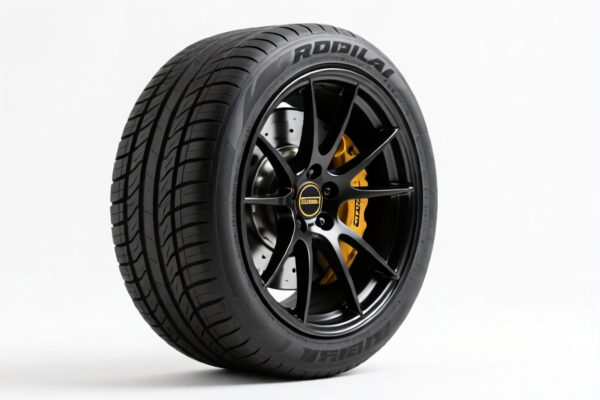
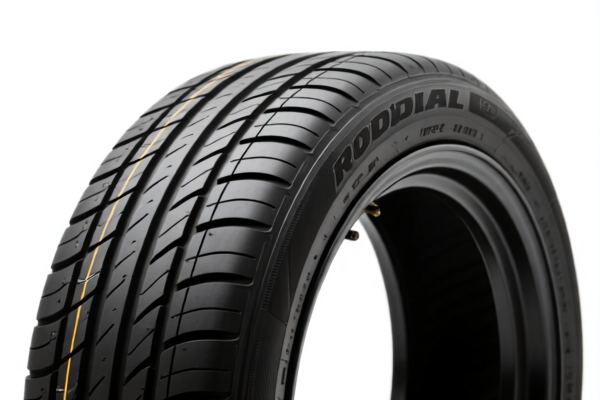
AI Analysis
🚛 High Performance Radial Tires & Related Rubber Components
🌐 HS Code Reference & Customs Clearance Guide | 2026 Latest Tariff Analysis | Professional Compliance Strategy
📌 Part 1: Product Definition & Classification – What Exactly Are "High Performance Radial Tires"?
"High performance" in the tire industry typically refers to tires designed for superior handling, higher speed ratings, and specific vehicle applications such as trucks (trailer buses, heavy-duty trucks) and buses.
In international trade, rubber tires are broadly categorized by:
1. Type: Radial (coded 4011.20 or 4011.99 depending on construction) vs. Bias.
2. Application: Passenger cars vs. Trucks/Buses.
3. State: New vs. Retreaded/Regenerated.
4. Related Parts: Inner tubes (4013).
⚠️ Key Distinction:
- If the product is a new radial tire for trucks/buses, it falls under 4011.20.
- If the product is a retreaded/regenerated radial tire, it may fall under 4012.19.
- If the product is an inner tube for these vehicles, it falls under 4013.10.
- If the product is a special form (pneumatic, solid, or cushion tire not meeting standard radial definitions), it may fall under 4012.90.
📦 Part 2: HS Code Classification Matrix (2026 Latest Tariff Authority)
Based on the provided data, here are the exact HS Codes for High Performance Radial Tires and related rubber components for Trucks/Buses.
| HS Code | Product Description | Application | Material/State |
|---|---|---|---|
4011.20.10.15 |
Radial tires for trucks or buses | Trucks / Buses | Rubber (New) |
4011.20.10.05 |
Radial tires for trucks | Trucks only | Rubber (New) |
4012.19.40.00 |
Retreaded radial tires | General/Truck/Bus | Regenerated Rubber |
4013.10.00.20 |
Inner tubes for trucks and buses | Trucks / Buses | Rubber |
4012.90.90.00 |
Other pneumatic/solid/cushion tires | Various | Rubber (Non-radial or Special Form) |
🔍 Critical Note:
- "High Performance" is not a standalone HS classification. It is a marketing term. You must classify based on physical construction (Radial/Bias) and vehicle type (Truck/Bus/Car).
- Radial tires for trucks are strictly4011.20.
- Inner tubes are separate from tires and classified under4013.
💰 Part 3: 2026 Tariff Rate Breakdown (Detailed Tax Clauses)
✅ Applicable Market: United States (US)
✅ Origin: China (CN)
✅ Effective Date: Rates include Base Duty, 301 Section Duty (25%), and Section 122 Duty (10%).
🎯 1. 4011.20.10.15 & 4011.20.10.05 —— Radial Tires for Trucks/Buses
| Item | Detail |
|---|---|
| Product | Radial Tires for Trucks or Buses (4011.20.10.15); Radial Tires for Trucks (4011.20.10.05) |
| Base Duty | 4.0% |
| Section 301 Duty | 25.0% |
| Section 122 Duty | 10.0% |
| Total Tax Rate | 39.0% |
| Calculation Basis | CIF Value × 39.0% |
| De Minimis Exemption | ❌ Not Available (High value category) |
| Legal Path | Base: 4011.20 → Sec301: +25% → Sec122: +10% |
📌 Explanation:
- Base Duty (4%): Standard MFN rate for truck/bus radial tires.
- Section 301 Duty (25%): Imposed under U.S. Trade Act of 1974, Section 301, against Chinese goods.
- Section 122 Duty (10%): Additional duty under specific trade provisions (e.g., counter-dumping or specific bilateral terms).
- Total Cost Impact: 39%. This is a high tariff category. Profit margins will be significantly impacted.
🎯 2. 4012.90.90.00 —— Other Pneumatic/Solid/Cushion Tires
| Item | Detail |
|---|---|
| Product | Other rubber tires (pneumatic, solid, or cushion) not elsewhere specified |
| Base Duty | 2.7% |
| Section 301 Duty | 25.0% |
| Section 122 Duty | 10.0% |
| Total Tax Rate | 37.7% |
| Calculation Basis | CIF Value × 37.7% |
| De Minimis Exemption | ❌ Not Available |
| Legal Path | Base: 4012.90 → Sec301: +25% → Sec122: +10% |
📌 Explanation:
- This code is often used for specialty tires (e.g., solid rubber tires for forklifts, or cushion tires) or tires that do not fit the strict "radial" definition of 4011.20.
- Note: If your product is a standard radial tire, do not use this code to avoid misclassification penalties. Use4011.20instead.
🎯 3. 4013.10.00.20 —— Inner Tubes for Trucks and Buses
| Item | Detail |
|---|---|
| Product | Inner tubes for trucks or buses |
| Base Duty | 3.7% |
| Section 301 Duty | 25.0% |
| Section 122 Duty | 10.0% |
| Total Tax Rate | 38.7% |
| Calculation Basis | CIF Value × 38.7% |
| De Minimis Exemption | ❌ Not Available |
| Legal Path | Base: 4013.10 → Sec301: +25% → Sec122: +10% |
📌 Explanation:
- Inner tubes are accessories to tires but have their own HS code (4013).
- Do not bundle inner tubes with tires in one line item if they are shipped separately; declare them under4013.10.00.20.
- If bundled, ensure the invoice clearly separates the value if possible, or declare the primary product (Tire) and list inner tubes as parts, but check with customs broker for "essential character" rules.
🎯 4. 4012.19.40.00 —— Regenerated (Retreaded) Radial Tires
| Item | Detail |
|---|---|
| Product | Retreaded radial tires |
| Base Duty | 4.0% |
| Section 301 Duty | 25.0% |
| Section 122 Duty | 10.0% |
| Total Tax Rate | 39.0% |
| Calculation Basis | CIF Value × 39.0% |
| De Minimis Exemption | ❌ Not Available |
| Legal Path | Base: 4012.19 → Sec301: +25% → Sec122: +10% |
📌 Explanation:
- Retreaded tires are considered "regenerated" and fall under 4012.19.
- Warning: Some countries restrict or ban the import of retreaded tires for safety reasons. The US allows them but at a high tariff. Ensure they meet US DOT standards for retreaded tires.
🛠️ Part 4: Customs Clearance Practical Advice
✅ 1. Required Documentation Checklist
| Document | Mandatory | Notes |
|---|---|---|
| ✅ Commercial Invoice | ✔️ | Must specify: HS Code, Origin (China), Material (Rubber), Type (Radial), Application (Truck/Bus). |
| ✅ Packing List | ✔️ | Detail weight, dimensions, and quantity. |
| ✅ Certificate of Origin | ✔️ | Proof of Chinese origin is critical for calculating 301/122 duties. |
| ✅ Product Specifications | ✔️ | Include: Size (e.g., 11R22.5), Load Index, Speed Rating, Ply Rating. |
| ✅ DOT Certification | ✔️ | For US import, tires must comply with FMVSS No. 119 or No. 139. Provide DOT tag photos. |
| ✅ Retread Compliance (if applicable) | ✔️ | If 4012.19, provide retreading process certificates and safety test reports. |
✅ 2. Declaration Strategy (Key Tips)
🔥 "Be Specific, Not Vague: 'High Performance' is Not an HS Code!"
| Scenario | Correct Declaration | Incorrect Declaration | Consequence |
|---|---|---|---|
| New Radial Tire for Truck | 4011.20.10.15 - "Radial pneumatic tire, for trucks" |
"High performance tire" | Misclassification → Penalty + Back taxes |
| Inner Tube | 4013.10.00.20 - "Inner tube for trucks" |
"Tire accessory" | Ambiguity → Customs hold |
| Retreaded Tire | 4012.19.40.00 - "Retreaded radial tire" |
"Used tire" | "Used" is banned; "Retreaded" is allowed with conditions |
| Solid/Forklift Tire | 4012.90.90.00 - "Solid rubber tire" |
"Tire" | Wrong code → Over/Under payment |
✅ 3. Special Considerations for "High Performance"
- Speed Rating: If the tire is rated for high speeds (e.g., V, W, Y), ensure it meets US DOT safety standards. Non-compliant tires will be seized.
- Origin Labeling: Ensure each tire has a country of origin mark ("Made in China"). Lack of marking can lead to detention.
- Anti-Dumping/Countervailing Duties (AD/CVD): While the provided data shows a flat 39% total, verify if specific manufacturers are subject to additional AD/CVD orders on rubber tires. This can add 10%-100% more.
- Section 122 & 301 Nuance: The 35% combined surcharge (25% + 10%) is mandatory for Chinese-origin goods. No exceptions for "high performance" or "premium" branding.
🌍 Part 5: Global Market Comparison
| Market | HS Code (Similar) | Total Duty (Approx.) | Key Requirement |
|---|---|---|---|
| 🇺🇸 USA | 4011.20.10 |
39.0% | DOT, FMVSS, 301/122 Duties |
| 🇨🇳 China | 4011.20.10 |
4.0% - 10% | CCC Certification (if applicable) |
| 🇪🇺 EU | 4011.20 |
4.0% | E-mark Certification, REACH |
| 🇯🇵 Japan | 4011.20 |
5.0% - 7.5% | JIS Standards, JIS Mark |
| 🇦🇺 Australia | 4011.20 |
5.0% | ADR Compliance |
📌 Insight:
The US market is the most expensive due to the 35% additional tariffs. Consider supply chain diversification if targeting the US, or factor this cost into your pricing strategy.
📌 Part 6: Common Pitfalls & Avoidance
❌ Pitfall 1: Using "High Performance" as the product name without specifying "Radial" or "Truck Bus".
👉 Result: Customs assigns a generic code, potentially triggering higher duties or inspection.
✅ Fix: Always state "Radial Pneumatic Tire for Trucks/Buses".
❌ Pitfall 2: Misclassifying Inner Tubes as "Parts of Tires" under 4011.
👉 Result: Inner tubes have their own code (4013). Misclassification can lead to audits.
✅ Fix: Declare separately or clearly list as "Inner Tube" with HS 4013.10.00.20.
❌ Pitfall 3: Assuming "Radial" applies to all modern tires.
👉 Result: If the tire is Bias-ply (even if high performance), 4011.20 is wrong.
✅ Fix: Verify construction. Bias-ply trucks/buses fall under 4011.99 (different tariff).
❌ Pitfall 4: Ignoring Section 122 Duty.
👉 Result: Budgeting only for 4% + 25% = 29%, but actual is 39%.
✅ Fix: Include all three components in cost modeling: Base + 301 + 122.
🎯 Part 7: Conclusion & Action Plan
🎯 Key Takeaway:
High performance radial tires for trucks/buses from China face a 39% total tariff in the US. This is a non-negotiable cost under current trade policies.
🔹 "Radial = 4011.20 | Bus/Truck = 10.15/10.05 | Total Duty = 39%"
🔹 "Inner Tubes = 4013.10 | Duty = 38.7%"
🔹 "Retreaded = 4012.19 | Duty = 39.0%"
📌 Pro Tip:
- Apply for Advance Rulings: Submit a request to US CBP to confirm HS Code classification before shipping. This provides legal protection against misclassification penalties.
- Consider Bonded Warehouses: If warehousing in the US, you can defer duty payment until goods leave the warehouse for domestic sale.
- Supplier Verification: Ensure your Chinese supplier provides accurate documentation to avoid delays.
📣 Immediate Action:
📞 Contact a licensed US Customs Broker to review your specific tire specifications (size, ply, application).
📄 Prepare DOT-compliant labeling and technical files.
💰 Model your landed cost using the 39% total duty rate to ensure profitability.
✨ Precision in Classification Saves Thousands!
💼 Every Percentage Point of Duty Matters in the Rubber Industry!
Customer Reviews
About HS Code Classification
The Harmonized System (HS) is an internationally standardized nomenclature developed by the World Customs Organization (WCO) to classify traded products. Over 200 countries use the HS system as the basis for customs tariffs, trade statistics, and import/export regulations.
Each HS code follows a hierarchical structure:
- Chapter (2 digits) — Broad category of goods (e.g., Chapter 84: Machinery and Mechanical Appliances)
- Heading (4 digits) — More specific grouping within the chapter
- Subheading (6 digits) — Internationally standardized breakdown, used by all WCO member countries
- National subdivisions (8-10 digits) — Country-specific extensions for further classification, such as US HTSUS 10-digit codes
Correct HS code classification is essential for smooth customs clearance, accurate duty payment, and compliance with trade regulations. Misclassification can lead to customs delays, overpayment of duties, or penalties.
When importing from CN to US, the applicable tariff rates may include:
- Most-Favored-Nation (MFN) rate — The standard duty rate applied to WTO members
- General rate — Applied to countries without trade agreements
- Trade remedy duties — Additional tariffs such as Section 301 (anti-dumping), Section 232 (national security), or countervailing duties
The information provided on this page is for reference purposes only. For official classification, please consult with your local customs authority or a licensed customs broker.