High performance brake fluid
CN → US| HS Code | Tariff Rate | Origin | Destination | Doc |
|---|---|---|---|---|
| 3811900000 | 41.5% | CN | US | Official Doc |
| 3403191000 | 35.2% | CN | US | Official Doc |
| 2710193020 | 0.0% | CN | US | Official Doc |
| 2710193080 | 0.0% | CN | US | Official Doc |
| 3403191000 | 35.2% | CN | US | Official Doc |
Product Images
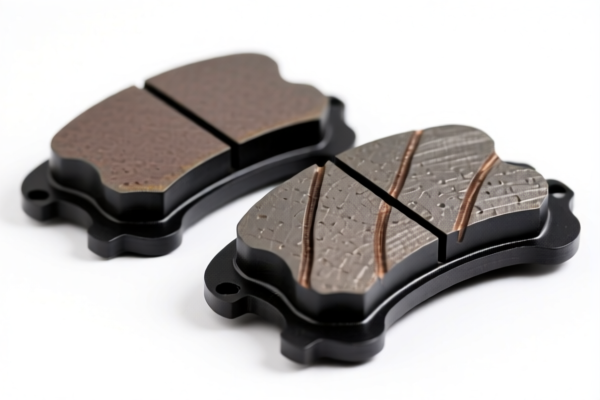
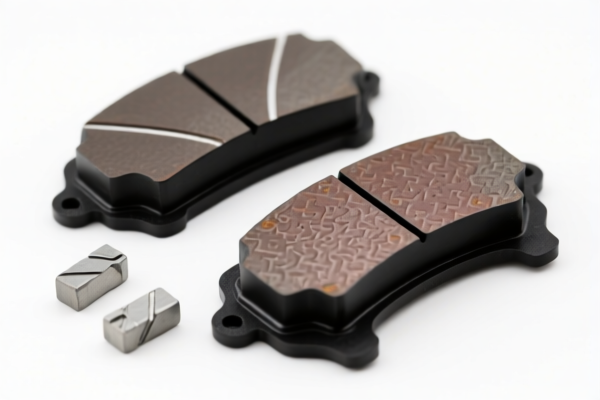

AI Analysis
🛑 High-Performance Brake Fluid (and Hydraulic Oils)
🌐 HS Code Reference & Clearance Guide | 2026 Latest Tariff Analysis | Professional Customs Strategy
📌 I. Product Definition & Classification: What Exactly is "High-Performance Brake Fluid"?
Brake fluid is a specialized hydraulic fluid used in brake and clutch applications. However, in international trade, classification depends heavily on the formulation, base ingredients, and primary function.
The term "High-Performance Brake Fluid" can fall into two distinct categories depending on its chemical makeup: 1. Additive/Blend Formulation: If it is primarily a chemical additive or blend intended to enhance existing fluids, it may be classified under Chemical Preparations (Chapter 38). 2. Lubricant/Hydraulic Formulation: If it is a finished lubricant or hydraulic fluid primarily composed of petroleum oils, it is classified under Lubricating Preparations (Chapter 34) or Petroleum Oils (Chapter 27).
⚠️ Key Distinction Point:
- If the product is marketed as an "Additive" or "Fluid Treatment" that modifies another fluid → Likely 3811.
- If the product is a "Ready-to-use Lubricant", "Hydraulic Oil", or "Lubricating Preparation" → Likely 3403.
- If the product is purely a "Petroleum Oil" without lubricating preparation characteristics → Likely 2710.
📦 II. HS Code Classification Matrix (2026 Latest Tariff Authority Comparison)
| HS Code | Product Description | Application Scenario | Base Ingredient | Tariff Structure |
|---|---|---|---|---|
3811.90.00.00 |
Brake Fluid Additives: Chemical preparations for hydraulic fluids, not containing petroleum oils as main component or defined as "treatment" additives. | Chemical additives, fluid treatments, mineral oil-based blends for fluid modification. | Mineral Oil / Liquid Treatments | 41.5% (6.5% Base + 25% Sec 301 + 10% 122) |
3403.19.10.00 |
Lubricating Preparations: Hydraulic oils or brake fluids in the form of preparations, containing petroleum oils/asphaltites. | High-performance hydraulic fluids, lubricating brake fluids, finished lubricant products. | Petroleum Oil / Mineral Oil | 35.2% (0.2% Base + 25% Sec 301 + 10% 122) |
2710.19.30.20 |
Petroleum Oils (Preparations): Hydraulic system lubricants, specific petroleum fractions not elsewhere specified. | Pure petroleum-based hydraulic fluids, specific industrial oil preparations. | Petroleum Oil | 84¢/bbl + 35.0% (84¢/bbl Base + 25% Sec 301 + 10% 122) |
2710.19.30.80 |
Other Petroleum Oils: Oils not falling into excluded categories, inferred as "Other". | Generic petroleum oil preparations not specifically covered by other subheadings. | Petroleum Oil | 84¢/bbl + 35.0% (84¢/bbl Base + 25% Sec 301 + 10% 122) |
🔍 Critical Note:
- 3811.90.00.00 is for additives or chemical treatments. If your product is a complete brake fluid, this might be incorrect unless it is strictly an "additive pack." - 3403.19.10.00 is the most common for finished lubricating brake fluids or hydraulic oils containing petroleum. - 2710.19.30.x0 applies if the product is classified purely as a petroleum oil preparation without significant "lubricating preparation" characteristics, or if it is a specific hydraulic oil fraction.
💰 III. 2026 Latest Tariff Rate Breakdown (Including Surcharges & Policy Add-ons)
✅ Applicable Country: United States (US)
✅ Origin: China (CN)
✅ Effective Date: November 10, 2025 (for subsequent imports)
🎯 1. 3811.90.00.00 — Brake Fluid Additives / Chemical Preparations
| Item | Content |
|---|---|
| Base Tariff | 6.5% (Ad Valorem) |
| Section 301 Surcharge | +25.0% |
| Section 122 Surcharge | +10.0% |
| Total Tax Rate | 41.5% |
| Tax Calculation | CIF Value × 41.5% |
| De Minimis Exemption | ❌ Not Applicable (deny_de_minimis) |
| Legal Basis Path | Base: 6.5% → Sec 301: 25% → Sec 122: 10% |
📌 Explanation:
- This category is for chemical additives or fluid treatments.
- If your "High-Performance Brake Fluid" is marketed as an additive to be mixed with other fluids, this applies.
- Total Cost: 41.5% of CIF value.
🎯 2. 3403.19.10.00 — Lubricating Preparations (Hydraulic/Brake Oils)
| Item | Content |
|---|---|
| Base Tariff | 0.2% (Ad Valorem) |
| Section 301 Surcharge | +25.0% |
| Section 122 Surcharge | +10.0% |
| Total Tax Rate | 35.2% |
| Tax Calculation | CIF Value × 35.2% |
| De Minimis Exemption | ❌ Not Applicable (deny_de_minimis) |
| Legal Basis Path | Base: 0.2% → Sec 301: 25% → Sec 122: 10% |
📌 Explanation:
- This is the standard classification for finished lubricating preparations, including high-performance brake fluids and hydraulic oils that contain petroleum oils.
- If your product is a ready-to-use brake fluid, this is likely the correct classification.
- Total Cost: 35.2% of CIF value.
🎯 3. 2710.19.30.20 & 2710.19.30.80 — Petroleum Oils (Hydraulic Lubricants)
| Item | Content |
|---|---|
| Base Tariff | 84¢/barrel (Specific Duty) |
| Section 301 Surcharge | +25.0% (Ad Valorem on CIF) |
| Section 122 Surcharge | +10.0% (Ad Valorem on CIF) |
| Total Tax Rate | 84¢/bbl + 35.0% (Ad Valorem) |
| Tax Calculation | (84¢ × Volume in Barrels) + (CIF Value × 35.0%) |
| De Minimis Exemption | ❌ Not Applicable (deny_de_minimis) |
| Legal Basis Path | Base: 84¢/bbl → Sec 301: 25% → Sec 122: 10% |
📌 Explanation:
- This classification applies if the product is considered a petroleum oil preparation rather than a "lubricating preparation."
- The 84¢/bbl is a specific duty based on volume, while the 35% (25% + 10%) is an ad valorem duty on value.
- Total Cost: Variable based on volume and value.
🛠️ IV. Customs Clearance Practical Advice (Real-World Pitfall Guide)
✅ 1. Required Documentation Checklist (Non-Negotiable)
| Document | Must Provide | Notes |
|---|---|---|
| ✅ Product Specification Sheet | ✔️ | Must detail base ingredients (Petroleum vs. Mineral Oil vs. Chemical Additive), viscosity, and performance specs. |
| ✅ Safety Data Sheet (SDS) | ✔️ | Critical for hazardous material classification and handling instructions. |
| ✅ Product Photos (Label & Container) | ✔️ | Must clearly show the product name, intended use (e.g., "Brake Fluid" vs. "Brake Fluid Additive"). |
| ✅ Commercial Invoice | ✔️ | Must specify "High-Performance Brake Fluid" or "Lubricating Preparation" accurately. |
| ✅ Certificate of Origin (CO) | ✔️ | If non-China origin, may reduce tariffs. |
| ✅ Packaging List | ✔️ | Details volume (barrels for 2710) or value (for 3811/3403). |
✅ 2. Declaration Strategy (Key Mantra)
🔥 “Additive = 3811, Lubricant = 3403, Oil = 2710. Don’t Mix Them!”
| Scenario | Correct Declaration | Wrong Practice |
|---|---|---|
| Finished Brake Fluid (Ready to use) | 3403.19.10.00 |
Misclassifying as "Additive" → 41.5% vs 35.2% |
| Brake Fluid Additive (To be mixed) | 3811.90.00.00 |
Misclassifying as "Lubricant" → 35.2% vs 41.5% |
| Pure Hydraulic Oil (Petroleum base) | 2710.19.30.20 |
Misclassifying as "Lubricant" → 35.2% vs 35%+84¢/bbl |
| Generic Oil (No specific use) | 2710.19.30.80 |
Misclassifying as "Lubricant" → 35.2% vs 35%+84¢/bbl |
⚠️ Warning:
- If you declare a finished brake fluid as an additive (3811), you may face higher tariffs (41.5% vs 35.2%) and audit risks for misclassification.
- If you declare a pure oil as a lubricant (3403), you may face audits for not meeting the "lubricating preparation" definition.
✅ 3. Special Cases Handling
| Scenario | Handling Advice |
|---|---|
| OEM Custom Brake Fluid | Provide client order + formula sheet. Ensure it’s declared as a "Lubricating Preparation" if it’s a finished product. |
| Hydraulic Oil for Industrial Use | If it’s primarily for hydraulic systems, consider 2710.19.30.20 if it’s a petroleum fraction, or 3403.19.10.00 if it’s a lubricating preparation. |
| Mix of Additive and Oil | If it’s a blend, declare based on primary function. If it’s a lubricant, use 3403. If it’s an additive, use 3811. |
| Non-China Origin | If sourced from Vietnam/Mexico, IEEPA exemptions may apply. Check origin certificates. |
🌍 V. Global Market Comparison (2026 Latest)
| Country/Region | Recommended HS Code | Tariff (China Origin) | Certification | Notes |
|---|---|---|---|---|
| 🇺🇸 USA | 3403.19.10.00 |
35.2% (0.2% + 25% + 10%) | SDS, GHS | High surcharges; strict classification |
| 🇨🇳 China | 3403.19.10.00 |
5% | CCC | No surcharges |
| 🇪🇺 EU | 3811.90.00.00 |
6.5% | REACH, CLP | No surcharges; check chemical regulations |
| 🇬🇧 UK | 3403.19.00.00 |
5% | UKCA | Post-Brexit rules apply |
| 🇯🇵 Japan | 3403.19.10.00 |
0% | JIS | No surcharges |
📌 Conclusion:
- USA imposes significant surcharges (35% total for lubricants).
- China, EU, Japan have lower or no surcharges.
- Origin is critical for tariff optimization.
📌 VI. Common Mistakes & Pitfalls (Lessons Learned)
❌ Mistake 1: Declaring a finished brake fluid as an additive (3811)
👉 Consequence: Paying 41.5% instead of 35.2% → Unnecessary cost increase!
❌ Mistake 2: Declaring a pure petroleum oil as a lubricating preparation (3403)
👉 Consequence: Customs may reject declaration for misclassification → Delays & Fines!
❌ Mistake 3: Not providing SDS or Ingredient List
👉 Consequence: Customs cannot verify classification → Hold for Inspection!
❌ Mistake 4: Ignoring Section 122 (10% surcharge)
👉 Consequence: Underestimating total cost → Profit Margin Erosion!
✅ Correct Approach:
“High-Performance Brake Fluid, Lubricating Preparation, Petroleum Base, Ready-to-Use, Model XYZ, SDS Available”
🎯 VII. Conclusion: Precise Classification, Cost Control, Compliance!
🎯 Remember the Mantra:
🔹 “Additive = 3811 (41.5%), Lubricant = 3403 (35.2%), Oil = 2710 (35% + 84¢/bbl).”
🔹 “HS Code Determines Life or Death, Tariff Difference is 6.3%, One Mistake Costs Thousands!”
📌 Pro Tip:
If your brake fluid is originating from Vietnam, Mexico, Thailand, or Malaysia, you may be eligible for IEEPA Exemptions, reducing tariffs to 0%~5%.
Recommend Applying for Advance Ruling to avoid clearance risks.
📣 Take Action Now:
📞 Contact a Professional Customs Broker + Provide Product Images + Apply for HS Code Advance Ruling
🚀 Ensure Your Brake Fluid Clears Smoothly, Exports Efficiently, and Maximizes Profit!
✨ Professional Clearance Starts with Accurate Classification!
💼 Every Cent of Cost Deserves to Be Precisely Calculated!
Customer Reviews
About HS Code Classification
The Harmonized System (HS) is an internationally standardized nomenclature developed by the World Customs Organization (WCO) to classify traded products. Over 200 countries use the HS system as the basis for customs tariffs, trade statistics, and import/export regulations.
Each HS code follows a hierarchical structure:
- Chapter (2 digits) — Broad category of goods (e.g., Chapter 84: Machinery and Mechanical Appliances)
- Heading (4 digits) — More specific grouping within the chapter
- Subheading (6 digits) — Internationally standardized breakdown, used by all WCO member countries
- National subdivisions (8-10 digits) — Country-specific extensions for further classification, such as US HTSUS 10-digit codes
Correct HS code classification is essential for smooth customs clearance, accurate duty payment, and compliance with trade regulations. Misclassification can lead to customs delays, overpayment of duties, or penalties.
When importing from CN to US, the applicable tariff rates may include:
- Most-Favored-Nation (MFN) rate — The standard duty rate applied to WTO members
- General rate — Applied to countries without trade agreements
- Trade remedy duties — Additional tariffs such as Section 301 (anti-dumping), Section 232 (national security), or countervailing duties
The information provided on this page is for reference purposes only. For official classification, please consult with your local customs authority or a licensed customs broker.