High performance fuel additive
CN → US| HS Code | Tariff Rate | Origin | Destination | Doc |
|---|---|---|---|---|
| 2942003500 | 41.5% | CN | US | Official Doc |
| 3811190000 | 41.5% | CN | US | Official Doc |
| 3811900000 | 41.5% | CN | US | Official Doc |
| 2942005000 | 38.7% | CN | US | Official Doc |
| 3824994900 | 41.5% | CN | US | Official Doc |
Product Images
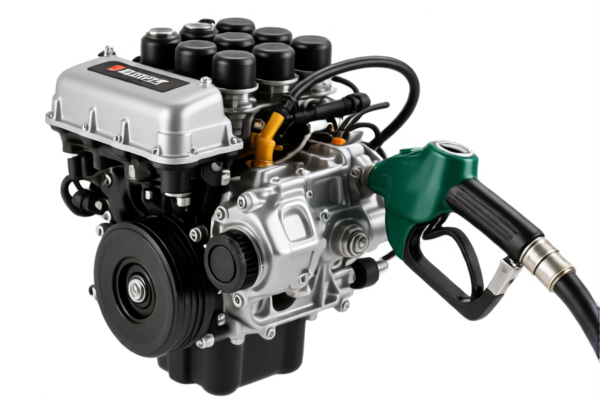
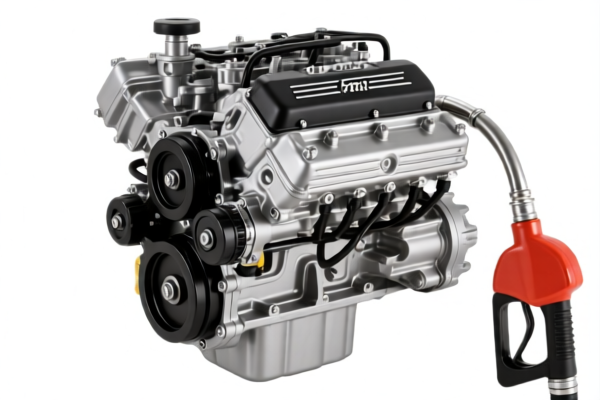
AI Analysis
⛽ High Performance Fuel Additives (HPFA)
🌐 HS Code Reference & Clearance Guide | 2026 Latest Tariff Analysis | Professional Clearance Strategy
📌 I. Product Definition & Classification: What Are "High Performance Fuel Additives"?
High Performance Fuel Additives are specialized chemical formulations designed to improve the combustion efficiency, stability, and cleanliness of fuel systems. In international trade, they are primarily classified into two distinct categories based on their chemical structure and primary function:
1. Organic Chemicals (Aromatic/Modified Aromatic)
Chemical compounds like MTBE, ETBE, or other oxygenates that act as octane boosters or oxygenates. These are classified under Chapter 29 (Organic Chemicals).
2. Mineral Oil/Prepared Additives
Liquid mixtures containing anti-knock agents, anti-oxidants, detergents, or dispersants, often based on mineral oil or similar liquids. These are classified under Chapter 38 (Miscellaneous Chemical Products).
⚠️ Key Distinction Point:
- If the additive is a single defined organic compound (e.g., pure MTBE or specific aromatic hydrocarbons) →归入 2942.xx
- If the additive is a mixture/preparation (e.g., detergent packages, anti-knock blends based on mineral oil) →归入 3811.xx or 3824.xx
📦 II. HS Code Classification Details (2026 Latest Tariff Authority Comparison)
| HS Code | Product Description | Applicable Scenario | Chemical Nature |
|---|---|---|---|
2942.00.35.00 |
High performance fuel additives as other organic compounds; material is aromatic or modified aromatic compounds | Specific oxygenates, synthetic aromatics used for octane improvement | ✅ Organic Compound |
3811.19.00.00 |
Fuel additives as prepared additives for anti-knock or anti-oxidant purposes; material is mineral oil or similar liquids | Commercial anti-knock blends, oxidation inhibitors | ✅ Prepared Product |
3811.90.00.00 |
Fuel additives fitting the description of other prepared liquids for similar purposes | Detergent packages, lubricity improvers, general fuel treatments | ✅ Prepared Product |
2942.00.50.00 |
High performance fuel additives as other organic compounds with consistent material attributes and no conflict in form/use | Other unspecified organic compounds used in fuel | ✅ Organic Compound |
3824.99.49.00 |
Fuel additives as chemical industry products and preparations; component is hydrocarbon mixture | Complex hydrocarbon mixtures, non-specific fuel formulations | ✅ Prepared Product |
🔍 Critical Reminder:
- Chapter 29 (2942) applies when the product is a defined organic chemical with a specific chemical structure (e.g., a specific aromatic compound).
- Chapter 38 (3811/3824) applies when the product is a mixture/preparation designed for a specific technical function (e.g., "anti-knock," "detergent") without a single dominant chemical identity, or based on mineral oil.
- Misclassification between Chapter 29 and Chapter 38 is a common customs audit risk.
💰 III. 2026 Latest Tariff Rate Breakdown (Including Surcharges & Policy Add-ons)
✅ Applicable Country: United States (US)
✅ Origin: China (CN)
✅ Effective Date: November 10, 2025 onwards (including subsequent imports)
🎯 1. HS Codes 2942.00.35.00 & 3811.19.00.00 & 3811.90.00.00 & 3824.99.49.00
| Item | Content |
|---|---|
| Base Duty Rate | 6.5% (ad valorem) |
| Section 301 Surcharge | +25.0% (USITC Footnote for Chinese goods) |
| Section 122 Surcharge | +10.0% (Specific surcharge for certain chemical/fuel products) |
| Total Tax Rate | 41.5% |
| Tax Calculation | CIF Value × 41.5% |
| De Minimis Exemption | ❌ Not Applicable (deny_de_minimis) |
| Legal Basis Path | Base: 6.5% → 301: 25.0% → 122: 10.0% → Total: 41.5% |
📌 Explanation:
- These four HS codes carry a high cumulative tariff burden of 41.5%.
- The 6.5% is the standard Most Favored Nation (MFN) base duty.
- The 25% is the standard Section 301 tariff for Chinese-origin goods.
- The 10% is an additional surcharge (Section 122 or specific chemical surcharge) applied to these fuel-related additives.
- No de minimis exemption applies, meaning even small shipments are subject to this full rate.
🎯 2. HS Code 2942.00.50.00
| Item | Content |
|---|---|
| Base Duty Rate | 3.7% (ad valorem) |
| Section 301 Surcharge | +25.0% (USITC Footnote for Chinese goods) |
| Section 122 Surcharge | +10.0% (Specific surcharge) |
| Total Tax Rate | 38.7% |
| Tax Calculation | CIF Value × 38.7% |
| De Minimis Exemption | ❌ Not Applicable (deny_de_minimis) |
| Legal Basis Path | Base: 3.7% → 301: 25.0% → 122: 10.0% → Total: 38.7% |
📌 Note:
- This code has a slightly lower base duty (3.7% vs 6.5%), resulting in a total rate of 38.7%.
- While slightly cheaper than the 41.5% bracket, it is still a very high tariff.
- Eligibility for this lower base rate depends on the specific chemical classification within "Other Organic Compounds."
🛠️ IV. Clearance Practical Advice (Battle-Tested Pitfall Avoidance)
✅ 1. Required Documentation Checklist (Mandatory)
| Document | Must Provide | Explanation |
|---|---|---|
| ✅ Technical Data Sheet (TDS) | ✔️ | Shows chemical composition, CAS numbers, and concentration of active ingredients. Crucial for distinguishing Ch. 29 vs Ch. 38. |
| ✅ Safety Data Sheet (SDS) | ✔️ | Required for hazardous material classification (flammable, corrosive, etc.). |
| ✅ Product Composition Statement | ✔️ | Detailed breakdown of all components by weight percentage. |
| ✅ Commercial Invoice | ✔️ | Must clearly state "Fuel Additive" and specify the chemical nature (e.g., "Aromatic Hydrocarbon Mixture"). |
| ✅ Certificate of Origin (CO) | ✔️ | To confirm Chinese origin and apply correct surcharges. |
| ✅ MSDS/SDS for Shipping | ✔️ | Required for IATA/IMDG compliance for air/sea transport. |
✅ 2. Declaration Tips (Key Mnemonic)
🔥 “Organic is 29, Mixture is 38, Check CAS Number to Save Cash!”
| Scenario | Correct Declaration | Wrong Practice |
|---|---|---|
| Single defined compound (e.g., pure MTBE) | 2942.00.35.00 or 2942.00.50.00 |
Reporting as "Prepared Fuel Additive" → Wrong Chapter |
| Mixture of chemicals (e.g., Detergent Package) | 3811.19.00.00 or 3811.90.00.00 |
Reporting as "Organic Compound" → Risk of reclassification |
| Mineral oil-based additive | 3811.19.00.00 |
Reporting as 2942 → Rejection |
| Unspecified "Fuel Treatment" | 3824.99.49.00 |
Vague description "Fuel Additive" → Customs Delay |
✅ 3. Special Situation Handling
| Situation | Handling Advice |
|---|---|
| Proprietary Formulas | Provide TDS without revealing exact trade secrets, but list major ingredients and CAS numbers. |
| Small Sample Shipments | No De Minimis! Do not use 80/86 forms. Must pay full 38.7%–41.5% duty. |
| Mixed Containers | If container has both Ch. 29 and Ch. 38 goods, declare separately. Misdeclaration leads to penalties. |
| Bunker Fuel Additives | Specifically declare use in marine bunkers if applicable, but HS code remains similar. |
🌍 V. Global Market Clearance Comparison (2026 Latest)
| Country/Region | Recommended HS Code | Tariff (China Origin) | Certification Requirements | Notes |
|---|---|---|---|---|
| 🇺🇸 USA | 3811.19.00.00 / 2942.00.35.00 |
38.7% – 41.5% | DOT/PHMSA (Hazmat) | High tariffs due to Section 301 + 122 |
| 🇨🇳 China | 3811.19.00.00 |
6.5% | GB Standards | No additional surcharges |
| 🇪🇺 EU | 3811.10.00 |
0% – 4.5% | REACH Registration | REACH compliance is critical for chemical imports |
| 🇯🇵 Japan | 3811.19.00 |
0% – 3.8% | JIS Standards | Low base duty, but strict chemical reporting |
📌 Conclusion:
- The US market is the most expensive for Chinese-made fuel additives due to the layered surcharges.
- EU requires REACH registration, which can be a significant time and cost barrier for new exporters.
- China and Japan offer much more favorable tariff environments.
📌 VI. Common Mistakes & Pitfall Guide (Blood-Taught Lessons)
❌ Mistake 1: Using "Fuel Additive" as a generic description without chemical detail
👉 Consequence: Customs cannot determine if it’s Chapter 29 or 38 → Detention for Inspection
❌ Mistake 2: Misclassifying a Mixture as a Pure Organic Compound
👉 Consequence: If customs reclassifies from 2942 (3.7% base) to 3811 (6.5% base), you face Back Taxes + Penalties
❌ Mistake 3: Assuming Small Shipments are Exempt from Duties
👉 Consequence: Fuel additives are explicitly denied de minimis. You will pay ~40% tax on a $100 sample.
❌ Mistake 4: Ignoring Section 122 Surcharge
👉 Consequence: Under-declaring by 10% leads to fraud allegations and severe fines.
✅ Correct Practice:
“Fuel Additive, Detergent Package, Based on Hydrocarbon Solvents and Polyisobutylene Amine, CAS No. XXX-XX-X, HS Code: 3811.19.00.00”
🎯 VII. Conclusion: Professional Classification Saves Money!
🎯 Remember the Mnemonic:
🔹 “Organic is 29, Mixture is 38, CAS Number is King!”
🔹 “USA Tariff is High (38-41%), Prepare Cash in Advance!”
🔹 “No De Minimis, No Excuses!”
📌 Pro Tip:
If your fuel additive is originating from Vietnam, Malaysia, or Thailand, you may qualify for lower or zero Section 301/122 surcharges.
Recommendation: Obtain a Certificate of Origin from a non-China source to reduce tax burden significantly.
Advance Ruling: Apply for a Binding Tariff Information (BTI) or US CBP Ruling before shipping to ensure correct classification.
📣 Immediate Action:
📞 Contact a Licensed Customs Broker
📄 Provide TDS + SDS + CAS Numbers
🚀 Secure the Correct HS Code to Avoid 41.5% Surprise Taxes!
✨ Professional Clearance Starts with Accurate Classification!
💼 Every Percent of Tariff Saved is Profit Earned!
Customer Reviews
About HS Code Classification
The Harmonized System (HS) is an internationally standardized nomenclature developed by the World Customs Organization (WCO) to classify traded products. Over 200 countries use the HS system as the basis for customs tariffs, trade statistics, and import/export regulations.
Each HS code follows a hierarchical structure:
- Chapter (2 digits) — Broad category of goods (e.g., Chapter 84: Machinery and Mechanical Appliances)
- Heading (4 digits) — More specific grouping within the chapter
- Subheading (6 digits) — Internationally standardized breakdown, used by all WCO member countries
- National subdivisions (8-10 digits) — Country-specific extensions for further classification, such as US HTSUS 10-digit codes
Correct HS code classification is essential for smooth customs clearance, accurate duty payment, and compliance with trade regulations. Misclassification can lead to customs delays, overpayment of duties, or penalties.
When importing from CN to US, the applicable tariff rates may include:
- Most-Favored-Nation (MFN) rate — The standard duty rate applied to WTO members
- General rate — Applied to countries without trade agreements
- Trade remedy duties — Additional tariffs such as Section 301 (anti-dumping), Section 232 (national security), or countervailing duties
The information provided on this page is for reference purposes only. For official classification, please consult with your local customs authority or a licensed customs broker.