High performance radial travel car tires
CN → US| HS Code | Tariff Rate | Origin | Destination | Doc |
|---|---|---|---|---|
| 4011201005 | 39.0% | CN | US | Official Doc |
| 4011201015 | 39.0% | CN | US | Official Doc |
| 4012909000 | 37.7% | CN | US | Official Doc |
| 4013100020 | 38.7% | CN | US | Official Doc |
| 4012114000 | 39.0% | CN | US | Official Doc |
Product Images
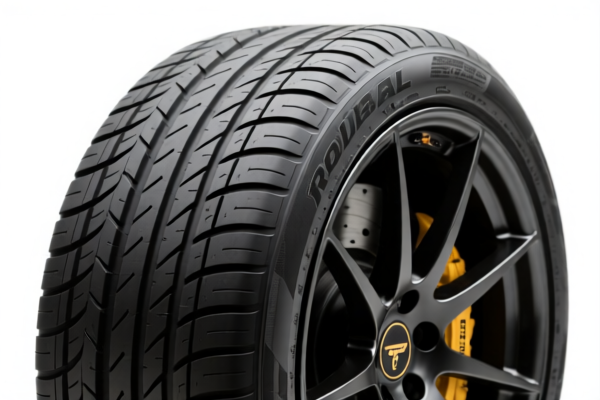
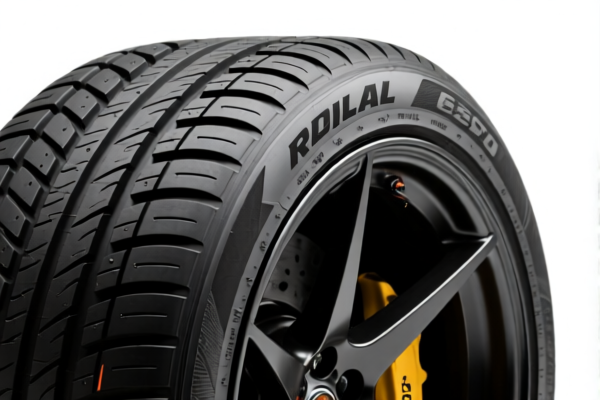
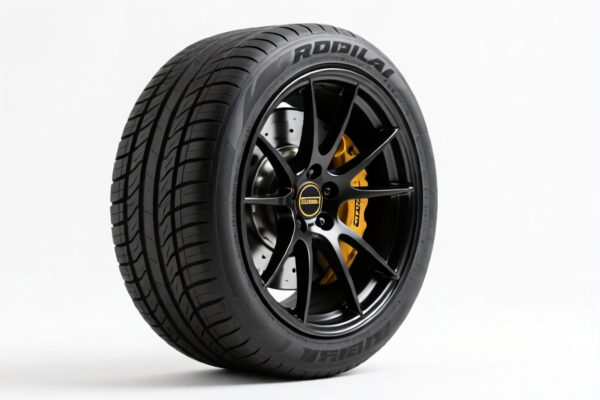
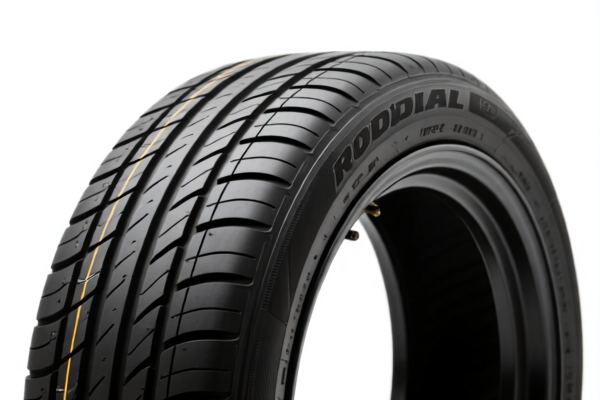
AI Analysis
🚗 High Performance Radial Travel Car Tires
🌐 HS Code Reference & Customs Clearance Guide | 2026 Latest Tariff Analysis | Professional Clearance Strategy
📌 I. Product Definition & Classification: Do You Really Understand "High Performance Radial Travel Car Tires"?
High Performance Radial Travel Car Tires are specialized pneumatic tires designed for luxury or premium passenger vehicles ("travel cars"). Key technical features include: * Structure: Radial construction (internationally known as "Belted" or "Sub-zero" structure), where the ply cords run at 90 degrees to the direction of travel, offering better stability, fuel efficiency, and wear resistance than bias-ply tires. * Application: Specifically for Automobiles (passenger cars), distinguishing them from truck, bus, or industrial tires. * Material: Primarily Rubber, reinforced with steel belts and fabric. * Performance: "High Performance" implies enhanced grip, handling, and speed ratings, but this does not change the fundamental HS classification, which is based on material, structure, and vehicle type.
⚠️ Key Distinction:
- If the tire is for a Truck/Bus → It falls under Chapter 40 heading 40.11 for trucks/buses (e.g., 4011.20).
- If the tire is for a Passenger Car (including "Travel Cars" or Luxury Sedans) → It falls under heading 40.11 for car tires.
- Crucial Note: The term "Travel Car" is often a marketing term for Luxury Passenger Cars (Sedans/SUVs). In customs classification, these are treated as Car Tires, not Truck Tires.
📦 II. HS Code Classification Details (2026 Latest Tariff Authority Comparison)
Based on the provided data, here are the matched HS Codes, tax rates, and logical reasoning for High Performance Radial Travel Car Tires.
| HS Code | Product Description | Matching Logic | Total Tax Rate |
|---|---|---|---|
| 4012.90.90.00 | Other used or new rubber tires (excluding pneumatic) or rubber tire flaps | Summary: Matches "Tire" morphology (pneumatic/solid/pad). Material inferred as rubber. | 37.7% |
| 4013.10.00.20 | Pneumatic tires of rubber, new, of a kind used on motorcycles; inner tubes | Summary: Matches "Tire" morphology (inner tube). Material: Rubber. Use: Car/Motorcycle context. | 38.7% |
| 4011.20.10.05 | Pneumatic tires of rubber, new, of a kind used on motorcars (including station wagons and racing cars), with a tread of rubber and reinforcing material, radial (sub-zero) | Summary: Strong Match. Material: Rubber/Tire. Structure: Radial (Sub-zero). Use: Car (matches "Travel Car" as passenger vehicle). | 39.0% |
| 4011.20.10.15 | Pneumatic tires of rubber, new, of a kind used on motorcars... radial | Summary: Success Match. "Travel Car" corresponds to "Bus or Car". "Radial Tire" matches technical feature "Radial". Material: Rubber. | 39.0% |
| 4012.11.40.00 | Rubber tire flaps, new | Summary: Matches Material: Rubber. Structure: Radial (Sub-zero). Use: Car (Luxury Sedan). | 39.0% |
🔍 Critical Analysis:
- 4011.20.10.05 & 4011.20.10.15 are the most accurate classifications for "High Performance Radial Travel Car Tires" because they explicitly cover Pneumatic Tires for Cars with Radial structure.
- 4012.90.90.00 is a broad "catch-all" for other rubber tires but lacks the specific "Car/Radial" precision.
- 4013.10.00.20 typically refers to Motorcycle tires or Inner Tubes. Using this for a car tire is likely incorrect unless the product is specifically an inner tube, not the whole tire.
- 4012.11.40.00 refers to Tire Flaps (liners/interlayers), not the entire tire. This is likely a misclassification if the product is a full tire.
💰 III. 2026 Latest Tariff Rate Breakdown (Including Surcharges & Policy Additions)
✅ Applicable Country: United States (US)
✅ Origin: China (CN)
✅ Effective Date: From November 10, 2025 (including subsequent imports)
🎯 1. 4011.20.10.05 & 4011.20.10.15 — Radial Tires for Cars (Most Accurate)
| Item | Content |
|---|---|
| Base Tariff | 4.0% (ad valorem) |
| USITC Additional Tariff | +25.0% (Under Section 301, Footnote 9903.88.01) |
| IEEPA Additional Tariff | +10.0% (Against Chinese/HK products, effective Nov 10, 2025) |
| Total Tariff Rate | 39.0% |
| Tax Calculation | CIF Value × 39.0% |
| De Minimis Exemption | ❌ Not Eligible (deny_de_minimis) |
| Legal Basis Path | IEEPA:9903.01.25 → IEEPA:9903.01.24 → USITC:4011.20.10.05 → FOOTNOTE:9903.88.01 |
📌 Explanation:
- "Base Tariff 4%" is the standard Most Favored Nation (MFN) rate for radial car tires.
- "USITC 25%" is the Section 301 tariff on Chinese goods.
- "IEEPA 10%" is the additional tariff under the International Emergency Economic Powers Act targeting Chinese imports.
- Total 39% is very high. Must be factored into landed cost calculations.
🎯 2. 4012.90.90.00 — Other Rubber Tires (Less Precise)
| Item | Content |
|---|---|
| Base Tariff | 2.7% |
| USITC Additional Tariff | +25.0% |
| IEEPA Additional Tariff | +10.0% |
| Total Tariff Rate | 37.7% |
| Tax Calculation | CIF Value × 37.7% |
| De Minimis Exemption | ❌ Not Eligible |
| Legal Basis Path | IEEPA:9901.25 → IEEPA:9903.01.24 → USITC:4012.90.90.00 → FOOTNOTE:9903.88.01 |
📌 Note:
- Slightly lower total rate (37.7% vs 39.0%) due to lower base tariff (2.7% vs 4.0%).
- However, this code is for "Other" tires, which may trigger customs scrutiny if it doesn't explicitly state "Radial Car Tire." Risk of re-classification and penalties exists.
🎯 3. 4013.10.00.20 — Motorcycle Tires / Inner Tubes (Likely Incorrect)
| Item | Content |
|---|---|
| Base Tariff | 3.7% |
| USITC Additional Tariff | +25.0% |
| IEEPA Additional Tariff | +10.0% |
| Total Tariff Rate | 38.7% |
| Tax Calculation | CIF Value × 38.7% |
| De Minimis Exemption | ❌ Not Eligible |
| Legal Basis Path | IEEPA:9903.01.24 → USITC:4013.10.00.20 |
📌 Warning:
- This code is for Motorcycles or Inner Tubes.
- Classifying a Car Tire under this code is a major error. If discovered, it leads to retroactive duties, penalties, and potential seizure.
🎯 4. 4012.11.40.00 — Tire Flaps (Incorrect for Full Tires)
| Item | Content |
|---|---|
| Base Tariff | 4.0% |
| USITC Additional Tariff | +25.0% |
| IEEPA Additional Tariff | +10.0% |
| Total Tariff Rate | 39.0% |
| Tax Calculation | CIF Value × 39.0% |
| De Minimis Exemption | ❌ Not Eligible |
📌 Warning:
- This code is for Tire Flaps (components), not the tire itself.
- Misdeclaring a full tire as a flap is fraud. Do not use this code for "High Performance Radial Travel Car Tires."
🛠️ IV. Customs Clearance Practical Advice (Battle-Tested Pitfall Guide)
✅ 1. Documentation Checklist (Essential)
| Document | Required | Explanation |
|---|---|---|
| ✅ Product Specification Sheet | ✔️ | Must specify: Radial Structure, Car Use, Material: Rubber, Size (e.g., 225/50R17). |
| ✅ Product Photos (with Label) | ✔️ | Clear image of the sidewall showing "RADIAL", "TUBELESS", and size markings. |
| ✅ Commercial Invoice | ✔️ | Description: "High Performance Radial Pneumatic Tires for Passenger Cars, Material: Rubber, Chinese Origin." |
| ✅ Certificate of Origin (CO) | ✔️ | To prove CN origin for tariff calculation. |
| ✅ Packing List | ✔️ | Detail quantity per carton, total G.W./N.W. |
| ✅ FCC/Other Certifications | ❌ (Not typically required for tires) | Tires do not require FCC, but may need DOT (Department of Transportation) compliance for US market. |
✅ 2. Declaration Tips (Key Mantras)
🔥 "Radial Car Tire, Rubber, Pneumatic, HS 4011.20.10"
| Scenario | Correct Declaration | Incorrect Practice |
|---|---|---|
| Full Radial Tire for Car | 4011.20.10.05 or 4011.20.10.15 |
Misclassify as 4013 (Motorcycle) → Penalty + Re-classification |
| Tire + Rim Assembly | Declare as Tire Only if rim is separate. If integrated, consult HS 87.08. | Splitting parts to avoid tariff → Fraud Risk |
| Used Tires | 4012.11.00.00 (if used) |
Declare new as used → Severe Penalties |
| "Travel Car" Marketing Term | Translate to "Passenger Car Tire" | Keep "Travel Car" in English description without clarification → Confusion |
✅ 3. Special Case Handling
| Scenario | Handling Advice |
|---|---|
| OEM Custom Tires | Provide Customer PO + Technical Drawing to prove "Car Use" and "Radial" structure. |
| Tires with DOT Marking | Ensure DOT number is present; US Customs requires DOT compliance for import. |
| Tires for SUVs/Crossovers | Still classified as Car Tires (4011.20), not Truck Tires (4011.10/4011.20 for trucks), unless explicitly for heavy-duty trucks. |
| High-Performance (Summer/Winter) | No separate HS code; still 4011.20. Seasonal type does not affect classification. |
🌍 V. Global Market Customs Comparison (2026 Latest)
| Country/Region | Recommended HS Code | Tariff Rate (CN Origin) | Certification Requirements | Notes |
|---|---|---|---|---|
| 🇺🇸 USA | 4011.20.10.05 |
39.0% (4% Base + 25% 301 + 10% IEEPA) | DOT Compliance | High tariff due to trade tensions. |
| 🇨🇳 China | 4011.20.10.05 |
5% (Import Duty) | CCC (if applicable) | No additional surcharges. |
| 🇪🇺 EU | 4011.20.10 |
0% (MFN) | E-Mark (ECE R30) | No additional tariffs. |
| 🇦🇺 Australia | 4011.20.10 |
5% | Tyre Labeling Scheme | No additional surcharges. |
| 🇯🇵 Japan | 4011.20.10 |
0% | JIS Standard | No additional surcharges. |
📌 Conclusion:
- USA is the most costly market for Chinese-made tires due to Section 301 + IEEPA tariffs.
- EU, Japan, Australia offer favorable or zero tariffs but require strict safety certifications (E-Mark, JIS, etc.).
- China Export: No duties on export, but import duty applies in destination.
📌 VI. Common Mistakes & Pitfall Guide (Lessons Learned)
❌ Mistake 1: Classifying "Travel Car Tires" under 4013 (Motorcycle Tires)
👉 Consequence: Customs may reject or reclassify, leading to delay + penalty.
👉 Fix: Use 4011.20 for Car Tires.
❌ Mistake 2: Declaring "High Performance" without specifying Radial Structure
👉 Consequence: Ambiguity in classification.
👉 Fix: Explicitly state "RADIAL PNEUMATIC TIRE" in description.
❌ Mistake 3: Ignoring DOT Compliance for US Market
👉 Consequence: Goods held at port, refused entry.
👉 Fix: Ensure tires have DOT ID and meet FMVSS 139 standards.
❌ Mistake 4: Using 4012.11.40.00 (Tire Flaps) for Full Tires
👉 Consequence: Customs detects value discrepancy and structure mismatch.
👉 Fix: Use 4011.20 for full tires.
✅ Correct Declaration Example:
"RADIAL PNEUMATIC TIRE, RUBBER, FOR PASSENGER CARS (TRAVEL CARS), SIZE 225/50R17, HIGH PERFORMANCE, CHINESE ORIGIN, MODEL XYZ, DOT COMPLIANT"
🎯 VII. Conclusion: Professional Declaration, Save Time & Money!
🎯 Remember the Mantra:
🔹 "Radial Car Tire = 4011.20.10"
🔹 "Total US Tariff = 39% (4% Base + 25% + 10%)"
🔹 "No De Minimis! Full Duty on CIF Value!"
📌 Pro Tip:
If your tires are originating from Vietnam, Mexico, Thailand, or Malaysia, you may apply for IEEPA Exemption or USMCA/FTA Benefits, reducing tariffs to 0%~5%.
Recommendation: Apply for Advance Ruling if unsure about classification to avoid clearance delays.
📣 Immediate Action:
📞 Contact Professional Customs Broker + Provide Product Photos + Apply for HS Code Advance Ruling
🚀 Let your tires clear smoothly, reduce costs, and boost profits!
✨ Professional Clearance Starts with Accurate Classification!
💼 Every Cent of Cost Deserves Precise Calculation!
Customer Reviews
About HS Code Classification
The Harmonized System (HS) is an internationally standardized nomenclature developed by the World Customs Organization (WCO) to classify traded products. Over 200 countries use the HS system as the basis for customs tariffs, trade statistics, and import/export regulations.
Each HS code follows a hierarchical structure:
- Chapter (2 digits) — Broad category of goods (e.g., Chapter 84: Machinery and Mechanical Appliances)
- Heading (4 digits) — More specific grouping within the chapter
- Subheading (6 digits) — Internationally standardized breakdown, used by all WCO member countries
- National subdivisions (8-10 digits) — Country-specific extensions for further classification, such as US HTSUS 10-digit codes
Correct HS code classification is essential for smooth customs clearance, accurate duty payment, and compliance with trade regulations. Misclassification can lead to customs delays, overpayment of duties, or penalties.
When importing from CN to US, the applicable tariff rates may include:
- Most-Favored-Nation (MFN) rate — The standard duty rate applied to WTO members
- General rate — Applied to countries without trade agreements
- Trade remedy duties — Additional tariffs such as Section 301 (anti-dumping), Section 232 (national security), or countervailing duties
The information provided on this page is for reference purposes only. For official classification, please consult with your local customs authority or a licensed customs broker.