High performance steering wheel
CN → US| HS Code | Tariff Rate | Origin | Destination | Doc |
|---|---|---|---|---|
| 8708945000 | 37.5% | CN | US | Official Doc |
| 8708947550 | 0.0% | CN | US | Official Doc |
| 8708941000 | 35.0% | CN | US | Official Doc |
Product Images
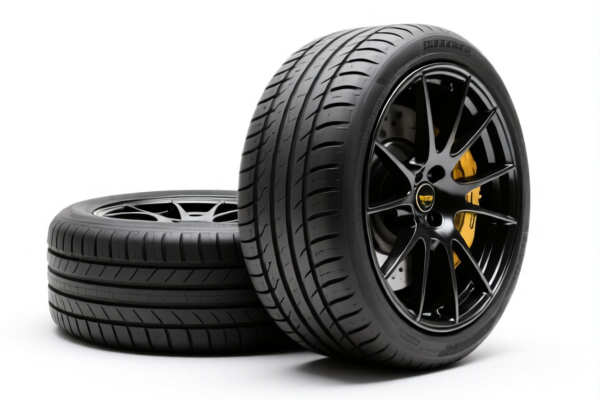
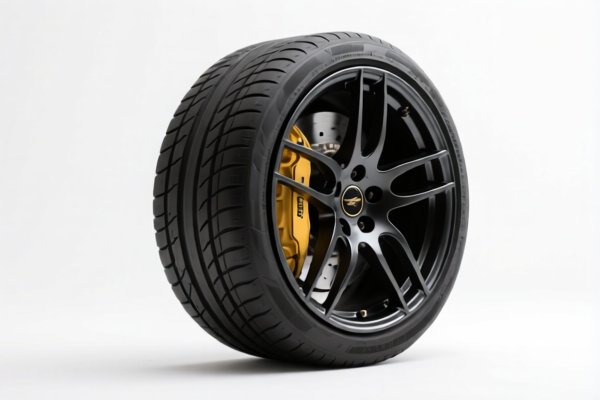
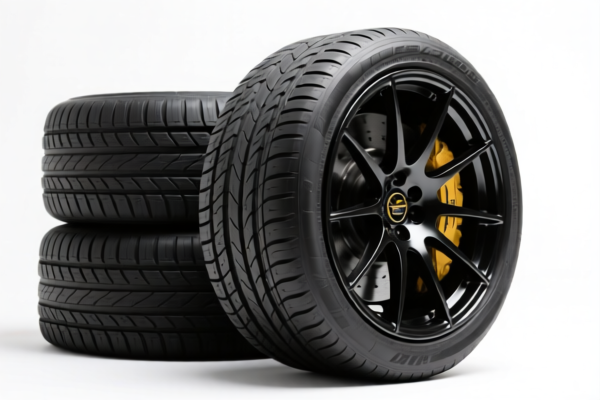
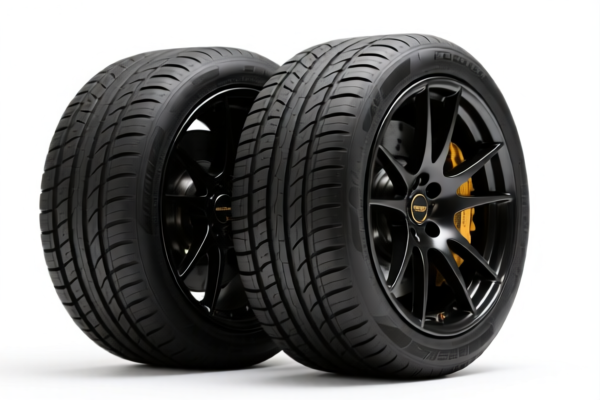
AI Analysis
🎡 High Performance Steering Wheel (Auto Parts)
🌐 HS Code Reference & Customs Clearance Guide | 2026 Latest Tariff Analysis | Professional Clearance Strategy for US Imports
📌 Part 1: Product Definition & Classification: Do You Really Understand "Steering Wheels"?
A High Performance Steering Wheel is a critical safety component and driving interface for vehicles. In international trade, it falls under Chapter 87 (Vehicles Other Than Railway), specifically under heading 8708 (Parts and accessories of motor vehicles).
In the context of US customs (HTSUS) and current trade policies, the classification depends heavily on the specific vehicle type it is designed for (Passenger Car vs. Tractor/Others) and the structure (Steering Wheel vs. Column/Box).
⚠️ Key Classification Points:
- If it is a steering wheel for passenger cars → Likely 8708.94.50 or 8708.94.75.
- If it is specifically for tractors (agricultural/industrial) → Likely 8708.94.10.
- Material Check: The summary indicates no material conflicts, meaning standard plastic, leather, or carbon fiber finishes do not shift the HS Code, but the application does.
📦 Part 2: HS Code Classification Details (Based on Provided Data)
| HS Code | Product Description | Application Context | Total Tax Rate (Est.) |
|---|---|---|---|
8708.94.50.00 |
Steering wheels, steering columns, and steering boxes | General Motor Vehicles (Passenger Cars) | 37.5% |
8708.94.75.50 |
Other parts (Steering wheels, columns, boxes) for Other Vehicles | General Auto Parts (Catch-all Category) | 2.5% + 35.0% = 37.5% |
8708.94.10.00 |
Steering wheels, steering columns, and steering boxes for Tractors | Agricultural/Industrial Tractors | 35.0% |
🔍 Analysis of the 3 Codes from Data: 1.
8708.94.50.00: The most direct match for "Steering Wheel" in passenger vehicles. The summary confirms it "fully complies with the definition of steering wheels." 2.8708.94.75.50: A broader "Other" category. The summary notes high matching with "other vehicle use." Note: The total tax here is effectively 37.5% (2.5% base + 35% additional). 3.8708.94.10.00: Specific to Tractors. Unless your "high performance steering wheel" is for a tractor, this is less likely, but included due to "parts default tendency" rules in ambiguous cases.
💰 Part 3: 2026 Latest Tariff Rate Breakdown (Including Additional Taxes)
✅ Applicable Country: USA (US)
✅ Origin: China (CN) (Implied by "122 Clause" and "Section 301" references in tax details)
✅ Effective Time: Current 2025/2026 Trade Policies
🎯 1. 8708.94.50.00 — Steering Wheel (Passenger Vehicle)
| Item | Content |
|---|---|
| Basic Duty Rate | 2.5% |
| Section 301 Additional Duty | +25.0% (From USITC Footnote 9903.88.01 / Section 301 List 4A) |
| 122 Clause (IEEPA) Duty | +10.0% (China-specific tariff) |
| Total Effective Rate | 37.5% |
| Tax Calculation | CIF Value × 37.5% |
| De Minimis Exemption? | ❌ NO (Deny de minimis) |
| Legal Basis Path | HTS:8708.94.50 → USITC:25% → IEEPA:10% |
📌 Explanation:
- The 2.5% is the standard Most Favored Nation (MFN) rate for auto parts.
- The 25% is the significant trade war tariff on Chinese auto parts.
- The 10% is a separate statutory additional tariff (Section 122).
- Total: 37.5%. This is a high cost item for importers.
🎯 2. 8708.94.75.50 — Other Auto Parts (Steering System)
| Item | Content |
|---|---|
| Basic Duty Rate | 2.5% |
| Section 301 Additional Duty | +25.0% |
| 122 Clause (IEEPA) Duty | +10.0% |
| Total Effective Rate | 37.5% (Displayed as 2.5% + 35%) |
| Tax Calculation | CIF Value × 37.5% |
| De Minimis Exemption? | ❌ NO |
| Legal Basis Path | HTS:8708.94.75 → USITC:25% → IEEPA:10% |
📌 Note:
- While the base rate is the same (2.5%), the "Other" category often catches items not explicitly listed in .50.
- The summary explicitly states: "Material no conflict... high match with other vehicle use."
- Crucially: The total tax burden is identical to the primary steering wheel code (37.5%).
🎯 3. 8708.94.10.00 — Steering Wheel (Tractor Specific)
| Item | Content |
|---|---|
| Basic Duty Rate | 0.0% |
| Section 301 Additional Duty | +25.0% |
| 122 Clause (IEEPA) Duty | +10.0% |
| Total Effective Rate | 35.0% |
| Tax Calculation | CIF Value × 35.0% |
| De Minimis Exemption? | ❌ NO |
| Legal Basis Path | HTS:8708.94.10 → USITC:25% → IEEPA:10% |
📌 Explanation:
- This code has a 0% base duty, making it 2.5% cheaper than passenger car steering wheels.
- Warning: Do NOT misuse this code for passenger cars. Misclassification can lead to severe penalties. Only use if the product is technically and legally defined for use in tractors.
🛠️ Part 4: Customs Clearance Practical Advice (Pitfall Avoidance Guide)
✅ 1. Documentation Checklist (Must-Haves)
| Document | Required | Description |
|---|---|---|
| ✅ Commercial Invoice | ✔️ | Must state "Steering Wheel" or "Steering System Part". |
| ✅ Packing List | ✔️ | Detail contents. |
| ✅ Product Photos | ✔️ | Show brand, model, and no visible tractor-specific markings if declaring for cars. |
| ✅ Usage Declaration | ✔️ | State: "For use in Passenger Motor Vehicles" or "For Tractors". |
| ✅ Certificate of Origin | ✔️ | To prove Chinese origin (triggering tariffs). |
✅ 2. Declaration Strategy (Key Tips)
🔥 "Be Specific, Not Generic!"
| Scenario | Correct Declaration | Wrong Declaration | Consequence of Error |
|---|---|---|---|
| Car Steering Wheel | "Steering Wheel for Passenger Car" | "Auto Part" | Customs may assign worst-case code or delay. |
| Tractor Steering Wheel | "Steering Wheel for Tractor" | "Auto Part" | Risk of penalty if deemed misclassified. |
| Complete Unit | Include column? | Say "Wheel Only" if column included | If column included, must declare as "Steering Column/Wheel Assembly". |
✅ 3. Special Handling
| Situation | Handling Suggestion |
|---|---|
| OEM Parts | Provide the OEM logo license if requested. |
| High-End/Carbon Fiber | Declare value accurately; do not under-declare to avoid audits. |
| Mixed Shipment | If steering wheels are packed with other auto parts, declare each item separately. Do not lump under one HS code. |
🌍 Part 5: Global Market Comparison (2026)
| Country/Region | Recommended HS Code | Approx. Total Duty (China Origin) | Notes |
|---|---|---|---|
| 🇺🇸 USA | 8708.94.50.00 |
37.5% | High tariffs due to Section 301 + 122. |
| 🇨🇳 China (Import) | 8708.94.50 |
~10-15% | Lower than US; no 301 tariffs. |
| 🇪🇺 EU | 8708.94 |
4.5% | No Section 301 equivalent; standard MFN. |
| 🇲🇽 Mexico | 8708.94 |
0% - 5% | Check USMCA rules if applicable. |
| 🇦🇺 Australia | 8708.94 |
5.0% | Generally low duty. |
📌 Conclusion:
- The USA is the most expensive market for Chinese steering wheels due to the 37.5% effective rate.
- EU and Australia offer significant duty savings (4.5% - 5%).
- If possible, consider sourcing or final assembly outside China to mitigate US tariffs (e.g., Mexico/Vietnam).
📌 Part 6: Common Mistakes & Pitfalls (Lessons Learned)
❌ Mistake 1: Classifying a Car Steering Wheel as Tractor Steering Wheel (8708.94.10.00) to save 2.5%.
👉 Consequence: Customs audit, back-tariffs, fines, and potential seizure. The risk is not worth saving 2.5% on a high-value item.
❌ Mistake 2: Declaring as "Auto Part" without specifying "Steering Wheel".
👉 Consequence: Customs may assign a higher generic duty rate or require additional classification fees/delays.
❌ Mistake 3: Ignoring the 122 Clause (10%).
👉 Consequence: Underpayment of duties. The 10% is mandatory for many Chinese auto parts.
✅ Correct Approach:
"Steering Wheel, Model XYZ, for [Make/Model] Vehicle, Plastic/Leather Cover, No Electronic Controls"
🎯 Part 7: Conclusion: Professional Classification Saves Money!
🎯 Key Takeaway:
🔹 Total Duty for US Imports: 37.5% (for Cars/General).
🔹 Total Duty for US Imports: 35.0% (for Tractors, if valid).
🔹 Never split a single steering unit into "Wheel" and "Column" unless they are sold separately and shipped separately.
📌 Pro Tip:
- If you are importing large volumes, consider Pre-Ruling from US Customs (CBP) to lock in the HS Code.
- Check if your supplier can provide Country of Origin documents for non-Chinese components to potentially reduce the 122% or 301% impact if applicable (complex).
📣 Action Item:
📞 Verify the End-Use: Is it for a Car or a Tractor?
📦 Declare Accurately: Use the correct HS Code (8708.94.50.00for cars).
💰 Budget Correctly: Include 37.5% in your landed cost calculation for US imports.
✨ Clear Classification, Clear Customs, Clear Profits!
💼 Don't let 37.5% tax eat your margins – get it right the first time!
Customer Reviews
About HS Code Classification
The Harmonized System (HS) is an internationally standardized nomenclature developed by the World Customs Organization (WCO) to classify traded products. Over 200 countries use the HS system as the basis for customs tariffs, trade statistics, and import/export regulations.
Each HS code follows a hierarchical structure:
- Chapter (2 digits) — Broad category of goods (e.g., Chapter 84: Machinery and Mechanical Appliances)
- Heading (4 digits) — More specific grouping within the chapter
- Subheading (6 digits) — Internationally standardized breakdown, used by all WCO member countries
- National subdivisions (8-10 digits) — Country-specific extensions for further classification, such as US HTSUS 10-digit codes
Correct HS code classification is essential for smooth customs clearance, accurate duty payment, and compliance with trade regulations. Misclassification can lead to customs delays, overpayment of duties, or penalties.
When importing from CN to US, the applicable tariff rates may include:
- Most-Favored-Nation (MFN) rate — The standard duty rate applied to WTO members
- General rate — Applied to countries without trade agreements
- Trade remedy duties — Additional tariffs such as Section 301 (anti-dumping), Section 232 (national security), or countervailing duties
The information provided on this page is for reference purposes only. For official classification, please consult with your local customs authority or a licensed customs broker.