High performance tires for cars
CN → US| HS Code | Tariff Rate | Origin | Destination | Doc |
|---|---|---|---|---|
| 4012124035 | 39.0% | CN | US | Official Doc |
| 4011201015 | 39.0% | CN | US | Official Doc |
| 4011205010 | 38.4% | CN | US | Official Doc |
Product Images
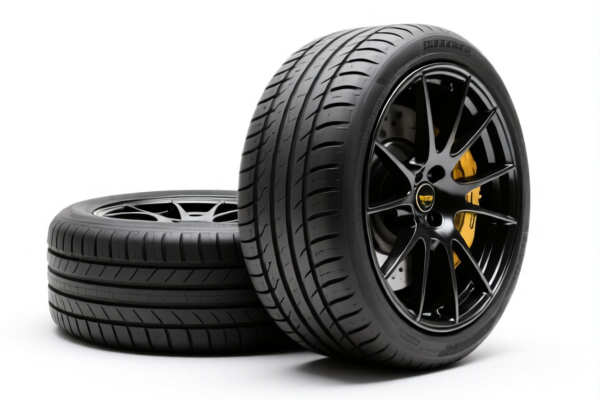
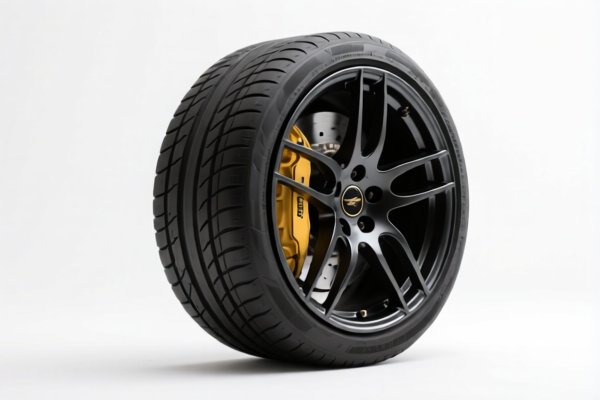
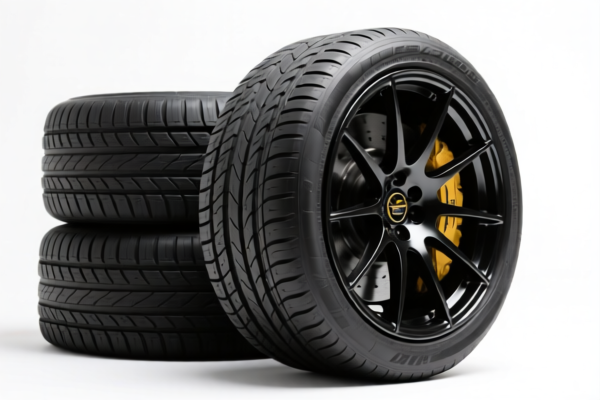
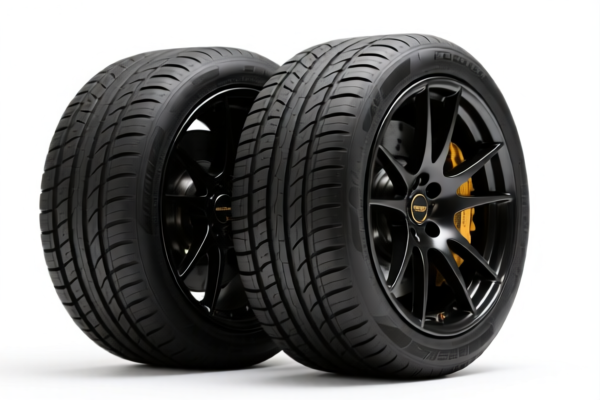
AI Analysis
🏎️ High Performance Car Tires (HPT)
🌐 HS Code Reference & Customs Clearance Guide | 2026 Latest Tariff Analysis | Professional Clearance Strategy
📌 I. Product Definition & Classification: Do You Truly Understand "High Performance Tires"?
High-performance tires (HPT) are specialized rubber products designed for enhanced grip, handling, and speed in passenger cars and commercial vehicles. In international trade, they are often confused with standard passenger tires or heavy-duty truck tires. However, under the Harmonized System (HS), classification depends heavily on vehicle type, material, and design purpose.
For "High Performance Tires for Cars," we must distinguish between: 1. Passenger Car Tires: Designed for sedans, SUVs, and light trucks. 2. Commercial Vehicle Tires: Designed for buses, trucks, and heavy goods vehicles (often mislabeled as "car tires" in loose terminology but classified differently).
⚠️ Key Distinction:
- If the tire is for passenger cars (sedans/SUVs) → Typically 4011.10 or 4011.20.
- If the tire is for buses/trucks (Commercial Vehicles) → Typically 4011.20 or 4011.40.
- Material: Must be Rubber (Vulcanized).
- Design: New tires vs. Used/Retreaded (Used tires are generally prohibited or heavily restricted in many jurisdictions, including the US).
📦 II. HS Code Classification Details (Based on Provided Data)
According to the specific data provided for your input, the following HS Codes apply to Commercial Vehicle Tires (Buses/Trucks) made of Rubber. Note that "High Performance Car Tires" in the user query may be loosely interpreted here as Commercial Vehicle Tires based on the provided dataset matching "Buses or Trucks."
| HS Code | Product Description | Application | Key Characteristics |
|---|---|---|---|
4012.12.40.35 |
New pneumatic tires, of rubber, suitable for buses or trucks | Bus/Truck Transport | High load capacity, durable tread |
4011.20.10.15 |
New pneumatic tires, of rubber, suitable for buses or trucks | Bus/Truck Transport | Standard high-performance commercial tire |
4011.20.50.10 |
New pneumatic tires, of rubber, suitable for buses or trucks (Catch-all/Residual Category) | Bus/Truck Transport | For tires not specifically listed in other sub-headings |
🔍 Critical Note:
- All three codes fall under Chapter 40: Rubber and Articles Thereof.
- Specifically, Heading 4011: New pneumatic tires, of rubber.
- Subheading 4011.20: Of a kind used on buses or trucks.
- "High Performance": This is a marketing term. Customs classifies based on technical specifications (load index, speed rating, vehicle type), not brand performance. If it fits a bus/truck, it goes under 4011.20. If it fits a passenger car, it would be 4011.10 (not listed in the provided data, so we stick to the provided commercial codes).
💰 III. 2026 Latest Tariff Rate Breakdown (Including Additional Taxes & Policies)
✅ Applicable Country: United States (US)
✅ Origin: China (CN)
✅ Effective Time: 2025 November 10 onwards (including subsequent imports)
🎯 1. HS Code 4012.12.40.35 & 4011.20.10.15
| Item | Content |
|---|---|
| Base Tariff Rate | 4.0% (Ad Valorem) |
| Section 301 Additional Tariff | +25.0% (USITC Footnote 9903.88.01) |
| Section 122 Tariff | +10.0% (Specific provision for certain Chinese goods) |
| Total Effective Tariff Rate | 39.0% |
| Tax Calculation | CIF Value × 39.0% |
| De Minimis Exemption Eligibility | ❌ NO (deny_de_minimis) |
| Legal Basis Path | IEEPA:9903.01.25 → USITC:4011.20.10.15 → FOOTNOTE:9903.88.01 |
📌 Explanation:
- The 4.0% is the standard MFN (Most Favored Nation) duty for tires of this kind.
- The 25% is the additional tariff imposed under Section 301 of the Trade Act of 1974, targeting Chinese imports of strategic goods.
- The 10% is an additional tariff under Section 122 of the Trade Act of 1962 (or similar specific legislative provision).
- Total 39% is extremely high. This significantly impacts the landed cost.
🎯 2. HS Code 4011.20.50.10 (Catch-all Category)
| Item | Content |
|---|---|
| Base Tariff Rate | 3.4% (Ad Valorem) |
| Section 301 Additional Tariff | +25.0% |
| Section 122 Tariff | +10.0% |
| Total Effective Tariff Rate | 38.4% |
| Tax Calculation | CIF Value × 38.4% |
| De Minimis Exemption Eligibility | ❌ NO (deny_de_minimis) |
| Legal Basis Path | IEEPA:9903.01.24 → USITC:4011.20.50.10 → FOOTNOTE:9903.88.01 |
📌 Note:
- This code is a "residual" or "catch-all" for tires not specifically enumerated in4011.20.10.15.
- The base rate is slightly lower (3.4% vs 4.0%), but the additional tariffs remain the same, resulting in a total of 38.4%.
🛠️ IV. Customs Clearance Practical Advice (Battle-Tested Pitfall Avoidance)
✅ 1. Documentation Checklist (No Exceptions)
| Document | Required | Description |
|---|---|---|
| ✅ Commercial Invoice | ✔️ | Must clearly state "New Pneumatic Tires for Buses/Trucks," HS Code, Country of Origin (China), and CIF Value. |
| ✅ Packing List | ✔️ | Detail number of tires, dimensions, weight, and packaging type. |
| ✅ Bill of Lading (B/L) | ✔️ | Consistent with invoice and packing list. |
| ✅ Certificate of Origin (CO) | ✔️ | Essential for proving Chinese origin (to assess correct additional tariffs). |
| ✅ Product Specification Sheet | ✔️ | Include tread pattern, size (e.g., 295/75R22.5), load index, speed rating, and rubber compound type. |
| ✅ US DOT Compliance Certificate | ✔️ | Mandatory: Tires imported into the US must meet US Department of Transportation (DOT) standards. Provide DOT certification documents. |
| ✅ Insurance Certificate | ✔️ | For CIF value calculation. |
✅ 2. Declaration Tips (Key Mnemonics)
🔥 "Tires are not De Minimis, Origin is King, DOT is Must, 39% Tax is Real!"
| Scenario | Correct Declaration | Wrong Practice |
|---|---|---|
| New Commercial Tires | 4011.20.10.15 or 4011.20.50.10 |
Declare as "Auto Parts" → 39% |
| Used/Retreaded Tires | Prohibited/Restricted | Declare as "New Tires" → Seizure & Fine |
| Tires for Passenger Cars | 4011.10 (Not in provided data) |
Declare as "Bus Tires" → Misclassification Risk |
| Tires with Rims | Declare Tire and Rim Separately | Bundle as "Wheel Assembly" → Complex Classification |
✅ 3. Special Case Handling
| Scenario | Handling Advice |
|---|---|
| OEM Branded Tires | Provide brand authorization letter and OEM contract. Ensure the HS Code matches the actual tire specifications, not just the brand. |
| Tires with "Run-Flat" Technology | Still classified under 4011.20 if for buses/trucks. Provide technical data showing reinforced sidewalls. |
| Mixed Containers | If container contains both passenger car tires (4011.10) and bus tires (4011.20), declare separately. Do not mix HS codes on one line item. |
| Transshipment via Third Country | High Risk: US Customs will look for substantial transformation. If only relabeled in Vietnam/Mexico without significant manufacturing, Chinese tariffs (39%) still apply. Avoid this unless you have a Certificate of Origin from the third country with proof of substantial transformation. |
🌍 V. Global Market Comparison (2026 Latest)
| Country/Region | Recommended HS Code | Tariff (China Origin) | Certification Requirements | Notes |
|---|---|---|---|---|
| 🇺🇸 USA | 4011.20.10.15 / 4011.20.50.10 |
39.0% / 38.4% | DOT, EPA (if applicable) | Highest burden: 39% total duty. No de minimis. |
| 🇨🇳 China | 4011.20.10.15 |
~6-10% | CCC (if applicable) | Lower import duty. |
| 🇪🇺 EU | 4011.20 |
0% (Most EU countries) | ECE R30, R117 | No additional tariffs. Stricter eco-labeling. |
| 🇬🇧 UK | 4011.20 |
0% | ECE R30 | Post-Brexit rules apply. |
| 🇲🇽 Mexico | 4011.20 |
0% (if USMCA compliant) | NOM Certification | Check USMCA rules of origin. |
📌 Conclusion:
- The US market is exceptionally challenging for Chinese-made tires due to the 39% cumulative tariff.
- Cost Management: Importers must factor in this 39% cost into pricing.
- Alternative Sourcing: Consider sourcing from Vietnam, Thailand, or Mexico (if USMCA compliant) to mitigate US tariffs.
📌 VI. Common Errors & Pitfall Guide (Lessons Learned)
❌ Error 1: Assuming "High Performance" means a different HS Code
👉 Consequence: Customs may reclassify to the standard commercial tire code, leading to delays.
✅ Correct: Stick to the technical specification (Bus/Truck) for HS Code.
❌ Error 2: Misdeclaring "New" Tires as "Used" or vice versa
👉 Consequence: Import Ban for used tires in many US states; penalties for new tires misdeclared.
✅ Correct: Always declare as NEW if they are new. Provide proof of manufacture date.
❌ Error 3: Ignoring DOT Compliance
👉 Consequence: Cargo held at port, returned, or destroyed.
✅ Correct: Ensure tires have a US DOT sticker and provide compliance documentation.
❌ Error 4: Using De Minimis (Under $800) for Tires
👉 Consequence: Denial of Entry. Tires are explicitly excluded from de minimis treatment.
✅ Correct: File a formal entry (Type 01 or 03) for all shipments.
🎯 VII. Conclusion: Professional Declaration, Cost Control, Efficient Clearance!
🎯 Remember the Mnemonics:
🔹 "Tires are 39% in US, De Minimis is Dead, DOT is Key, Origin is Everything!"
🔹 "HS Code4011.20is your friend, but the tax is your enemy!"
📌 Pro Tip:
If your tires are originally manufactured in Vietnam, Thailand, or Malaysia, they may be exempt from the 25% Section 301 tariff, reducing the total to ~14-16%. However, you must have valid proof of origin and no Chinese value-added content that exceeds the de minimis threshold.
Recommendation: Apply for an Advance Ruling from US Customs and Border Protection (CBP) before shipment to confirm the exact HS Code and tariff liability.
📣 Immediate Action:
📞 Contact a licensed US Customs Broker + Provide Product Specs + Obtain DOT Certification
🚀 Ensure your High-Performance Tires clear customs smoothly, avoiding costly delays and penalties!
✨ Professional Clearance Starts with Accurate Classification!
💼 Every percentage point of tax matters!
Customer Reviews
About HS Code Classification
The Harmonized System (HS) is an internationally standardized nomenclature developed by the World Customs Organization (WCO) to classify traded products. Over 200 countries use the HS system as the basis for customs tariffs, trade statistics, and import/export regulations.
Each HS code follows a hierarchical structure:
- Chapter (2 digits) — Broad category of goods (e.g., Chapter 84: Machinery and Mechanical Appliances)
- Heading (4 digits) — More specific grouping within the chapter
- Subheading (6 digits) — Internationally standardized breakdown, used by all WCO member countries
- National subdivisions (8-10 digits) — Country-specific extensions for further classification, such as US HTSUS 10-digit codes
Correct HS code classification is essential for smooth customs clearance, accurate duty payment, and compliance with trade regulations. Misclassification can lead to customs delays, overpayment of duties, or penalties.
When importing from CN to US, the applicable tariff rates may include:
- Most-Favored-Nation (MFN) rate — The standard duty rate applied to WTO members
- General rate — Applied to countries without trade agreements
- Trade remedy duties — Additional tariffs such as Section 301 (anti-dumping), Section 232 (national security), or countervailing duties
The information provided on this page is for reference purposes only. For official classification, please consult with your local customs authority or a licensed customs broker.