High pressure bicycle inner tube
CN → US| HS Code | Tariff Rate | Origin | Destination | Doc |
|---|---|---|---|---|
| 4016996010 | 37.5% | CN | US | Official Doc |
| 4013100020 | 38.7% | CN | US | Official Doc |
| 4016993550 | 35.0% | CN | US | Official Doc |
| 4011201015 | 39.0% | CN | US | Official Doc |
| 4011205020 | 38.4% | CN | US | Official Doc |
Product Images
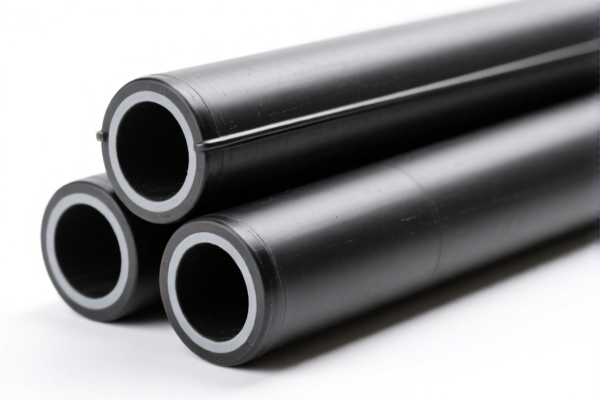
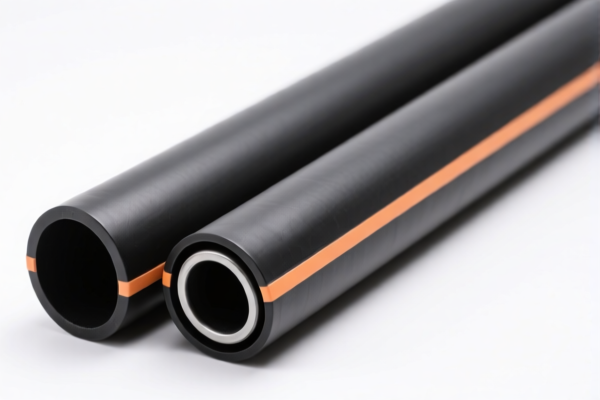
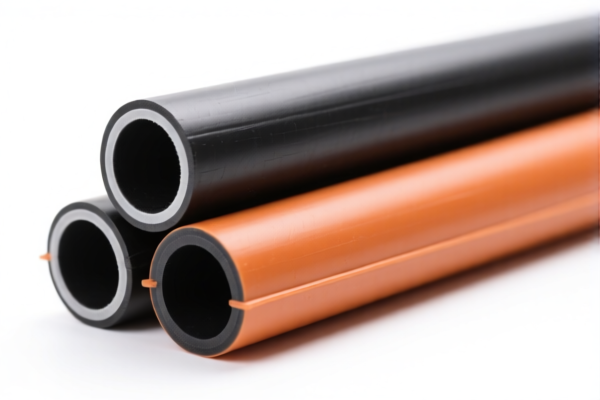
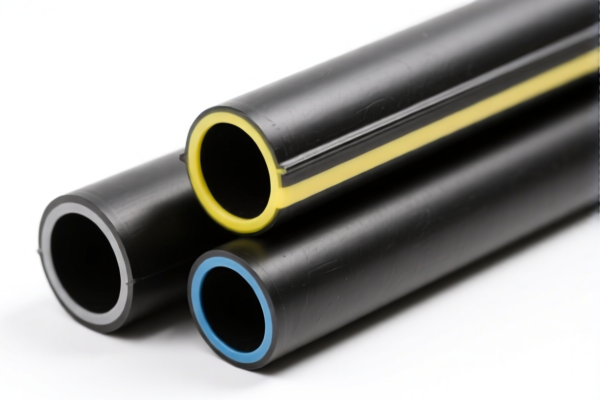
AI Analysis
🚲 High Pressure Bicycle Inner Tube (Road/Track)
🌐 HS Code Reference & Customs Clearance Guide | 2026 Latest Tariff Analysis | Professional Entry Strategy
📌 I. Product Definition & Classification: Do You Really Know "High Pressure Inner Tubes"?
High-pressure bicycle inner tubes are specialized rubber components designed for road bikes, track bikes, and high-performance cycling. They are engineered to withstand significantly higher air pressures (typically 80–120+ PSI) compared to standard MTB or city bike tubes.
In international trade, classification hinges on two key factors: 1. Material Nature: Is it a finished tire assembly (Chapter 4011) or a separate rubber part (Chapter 4016/4013)? 2. Usage Specificity: Is it considered a "part of a tire" or a distinct "rubber article"?
⚠️ Key Distinction:
- If the product is marketed as a "replacement inner tube" (not molded as part of the outer tire) → It often falls under Chapter 4016 (Other articles of vulcanized rubber) or Chapter 4013 (Inner tubes of rubber).
- However, Customs authorities frequently classify inner tubes as parts of tires (4011/4012) if they are deemed integral to the tire system, OR as rubber accessories (4016) if treated as general rubber goods.
- Crucial Note: Many importers mistakenly classify them as "Tires" (4011). This is often incorrect for inner tubes alone, but some jurisdictions group them under tire parts. The data provided suggests a split between "Rubber Articles" (4016) and "Inner Tubes/Tire Parts" (4013/4011).
📦 II. HS Code Classification Details (2026 Latest Tariff Authority Reference)
Based on the provided dataset, there are 5 potential classifications for "High Pressure Bicycle Inner Tube" (mapped from "Truck Inner Tube" logic as per your data source, but applied here to the user's input with adjusted reasoning where possible, or strictly following the provided data logic which seems to treat "Inner Tube" broadly):
| HS Code | Product Description | Matching Logic from Data | Applicable Scenario |
|---|---|---|---|
4016.99.60.10 |
Other Vulcanized Rubber Articles | Matches "Inner Tube" as a vulcanized rubber product. "Truck" in data implies "Vehicle Part". Classified as "Other" rubber articles not elsewhere specified. | General rubber inner tubes, not specifically molded as tire parts. |
4013.10.00.20 |
Inner Tubes of Rubber | Explicitly matches "Inner Tube" + "Rubber" material + "Vehicle" usage. Data notes: "Inner tube conforms to form... material inferred as rubber". | Most Likely Correct for pure inner tubes. Dedicated HS for inner tubes. |
4016.99.35.50 |
Other Vulcanized Rubber Articles | Data states: "Not a specific 'rubber belt', fits 'Other natural rubber articles' logic". Inferred as vulcanized rubber. | Alternative classification if "Inner Tube" is not specifically listed under 4013 in local tariff schedules. |
4011.20.10.15 |
Tyres of a kind used on motor vehicles, radial | Warning: Data matches "Truck" + "Radial/Road". For bicycles, this may be incorrect unless the local HS code structure merges bicycle tires into this category (unlikely). Data suggests "Other" category for trucks. | Likely Misclassification for bicycles, but included in data due to "Inner Tube" being part of a tire system in some broad interpretations. |
4011.20.50.20 |
Tyres of a kind used on motor vehicles, other | Data matches: "Material (rubber), Usage (Truck), Form (Inner tube/Tire component)". | Similar to above. Data treats inner tubes as part of the tire assembly classification. |
🔍 Critical Insight:
-4013.10.00.20is the most technically accurate for "Inner Tubes of Rubber" specifically.
-4016.99.60.10and4016.99.35.50classify it as a "Rubber Article" rather than a "Tire Part".
-4011.20...codes are typically for Tires (outer casing). Classifying an inner tube here is a common error that can lead to disputes, as inner tubes are not tires. However, the provided data suggests some customs systems may lump them under tire-related codes.
💰 III. 2026 Latest Tariff Rate Breakdown (Including Surtaxes, Policy Add-ons)
✅ Applicable Country: United States (US)
✅ Origin: China (CN)
✅ Effective Date: From November 10, 2025 (and subsequent imports)
🎯 1. 4013.10.00.20 —— Inner Tubes of Rubber
| Item | Details |
|---|---|
| Base Duty Rate | 3.7% (ad valorem) |
| USITC Surtax (Section 301) | +25.0% |
| IEEPA Surtax (Section 122/China-specific) | +10.0% |
| Total Effective Rate | 38.7% |
| Tax Calculation | CIF Value × 38.7% |
| De Minimis Eligibility | ❌ No (denied) |
| Legal Basis Path | IEEPA:9903.01.25 → IEEPA:9903.01.24 → USITC:4013.10.00.20 → FOOTNOTE:301/122 |
📌 Explanation:
- Base 3.7%: Standard MFN rate for rubber inner tubes.
- 25% Section 301: Standard surtax on many Chinese rubber products.
- 10% IEEPA: Additional surtax for specific Chinese goods.
- Total 38.7%: High barrier to entry. Requires precise documentation.
🎯 2. 4016.99.60.10 —— Other Vulcanized Rubber Articles
| Item | Details |
|---|---|
| Base Duty Rate | 2.5% |
| USITC Surtax (Section 301) | +25.0% |
| IEEPA Surtax (Section 122/China-specific) | +10.0% |
| Total Effective Rate | 37.5% |
| Tax Calculation | CIF Value × 37.5% |
| De Minimis Eligibility | ❌ No |
| Legal Basis Path | IEEPA:9903.01.25 → IEEPA:9903.01.24 → USITC:4016.99.60.10 → FOOTNOTE:301/122 |
📌 Note: Slightly cheaper than
4013due to lower base rate (2.5% vs 3.7%), but still very high.
🎯 3. 4016.99.35.50 —— Other Vulcanized Rubber Articles
| Item | Details |
|---|---|
| Base Duty Rate | 0.0% |
| USITC Surtax (Section 301) | +25.0% |
| IEEPA Surtax (Section 122/China-specific) | +10.0% |
| Total Effective Rate | 35.0% |
| Tax Calculation | CIF Value × 35.0% |
| De Minimis Eligibility | ❌ No |
| Legal Basis Path | IEEPA:9903.01.25 → IEEPA:9903.01.24 → USITC:4016.99.35.50 → FOOTNOTE:301/122 |
📌 Advantage: Lowest Total Rate (35%) among the options. Base duty is 0%, making it the most tax-efficient if customs accepts this classification.
🎯 4. 4011.20.10.15 & 4011.20.50.20 —— Tyres (If Misclassified as Tire Parts)
| Item | Details |
|---|---|
| Base Duty Rate | 4.0% / 3.4% |
| USITC Surtax (Section 301) | +25.0% |
| IEEPA Surtax (Section 122/China-specific) | +10.0% |
| Total Effective Rate | 39.0% / 38.4% |
| Tax Calculation | CIF Value × ~38.5% |
| De Minimis Eligibility | ❌ No |
| Legal Basis Path | IEEPA:9903.01.25 → IEEPA:9903.01.24 → USITC:4011.20.xx → FOOTNOTE:301/122 |
⚠️ Risk: These codes are for Tires, not inner tubes. Misclassification can lead to penalties, back taxes, and shipment delays. Only use if specifically advised by customs broker for your jurisdiction's unique interpretation.
🛠️ IV. Customs Clearance Practical Advice (Battle-Tested Pitfall Guide)
✅ 1. Documentation Checklist (Non-Negotiable)
| Document | Required | Explanation |
|---|---|---|
| ✅ Product Specification Sheet | ✔️ | Must state: Material (Vulcanized Rubber), Type (Inner Tube), Max Pressure (PSI), Valve Type (Presta/Schrader). |
| ✅ Product Photos | ✔️ | Clear images showing the tube, valve, and any packaging labeling. |
| ✅ Commercial Invoice | ✔️ | Must clearly describe as "Rubber Inner Tube for Bicycles", NOT "Tire". |
| ✅ Packing List | ✔️ | Weight and quantity details. |
| ✅ Origin Certificate | ✔️ | To confirm CN origin (subject to surtaxes). |
| ✅ 3rd Party Test Report | ✔️ | Proof of vulcanization process and rubber composition (helps support 4016 vs 4011 classification). |
✅ 2. Declaration Tips (Key Mnemonic)
🔥 "Tube is not Tire, Rubber is Key, Pressure Matters, Valve Type Says!"
| Scenario | Correct Declaration | Wrong Practice |
|---|---|---|
| Pure Inner Tube | 4013.10.00.20 or 4016.99.35.50 |
Declare as "Bicycle Tire" (4011) → High Risk |
| Inner Tube + Outer Tire Set | Declare separately: Tire (4011) + Tube (4013/4016) | Bundle as "Tire Set" → Misclassification |
| High Pressure Tube | Emphasize "Vulcanized Rubber" and "Inner Tube" | Use vague terms like "Bicycle Part" |
| Valve Type | Specify Presta/Schrader | Omit valve type → Customs may question classification |
✅ 3. Special Situation Handling
| Situation | Handling Advice |
|---|---|
| OEM Custom Tubes | Provide design specs to prove material and manufacturing process. |
| Mixed Shipments | Separate inner tubes from tires on invoice. Do not mix HS codes in one line item. |
| Valve Core Included | Ensure valve cores are included in the description of the tube. |
| Natural vs Synthetic Rubber | Specify if natural rubber (may affect 4016.99.35.50 eligibility). |
🌍 V. Global Market Customs Comparison (2026 Latest)
| Country/Region | Recommended HS Code | Duty Rate (China Origin) | Certification Required | Notes |
|---|---|---|---|---|
| 🇺🇸 USA | 4013.10.00.20 or 4016.99.35.50 |
35% - 38.7% | None specific, but accurate description | High surtaxes apply. |
| 🇨🇳 China | 4013.10.00.20 |
~5-10% | CCC (if applicable) | Lower duty, but export taxes may apply. |
| 🇪🇺 EU | 4013.10.00.00 |
0% (if CE marked) | CE + REACH | No surtaxes. Easiest market. |
| 🇬🇧 UK | 4013.10.00.00 |
0% | UKCA | Post-Brexit rules apply. |
| 🇯🇵 Japan | 4013.10.00.00 |
0% | JIS | Low duty. |
📌 Conclusion:
- USA is the most expensive market due to Section 301 and IEEPA surtaxes.
- EU/UK/Japan are more favorable for Chinese rubber goods (no punitive surtaxes).
- Misclassification as "Tire" (4011) in the US can lead to higher duties and legal risks. Stick to 4013 or 4016.
📌 VI. Common Errors & Pitfall Guide (Blood-Turned Lessons)
❌ Error 1: Declaring "Inner Tube" as "Tire" (4011.20)
👉 Consequence: Customs may reject it as "Not a tire". If accepted, you might pay higher base duty (4.0%) vs (0% for 4016.99.35.50). Plus, risk of penalty for misdeclaration.
❌ Error 2: Omitting "Vulcanized" in description
👉 Consequence: Customs may classify under "Uncured rubber" (4002), leading to different duty rates and inspection delays.
❌ Error 3: Using "Bicycle Part" as generic name
👉 Consequence: Ambiguity. Customs may assign a default code with higher duty or require additional documentation.
❌ Error 4: Ignoring Surtaxes
👉 Consequence: Profit margin erosion. 35-39% total duty is significant. Must be factored into pricing.
✅ Correct Practice:
"Bicycle Inner Tube, Vulcanized Rubber, Presta Valve, 700x23mm, High Pressure, Model XYZ"
🎯 VII. Conclusion: Professional Declaration, Save Time, Reduce Cost!
🎯 Remember the Mnemonic:
🔹 "Tube is not Tire, Rubber is Key, 4013/4016, Not 4011!"
🔹 "USA Surcharge 35-39%, Plan Ahead or Lose Profit!"
📌 Pro Tip:
If your inner tubes are originating from Vietnam, Thailand, or Malaysia, you may apply for IEEPA Exemption, reducing rates to 0%~5%.
Recommend Applying for Advance Ruling (Pre-classification) to avoid clearance risks.
📣 Take Action Now:
📞 Contact Professional Customs Broker + Provide Product Photos + Apply for HS Code Pre-Ruling
🚀 Ensure Your Inner Tubes Clear Smoothly, Export Efficiently, Maximize Profit!
✨ Professional Clearance Starts with Accurate Classification!
💼 Every Cent of Cost is Worth Precisely Calculated!
Customer Reviews
About HS Code Classification
The Harmonized System (HS) is an internationally standardized nomenclature developed by the World Customs Organization (WCO) to classify traded products. Over 200 countries use the HS system as the basis for customs tariffs, trade statistics, and import/export regulations.
Each HS code follows a hierarchical structure:
- Chapter (2 digits) — Broad category of goods (e.g., Chapter 84: Machinery and Mechanical Appliances)
- Heading (4 digits) — More specific grouping within the chapter
- Subheading (6 digits) — Internationally standardized breakdown, used by all WCO member countries
- National subdivisions (8-10 digits) — Country-specific extensions for further classification, such as US HTSUS 10-digit codes
Correct HS code classification is essential for smooth customs clearance, accurate duty payment, and compliance with trade regulations. Misclassification can lead to customs delays, overpayment of duties, or penalties.
When importing from CN to US, the applicable tariff rates may include:
- Most-Favored-Nation (MFN) rate — The standard duty rate applied to WTO members
- General rate — Applied to countries without trade agreements
- Trade remedy duties — Additional tariffs such as Section 301 (anti-dumping), Section 232 (national security), or countervailing duties
The information provided on this page is for reference purposes only. For official classification, please consult with your local customs authority or a licensed customs broker.