High pressure car tires
CN → US| HS Code | Tariff Rate | Origin | Destination | Doc |
|---|---|---|---|---|
| 8708704560 | 37.5% | CN | US | Official Doc |
| 4011201015 | 39.0% | CN | US | Official Doc |
| 4011201005 | 39.0% | CN | US | Official Doc |
Product Images
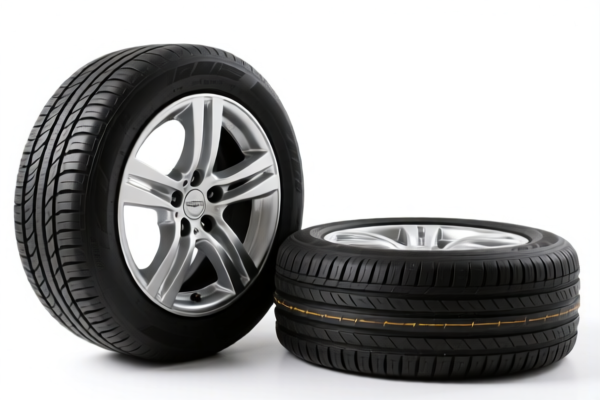
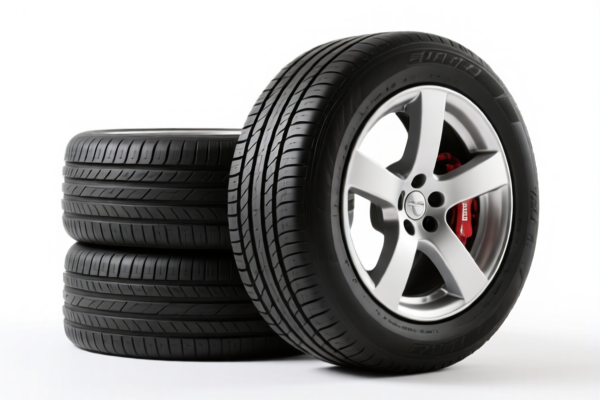
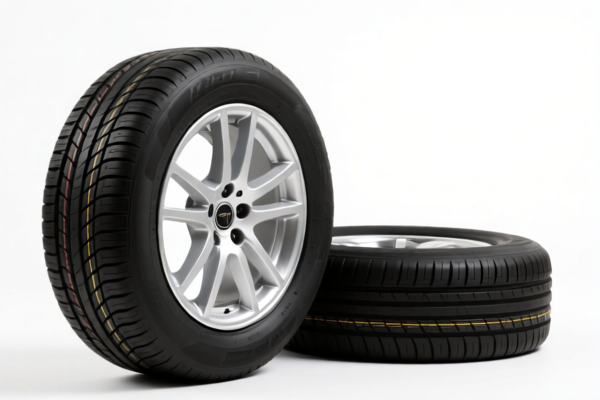
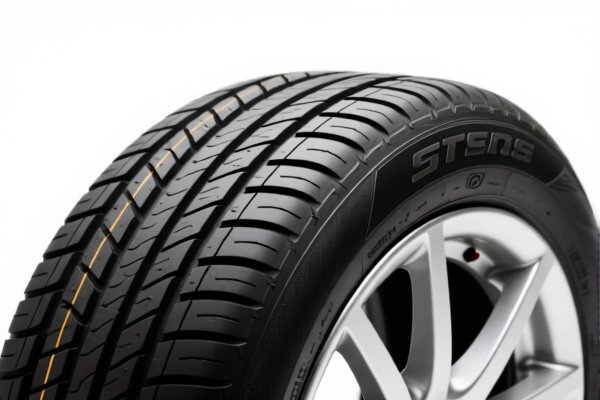
AI Analysis
🚗 High Pressure Car Tires (High-Strength Highway Tires)
🌐 HS Code Reference & Customs Clearance Guide | 2026 Latest Tariff Analysis | Professional Clearance Strategy
📌 I. Product Definition & Classification: Do You Really Know "High Pressure Car Tires"?
High pressure car tires, often referred to in trade as "High-Strength Highway Tires," are critical safety components for passenger vehicles and light trucks. In international trade, they are categorized based on their material composition (primarily rubber) and application (road wheels).
Key distinctions are made between tires intended for light vehicles (passenger cars) and heavy vehicles (buses, trucks). Misclassification here can lead to significant tariff discrepancies and customs delays.
⚠️ Key Distinction Point:
- If the tire is for light vehicles (cars, SUVs, vans) → It often falls under 8708.70 (Parts of motor vehicles) or 4011 depending on specific structural details and country classification rules. Note: In the provided data, specific sub-codes under 8708.70 are highlighted.
- If the tire is for heavy vehicles (buses, trucks) → It falls strictly under 4011 (Rubber tires for buses or trucks).
📦 II. HS Code Classification Details (2026 Latest Tariff Authority Comparison)
Based on the provided dataset, here are the precise HS Codes and their corresponding tax implications:
| HS Code | Product Description | Application Scenario | Classification Basis |
|---|---|---|---|
8708.70.45.60 |
High-Strength Highway Tire, classified by rubber material and road wheel category | Passenger cars, light trucks, general highway use | Based on rubber material & road wheel classification |
4011.20.10.15 |
High-Strength Highway Tire, suitable for heavy-duty scenarios like buses or trucks | Buses, Heavy Trucks, Commercial Vehicles | Heavy-duty application |
4011.20.10.05 |
High-Strength Highway Tire, conforms to the category of highway tires | General highway tires meeting specific standards | General highway tire category |
🔍 Key Reminder:
-8708.70.45.60is typically associated with light vehicle components or specific rubber goods classified under vehicle parts in certain jurisdictions.
-4011codes are strictly for bus/truck tires. Ensure you do not misdeclare a truck tire as a car tire part to avoid penalty.
💰 III. 2026 Latest Tariff Rate Details (Including Surtaxes, Policy Surcharges)
✅ Applicable Country: United States (US)
✅ Origin: China (CN)
✅ Effective Time: Current rates as per provided data
🎯 1. 8708.70.45.60 —— High-Strength Highway Tire (Light Vehicle/Component Classification)
| Item | Content |
|---|---|
| Base Tariff | 2.5% (Ad Valorem) |
| Section 301 Surcharge | +25.0% |
| Section 122 Surcharge | +10.0% |
| Total Tax Rate | 37.5% |
| Tax Calculation | CIF Value × 37.5% |
| De Minimis Eligibility | ❌ Not Eligible (Subject to full duty) |
| Legal Basis Path | Section 301: +25% + Section 122: +10% + Base: 2.5% |
📌 Explanation:
- The 2.5% is the standard Most Favored Nation (MFN) base rate for this specific rubber/vehicle part classification.
- The 25% is the additional tariff imposed under Section 301 of the Trade Act of 1974, specifically targeting Chinese imports.
- The 10% is the Section 122 tariff (national security/import relief measure).
- Total: 37.5%. This is a high-cost import, requiring precise cost accounting.
🎯 2. 4011.20.10.15 & 4011.20.10.05 —— Heavy-Duty Highway Tires (Bus/Truck)
| Item | Content |
|---|---|
| Base Tariff | 4.0% (Ad Valorem) |
| Section 301 Surcharge | +25.0% |
| Section 122 Surcharge | +10.0% |
| Total Tax Rate | 39.0% |
| Tax Calculation | CIF Value × 39.0% |
| De Minimis Eligibility | ❌ Not Eligible (Subject to full duty) |
| Legal Basis Path | Section 301: +25% + Section 122: +10% + Base: 4.0% |
📌 Note:
- Both4011.20.10.15and4011.20.10.05share the same total tax rate of 39.0%.
- The distinction between these two sub-codes usually lies in the specific tread pattern, speed rating, or specific heavy-duty application (e.g., steer axle vs. drive axle).
- Even though the base rate (4.0%) is higher than the car tire part (2.5%), the total impact is similar due to the fixed surcharges.
🛠️ IV. Customs Clearance Practical Advice (Battle-Tested Pitfall Avoidance Guide)
✅ 1. Required Documentation Checklist (Mandatory)
| Document | Required | Explanation |
|---|---|---|
| ✅ Product Specification Sheet | ✔️ | Must include size (e.g., 205/55R16), load index, speed rating, tread depth, and manufacturing date (DOT code). |
| ✅ Technical Data Sheet | ✔️ | Proves the material composition (Rubber) and application (Highway/Road). |
| ✅ Commercial Invoice | ✔️ | Must clearly state "High-Strength Highway Tires" and not generic "Rubber Products." |
| ✅ Certificate of Origin (CO) | ✔️ | Essential for proving Chinese origin (to apply correct surcharges) or potential FTZ benefits if not CN origin. |
| ✅ Packaging List | ✔️ | Clearly show quantity per carton/pallet. |
✅ 2. Declaration Tips (Key Mantras)
🔥 "Classify by Vehicle, Not Just Material!"
| Scenario | Correct Declaration | Wrong Action |
|---|---|---|
| Tires for Cars (Light Duty) | 8708.70.45.60 |
Misdeclaring as 4011 → Wrong tax base |
| Tires for Trucks/Buses | 4011.20.10.15 or .05 |
Misdeclaring as 8708 → Risk of penalty for wrong HS |
| Mixed Shipment (Cars + Trucks) | Separate Line Items | Combining into one line → Customs may audit entire shipment |
| Retreaded Tires | Do Not Use These Codes | Retreads have different HS codes and higher restrictions |
✅ 3. Special Circumstances Handling
| Situation | Handling Advice |
|---|---|
| OEM Tires for Car Manufacturers | Provide end-user contract to prove "Vehicle Part" status if claiming 8708 |
| Aftermarket Retail Tires | Standard declaration under 4011 (if truck/bus) or 8708 (if car) |
| DOT Labeling Missing | Refused Entry! US DOT requires specific sidewall markings. Ensure compliance before shipping. |
| High Risk of Inspection | Prepare physical samples for customs inspection. Have specs ready for "Load Index" verification. |
🌍 V. Global Market Comparison (2026 Latest)
| Country/Region | Recommended HS Code | Tariff Impact | Certification Requirements | Notes |
|---|---|---|---|---|
| 🇺🇸 USA | 8708.70.45.60 / 4011.20.10.15 |
37.5% - 39.0% | DOT, FMVSS (if applicable) | Highest duty burden due to Section 301 + 122 |
| 🇨🇳 China | 4011.20 / 4011.10 |
~10% - 15% | CCC (for some) | Lower base duty, no Section 301 |
| 🇪🇺 EU | 4011.20 / 4011.10 |
~0% - 4.5% | E-mark, TIR | No Section 301/122 equivalent |
| 🇲🇽 Mexico | 4011.20 |
~0% - 5% | NOM | Potential USMCA benefits if qualified |
📌 Conclusion:
- USA is the most expensive market for Chinese-manufactured tires due to the cumulative effect of Base + Section 301 (25%) + Section 122 (10%).
- Total tax rates of 37.5% - 39.0% significantly impact profit margins. Pricing strategies must account for this.
📌 VI. Common Mistakes & Pitfalls (Blood & Tears Lessons)
❌ Mistake 1: Declaring Bus Tires under Car Tire Parts (8708)
👉 Consequence: Customs may reject for incorrect classification or audit the entire shipment for evasion.
👉 Fix: Always verify vehicle type (Passenger vs. Commercial).
❌ Mistake 2: Ignoring Section 122
👉 Consequence: Underpaying duties by 10%.
👉 Fix: Ensure invoices and system calculations include the 10% surcharge.
❌ Mistake 3: Misidentifying High-Strength vs. Standard
👉 Consequence: While tax rate may be same, quality disputes may arise if specs don't match "High-Strength" claims.
👉 Fix: Provide test reports proving tensile strength and durability.
❌ Mistake 4: Using De Minimis (Section 321) for Tires
👉 Consequence: Denied! Tires are explicitly excluded from de minimis thresholds in many cases, and even if allowed, Section 301/122 may apply.
👉 Fix: Plan for full commercial entry (90%+ value).
✅ Correct Practice:
"Rubber Tire, Radial, Size 215/60R16, Load Index 95H, for Passenger Car, DOT Certified, Model XYZ"
🎯 VII. Conclusion: Professional Clearance Saves Money!
🎯 Remember the Mantra:
🔹 "Cars go 8708, Trucks go 4011, Sections 301 & 122 add 35%, Don't skip the base!"
🔹 "HS Code determines your fate, 39% is steep, declare accurately or pay the steep!"
📌 Pro Tip:
If your tires are originating from Vietnam, Thailand, or India, you may avoid the 25% Section 301 tariff, potentially reducing the total tax burden to ~14-15% (Base + Section 122 only).
✅ Recommendation: Evaluate supply chain diversification to mitigate US tariff risks.
📣 Take Action Now:
📞 Consult a licensed customs broker + Provide DOT specs + Apply for Advance Ruling if volume is high
🚀 Let your tires pass customs smoothly, avoid delays, and protect your margins!
✨ Professional clearance starts with precise classification!
💼 Every cent of duty counts!
Customer Reviews
About HS Code Classification
The Harmonized System (HS) is an internationally standardized nomenclature developed by the World Customs Organization (WCO) to classify traded products. Over 200 countries use the HS system as the basis for customs tariffs, trade statistics, and import/export regulations.
Each HS code follows a hierarchical structure:
- Chapter (2 digits) — Broad category of goods (e.g., Chapter 84: Machinery and Mechanical Appliances)
- Heading (4 digits) — More specific grouping within the chapter
- Subheading (6 digits) — Internationally standardized breakdown, used by all WCO member countries
- National subdivisions (8-10 digits) — Country-specific extensions for further classification, such as US HTSUS 10-digit codes
Correct HS code classification is essential for smooth customs clearance, accurate duty payment, and compliance with trade regulations. Misclassification can lead to customs delays, overpayment of duties, or penalties.
When importing from CN to US, the applicable tariff rates may include:
- Most-Favored-Nation (MFN) rate — The standard duty rate applied to WTO members
- General rate — Applied to countries without trade agreements
- Trade remedy duties — Additional tariffs such as Section 301 (anti-dumping), Section 232 (national security), or countervailing duties
The information provided on this page is for reference purposes only. For official classification, please consult with your local customs authority or a licensed customs broker.