High pressure water gun
CN → US| HS Code | Tariff Rate | Origin | Destination | Doc |
|---|---|---|---|---|
| 8424201000 | 37.9% | CN | US | Official Doc |
| 8424209000 | 35.0% | CN | US | Official Doc |
Product Images
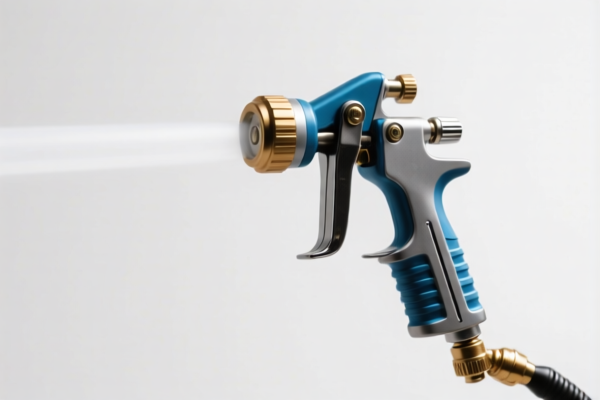
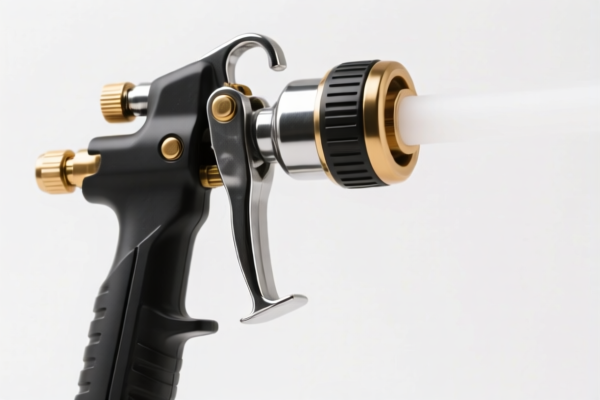
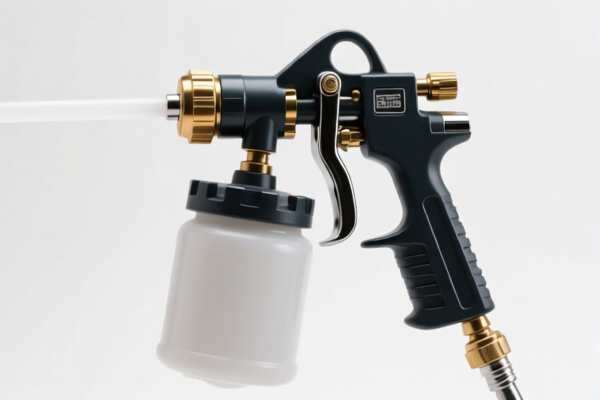
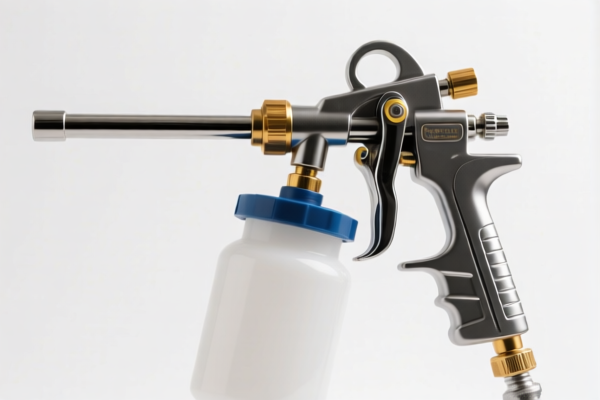
AI Analysis
💦 High Pressure Water Gun (Spray Guns & Similar Appliances)
🌐 HS Code Reference & Customs Clearance Guide | 2026 Latest Tariff Analysis | Professional Strategy for US Imports
📌 I. Product Definition & Classification: Is It a "Pump" or Just a "Gun"?
A High Pressure Water Gun is generally classified under Chapter 84 as a mechanical appliance for projecting liquids. However, the specific mechanism determines the HS Code and, crucially, the tariff burden.
In international trade, "Spray Guns" are divided into two distinct categories:
- Simple Piston Pump Sprays / Powder Bellows: These are manually operated, simple mechanisms often used for gardening, washing cars, or basic cleaning. They rely on a simple piston or bellows action.
- Other Spray Guns: This includes motorized high-pressure cleaners, complex trigger mechanisms, or guns attached to electric/petrol pumps that go beyond simple hand-operated piston actions.
⚠️ Key Distinction Point:
- If it is a simple, hand-held pistol grip with a direct piston mechanism (often without a separate electric pump unit in the gun itself), it leans toward 8424.20.10.00.
- If it is part of a more complex assembly, motor-driven, or simply does not fit the "simple piston" definition, it falls under 8424.20.90.00.
📦 II. HS Code Classification Details (2026 Official Tariff Schedule)
Based on the provided data, here are the two possible classifications:
| HS Code | Product Description | Application Scenario | Key Feature |
|---|---|---|---|
8424.20.10.00 |
Simple piston pump sprays and powder bellows | Hand-held garden sprayers, simple car wash wands, manual pressure sprayers | ✅ Simple mechanical piston/bellows |
8424.20.90.00 |
Other spray guns and similar appliances | Electric high-pressure washer wands, complex trigger guns, professional industrial sprayers | ✅ Complex/Motorized/Non-simple piston |
🔍 Critical Note:
- Most standard hand-held high-pressure water guns used by consumers for washing cars or gardens are often scrutinized under 8424.20.10.00 if they are simple piston types.
- However, if the "gun" is part of a high-pressure system with motorized components integrated into the spray head or controlled by complex valves, customs may classify it under 8424.20.90.00.
- Always check the mechanism: Simple piston =.10; Everything else =.90.
💰 III. 2026 Latest Tariff Rate Breakdown (Including Section 301 & Additional Duties)
✅ Applicable Country: United States (US)
✅ Origin: China (CN)
✅ Effective Date: Current rates apply (Subject to trade policy updates)
🎯 1. 8424.20.10.00 —— Simple Piston Pump Sprays / Powder Bellows
| Item | Content |
|---|---|
| Base Duty Rate | 2.9% (Ad Valorem) |
| Additional Duty (Section 301) | +25.0% |
| Total Tax Rate | 27.9% |
| Tax Calculation | CIF Value × 27.9% |
| Legal Basis | USITC Tariff Schedule + Section 301 List 4A |
📌 Explanation:
- Base Duty (2.9%): The standard MFN (Most Favored Nation) duty for simple mechanical spray appliances.
- Section 301 Duty (25%): An additional tariff imposed on Chinese goods under trade remedy measures.
- Total Burden: 27.9%. This is a significant cost multiplier for low-margin hardware products.
🎯 2. 8424.20.90.00 —— Other Spray Guns and Similar Appliances
| Item | Content |
|---|---|
| Base Duty Rate | 0.0% |
| Additional Duty (Section 301) | +25.0% |
| Total Tax Rate | 25.0% |
| Tax Calculation | CIF Value × 25.0% |
| Legal Basis | USITC Tariff Schedule + Section 301 List 4A |
📌 Explanation:
- Base Duty (0.0%): Other spray guns enjoy a duty-free base rate.
- Section 301 Duty (25%): Despite the lower base rate, the 25% additional tariff remains applicable.
- Total Burden: 25.0%. Slightly cheaper than the "Simple Piston" category, but still high.⚠️ Important:
- Both categories are subject to the 25% Section 301 tariff.
- There is NO de minimis exemption for these goods if they are part of a larger commercial shipment or if the total value exceeds $800 (though typically, high-pressure guns are commercial imports).
- Verify Origin: If the product is manufactured in a third country (e.g., Vietnam, Thailand) and substantially transformed, Section 301 may not apply. Chinese origin is strictly enforced.
🛠️ IV. Customs Clearance Practical Advice (Pitfall Avoidance Guide)
✅ 1. Documentation Checklist (Mandatory)
| Document | Required | Notes |
|---|---|---|
| ✅ Product Spec Sheet | ✔️ | Must clearly describe the mechanism (piston, motor, bellows). |
| ✅ Product Photos | ✔️ | Show the internal structure, trigger mechanism, and connections. |
| ✅ Commercial Invoice | ✔️ | Describe as "High Pressure Water Gun, Model XYZ, Origin: China". Avoid vague terms like "Tool". |
| ✅ Packing List | ✔️ | List quantity, weight, and dimensions accurately. |
| ✅ Certificate of Origin (CO) | ✔️ | Confirm Chinese origin. If non-Chinese, provide valid CO to avoid Section 301. |
| ✅ Test Reports | ✔️ | ASTM/ANSI safety standards for pressurized equipment may be required by CBSA/CBP. |
✅ 2. Declaration Strategy (Key Tips)
🔥 Golden Rule: "Describe the Mechanism, Not Just the Function!"
| Scenario | Correct Declaration | Risk of Misclassification |
|---|---|---|
| Hand-held, simple piston action | 8424.20.10.00 - Simple piston pump spray |
Low. Matches description well. |
| Electric/Petrol driven wand | 8424.20.90.00 - Other spray guns |
High risk if misclassified as piston. |
| Part of a machine | If sold with a pump/motor, consider classifying as machine parts or complete machine (8413/8479) | Misclassifying gun alone may lead to rejection if it's not standalone. |
| Fire Extinguisher? | ❌ NEVER | Fire extinguishers are 8424.10. Do not confuse! |
📌 Note on "Fire Extinguishers":
- The HS Code chapter 8424 also includes fire extinguishers. If your "water gun" has safety features or is marketed as a firefighting tool, customs may reclassify it as 8424.10 (Fire Extinguishers), which has different duties. Ensure your product is clearly for cleaning/spraying, not fire suppression.
✅ 3. Cost Optimization & Supply Chain Tips
| Strategy | Action | Impact |
|---|---|---|
| Origin Diversification | Source from Vietnam, India, or Thailand | Eliminate 25% Section 301 tariff. Total tax drops to 0%-2.9%. |
| Pre-Ruling | Apply for an ISR (Intermediate Summary Ruling) | Confirm HS Code before shipment. Avoids delays and penalties. |
| Component Separation | Ship gun heads and hoses separately? | Not recommended. CBP often consolidates kits into the main item's code. |
| Bundle with Accessories | Include nozzles, hoses, triggers | Must be declared as part of the main product. Do not split value artificially. |
🌍 V. Global Market Comparison (2026 Overview)
| Market | HS Code | Base Duty | Additional Duty | Total | Notes |
|---|---|---|---|---|---|
| 🇺🇸 USA | 8424.20.10.00 |
2.9% | +25% (China) | 27.9% | High barrier for Chinese goods. |
| 🇺🇸 USA | 8424.20.90.00 |
0.0% | +25% (China) | 25.0% | Slightly better than piston type. |
| 🇪🇺 EU | 8424.20 | 4.5% | 0% | 4.5% | No Section 301 equivalent. Lower cost. |
| 🇨🇳 China | 8424.20 | 2.9% | 0% | 2.9% | Low import duty for Chinese makers. |
| 🇯🇵 Japan | 8424.20 | 3.0% | 0% | 3.0% | Stable, low duty. |
📌 Conclusion:
- The US market is the most expensive for Chinese-made high-pressure water guns due to the 25% additional tariff.
- EU, Japan, and China have significantly lower total tax burdens.
- Strategic Recommendation: If exporting to the US, consider shifting production to a third country or absorbing the 25% cost by increasing retail prices.
📌 VI. Common Errors & Pitfalls (Lessons Learned)
❌ Mistake 1: Classifying as "Parts of Machines" (8479.90)
👉 Result: If the gun is sold as a standalone consumer product, this is incorrect. CBP will reclassify and charge penalties.
❌ Mistake 2: Confusing with Fire Extinguishers (8424.10)
👉 Result: If labeled as "Firefighting Gun", it triggers safety regulations and different duties. Avoid terms like "Firefighter" unless it's a certified extinguisher.
❌ Mistake 3: Ignoring the "Simple Piston" Definition
👉 Result: If you declare 8424.20.90.00 but the product is a simple piston type, you might be under-reporting duty (27.9% vs 25%). Always pick the more specific code if applicable.
❌ Mistake 4: Omitting "Origin: China" on Invoice
👉 Result: CBP may assume USMF (Made in USA) or other origins, leading to false declarations and audits.
✅ Correct Declaration Example:
"High Pressure Water Spray Gun, Hand-Held, Simple Piston Mechanism, for Garden Cleaning, Model ABC, Made in China"
HS Code:8424.20.10.00
Total Duty: 27.9%
🎯 VII. Conclusion: Smart Clearance, Higher Profits!
🎯 Remember the Formula:
🔹 "Check the Mechanism: Piston = .10 (27.9%), Other = .90 (25%)"
🔹 "China Origin = +25% Additional Duty"
🔹 "Origin Change = Tax Saving!"
📌 Pro Tip:
If your high-pressure water gun is not simple piston (e.g., electric trigger, complex valve), declare as 8424.20.90.00 to save 2.9% in base duty. However, the 25% Section 301 remains unchanged.
For maximum savings, optimize your supply chain to source from non-Chinese origins.
📣 Take Action Now:
📞 Consult a Customs Broker for an Advance Ruling if unsure about the mechanism.
📦 Label Correctly: "Water Spray Gun, Not a Fire Extinguisher."
🚀 Protect Your Margins: Factor in 25-28% duty for US imports from China.
✨ Accurate Classification Saves Money!
💼 Don't Let Customs Delays Kill Your Profit!
Customer Reviews
About HS Code Classification
The Harmonized System (HS) is an internationally standardized nomenclature developed by the World Customs Organization (WCO) to classify traded products. Over 200 countries use the HS system as the basis for customs tariffs, trade statistics, and import/export regulations.
Each HS code follows a hierarchical structure:
- Chapter (2 digits) — Broad category of goods (e.g., Chapter 84: Machinery and Mechanical Appliances)
- Heading (4 digits) — More specific grouping within the chapter
- Subheading (6 digits) — Internationally standardized breakdown, used by all WCO member countries
- National subdivisions (8-10 digits) — Country-specific extensions for further classification, such as US HTSUS 10-digit codes
Correct HS code classification is essential for smooth customs clearance, accurate duty payment, and compliance with trade regulations. Misclassification can lead to customs delays, overpayment of duties, or penalties.
When importing from CN to US, the applicable tariff rates may include:
- Most-Favored-Nation (MFN) rate — The standard duty rate applied to WTO members
- General rate — Applied to countries without trade agreements
- Trade remedy duties — Additional tariffs such as Section 301 (anti-dumping), Section 232 (national security), or countervailing duties
The information provided on this page is for reference purposes only. For official classification, please consult with your local customs authority or a licensed customs broker.