High quality animal fur coat
CN → US| HS Code | Tariff Rate | Origin | Destination | Doc |
|---|---|---|---|---|
| 4301800290 | 17.5% | CN | US | Official Doc |
| 4301900000 | 10.0% | CN | US | Official Doc |
Product Images
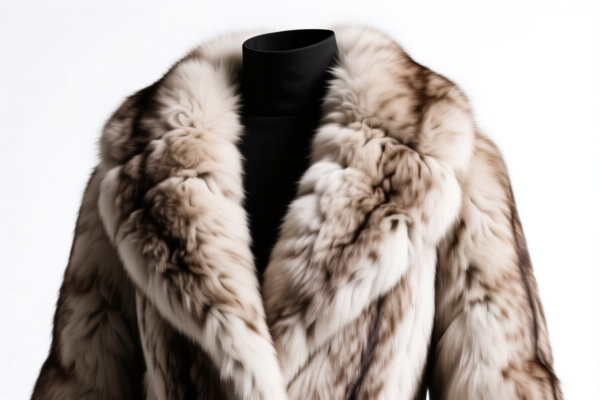

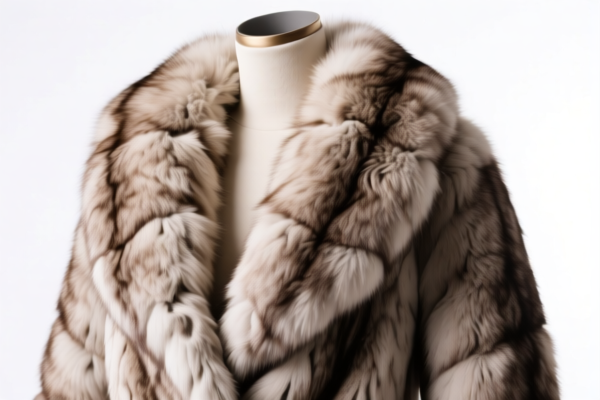
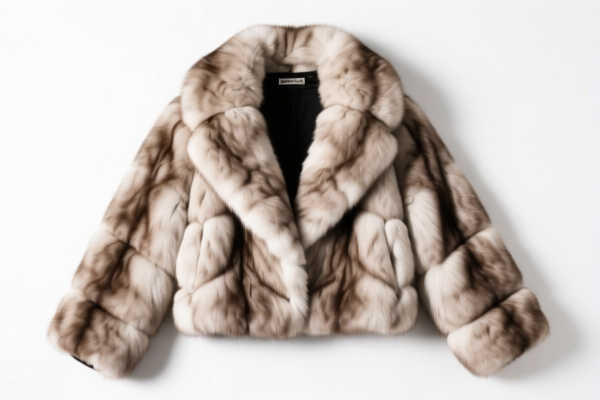
AI Analysis
🧥 Raw Furskins for Furriers' Use (Raw Animal Fur Materials)
🌐 HS Code Reference & Customs Clearance Guide | 2026 Latest Tariff Analysis | Professional Clearance Strategy
📌 I. Product Definition & Classification: What Are "Raw Furskins"?
"High quality animal fur coat" in the context of raw materials refers to raw furskins (including heads, tails, paws, and other pieces or cuttings) that are suitable for furriers' use but have not yet been tanned, dressed, or assembled into finished garments.
In international trade, raw furskins are strictly categorized based on their form and completeness:
Whole Furskins (with/without head, tail, paws):
These are entire animal pelts, possibly including the head, tail, or paws, but not classified under Chapter 41 (raw hides/skins of cattle, equines, etc.).
Pieces/Cuttings (Heads, Tails, Paws, etc.):
These are dismembered parts of furskins, such as heads, tails, paws, or other cuttings, which are still suitable for furriers' use (i.e., they can be used to make fur accessories, trimmings, or parts of coats).
⚠️ Key Distinction Point:
- If the product is a whole fur skin (e.g., mink, fox, rabbit whole pelt) → It falls under 4301.80.02.90.
- If the product consists of dismembered parts (heads, tails, paws, cuttings) suitable for furriers → It falls under 4301.90.00.00.
- Note: If the item is a finished fur coat (tanned, dressed, and sewn), it would fall under 4303.90 (not included in this DATA). This guide only covers raw materials as per the provided DATA.
📦 II. HS Code Classification Details (2026 Latest Tariff Authority Comparison)
| HS Code | Product Description | Application Scenario | Form Type |
|---|---|---|---|
4301.80.02.90 |
Other furskins, whole, with or without head, tail or paws | Whole pelts (mink, fox, etc.), suitable for furriers, not classified under 4101/4102/4103 | ✅ Whole Skin |
4301.90.00.00 |
Heads, tails, paws and other pieces or cuttings, suitable for furriers' use | Disconnected parts (heads, tails, paws, cuttings) from furskins | ✅ Parts/Cuttings |
🔍 Key Reminder:
- Whole furskins (even if missing a tail or paw, if the main body is intact) are generally classified under 4301.80.02.90.
- Only dismembered parts (heads, tails, paws, cuttings) that are not whole skins fall under 4301.90.00.00.
- Do not confuse with Chapter 41 (raw hides/skins of cattle, equines, etc.). Furskins are in Chapter 43.
💰 III. 2026 Latest Tariff Rate Details (Including Additional Taxes, Policy Additions)
✅ Applicable Country: United States (US)
✅ Origin: China (CN)
✅ Effective Date: As per provided data (no specific date mentioned, assume current application)
🎯 1. 4301.80.02.90 —— Other Furskins, Whole (with/without head, tail, paws)
| Item | Content |
|---|---|
| Base Tariff | 0.0% (ad valorem) |
| Additional Tariff | +7.5% |
| Total Tariff Rate | 7.5% |
| Tax Calculation | CIF Value × 7.5% |
| De Minimis Exemption | ❌ Not Applicable (Standard tariff applies) |
| Legal Basis | Based on provided data: "基础关税: 0.0%, 加征关税: 7.5%" |
📌 Explanation:
- Base Tariff (0%): Raw furskins often benefit from low base tariffs.
- Additional Tariff (7.5%): This is likely due to Section 301 or similar trade measures against China.
- Total Rate: 7.5%: This is a moderate tariff compared to finished goods, but still significant.
🎯 2. 4301.90.00.00 —— Heads, Tails, Paws, and Other Pieces/Cuttings
| Item | Content |
|---|---|
| Base Tariff | 0.0% (ad valorem) |
| Additional Tariff | 0.0% |
| Total Tariff Rate | 0.0% |
| Tax Calculation | CIF Value × 0% = $0 |
| De Minimis Exemption | ✅ Potentially Applicable (if value < $800, subject to customs discretion) |
| Legal Basis | Based on provided data: "基础关税: 0.0%, 加征关税: 0.0%" |
📌 Explanation:
- Total Rate: 0%: This is a tax-free classification for dismembered fur parts.
- Strategic Advantage: If your product can be legally classified as "pieces or cuttings" rather than "whole skins," you can save 7.5% in tariffs.
- Caution: Customs will scrutinize this classification. Ensure the items are genuinely disconnected parts and not whole skins with minor damage.
🛠️ IV. Customs Clearance Practical Advice (Combat Pitfall Guide)
✅ 1. Required Documentation Checklist (Non-Negotiable)
| Document | Must Provide | Description |
|---|---|---|
| ✅ Commercial Invoice | ✔️ | Must clearly state "Raw Furskins" or "Fur Skins, Whole/Parts" and HS Code. |
| ✅ Packing List | ✔️ | Detail quantity, weight, and whether items are whole or parts. |
| ✅ Product Photos | ✔️ | Clear images showing whether skins are whole or dismembered. |
| ✅ Certificate of Origin | ✔️ | To prove origin (China) and apply correct tariff rates. |
| ✅ Furriers' Use Declaration | ✔️ | Statement that products are "suitable for furriers' use" (critical for Chapter 43). |
| ✅ CITES Documentation | ⚠️ If Applicable | If species are endangered (e.g., certain foxes, minks), CITES permits are mandatory. |
✅ 2. Classification Strategy (Key Mnemonic)
🔥 "Whole Skin = 7.5%, Parts = 0%, CITES is Key, Species Matter!"
| Scenario | Correct HS Code | Tariff | Risk Level |
|---|---|---|---|
| Whole fur skins (mink, fox, etc.) | 4301.80.02.90 |
7.5% | Medium |
| Disassembled parts (heads, tails, paws) | 4301.90.00.00 |
0.0% | Low (if genuine) |
| Finished fur coats (tanned, sewn) | Not in DATA (likely 4303.90) | Higher | High |
| Endangered species (no CITES) | Seizure | N/A | Critical |
📌 Critical Warning:
- Do not misclassify whole skins as "parts" to avoid the 7.5% tariff. Customs may inspect and impose penalties + back taxes.
- Species Identification: You must declare the exact species (e.g., Vulpes vulpes for red fox). Vague terms like "animal fur" will lead to customs delays.
✅ 3. Special Handling
| Scenario | Handling Advice |
|---|---|
| Mixed Shipments | If a shipment contains both whole skins and parts, declare separately on the invoice. |
| Endangered Species | Check CITES Appendix I & II. If listed, you need pre-import permits. Failure to provide = Seizure & Fine. |
| Raw vs. Tanned | Ensure the product is raw (untanned, undressed). If tanned, it may fall under Chapter 43 but different heading (e.g., 4302). The provided DATA only covers raw skins. |
| De Minimis ($800) | For 4301.90.00.00 (0% tariff), if the value is under $800, it may enter under Section 321 (de minimis) without formal entry. However, CITES still applies. |
🌍 V. Global Market Comparison (2026 Latest)
| Country/Region | Recommended HS Code | Tariff (China Origin) | Certification | Remarks |
|---|---|---|---|---|
| 🇺🇸 USA | 4301.80.02.90 / 4301.90.00.00 |
7.5% / 0.0% | CITES (if applicable) | Highest scrutiny on species |
| 🇨🇳 China | 4301.80.02.90 / 4301.90.00.00 |
Varies (Check Local) | CITES (if applicable) | Import duties may differ |
| 🇪🇺 EU | 4301 heading |
Varies | CITES + EU Wildlife Trade Regulations | Strict CITES enforcement |
| 🇬🇧 UK | 4301 heading |
Varies | CITES + UK Wildlife Trade | Post-Brexit rules apply |
📌 Conclusion:
- USA is the market with explicit 7.5% tariff for whole furskins.
- EU/UK have stricter CITES enforcement than USA.
- China as an origin country faces additional tariffs in the USA for whole skins.
📌 VI. Common Errors & Pitfall Guide (Blood & Tears Lessons)
❌ Error 1: Classifying whole skins as "parts" to avoid 7.5% tariff
👉 Consequence: Customs inspection reveals whole skins → Back taxes + 25% penalty.
❌ Error 2: Ignoring CITES regulations for endangered species
👉 Consequence: Seizure of goods + Heavy fines + Criminal charges in some cases.
❌ Error 3: Using vague description "Fur Coat Material"
👉 Consequence: Customs request for more information → Delay of clearance.
👉 Correct: Specify "Raw Mink Skins, Whole, Mustela vison".
❌ Error 4: Assuming "Raw" means "Untanned" but not specifying "Suitable for Furriers' Use"
👉 Consequence: If not suitable for furriers, it may be classified elsewhere (e.g., Chapter 41 if mistaken for hides).
👉 Correct: Always include "Suitable for Furriers' Use" in description.
✅ Correct Practice:
"Raw Mink Skins, Whole, Mustela vison, Suitable for Furriers' Use, HS Code: 4301.80.02.90, Origin: China"
🎯 VII. Conclusion: Professional Declaration, Save Time & Cost!
🎯 Remember the Mnemonic:
🔹 "Whole Skin = 7.5%, Parts = 0%, CITES is Mandatory, Species is Key!"
🔹 "HS Code Determines Tariff, Misclassification Costs Double!"
📌 Tips:
- If you are importing large quantities, consider Advance Ruling from US Customs to confirm HS Code.
- For endangered species, engage a CITES specialist before shipping.
- Keep detailed species records to prove compliance.
📣 Immediate Action:
📞 Contact a Customs Broker + Provide Species Details + Apply for CITES Permits (if needed)
🚀 Ensure your raw furskins clear customs smoothly, avoid penalties, and maximize profits.
✨ Professional Clearance Starts with Accurate Classification!
💼 Every Dollar Saved on Tariffs Adds to Your Bottom Line!
Customer Reviews
About HS Code Classification
The Harmonized System (HS) is an internationally standardized nomenclature developed by the World Customs Organization (WCO) to classify traded products. Over 200 countries use the HS system as the basis for customs tariffs, trade statistics, and import/export regulations.
Each HS code follows a hierarchical structure:
- Chapter (2 digits) — Broad category of goods (e.g., Chapter 84: Machinery and Mechanical Appliances)
- Heading (4 digits) — More specific grouping within the chapter
- Subheading (6 digits) — Internationally standardized breakdown, used by all WCO member countries
- National subdivisions (8-10 digits) — Country-specific extensions for further classification, such as US HTSUS 10-digit codes
Correct HS code classification is essential for smooth customs clearance, accurate duty payment, and compliance with trade regulations. Misclassification can lead to customs delays, overpayment of duties, or penalties.
When importing from CN to US, the applicable tariff rates may include:
- Most-Favored-Nation (MFN) rate — The standard duty rate applied to WTO members
- General rate — Applied to countries without trade agreements
- Trade remedy duties — Additional tariffs such as Section 301 (anti-dumping), Section 232 (national security), or countervailing duties
The information provided on this page is for reference purposes only. For official classification, please consult with your local customs authority or a licensed customs broker.