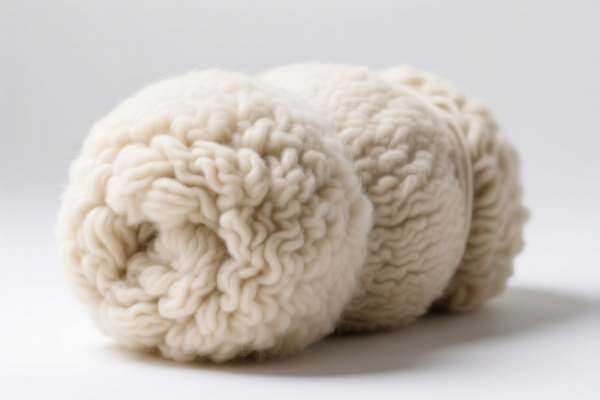
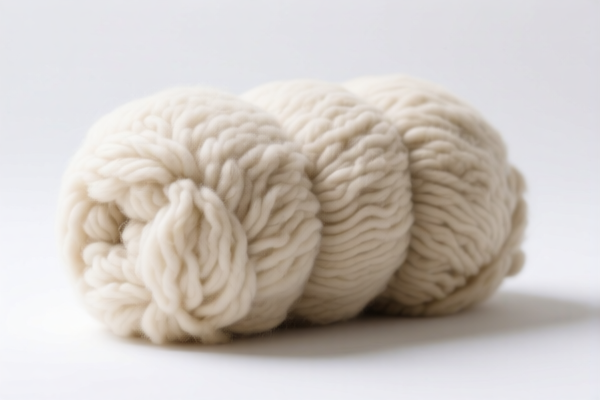
High quality animal wool blended unprocessed home fabric
CN → US| HS Code | Tariff Rate | Origin | Destination | Doc |
|---|---|---|---|---|
| 5111904000 | 42.0% | CN | US | Official Doc |
| 5111905000 | 42.0% | CN | US | Official Doc |
Product Images
AI Analysis
🧶 High-Quality Animal Wool Blended Unprocessed Home Fabric
🌐 HS Code Reference & Customs Clearance Guide | 2026 Latest Tariff Analysis | Professional Clearance Strategy
📌 I. Product Definition and Classification: Do You Really Understand "Unprocessed Wool Fabric"?
High-quality animal wool blended unprocessed home fabric falls under the category of Woven Fabrics of Carded Wool or Fine Animal Hair. The key determinant for classification here is not just the material (wool/animal hair) but the weight (GSM) and the specific end-use designation (Tapestry vs. Upholstery).
In international trade, "unprocessed home fabric" typically refers to fabric intended for domestic use such as upholstery (sofas, chairs) or tapestries (wall hangings, decorative coverings). The critical distinction lies in the grammage (weight per square meter):
⚠️ Key Distinction Point:
- If the fabric weight exceeds 300 g/m² → It is classified as Tapestry/Heavy Upholstery Fabric under HS Code 5111.90.40.00.
- If the fabric weight does not exceed 140 g/m² → It is classified as Light Tapestry/Upholstery Fabric under HS Code 5111.90.50.00.
- Note: Fabrics with weights between 140 g/m² and 300 g/m² are not listed in the provided<DATA>, implying they may fall under different subcategories or require further specific verification outside this dataset.
📦 II. HS Code Classification Details (Based on Provided Data)
| HS Code | Product Description | Application Scenario | Weight Threshold |
|---|---|---|---|
5111.90.40.00 |
Woven fabrics of carded wool or fine animal hair: Other: Tapestry fabrics and upholstery fabrics of a weight exceeding 300 g/m² | Heavy-duty sofas, wall tapestries, thick decorative drapes, high-end upholstery | > 300 g/m² |
5111.90.50.00 |
Woven fabrics of carded wool or fine animal hair: Other: Tapestry fabrics and upholstery fabrics of a weight not exceeding 140 g/m² | Light upholstery, cushion covers, wall hangings, lightweight decorative fabrics | ≤ 140 g/m² |
🔍 Key Reminder:
- Blended Fabrics: Since the product is "wool blended," it still falls under Chapter 51 if wool/fine animal hair is the primary constituent or if it meets the specific description of "Woven fabrics of carded wool or of carded fine animal hair." Ensure the blend ratio supports this classification.
- Weight is King: The customs authority will strictly check the Grams per Square Meter (GSM). Misdeclaring the weight can lead to reclassification and penalties.
- Unprocessed: "Unprocessed" here refers to the fabric state (greige or simple dyeing/weaving) rather than raw fiber. It must be in the form of woven fabric, not yarn or finished garments.
💰 III. 2026 Latest Tariff Rate Details
✅ Applicable Country: Not specified in
<DATA>, but rates are provided.
✅ Origin: Not specified in<DATA>, but rates are provided.
✅ Effective Time: Based on the provided tax data.
🎯 1. 5111.90.40.00 —— Tapestry and Upholstery Fabrics (> 300 g/m²)
| Item | Content |
|---|---|
| Base Tariff | 0.0% |
| Additional Tariff | 0.0% |
| Total Tax Rate | 0.0% |
| Tax Calculation | CIF Value × 0% = $0 |
| De Minimis Exemption | N/A (0% tax applies regardless of value) |
| Legal Basis | HS Code: 5111.90.40.00 |
📌 Explanation:
- This category enjoys zero duty. This is highly advantageous for importing heavy-weight wool tapestries or upholstery fabrics.
- No additional surcharges, anti-dumping duties, or retaliation tariffs are applied according to the provided data.
🎯 2. 5111.90.50.00 —— Tapestry and Upholstery Fabrics (≤ 140 g/m²)
| Item | Content |
|---|---|
| Base Tariff | 0.0% |
| Additional Tariff | 0.0% |
| Total Tax Rate | 0.0% |
| Tax Calculation | CIF Value × 0% = $0 |
| De Minimis Exemption | N/A (0% tax applies regardless of value) |
| Legal Basis | HS Code: 5111.90.50.00 |
📌 Explanation:
- Similar to the heavy-weight category, light-weight wool tapestry/upholstery fabrics also enjoy zero duty.
- This applies to carded wool or fine animal hair blends meeting the weight criteria.
🛠️ IV. Customs Clearance Practical Advice (Real-World Pitfall Guide)
✅ 1. Preparation Checklist (All Items Mandatory)
| Document | Required | Explanation |
|---|---|---|
| ✅ Product Specification Sheet | ✔️ | Must clearly state GSM (Grams per Square Meter), fiber composition (e.g., 80% Wool, 20% Polyester), and weave type (carded). |
| ✅ Weight Certificate | ✔️ | Third-party test report confirming GSM is critical. Disputes often arise here. |
| ✅ Fabric Swatches/Photos | ✔️ | Show texture, weave pattern, and edge condition to prove it is "unprocessed" or "finished fabric" not garments. |
| ✅ Commercial Invoice | ✔️ | Must explicitly state: "Woven Carded Wool Fabric for Home Use (Upholstery/Tapestry)". Avoid vague terms like "Textile." |
| ✅ Packing List | ✔️ | Detail roll lengths, widths, and total weights. |
✅ 2. Declaration Tips (Critical Mnemonics)
🔥 "Weight Defines Code, Blend Must Be Clear, Name Must Be Specific!"
| Scenario | Correct Declaration | Wrong Practice |
|---|---|---|
| Fabric weight is 320 g/m² | 5111.90.40.00 |
Misdeclare as 5111.90.50.00 to match lighter category → Customs Penalty & Reassessment |
| Fabric weight is 120 g/m² | 5111.90.50.00 |
Misdeclare as 5111.90.40.00 → Unnecessary scrutiny |
| Fabric is Uncut, in rolls | Declare as "Woven Fabric" | Declare as "Home Furnishings" → Wrong Chapter (63 vs 51) |
| Blend includes Silk | Verify if Wool is Primary | If Silk is primary, it may fall under Chapter 50. Do not force Chapter 51 if composition is wrong. |
✅ 3. Special Handling
| Situation | Handling Advice |
|---|---|
| Blended with Synthetics | Ensure the label says "Carded Wool Fabric" even if blended, if wool content is dominant. Check local rules for "Essential Character." |
| "Unprocessed" State | If the fabric is dyed or printed, it is still considered "fabric" and not "made-up articles." Ensure it is not cut into cushions or covers yet. |
| Origin Dispute | Even if tariff is 0%, incorrect origin declaration can lead to false claims of preferential trade status. |
🌍 V. Global Market Comparison (Based on Provided 0% Tariff)
| Country/Region | Recommended HS Code | Tariff (Based on Data) | Certification Requirements | Remarks |
|---|---|---|---|---|
| 🇺🇸 United States | 5111.90.40.00 / 5111.90.50.00 |
0.0% | USDA (if animal origin), FDA (if treated with chemicals) | Wool often faces sanitary inspections. |
| 🇪🇺 European Union | 5111.90.40 / 5111.90.50 |
0.0% (MFN rate) | REACH (chemicals), ECOLABEL (if organic) | Strict fiber labeling laws. |
| 🇨🇳 China | 5111.90.40 / 5111.90.50 |
0.0% | GB Standard compliance | High demand for wool blends. |
| 🇯🇵 Japan | 5111.90.40 / 5111.90.50 |
0.0% (Likely under FTA) | JIS standards | Quality inspection is rigorous. |
📌 Conclusion:
- The provided data shows 0% tax for both weight categories, making these products highly competitive.
- However, non-tariff barriers (sanitary checks for animal hair, chemical safety for dyes) are the real challenges, not tariffs.
📌 VI. Common Errors & Pitfall Guide (Lessons from Experience)
❌ Error 1: Declaring weight as "Heavy" without providing GSM data
👉 Consequence: Customs will assess weight via testing, leading to delays and potential reclassification to a higher duty rate if it falls outside the 0% brackets.
❌ Error 2: Calling it "Home Fabric" without specifying "Tapestry" or "Upholstery"
👉 Consequence: Ambiguity may lead to classification under "Other Woven Fabrics" (5111.90.90), which might have different, potentially higher, duties.
❌ Error 3: Ignoring the "Carded" requirement
👉 Consequence: If the wool is Combed (not carded), it may fall under different subheadings (e.g., 5112). Ensure the manufacturing process (carding vs. combing) matches the HS code description.
❌ Error 4: Blended Fabric Composition Omission
👉 Consequence: If the blend ratio is not declared, customs may assume 100% wool or reject the entry for incomplete documentation.
✅ Correct Declaration Example:
"Woven Fabrics, Carded Wool Blend (80% Wool, 20% Acrylic), Tapestry/Upolstery Fabric, Weight 320 g/m², in Rolls, Unprocessed/Greige, For Home Furniture Use."
🎯 VII. Conclusion: Precision Declaration, Cost-Free Import
🎯 Key Takeaway:
🔹 "Weight Determines Code: >300g is .40, ≤140g is .50."
🔹 "0% Tax is Sweet, but Compliance is Key."
🔹 "Carded vs. Combed Matters – Don't Mix Them Up."
📌 Pro Tip:
If your wool fabric is treated with flame retardants or anti-microbial coatings, ensure you declare the chemical composition separately for customs and safety compliance (e.g., CA Prop 65, REACH).
Always request a GSM Test Report from your supplier before shipping to ensure the HS Code matches the physical product exactly.
📣 Immediate Action:
📞 Verify GSM with Supplier → 📄 Prepare Spec Sheet → 🚀 Ship with 0% Tariff Confidence!
✨ Professional Clearance Starts with Accurate Classification!
💼 Every Gram Counts – Both in Weight and in Duty Savings!
Customer Reviews
About HS Code Classification
The Harmonized System (HS) is an internationally standardized nomenclature developed by the World Customs Organization (WCO) to classify traded products. Over 200 countries use the HS system as the basis for customs tariffs, trade statistics, and import/export regulations.
Each HS code follows a hierarchical structure:
- Chapter (2 digits) — Broad category of goods (e.g., Chapter 84: Machinery and Mechanical Appliances)
- Heading (4 digits) — More specific grouping within the chapter
- Subheading (6 digits) — Internationally standardized breakdown, used by all WCO member countries
- National subdivisions (8-10 digits) — Country-specific extensions for further classification, such as US HTSUS 10-digit codes
Correct HS code classification is essential for smooth customs clearance, accurate duty payment, and compliance with trade regulations. Misclassification can lead to customs delays, overpayment of duties, or penalties.
When importing from CN to US, the applicable tariff rates may include:
- Most-Favored-Nation (MFN) rate — The standard duty rate applied to WTO members
- General rate — Applied to countries without trade agreements
- Trade remedy duties — Additional tariffs such as Section 301 (anti-dumping), Section 232 (national security), or countervailing duties
The information provided on this page is for reference purposes only. For official classification, please consult with your local customs authority or a licensed customs broker.