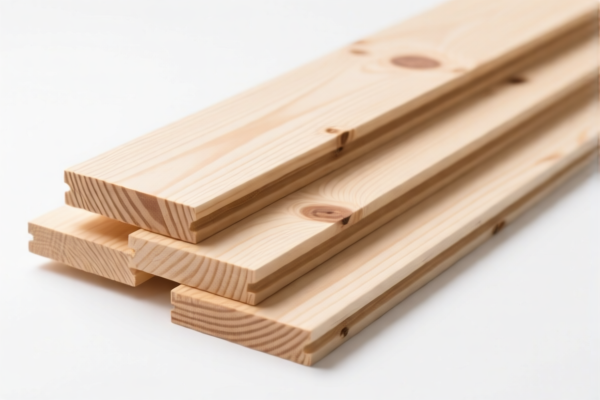
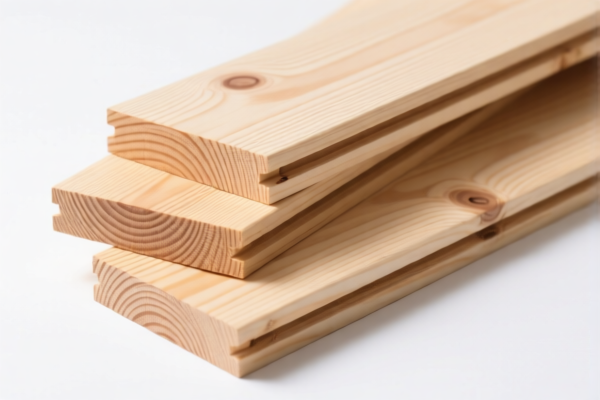
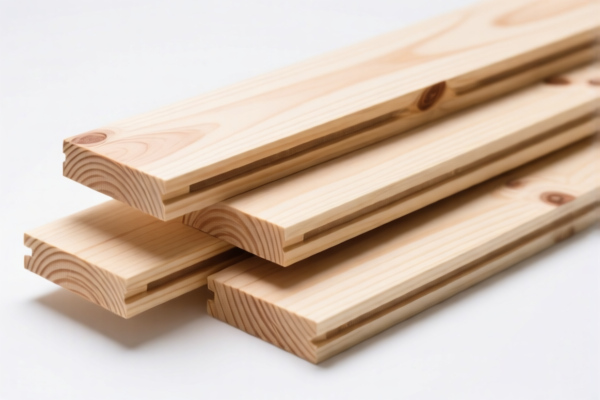
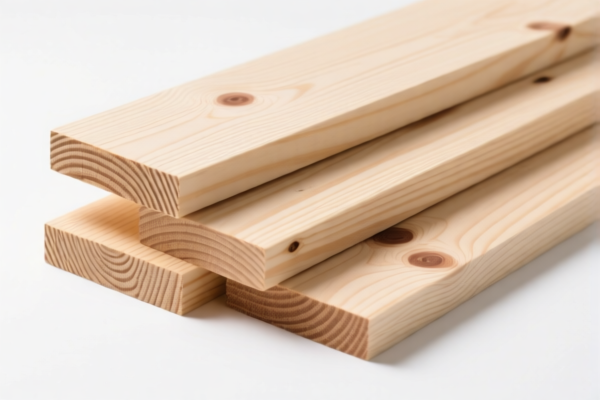
High quality finger jointed board
CN → US| HS Code | Tariff Rate | Origin | Destination | Doc |
|---|---|---|---|---|
| 4418919195 | 38.2% | CN | US | Official Doc |
| 4412525100 | 35.0% | CN | US | Official Doc |
| 4407110001 | 35.0% | CN | US | Official Doc |
| 4407120001 | 35.0% | CN | US | Official Doc |
| 4418999195 | 38.2% | CN | US | Official Doc |
Product Images
AI Analysis
🪵 Finger Jointed Board (FJ Board)
🌐 HS Code Reference & Customs Clearance Guide | 2026 Tariff Analysis | Strategic Entry Strategies
📌 I. Product Definition & Classification: What Exactly is "Finger Jointed Board"?
Finger Jointed Board (FJ Board) is an engineered wood product created by cutting the ends of small timber pieces into interlocking "fingers" and gluing them together to form longer boards. It is primarily used in furniture making, cabinetry, and interior construction.
In international trade, FJ boards are not classified as a single unique item but are determined by their wood species, processing method (sawn vs. laminated), and final form (construction material vs. component).
⚠️ Key Classification Logic:
- If classified as sawed timber/edge-glued panels based on wood species (e.g., Pine/Spruce) → Likely Chapter 44 (Wood and articles of wood).
- If classified as plywood/laminated veneer structures → Likely 4412.
- If classified as general construction wood items → Likely 4418.
📦 II. HS Code Classification Details (Based on Provided Data)
| HS Code | Product Description | Application Scenario | Primary Basis for Classification |
|---|---|---|---|
4412.52.51.00 |
Laminated wood products (Plywood/LVL type) | FJ boards treated as laminated structures based on material inference | Laminated Wood Structure |
4407.11.00.01 |
Sawn wood of coniferous species (e.g., Pine) | FJ工艺与编码要求完全一致;材质推断为针叶树/松木类 | Coniferous Timber (Sawn) |
4407.12.00.01 |
Sawn wood of coniferous species | FJ工艺符合手指接合形态;材质推断为针叶树木材 | Coniferous Timber (Sawn) |
4418.91.91.95 |
Other builders' carpentry and joinery | FJ board belongs to board components of fine woodwork for construction | Construction Woodwork Component |
4418.99.91.95 |
Other builders' carpentry and joinery | FJ board is a wood material for construction, fitting general categories | General Construction Wood Item |
🔍 Critical Distinction:
- 4407 Series: Focuses on the raw material type (Coniferous/Softwood) and basic processing (sawing). High confidence if the wood is clearly Pinus/Spruce.
- 4412 Series: Focuses on the structural integrity as a laminated entity. Used if the board is viewed as a composite panel rather than solid timber.
- 4418 Series: Focuses on the end-use in construction. Used when the board is considered a "fine woodwork" component for buildings.
💰 III. Detailed Tariff Rate Breakdown (2026 Latest)
✅ Applicable Country: United States (US)
✅ Origin: China (CN)
✅ Effective Time: Includes imports from November 10, 2025 onwards
🎯 1. 4407.11.00.01 & 4407.12.00.01
Classification: Sawn Wood of Coniferous Species (Pine/Spruce)
Summary: FJ process matches code requirements; material inferred as Coniferous/Pine.
| Item | Details |
|---|---|
| Base Tariff | 0.0% |
| Section 301 / Additional Tariff | +25.0% |
| Section 122 Tariff | +10.0% |
| Total Effective Tax Rate | 35.0% |
| Tax Calculation | CIF Value × 35.0% |
| De Minimis Eligibility | ❌ Not Eligible (High risk of seizure) |
| Legal Basis Path | Base: 4407 → Add: 301 (25%) → Add: 122 (10%) |
📌 Explanation:
- The 0% base rate makes these codes attractive initially.
- However, the 35% total burden is driven by the mandatory 25% Section 301 tariff (trade war measure) and the 10% Section 122 tariff (national security/strategic goods).
- This is the most common classification for standard Pine FJ boards exported from China.
🎯 2. 4412.52.51.00
Classification: Laminated Wood Products
Summary: FJ board classified as laminated wood product form, based on material inference principles.
| Item | Details |
|---|---|
| Base Tariff | 0.0% |
| Section 301 / Additional Tariff | +25.0% |
| Section 122 Tariff | +10.0% |
| Total Effective Tax Rate | 35.0% |
| Tax Calculation | CIF Value × 35.0% |
| De Minimis Eligibility | ❌ Not Eligible |
| Legal Basis Path | Base: 4412 → Add: 301 (25%) → Add: 122 (10%) |
📌 Note:
- Even though the base tariff is 0%, the additional taxes make it identical to the 4407 codes in final cost.
- This classification is used when the laminated/panel nature of the FJ board is emphasized over its solid timber origin.
🎯 3. 4418.91.91.95 & 4418.99.91.95
Classification: Other Builders' Carpentry and Joinery
Summary: FJ board as a component of fine woodwork for construction.
| Item | Details |
|---|---|
| Base Tariff | 3.2% |
| Section 301 / Additional Tariff | +25.0% |
| Section 122 Tariff | +10.0% |
| Total Effective Tax Rate | 38.2% |
| Tax Calculation | CIF Value × 38.2% |
| De Minimis Eligibility | ❌ Not Eligible |
| Legal Basis Path | Base: 4418 → Add: 301 (25%) → Add: 122 (10%) |
📌 Warning:
- These codes carry a higher total tax (38.2%) due to the 3.2% base tariff.
- Use these only if the product is strictly defined as a finished construction component rather than raw timber or panel stock.
- Misclassification here can lead to higher duties without benefit.
🛠️ IV. Customs Clearance Practical Advice (Pitfall Avoidance Guide)
✅ 1. Essential Documentation Checklist
| Document | Required | Explanation |
|---|---|---|
| ✅ Product Specification Sheet | ✔️ | Must specify: Wood Species (e.g., Pinus sylvestris), FJ length, Bond type (MDI/Urea-formaldehyde). |
| ✅ Material Declaration | ✔️ | Explicitly state "Finger Jointed Board" and "Made in China". |
| ✅ Photos (Clear) | ✔️ | Show the "finger" joint pattern clearly to prove it is not solid timber or plywood. |
| ✅ Commercial Invoice | ✔️ | Accurate CIF value. Do not under-declare. |
| ✅ Packing List | ✔️ | Detail dimensions, weight, and number of packages. |
| ✅ Certificate of Origin | ✔️ | Confirm CN origin to apply correct Section 301/122 tariffs. |
✅ 2. Declaration Strategy (Key Mnemonic)
🔥 "Know the Wood, Choose the Code: 0% Base + 35% Add = 35%; 3.2% Base + 35% Add = 38.2%"
| Scenario | Correct Declaration | Risk of Error |
|---|---|---|
| Standard Pine/Spruce FJ Board | 4407.11.00.01 or 4407.12.00.01 |
Low risk if species is confirmed. |
| Laminated Panel Style FJ | 4412.52.51.00 |
Moderate risk; ensure it's not classified as Plywood (8524). |
| Finished Construction Component | 4418.91.91.95 |
High risk of higher tax (38.2%) if it's just raw board. |
| Mislabeling as "Solid Wood Plank" | ❌ Avoid | May be rejected or reclassified with penalties. |
✅ 3. Special Situation Handling
| Situation | Handling Advice |
|---|---|
| Mixed Wood Species | Declare the dominant species or the species with the highest tariff risk. If mixed, consider 4418 as a fallback, but verify tax implications. |
| Treated Wood (Pressure Treated) | May require additional phytosanitary certificates. Ensure the treatment does not change the wood classification to "chemically modified wood" (unlikely for standard FJ). |
| Small Samples (< De Minimis Threshold) | ❌ Do NOT attempt. Section 122 and 301 tariffs often apply to low-value shipments from China. Risk of seizure is extremely high. |
| OEM for US Brands | Provide end-user declaration if applicable, but origin remains China, so tariffs still apply. |
🌍 V. Global Market Comparison (2026 Latest)
| Country/Region | Recommended HS Code | Total Tariff (China Origin) | Certification Required | Notes |
|---|---|---|---|---|
| 🇺🇸 USA | 4407.11.00.01 / 4418.91.91.95 |
35.0% - 38.2% | None specific, but CBP scrutiny is high | Highest Barrier due to 301+122 tariffs. |
| 🇨🇳 China | 4407 / 4418 |
VAT: 13% + Import Duty: 0-6% | CCC (if applicable) | Low entry barrier for domestic sales. |
| 🇪🇺 EU | 4407 / 4412 |
0-6% | FSC/PEFC (Voluntary but recommended) | No major political tariffs, but strict FSC compliance needed. |
| 🇬🇧 UK | 4407 / 4418 |
0-6% | UKCA (if applicable) | Post-Brexit rules apply, but tariffs remain low. |
| 🇯🇵 Japan | 4407 / 4418 |
0-6% | PHMS (Phytosanitary) | Low tariffs, strict quality standards. |
📌 Conclusion:
- The USA is the most challenging market for Chinese FJ boards due to the cumulative 35%-38.2% tax burden.
- EU/UK/Japan offer significantly better tariff advantages, making them more profitable destinations despite stricter environmental certifications (FSC).
📌 VI. Common Errors & Pitfall Guide (Lessons Learned)
❌ Error 1: Classifying FJ Board as "Solid Timber" (e.g., 4403)
👉 Consequence: Customs may reject it because FJ is an engineered product, not solid log/plank. Re-classification leads to delays.
❌ Error 2: Using 4418 codes for raw stock instead of finished components
👉 Consequence: Paying 38.2% tax instead of 35.0%. Small difference, but unnecessary cost increase.
❌ Error 3: Ignoring Section 122 Tariff
👉 Consequence: Underestimating landed cost by 10%. Budget planning fails.
❌ Error 4: Labeling as "Furniture Part" without details
👉 Consequence: Customs may classify as 8708/9403 parts, which could have different tariffs and higher scrutiny. Always declare as "Wood Board".
✅ Correct Practice:
"Finger Jointed Board, Pine Wood, Glued, Sawn, Unplaned, for Furniture Making, Origin: China"
🎯 VII. Conclusion: Professional Declaration, Cost Control!
🎯 Remember the Key:
🔹 "35% is the baseline for 4407/4412; 38.2% is the risk for 4418."
🔹 "Section 301 (25%) + Section 122 (10%) are non-negotiable for China Origin."
🔹 "Accurate wood species declaration saves time and money."
📌 Pro Tip:
If your FJ boards are shipped from Vietnam, Malaysia, or Thailand (re-exported), you might avoid the US Section 301/122 tariffs if you can prove substantial transformation occurred in the third country.
However, for direct exports from China, the 35%-38.2% rate is mandatory.
📞 Immediate Action:
📞 Consult a licensed US Customs Broker
📦 Submit Advance Ruling request to CBP if unsure between 4407 and 4418
🚀 Plan your pricing model to absorb the ~35% tax impact for US market sales!
✨ Professional Clearance Starts with Precise Classification!
💼 Every Percentage Point of Tax is a Percentage Point of Profit!
Customer Reviews
About HS Code Classification
The Harmonized System (HS) is an internationally standardized nomenclature developed by the World Customs Organization (WCO) to classify traded products. Over 200 countries use the HS system as the basis for customs tariffs, trade statistics, and import/export regulations.
Each HS code follows a hierarchical structure:
- Chapter (2 digits) — Broad category of goods (e.g., Chapter 84: Machinery and Mechanical Appliances)
- Heading (4 digits) — More specific grouping within the chapter
- Subheading (6 digits) — Internationally standardized breakdown, used by all WCO member countries
- National subdivisions (8-10 digits) — Country-specific extensions for further classification, such as US HTSUS 10-digit codes
Correct HS code classification is essential for smooth customs clearance, accurate duty payment, and compliance with trade regulations. Misclassification can lead to customs delays, overpayment of duties, or penalties.
When importing from CN to US, the applicable tariff rates may include:
- Most-Favored-Nation (MFN) rate — The standard duty rate applied to WTO members
- General rate — Applied to countries without trade agreements
- Trade remedy duties — Additional tariffs such as Section 301 (anti-dumping), Section 232 (national security), or countervailing duties
The information provided on this page is for reference purposes only. For official classification, please consult with your local customs authority or a licensed customs broker.