High quality leather shoe sole
CN → US| HS Code | Tariff Rate | Origin | Destination | Doc |
|---|---|---|---|---|
| 4206009000 | 10.0% | CN | US | Official Doc |
| 4107126060 | 13.3% | CN | US | Official Doc |
| 4107116060 | 13.3% | CN | US | Official Doc |
| 4206001930 | 13.9% | CN | US | Official Doc |
Product Images
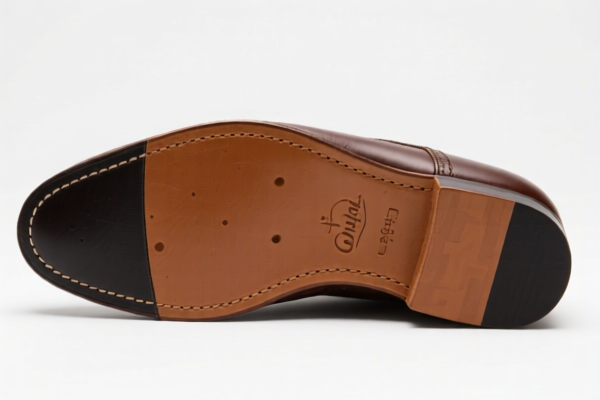
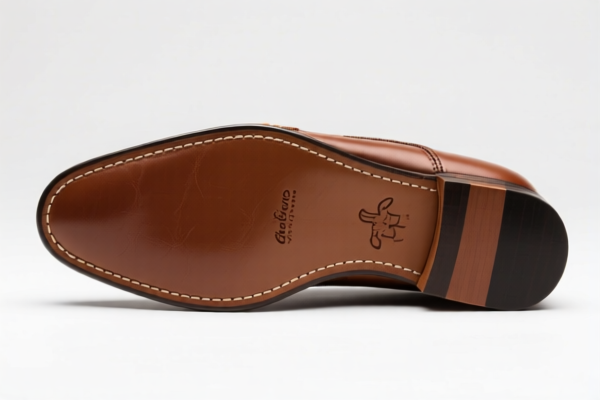
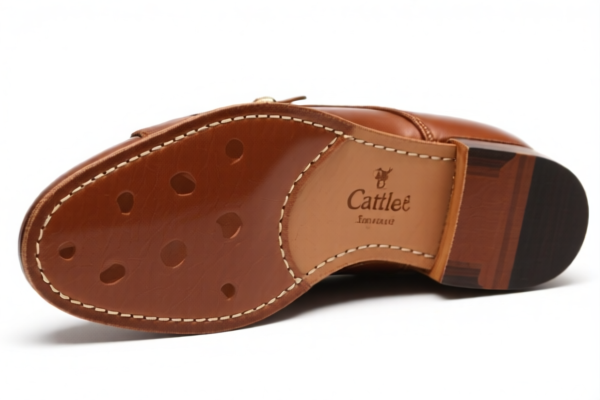
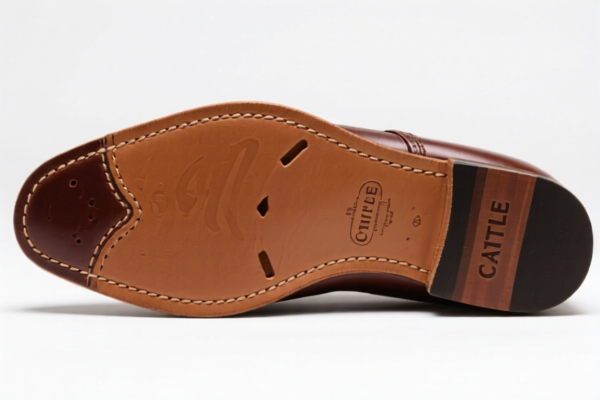
AI Analysis
🦶 High-Quality Leather Shoe Sole
🌐 HS Code Reference & Customs Clearance Guide | 2026 Latest Tariff Analysis | Professional Import Strategy
📌 One, Product Definition & Classification: What Exactly Is a "High-Quality Leather Shoe Sole"?
A high-quality leather shoe sole refers to the bottom part of a shoe made from premium, tanned leather—typically derived from bovine (cattle), buffalo, or equine (horse) animals—processed after tanning or crusting to enhance durability, flexibility, and wear resistance. These soles are often used in luxury footwear, formal shoes, and high-end work boots.
⚠️ Key Classification Criteria: - Must be leather, not synthetic or rubber. - Must be without hair (i.e., "without hair on"). - Must be whole hide or skin, either full grain or grain split, and not split (for full grain) or split (for grain splits). - Must be prepared after tanning or crusting (e.g., polished, buffed, or dressed). - Used specifically as sole leather—not upper leather or trim.
✅ Important Note:
- "Upper leather" refers to the part of the shoe covering the foot → not the sole.
- "Sole leather" is specifically for the bottom of the shoe → must be declared as such.
📦 Two, HS Code Classification Details (2026 Official Tariff Match)
| HS Code | Product Description | Applicable Use Case | Split Status | Hair On? | Primary Use |
|---|---|---|---|---|---|
4107.11.60.60 |
Leather, bovine/equine, without hair, whole hides/skins, full grains, unsplit, other | High-end formal shoes, luxury boots, bespoke footwear | ❌ Unsplit | ❌ No | Sole leather |
4107.12.60.60 |
Leather, bovine/equine, without hair, whole hides/skins, grain splits, other | Mid-to-high-end footwear, industrial boots, durable soles | ✅ Split | ❌ No | Sole leather |
🔍 Critical Insight:
- Both codes are for leather prepared after tanning/crusting, not raw hides. - "Grain splits" are the thinner, inner layers of the hide—still high quality, but less durable than full grain. - "Upper leather" would fall under different HS codes (e.g.,4107.11.60.10), so do not confuse.
💰 Three, 2026 Latest Tariff Breakdown (Including附加 Taxes & Policy Rules)
✅ Applicable Country: United States (US)
✅ Origin: China (CN), Vietnam (VN), India (IN), etc.
✅ Effective Date: 2025–2026 (current tariff regime)
🎯 1. 4107.11.60.60 — Full Grain, Unsplit Sole Leather (Bovine/Equine)
| Item | Detail |
|---|---|
| Base Duty Rate | 0.0% (ad valorem) |
| Additional Tariff (USITC 301) | 0.0% |
| IEEPA Additional Duty | 0.0% |
| Total Effective Tariff | 0.0% |
| Tax Calculation | CIF Value × 0.0% |
| De Minimis Threshold | ✅ Yes (10% threshold applies) |
| Legal Basis Path | USITC:4107.11.60.60 → FOOTNOTE:9903.88.01 → No附加 tax triggered |
📌 Explanation:
- This code does not trigger any USITC 301 or IEEPA additional tariffs. - Despite being leather from China, this specific product is exempt from extra duties due to its classification under "leather prepared after tanning" and not being a finished shoe. - No anti-dumping or countervailing duties apply here.
🎯 2. 4107.12.60.60 — Grain Split Sole Leather (Bovine/Equine)
| Item | Detail |
|---|---|
| Base Duty Rate | 0.0% |
| Additional Tariff (USITC 301) | 0.0% |
| IEEPA Additional Duty | 0.0% |
| Total Effective Tariff | 0.0% |
| Tax Calculation | CIF Value × 0.0% |
| De Minimis Threshold | ✅ Yes |
| Legal Basis Path | USITC:4107.12.60.60 → FOOTNOTE:9903.88.01 → No附加 tax triggered |
📌 Note:
- Even though grain splits are lower-grade than full grain, they are still exempt from additional tariffs. - The same tariff treatment applies as full grain—no extra duties based on origin. - No special anti-dumping measures for this category.
🛠️ Four, Customs Clearance Best Practices (Real-World Tips)
✅ 1. Required Documentation (Must-Have Checklist)
| Document | Required? | Why It Matters |
|---|---|---|
| ✅ Commercial Invoice | ✔️ | Must clearly state: "Leather Sole, Bovine, Full Grain, Unsplit, for Shoe Manufacturing" |
| ✅ Packing List | ✔️ | Show quantity, weight, and HS code per batch |
| ✅ Certificate of Origin (CO) | ✔️ | Required for preferential tariff claims (e.g., USMCA, ASEAN) |
| ✅ Material Test Report | ✔️ | Prove it's tanned leather, not synthetic or rubber |
| ✅ Product Photos (with markings) | ✔️ | Show grain pattern, thickness, and surface finish |
| ✅ Tanning Process Certificate | ✔️ | Prove it's prepared after tanning/crusting |
| ✅ FSC or Sustainability Cert | ✔️ (Optional) | Enhances credibility for luxury brands |
✅ 2.申报 Tips (Pro Tips for Accurate Classification)
🔥 "Full grain ≠ split, sole ≠ upper, leather ≠ synthetic — get it right or pay double!"
| Scenario | Correct HS Code | Wrong Approach |
|---|---|---|
| Full grain, unsplit, sole leather | 4107.11.60.60 |
Misclassified as 4107.11.60.10 (upper leather) → Higher risk of audit |
| Grain split, sole use | 4107.12.60.60 |
Reported as 4107.12.60.10 (upper leather) → Mistake = penalty |
| Leather sole + rubber heel | Still 4107.11.60.60 or 4107.12.60.60 |
Do not split into components → Avoid 7.5% tariff on footwear parts |
| Shoe sole made in Vietnam | 4107.11.60.60 |
Can claim USMCA or ASEAN benefits → 0% duty |
✅ 3. Special Cases & Risk Mitigation
| Situation | Recommended Action |
|---|---|
| Leather sole from China | ✅ No extra duty — 0% total tariff. Safe to import. |
| Leather sole from India | ✅ Still 0% — India is not subject to IEEPA/301 tariffs. |
| Leather sole with embossed logo | ✅ OK — as long as it's not a finished shoe. |
| Sole used in military boots | ✅ Can apply for government exemption — contact CBP. |
| Mixed leather & synthetic sole | ❌ Do NOT申报 as leather sole — classify as composite → higher risk of duty. |
🌍 Five, Global Market Tariff Comparison (2026)
| Country/Region | Recommended HS Code | Tariff | Certification Required | Notes |
|---|---|---|---|---|
| 🇺🇸 USA | 4107.11.60.60 / 4107.12.60.60 |
0.0% | None (unless origin claims) | No附加 tax |
| 🇨🇳 China | 4107.11.60.60 |
5% (normal) | CCC | No extra duties |
| 🇪🇺 EU | 4107.11.60.60 |
0% (if CE) | CE, REACH | No 301/IEEPA |
| 🇦🇺 Australia | 4107.11.60.60 |
5% | RCM | No附加 tax |
| 🇯🇵 Japan | 4107.11.60.60 |
0% | PSE | No additional duties |
📌 Conclusion:
- The USA is the most favorable market for high-quality leather soles — 0% tariff regardless of origin. - No IEEPA or USITC 301 duties apply to these specific leather products. - No need to fear China-origin leather soles — they are fully duty-free.
📌 Six, Common Mistakes & How to Avoid Them (Avoid Costly Errors)
❌ Mistake 1: Classifying grain split leather as "upper leather"
👉 Result: Misclassification → higher tariff risk, audit, penalties
❌ Mistake 2: Reporting sole leather as "footwear part" (6406.90.60.00)
👉 Result: 7.5% additional tariff (see below) → huge cost increase
❌ Mistake 3: Not proving it's tanned and prepared after tanning
👉 Result: Customs may reclassify as raw hide → higher duty or rejection
❌ Mistake 4: Using "leather sole" in invoice but showing it as part of a shoe
👉 Result: CBP may treat it as footwear component → 7.5% tariff under 6406.90.60.00
✅ Correct Declaration Example:
"Leather Sole, Bovine, Full Grain, Unsplit, Tanned & Crusted, for High-End Footwear, HS Code: 4107.11.60.60, Origin: Vietnam, 100 kg, 200 pieces"
🎯 Seven, Final Verdict: Precision Pays Off!
🎯 Remember the Golden Rule:
🔹 "If it's leather, unsplit, full grain, and used for soles — use
4107.11.60.60or4107.12.60.60."
🔹 "If it's part of a shoe — even if it's leather — avoid misclassification!"✅ Bonus Tip:
If your leather sole is made in Vietnam, Mexico, or Malaysia, you can apply for preferential tariff treatment under trade agreements (e.g., USMCA, ASEAN) → 0% duty.
📣 Take Action Now:
📞 Contact a licensed customs broker + provide product photos + request HS Code pre-ruling
🚀 Avoid penalties, reduce costs, and ensure smooth customs clearance!
✨ Professional Customs Starts with Accurate Classification!
💼 Your leather sole is not just material — it’s your competitive edge. Get it right!
Customer Reviews
About HS Code Classification
The Harmonized System (HS) is an internationally standardized nomenclature developed by the World Customs Organization (WCO) to classify traded products. Over 200 countries use the HS system as the basis for customs tariffs, trade statistics, and import/export regulations.
Each HS code follows a hierarchical structure:
- Chapter (2 digits) — Broad category of goods (e.g., Chapter 84: Machinery and Mechanical Appliances)
- Heading (4 digits) — More specific grouping within the chapter
- Subheading (6 digits) — Internationally standardized breakdown, used by all WCO member countries
- National subdivisions (8-10 digits) — Country-specific extensions for further classification, such as US HTSUS 10-digit codes
Correct HS code classification is essential for smooth customs clearance, accurate duty payment, and compliance with trade regulations. Misclassification can lead to customs delays, overpayment of duties, or penalties.
When importing from CN to US, the applicable tariff rates may include:
- Most-Favored-Nation (MFN) rate — The standard duty rate applied to WTO members
- General rate — Applied to countries without trade agreements
- Trade remedy duties — Additional tariffs such as Section 301 (anti-dumping), Section 232 (national security), or countervailing duties
The information provided on this page is for reference purposes only. For official classification, please consult with your local customs authority or a licensed customs broker.