High quality welding flux
CN → US| HS Code | Tariff Rate | Origin | Destination | Doc |
|---|---|---|---|---|
| 3810901000 | 41.5% | CN | US | Official Doc |
| 3811900000 | 41.5% | CN | US | Official Doc |
| 3810100000 | 40.0% | CN | US | Official Doc |
| 3811190000 | 41.5% | CN | US | Official Doc |
| 3810901000 | 41.5% | CN | US | Official Doc |
Product Images
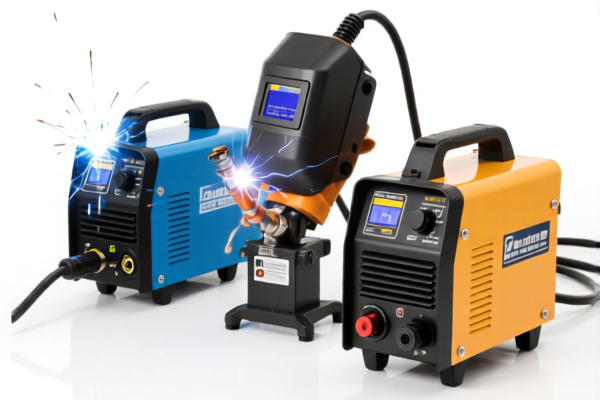
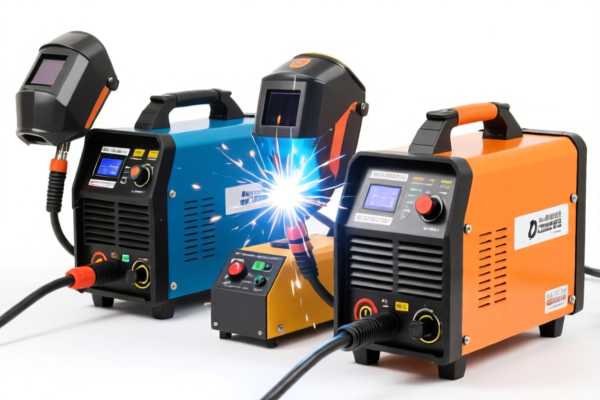
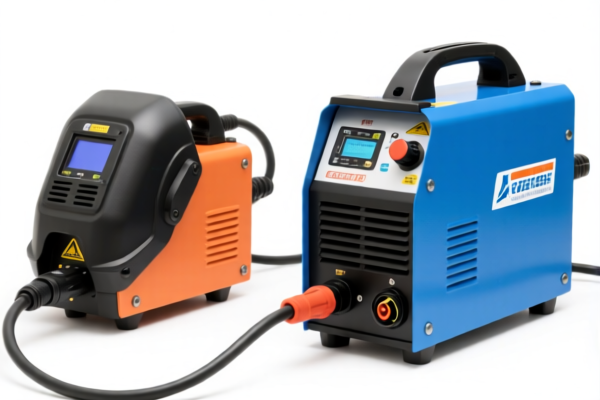
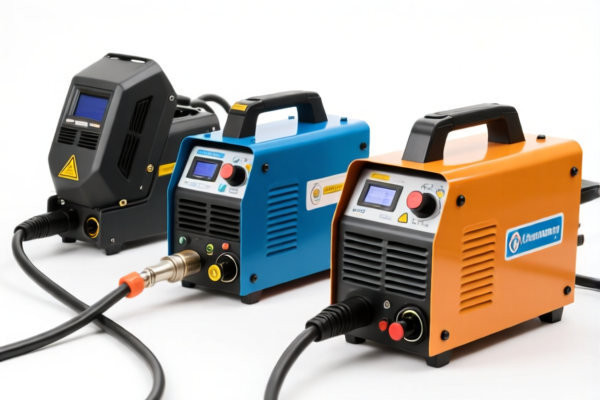
AI Analysis
🔥 High-Quality Welding Flux: The Unsung Hero of Metal Joining
🌐 HS Code Reference & Customs Clearance Guide | 2026 Latest Tariff Analysis | Professional Entry Strategy
📌 I. Product Definition & Classification: What Exactly is "Welding Flux"?
Welding flux is a chemical compound or mixture used during welding, brazing, and soldering processes. Its primary functions are to prevent oxidation, remove oxides, and facilitate the flow of filler metal. In international trade, it is classified under Chapter 38 (Miscellaneous Chemical Products).
Depending on the specific chemical composition and primary function, welding fluxes are typically divided into two main categories:
- Fluxes for Welding/Brazing (Chapter 38, Heading 3810): Specifically formulated to aid in the joining of metals. These are the most common "welding fluxes."
- Other Chemical Preparations/Additives (Chapter 38, Heading 3811 or 3810.90): General chemical preparations that may include flux-like properties but are classified as additives or miscellaneous chemical mixtures.
⚠️ Key Distinction Point:
- If the product is primarily designed for welding, brazing, or hard-soldering, it falls under Heading 3810.
- If the product is a general chemical additive (e.g., an anti-explosion agent or liquid modifier) that happens to have fluxing properties, it may fall under Heading 3811 or 3810.90.
- High-purity versions often attract scrutiny regarding specific sub-headings under 3810.90.
📦 II. HS Code Classification Details (2026 Latest Tariff Authority Comparison)
Based on the provided data, here are the valid HS Code options for High-Quality Welding Flux, along with their tax implications.
| HS Code | Product Description | Application Logic | Total Tax Rate (China Origin → US) |
|---|---|---|---|
3810.90.10.00 |
Fluxes for welding, brazing, or hard soldering (Other) | Primary Match: Specifically for welding/brazing aids. High-purity variants fit here. | 41.5% |
3811.90.00.00 |
Other prepared additives for mineral oils or similar liquids | Secondary Match: Classified as a chemical preparation/additive. No material conflict. | 41.5% |
3810.10.00.00 |
Flux pastes and powders for soldering (Base Metal/Silver) | Specific Match: For soldering fluxes (different from welding/brazing). | 40.0% |
3811.19.00.00 |
Other prepared anti-knock preparations | Alternative Match: Classified as "Other" additives for liquid modulation. No conflict. | 41.5% |
🔍 Focus on
3810.90.10.00:
This is the most accurate classification for "High-Quality Welding Flux" because it explicitly covers "fluxes for welding, brazing, or hard soldering." The data confirms it is a "chemical preparation" with "no material conflict."
💰 III. 2026 Latest Tariff Rate Breakdown (Including Surtaxes & Policy Add-ons)
✅ Applicable Country: United States (US)
✅ Country of Origin: China (CN)
✅ Effective Date: 2025/2026 (Current Trade War Framework)
🎯 1. 3810.90.10.00 —— Fluxes for Welding/Brazing (Other)
| Item | Content |
|---|---|
| Base Duty | 6.5% (General Rate of Duty) |
| Section 301 Surtax | +25.0% (USITC Footnote 9903.88.01 related) |
| IEEPA Surtax | +10.0% (122-Clause Tariff for China Origin) |
| Total Effective Tax | 41.5% |
| Calculation | CIF Value × 41.5% |
| De Minimis Exemption | ❌ Not Eligible (Deny de_minimis for high-value chemical imports from China) |
| Legal Basis Path | IEEPA:9903.01.25 → IEEPA:9903.01.24 → USITC:3810.90.10.00 → FOOTNOTE:301/122 |
📌 Explanation:
- Base 6.5%: Standard MFN tariff for miscellaneous chemical products.
- 25% Section 301: The standard punitive tariff on many Chinese chemical products.
- 10% IEEPA (122-Clause): An additional layer of surtax applied to specific Chinese imports under the International Emergency Economic Powers Act.
- Total 41.5%: This is a high-cost entry for chemical goods. Profit margins must account for this significant burden.
🎯 2. 3811.90.00.00 & 3811.19.00.00 —— Chemical Additives
| Item | Content |
|---|---|
| Base Duty | 6.5% |
| Section 301 Surtax | +25.0% |
| IEEPA Surtax | +10.0% |
| Total Effective Tax | 41.5% |
| Note | Identical tax structure to 3810.90.10.00. Classification as an "additive" does not reduce the tariff burden. |
🎯 3. 3810.10.00.00 —— Soldering Fluxes (Past/Powders)
| Item | Content |
|---|---|
| Base Duty | 5.0% (Slightly lower base rate) |
| Section 301 Surtax | +25.0% |
| IEEPA Surtax | +10.0% |
| Total Effective Tax | 40.0% |
| Note | Only applicable if the product is strictly for soldering (low-temp, electronics), not high-temp welding/brazing. Using this code for welding flux risks customs penalties for misdeclaration. |
📌 Critical Warning:
- Do not use3810.10.00.00for welding flux. Welding (high temp) and Soldering (low temp) are distinct in HS classification. Misdeclaration can lead to seizures and fines.
🛠️ IV. Customs Clearance Practical Advice (Pitfall Avoidance Guide)
✅ 1. Documentation Checklist (Mandatory)
| Document | Required | Explanation |
|---|---|---|
| ✅ Material Safety Data Sheet (MSDS) | ✔️ Mandatory | Chemical products require MSDS for safety classification. Must state composition. |
| ✅ Product Specification Sheet | ✔️ | Detail the flux type (e.g., Rosin-based, No-Clean, Water-Soluble), melting point, and application (Welding vs. Soldering). |
| ✅ Commercial Invoice | ✔️ | Clearly state "Welding Flux, High Purity" and HS Code 3810.90.10.00. Avoid vague terms like "Chemical." |
| ✅ Certificate of Origin | ✔️ | Required for proving Chinese origin (subject to 41.5% tax). |
| ✅ FCC/ROHS Certificates | ⚠️ If Applicable | If the flux is used in electronics, environmental certifications may be requested. |
✅ 2. Declaration Strategy (Key Rules)
🔥 “Be Specific, Be Accurate, Avoid ‘Other’ Traps!”
| Scenario | Correct Declaration | Incorrect Practice |
|---|---|---|
| Industrial Welding Flux | 3810.90.10.00 |
Declaring as "Other Chemicals" (Risk of audit) |
| Electronics Soldering Paste | 3810.10.00.00 |
Declaring as "Welding Flux" (Misclassification) |
| General Chemical Additive | 3811.90.00.00 |
Only if it lacks specific welding function claims |
📌 Important:
- The term "High-Quality" is subjective. In customs documents, use technical terms like "High-Purity," "Rosin-Based," or "No-Clean." - Ensure the MSDS matches the declared composition. Discrepancies lead to delays.
✅ 3. Special Considerations
| Situation | Handling Advice |
|---|---|
| Water-Soluble Flux | Clearly state "Water-Soluble" on invoice. May require additional safety data. |
| Bulk Chemical vs. Retail Packaging | If in bulk drums, ensure HS Code remains 3810.90.10.00. No change in rate, but packaging details must match. |
| Mixed Shipments | If shipping flux with welding torches/guns, declare separately. Flux = Ch 38; Torch = Ch 84. Do not combine. |
| Origin Labeling | Must clearly state "Product of China" to avoid origin fraud accusations, which trigger higher penalties. |
🌍 V. Global Market Comparison (2026 Latest)
| Country/Region | Recommended HS Code | Tax Rate (China Origin) | Certification Requirements | Notes |
|---|---|---|---|---|
| 🇺🇸 USA | 3810.90.10.00 |
41.5% | MSDS, OSHA Compliance | High tariff burden due to 301/IEEPA clauses. |
| 🇨🇳 China | 3810.90.10.00 |
5.0% | No special surtax | Export incentive for chemical goods. |
| 🇪🇺 EU | 3810.90.10.00 |
6.5% (approx.) | REACH Registration | REACH compliance is critical for chemical imports. |
| 🇮🇳 India | 3810.90.10.00 |
Varies | BIS Certification | Check for Anti-Dumping Duties on specific chemical fluxes. |
📌 Conclusion:
- USA: Highest cost due to trade war tariffs. Plan for 41.5% duty.
- EU/India: Moderate costs, but Regulatory Compliance (REACH/BIS) is the biggest hurdle, not just tariff.
📌 VI. Common Errors & Pitfall Guide (Lessons Learned)
❌ Error 1: Misclassifying Welding Flux as "Soldering Flux" (3810.10.00.00)
👉 Consequence: If used for high-temp welding, customs may impose penalties for misdeclaration. The tax difference is small (1.5%), but the risk of audit is high.
❌ Error 2: Omitting MSDS from Documentation
👉 Consequence: Shipment held at US Border for safety review. Potential delay of 2-4 weeks.
❌ Error 3: Using Generic Terms like "Chemical Mix"
👉 Consequence: Customs officer cannot determine the correct sub-heading. Leads to manual examination and increased scrutiny.
❌ Error 4: Ignoring the "High Purity" Claim
👉 Consequence: If purity is claimed but not supported by CoA (Certificate of Analysis), it may be viewed as false advertising or misrepresentation.
✅ Correct Practice:
Product Name: "High-Purity Rosin-Based Welding Flux for Steel"
HS Code:3810.90.10.00
MSDS: Attached, detailing composition and hazard class.
Origin: "Made in China" clearly marked on each container.
🎯 VII. Conclusion: Professional Clearance, Cost Optimization!
🎯 Remember the Key Points:
🔹 "Welding vs. Soldering: Don't Mix!" (Different HS Codes, Different Risks)
🔹 "41.5% is the US Reality for China-Origin Flux" (Plan your pricing accordingly)
🔹 "MSDS is King" (No MSDS, No Entry)
🔹 "Be Specific in Description" (Avoid "Other Chemicals" vagueness)
📌 Pro Tip:
If you are importing in large volumes, consider Advance Rulings from US CBP to confirm the HS Code 3810.90.10.00 officially. This provides legal certainty and protects against retroactive tariff changes.
📣 Immediate Action:
📞 Contact a Licensed Customs Broker to review your MSDS and Product Specifications.
🚀 Ensure Your Commercial Invoice explicitly states the HS Code3810.90.10.00and "Product of China."
💼 Your Profit Margin depends on accurate classification. Don't let 41.5% catch you off guard!
✨ Precise Classification, Smooth Clearance, Higher Profits!
💼 Chemical Imports Require Chemical Care!
Customer Reviews
About HS Code Classification
The Harmonized System (HS) is an internationally standardized nomenclature developed by the World Customs Organization (WCO) to classify traded products. Over 200 countries use the HS system as the basis for customs tariffs, trade statistics, and import/export regulations.
Each HS code follows a hierarchical structure:
- Chapter (2 digits) — Broad category of goods (e.g., Chapter 84: Machinery and Mechanical Appliances)
- Heading (4 digits) — More specific grouping within the chapter
- Subheading (6 digits) — Internationally standardized breakdown, used by all WCO member countries
- National subdivisions (8-10 digits) — Country-specific extensions for further classification, such as US HTSUS 10-digit codes
Correct HS code classification is essential for smooth customs clearance, accurate duty payment, and compliance with trade regulations. Misclassification can lead to customs delays, overpayment of duties, or penalties.
When importing from CN to US, the applicable tariff rates may include:
- Most-Favored-Nation (MFN) rate — The standard duty rate applied to WTO members
- General rate — Applied to countries without trade agreements
- Trade remedy duties — Additional tariffs such as Section 301 (anti-dumping), Section 232 (national security), or countervailing duties
The information provided on this page is for reference purposes only. For official classification, please consult with your local customs authority or a licensed customs broker.