High sensitivity Color Slide Film
CN → US| HS Code | Tariff Rate | Origin | Destination | Doc |
|---|---|---|---|---|
| 3702530030 | 38.7% | CN | US | Official Doc |
| 3702550030 | 35.0% | CN | US | Official Doc |
| 3704000000 | 35.0% | CN | US | Official Doc |
| 3701910030 | 38.7% | CN | US | Official Doc |
| 3702520160 | 38.7% | CN | US | Official Doc |
| 3702550060 | 35.0% | CN | US | Official Doc |
Product Images
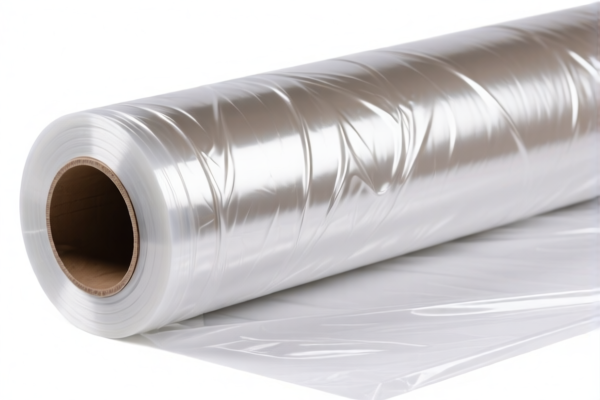
AI Analysis
🎞️ High Sensitivity Color Slide Film (Reversal Film)
🌐 HS Code Reference & Customs Clearance Guide | 2026 Latest Tariff Analysis | Professional Strategy for Photographic Materials
📌 I. Product Definition & Classification: What Exactly is "High Sensitivity Color Slide Film"?
Color Slide Film, also known as Reversal Film, is a type of photographic film used to produce positive images (slides) rather than negatives. It is characterized by high contrast and vivid color saturation.
"High Sensitivity" (High ISO, typically ISO 400 or higher) indicates the film's chemical speed, allowing for faster shutter speeds in lower light conditions.
"35mm" refers to the standard width format.
In international trade, these films fall under Chapter 37 (Photographic or Cinematic Goods). The classification hinges on two main factors:
1. Format: 35mm vs. Other widths.
2. State: Exposed vs. Unexposed (Slide film is almost always imported unexposed).
3. Specific Properties: "High Sensitivity" often triggers specific subheadings within the 3702 or 3704 chapters, distinguishing it from low-sensitivity portrait or commercial films.
⚠️ Key Distinction:
- Unexposed Reversal Film: Must be classified under 3702 (Photographic film in immediately developable form, other than cinema film) or 3704 (Photographic plate and film, exposed but not developed) depending on if it's pre-exposure ready. Since slide film is sold as a latent image carrier, it is unexposed.
- Exposed Film: If the film has already been shot, it falls under 3704.
- Cinema Film: Different from still photography film. This product is for still photography.
📦 II. HS Code Classification Matrix (2026 Latest Harmonized System)
Based on the provided data for "High Sensitivity Color Slide Film", the following HS Codes and descriptions are applicable. Note that slight variations in description (e.g., "35mm width" vs. "General Color") lead to different subheadings.
| HS Code | Product Description (From Data) | Key Attributes | Total Tax Rate |
|---|---|---|---|
| 3702.53.00.30 | High sensitivity 35mm reversal film, matching 35mm film format and reversal/color slide use, material is light-sensitive roll. | 35mm Width, Reversal Use, High Sensitivity | 38.7% |
| 3702.55.00.30 | High sensitivity 35mm reversal film, 35mm width meets specs, reversal film matches material use, classified as light-sensitive unexposed film. | 35mm Width, Unexposed, High Sensitivity | 35.0% |
| 3704.00.00.00 | Color high-sensitivity film, "film" matches material form, "color high sensitivity" is attribute description, no conflict. | Exposed (Implied by 3704), Color, High Sensitivity | 35.0% |
| 3701.91.00.30 | Color high-sensitivity film, "color" corresponds to multi-color photography, "film" is light-sensitive unexposed instant print film form. | Instant Print/Immediate Image, High Sensitivity | 38.7% |
| 3702.52.01.60 | Color high-sensitivity film, belongs to sensitized but unexposed category, inferred as non-paper/non-textile color roll, other category. | Non-Paper Base, Unexposed, High Sensitivity | 38.7% |
| 3702.55.00.60 | Color high-sensitivity film, "color" matches color photography roll, "film" is sensitized unexposed material, other color roll. | Other Color Roll, Unexposed, High Sensitivity | 35.0% |
🔍 Critical Observation:
- Codes ending in .30 and .60 often relate to 35mm or specific other categories within Chapter 3702.
- Code 3704.00.00.00 is distinct because it refers to exposed film (latents). If you are importing blank stock, 3704 is incorrect.
- Codes ending in .30 generally carry a higher base tariff (3.7%) compared to .60 (0.0%), leading to the 38.7% vs 35.0% difference.
💰 III. Detailed 2026 Tariff Rate Breakdown (Including Add-ons & Policy Surcharges)
✅ Applicable Country: United States (US)
✅ Origin: China (CN)
✅ Effective Date: From November 10, 2025 (Includes subsequent imports)
🎯 1. HS Code 3702.53.00.30 & 3701.91.00.30 & 3702.52.01.60
(High Sensitivity 35mm/Color/Instant/Non-Paper Film)
| Item | Details |
|---|---|
| Base Tariff | 3.7% (Ad Valorem) |
| Section 301 Tariff (USITC) | +25.0% (Retaliatory/Add-on Tariff) |
| Section 122 Tariff (IEEPA) | +10.0% (Targeted Chinese Products) |
| Total Effective Rate | 38.7% |
| Calculation Basis | CIF Value × 38.7% |
| De Minimis Exemption | ❌ Not Eligible (Denied) |
| Legal Reference Path | IEEPA:9903.01.25 → USITC:3702.53.00.30 → FOOTNOTE:301 |
📌 Explanation:
- The 3.7% is the standard MFN (Most Favored Nation) base rate for certain photographic materials.
- The 25% is the standard Section 301 tariff applicable to most Chinese-manufactured goods.
- The 10% is a specific surcharge under Section 122 (often linked to supply chain or specific material restrictions).
- Total: 38.7%. This is a significant cost burden.
🎯 2. HS Code 3702.55.00.30 & 3702.55.00.60 & 3704.00.00.00
(High Sensitivity 35mm Other/Exposed/General Color Film)
| Item | Details |
|---|---|
| Base Tariff | 0.0% (Ad Valorem) |
| Section 301 Tariff (USITC) | +25.0% (Retaliatory/Add-on Tariff) |
| Section 122 Tariff (IEEPA) | +10.0% (Targeted Chinese Products) |
| Total Effective Rate | 35.0% |
| Calculation Basis | CIF Value × 35.0% |
| De Minimis Exemption | ❌ Not Eligible (Denied) |
| Legal Reference Path | IEEPA:9903.01.24 → USITC:3702.55.00.30 → FOOTNOTE:301 |
📌 Explanation:
- The 0.0% base rate suggests these specific subheadings are duty-free under normal MFN terms.
- However, the 25% + 10% add-ons still apply fully.
- Total: 35.0%. While slightly cheaper than the 38.7% bracket, it remains high.📌 Note on Code
3704.00.00.00:
- If the film is exposed (already taken photos), it falls here.
- If you are importing unexposed film stock, do not use 3704. Misclassification can lead to audits, penalties, and back-taxes.
🛠️ IV. Customs Clearance Practical Advice (Battle-Tested Pitfall Avoidance)
✅ 1. Required Documentation Checklist (Non-Negotiable)
| Document | Mandatory? | Purpose |
|---|---|---|
| ✅ Product Spec Sheet | ✔️ | Must clearly state: "Unexposed Photographic Film", ISO (e.g., 400), Format (35mm), and Type (Reversal/Silver Halide). |
| ✅ Composition Analysis | ✔️ | Confirm base material (Cellulose Acetate, Polyester, etc.) to justify HS Code (e.g., distinguishing from paper-based film). |
| ✅ Photo of Product & Label | ✔️ | Show "Color Slide Film", "High Speed/ISO", and "Keep Refrigerated" (if applicable). |
| ✅ Commercial Invoice | ✔️ | Must match HS Code precisely. Avoid vague terms like "Camera Supplies". Use "Unexposed Color Reversal Film". |
| ✅ Certificate of Origin | ✔️ | Required to verify Chinese origin for accurate 301/122 tax application. |
| ✅ MSDS (Material Safety Data Sheet) | ✔️ | Photographic chemicals may be classified as hazardous. Required for air freight and storage compliance. |
✅ 2. Declaration Tips (Key Mantra)
🔥 “Unexposed is Key, 35mm is Standard, 122/301 are Mandatory!”
| Scenario | Correct Declaration | Wrong Action | Consequence |
|---|---|---|---|
| Unexposed 35mm Slide Film | 3702.55.00.30 or 3702.53.00.30 |
Declare as 3704 (Exposed) |
Penalty + Back Tax |
| Exposed Film (Slides) | 3704.00.00.00 |
Declare as 3702 (Unexposed) |
Misclassification Risk |
| Instant Print Film (e.g., Polaroid) | 3701.91.00.30 |
Declare as 3702 (Roll Film) |
Incorrect Base Rate |
| Bulk Film Rolls | Declare as "Film Rolls" | Declare as "Camera Accessories" | Wrong Chapter (90 vs 37) |
✅ 3. Special Handling for "High Sensitivity"
- Refrigeration: High-sensitivity films (ISO 800+) are often heat-sensitive.
- Customs Note: If shipped in refrigerated containers, provide Temperature Control Logs.
- Tax Impact: No tax benefit, but ensures product quality and avoids claims of damage.
- Chemical Nature:
- Ensure the description includes "Silver Halide" or "Gelatin Emulsion" to confirm it falls under Chapter 37 (Photographic) and not Chapter 40 (Rubber) or 39 (Plastics).
🌍 V. Global Market Comparison (2026 Latest)
| Country/Region | Recommended HS Code | Base Tariff | US Add-ons | Total Tax (China Origin) | Notes |
|---|---|---|---|---|---|
| 🇺🇸 USA | 3702.55.00.30 / 3702.53.00.30 |
0% or 3.7% | +35% (25+10) | 35.0% or 38.7% | Highest Duty Region |
| 🇨🇳 China | 3702.55.00.00 |
3.0% | 0% | 3.0% | Low entry barrier |
| 🇪🇺 EU | 3702.55.00.00 |
6.5% | 0% | 6.5% | Standard MFN |
| 🇬🇧 UK | 3702.55.00.00 |
6.5% | 0% | 6.5% | Post-Brexit MFN |
| 🇯🇵 Japan | 3702.55.00.00 |
3.2% | 0% | 3.2% | Low duty for quality goods |
| 🇦🇺 Australia | 3702.55.00.00 |
5.0% | 0% | 5.0% | Standard rate |
📌 Conclusion:
- The US is the most challenging market due to the combination of Section 301 (25%) and Section 122 (10%) tariffs.
- Total landed cost in the US is ~40% higher than in the EU or Asia.
- Strategy: If exporting to the US, consider price absorption or tariff engineering (e.g., importing from a non-Chinese origin if applicable) to remain competitive.
📌 VI. Common Mistakes & Pitfalls (Lessons Learned)
❌ Mistake 1: Declaring "Slide Film" as "Camera Accessories" (HS 9006)
👉 Consequence: Wrong chapter, potential duty evasion penalty, 10% penalty fee.
❌ Mistake 2: Ignoring the "Exposed" vs. "Unexposed" distinction
👉 Consequence: Using 3704 for unexposed film leads to audit and re-assessment.
👉 Fix: Always specify "Unexposed" on the invoice.
❌ Mistake 3: Assuming "High Sensitivity" changes the HS Code drastically
👉 Consequence: It mainly affects the sub-heading (e.g., .53 vs .55) and thus the base tariff (0% vs 3.7%), but not the 301/122 add-ons.
👉 Fix: Check the 8-digit code carefully to save the 3.7% base duty if possible.
❌ Mistake 4: Not declaring Chemical Composition
👉 Consequence: Customs may classify it as a generic plastic sheet (Chapter 39) or rubber (Chapter 40) if not clearly identified as photographic.
👉 Fix: Include "Silver Halide Emulsion on Plastic Base" in the description.
✅ Correct Declaration Example:
"Unexposed Color Reversal Film, 35mm Width, ISO 400 (High Sensitivity), Silver Halide on Polyester Base, for Professional Photography, Brand: XYZ, Model: SlidePro 400"
🎯 VII. Conclusion: Professional Declaration, Cost Optimization!
🎯 Remember the Mantra:
🔹 "Unexposed = 3702, Exposed = 3704"
🔹 "35mm Reversal = 3702.55, Instant = 3701"
🔹 "US Tariff = Base + 25% + 10% = 35% or 38.7%"
🔹 "No De Minimis for US from China"
📌 Pro Tip:
- If you are importing large volumes, consider applying for an HTS Exclusion under Section 301 (if available for photographic film) or explore Free Trade Agreement (FTA) benefits if sourcing from Japan, South Korea, or Australia.
- Pre-ruling: Request an Advance Ruling (CBP Ruling) from US Customs and Border Protection before shipping to lock in the HS Code and avoid surprises.
📣 Immediate Action:
📞 Contact your customs broker with the exact ISO rating and base material.
🚀 Verify the 8-digit HS Code against the latest 2026 tariff schedule.
💼 Budget for 35-39% duty on US shipments!
✨ Professional clearance starts with precise classification!
💼 Every percentage point saved is pure profit!
Customer Reviews
About HS Code Classification
The Harmonized System (HS) is an internationally standardized nomenclature developed by the World Customs Organization (WCO) to classify traded products. Over 200 countries use the HS system as the basis for customs tariffs, trade statistics, and import/export regulations.
Each HS code follows a hierarchical structure:
- Chapter (2 digits) — Broad category of goods (e.g., Chapter 84: Machinery and Mechanical Appliances)
- Heading (4 digits) — More specific grouping within the chapter
- Subheading (6 digits) — Internationally standardized breakdown, used by all WCO member countries
- National subdivisions (8-10 digits) — Country-specific extensions for further classification, such as US HTSUS 10-digit codes
Correct HS code classification is essential for smooth customs clearance, accurate duty payment, and compliance with trade regulations. Misclassification can lead to customs delays, overpayment of duties, or penalties.
When importing from CN to US, the applicable tariff rates may include:
- Most-Favored-Nation (MFN) rate — The standard duty rate applied to WTO members
- General rate — Applied to countries without trade agreements
- Trade remedy duties — Additional tariffs such as Section 301 (anti-dumping), Section 232 (national security), or countervailing duties
The information provided on this page is for reference purposes only. For official classification, please consult with your local customs authority or a licensed customs broker.