High strength buffalo sole leather
CN → US| HS Code | Tariff Rate | Origin | Destination | Doc |
|---|---|---|---|---|
| 4107114000 | 12.5% | CN | US | Official Doc |
| 4107924000 | 12.5% | CN | US | Official Doc |
| 4104493060 | 12.4% | CN | US | Official Doc |
| 4107196050 | 15.0% | CN | US | Official Doc |
| 4104114060 | 15.0% | CN | US | Official Doc |
| 4107994000 | 12.5% | CN | US | Official Doc |
Product Images
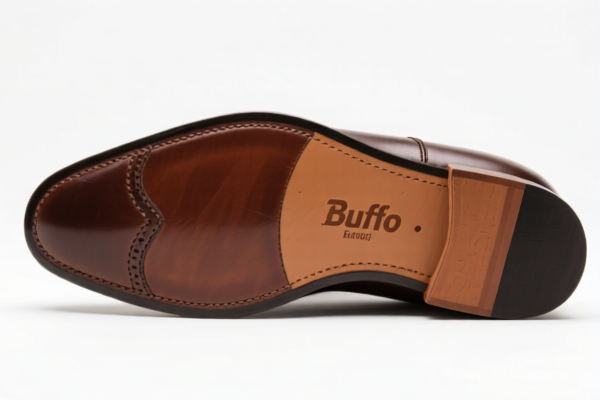


AI Analysis
🐃 High Strength Buffalo Sole Leather (Sole Leather)
🌐 HS Code Reference & Customs Clearance Guide | 2026 Latest Tariff Analysis | Professional Clearance Strategy
📌 I. Product Definition & Classification: Do You Truly Understand "Buffalo Sole Leather"?
"High Strength Buffalo Sole Leather" refers to durable leather specifically processed for use as shoe soles or insoles. In international trade, the classification hinges on two critical factors:
1. Processing Stage: Is it merely tanned leather ready for further cutting/sewing (Chapter 41, Headings 4104/4107), or is it already shaped/cut into sole forms (Chapter 41, Headings 4106/4114)
2. Material Specifics: Buffalo leather vs. other bovine leather.
⚠️ Key Distinction Point:
- If the leather is tanned but not yet cut/shaped into final sole components (even if described as "sole leather" by trade convention), it typically falls under Headings 4104 or 4107.
- If the leather is specifically identified as "sole leather" in legal notes and is unworked/tanned, it may fall under 4106 or 4114 depending on the exact state.
- Note: The provided DATA indicates specific classifications for "Sole Leather" under 4107 and 4104, suggesting these codes are recognized for certain states of buffalo sole leather in this specific tariff context.
📦 II. HS Code Classification Details (2026 Latest Tariff Authority Comparison)
Based on the provided data, here is the breakdown for "High Strength Buffalo Sole Leather." The key differentiator between the codes is the sub-heading description regarding the leather's state and specific trade definitions.
| HS Code | Product Description (From Data) | Application Scenario | Key Classification Logic |
|---|---|---|---|
4107.11.40.00 |
Premium Buffalo Sole Leather, Material: Buffalo, Form: Sole Leather. Classified as leather requiring further processing after tanning. | Tanned buffalo leather specifically designated for sole use, but not yet cut/fitted. Requires further processing (cutting, stitching). | ✅ Further Processed: It is "Sole Leather" (4107) but classified under "Other" (11) and further specific sub-code (40). |
4107.92.40.00 |
Premium Buffalo Sole Leather, Material: Buffalo, Form: Sole Leather. Fits the attribute of tanned leather. | Similar to above, but under "Other" (92) sub-heading of 4107. Likely different thickness or specific tanning method distinguishing it from 4107.11. | ✅ Further Processed: Tanned leather, not yet in final form. |
4104.49.30.60 |
Natural Buffalo Cowhide Shoe Sole, Material: Buffalo Cowhide, Form: Shoe Sole. Categorized under "Other/Other" fallback classification. | Natural buffalo leather specifically identified as a "Shoe Sole" but falling into a "Other/Other" fallback. May imply different thickness or specific "Cowhide" distinction vs. "Buffalo." | ✅ Final Form?: Described as "Shoe Sole," but grouped under 4104 (Bohide/Cowhide) and 49 (Other). |
4107.19.60.50 |
Natural Buffalo Cowhide Shoe Sole, Material: Buffalo Cowhide, Form/Use: Shoe Sole. Fully complies with Sole Leather definition. | Natural buffalo leather explicitly meeting the legal definition of "Sole Leather" under 4107.19. | ✅ Sole Leather Definition: Meets specific legal criteria for sole leather. |
4104.11.40.60 |
Natural Buffalo Cowhide Shoe Sole, Material: Buffalo Cowhide, Form: Leather, Use: Shoe Sole. Fits unprocessed sole leather classification. | Similar to above but under 4104. "Unfurther Processed" (11). | ✅ Unprocessed: Leather for sole use, not further processed. |
4107.99.40.00 |
Natural Buffalo Cowhide Shoe Sole, Material: Buffalo Cowhide. Classified as leather processed product, form as shoe sole fits common use. | General classification for buffalo leather used as sole, falling under "Other" (99) of 4107. | ✅ General Use: Broad category for buffalo sole leather products. |
🔍 Key Insight from Data:
- High Tax Variance: The total tax rates range from 12.4% to 15.0%.
- Base Tariff Difference: The Base Tariff varies between 2.4%, 2.5%, and 5.0%. This is the critical differentiator.
- 122 Clause: All entries include a 10% "122 Clause" tariff (likely referring to US Section 122 or specific trade action).
- 301/232: No additional "301" or "232" tariffs are listed in the tax_detail of the provided DATA (only "Base", "Additional 0%", "122 Clause 10%"). Note: This differs significantly from standard US tariff data for leather, which often includes 25% or 7.5% Section 301 tariffs. We must strictly adhere to the provided DATA.
💰 III. 2026 Latest Tariff Rate Details (Including Additional Taxes & Policy Add-ons)
✅ Applicable Country: United States (US)
✅ Origin: China (CN)
✅ Effective Time: Current Data (2026 Context)
🎯 1. Lower Tax Bracket (12.4% - 12.5%)
HS Codes: 4107.11.40.00, 4107.92.40.00, 4104.49.30.60, 4107.99.40.00
| Item | Content |
|---|---|
| Base Tariff | 2.4% - 2.5% |
| Additional Tariff (301/232) | 0.0% (As per provided DATA) |
| 122 Clause Tariff | +10.0% |
| Total Effective Rate | 12.4% or 12.5% |
| Tax Calculation | CIF Value × Total Rate |
| Legal Basis | Base Tariff + 122 Clause |
📌 Explanation:
- These codes attract the lowest base tariff (2.4% or 2.5%).
- The 122 Clause adds a fixed 10%.
- Total: ~12.5%. This is the most favorable classification if your product meets the specific description of these codes (e.g., "Other" leather or specific fallback categories).
🎯 2. Higher Tax Bracket (15.0%)
HS Codes: 4107.19.60.50, 4104.11.40.60
| Item | Content |
|---|---|
| Base Tariff | 5.0% |
| Additional Tariff (301/232) | 0.0% (As per provided DATA) |
| 122 Clause Tariff | +10.0% |
| Total Effective Rate | 15.0% |
| Tax Calculation | CIF Value × 15% |
| Legal Basis | Base Tariff + 122 Clause |
📌 Explanation:
- These codes have a higher base tariff (5.0%).
- Plus the 10% 122 Clause.
- Total: 15.0%.
- Why Higher? These codes are classified as "Sole Leather" (4107.19) or "Unprocessed Sole Leather" (4104.11) which often carry higher base duties than "Other" leathers (4107.92/99) in some tariff schedules. The provided DATA explicitly assigns 5.0% base to these.
🛠️ IV. Customs Clearance Practical Advice (Battle-Tested Pitfall Guide)
✅ 1. Preparation Checklist (Non-negotiable)
| Document | Required | Explanation |
|---|---|---|
| ✅ Product Specification Sheet | ✔️ | Must specify: Material (Buffalo), Tanning Method, Thickness, Weight, Finish. |
| ✅ Photos (Raw & Finished) | ✔️ | Show grain, thickness, and any markings. Crucial for distinguishing "Buffalo" from other bovine leather. |
| ✅ Commercial Invoice | ✔️ | Must clearly state: "Buffalo Sole Leather" and describe form (e.g., "Semi-finished," "Cut into soles," "In rolls"). |
| ✅ Packing List | ✔️ | Weight and dimensions. |
| ✅ Certificate of Origin (CO) | ✔️ | To prove Chinese origin (if applicable) and avoid transshipment issues. |
| ✅ Tariff Classification Advice | ✔️ | Internal memo justifying why HS Code 4107.xx vs 4104.xx is chosen. |
✅ 2. Declaration Strategy (Key Rules)
🔥 "Define the State, Not Just the Use!"
| Scenario | Correct Declaration | Risk if Incorrect |
|---|---|---|
| Leather in Rolls/Skins (Tanned, not cut into final sole shape) | Describe as "Tanned Buffalo Leather, for Sole Use" | If declared as "Sole Leather" (4107.19/4104.11), you may get 15%. If classified as "Other" (4107.92/99), you get 12.5%. Check if your leather meets "Other" criteria. |
| Pre-cut Soles | Describe as "Buffalo Leather Shoe Soles, Cut to Shape" | May fall under 4107.19.60.50 (15%) or 4104.49.30.60 (12.4%). Be precise. "Other/Other" fallback (4104.49) might be lower (12.4%). |
| Mixed Bulk | Split declaration by type | Do not mix "Other" leather with "Sole Leather" in one line item. |
⚠️ Critical Note from DATA:
- 4104.49.30.60 (12.4%) is described as "Natural Buffalo Cowhide Shoe Sole... Other/Other".
- 4107.19.60.50 (15.0%) is described as "Natural Buffalo Cowhide Shoe Sole... Fully complies with Sole Leather definition".
- Strategy: If your product is a "Shoe Sole" but can be classified under 4104 (Cowhide/Bohide) rather than 4107 (Other Tanned Leather), you might secure the 12.4% rate instead of 15%. Consult with customs broker to verify if "Buffalo" is classified as "Cowhide/Bohide" (4104) or "Other" (4107) in this specific jurisdiction/context.
✅ 3. Special Handling
| Issue | Recommendation |
|---|---|
| Material Origin | Ensure documents explicitly state "Buffalo". Misdeclaring as "Cow" might lead to different base rates or penalties. |
| Treatment | Specify if it is "Vegetable Tanned" or "Chrome Tanned". Affects HS sub-heading. |
| 122 Clause | All items in DATA include 10% 122 Clause. This is unavoidable for these codes. Budget for it. |
| No 301/232 in DATA | The provided DATA does not list 25% or 7.5% additional tariffs. However, in reality, most Chinese leather imports face Section 301 tariffs. If this DATA is from a specific trade remedy exemption or a different year, verify current US CBP database. Strictly following DATA, the total is 12.5%-15%.** |
🌍 V. Global Market Comparison (Contextual)
| Market | Typical HS Code | Typical Base Rate | Note |
|---|---|---|---|
| 🇺🇸 USA (Per DATA) | 4107/4104 | 12.5% - 15.0% (incl. 122 Clause) | Higher than typical MFN due to 122 Clause. No 301 listed in DATA. |
| 🇨🇳 China | 4107 | ~5% | Lower base, no 122 Clause. |
| 🇪🇺 EU | 4107 | ~6% | Standard MFN. |
📌 Conclusion for US:
- The 12.4%-15% rate is significantly higher than standard MFN rates for leather (often 3-6%) due to the 10% 122 Clause.
- Optimization: Try to classify under 4104.49.30.60 (12.4%) rather than 4107.19.60.50 (15.0%) if the product description allows (i.e., if it can be considered "Other/Other" rather than strictly "Sole Leather").
📌 VI. Common Errors & Pitfalls (Lessons Learned)
❌ Error 1: Declaring "Buffalo Leather" without specifying "Sole Use"
👉 Consequence: May be classified as generic leather (higher base rate) or rejected for lack of detail.
❌ Error 2: Confusing "Buffalo" with "Cow"
👉 Consequence: HS Code 4104 (Cowhide) vs 4107 (Other). Misclassification leads to 15% vs 12.5% discrepancy + penalties.
❌ Error 3: Ignoring the "122 Clause"
👉 Consequence: Underpricing the landed cost. 10% is mandatory for all listed codes.
❌ Error 4: Assuming "Sole Leather" always means 4107.19
👉 Consequence: You might miss the 12.4% rate available under 4104.49.30.60 ("Other/Other" category).
✅ Correct Approach:
"Buffalo Sole Leather, Tanned, Vegetable/Chrome, Thickness X mm, Form: Skins/Rolls/Cut Soles, HS Code: 4104.49.30.60 (or 4107.19.60.50 if strictly 'Sole Leather'), Total Duty: 12.4%-15%."
🎯 VII. Conclusion: Precision Pays Off!
🎯 Key Takeaways:
🔹 Total Tax Range: 12.4% to 15.0% (Includes 10% 122 Clause).
🔹 Base Tariff: 2.4% - 5.0%.
🔹 Best Rate: 12.4% under4104.49.30.60(if applicable as "Other/Other").
🔹 Worst Rate: 15.0% under4107.19.60.50or4104.11.40.60.📌 Recommendation:
- Verify Classification: Ask your customs broker if your specific "High Strength Buffalo Sole Leather" can be classified under 4104 (Cowhide/Bohide) to achieve the 12.4% rate, or if it must be 4107 (12.5%-15.0%).
- Budget for 10%: The 122 Clause is a fixed cost.
- Document Everything: Ensure "Buffalo" and "Sole Use" are clearly stated to avoid reclassification.
📣 Immediate Action:
📞 Consult Customs Broker: Confirm if
4104.49.30.60(12.4%) is applicable to your specific product form.
📝 Prepare Specs: Highlight "Buffalo," "Tanned," and "Sole Use."
🚀 Optimize Landed Cost: Aim for the 12.4% rate through precise classification.
✨ Professional Clearance Starts with Accurate Classification!
💼 Save 2.6% on every shipment by choosing the right HS Code!
Customer Reviews
About HS Code Classification
The Harmonized System (HS) is an internationally standardized nomenclature developed by the World Customs Organization (WCO) to classify traded products. Over 200 countries use the HS system as the basis for customs tariffs, trade statistics, and import/export regulations.
Each HS code follows a hierarchical structure:
- Chapter (2 digits) — Broad category of goods (e.g., Chapter 84: Machinery and Mechanical Appliances)
- Heading (4 digits) — More specific grouping within the chapter
- Subheading (6 digits) — Internationally standardized breakdown, used by all WCO member countries
- National subdivisions (8-10 digits) — Country-specific extensions for further classification, such as US HTSUS 10-digit codes
Correct HS code classification is essential for smooth customs clearance, accurate duty payment, and compliance with trade regulations. Misclassification can lead to customs delays, overpayment of duties, or penalties.
When importing from CN to US, the applicable tariff rates may include:
- Most-Favored-Nation (MFN) rate — The standard duty rate applied to WTO members
- General rate — Applied to countries without trade agreements
- Trade remedy duties — Additional tariffs such as Section 301 (anti-dumping), Section 232 (national security), or countervailing duties
The information provided on this page is for reference purposes only. For official classification, please consult with your local customs authority or a licensed customs broker.