High strength polypropylene tape
CN → US| HS Code | Tariff Rate | Origin | Destination | Doc |
|---|---|---|---|---|
| 3919102010 | 40.8% | CN | US | Official Doc |
| 3919905020 | 40.8% | CN | US | Official Doc |
| 3926909989 | 22.8% | CN | US | Official Doc |
| 5604909000 | 40.0% | CN | US | Official Doc |
| 3926909905 | 22.8% | CN | US | Official Doc |
Product Images
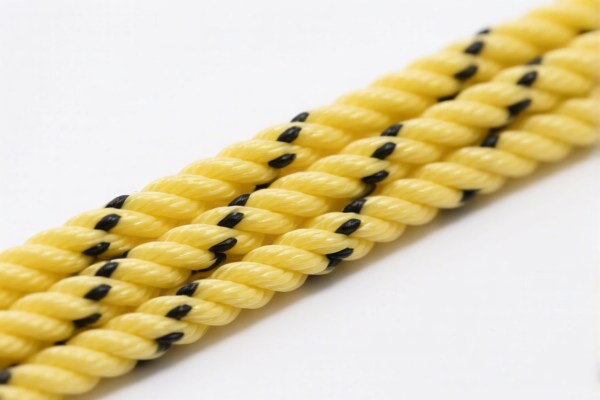


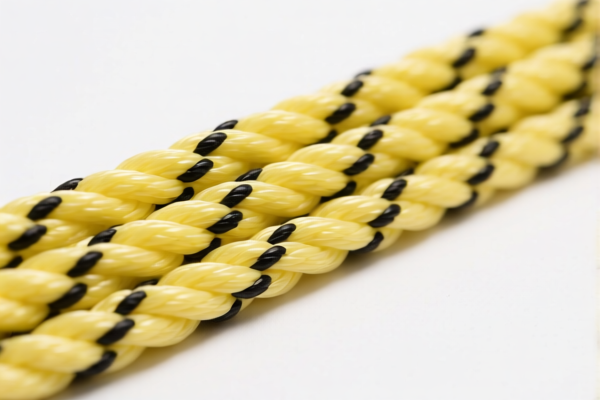
AI Analysis
🎗 High-Strength Polypropylene Tape (The "Workhorse" of Industrial Logistics)
🌐 HS Code Reference & Customs Clearance Guide | 2026 Latest Tariff Analysis | Strategic Customs Strategy
📌 I. Product Definition & Classification: Do You Really Understand "Polypropylene Tape"?
High-Strength Polypropylene (BOPP/PP) Tape is a ubiquitous adhesive tape used primarily for carton sealing, packaging, and light-duty bundling. However, in international trade, its classification is not singular. It hinges on three critical factors: 1. Structure: Is it a simple plastic film with adhesive? Or is it reinforced with fibers (like glass or plastic scrim)? 2. Processing: Has it been impregnated/coated with plastic? Or is it just a self-adhesive strip? 3. Usage: Is it a general-purpose "other plastic article" or a specific "self-adhesive tape"?
⚠ Key Distinction Point:
- If it is plain plastic film with adhesive → It is generally classified under 3919 (Self-adhesive plates/f sheets/strip) or 3926 (Other plastic articles).
- If it is fiber-reinforced or impregnated with plastic → It may fall under 5604 (Threads/coated yarns) or 3926 with different tax implications.
- Crucial Warning: The presence of "122 Clause Tariffs" (Section 301/Trade Act surcharges) and Additional Duties varies significantly based on the specific chemical/physical classification, leading to huge cost differences.
📦 II. Detailed Hs Code Breakdown (2026 Latest Tariff Authority)
| Hs Code | Product Description | Key Classification Feature | Total Tax Rate |
|---|---|---|---|
3926.90.99.89 |
Other Plastic Articles | Generic classification for PP tapes not fitting specific "self-adhesive" or "reinforced" subheadings. Treated as "Other plastic制品". | 22.8% |
5604.90.90.00 |
Plastic-Impregnated Fibers/Tapes | PP Tape impregnated/coated with plastic, meeting specific textile/technical article criteria. | 40.0% |
3926.90.99.05 |
Plastic Elastic Bands/Strips | Classified specifically as "Elastic bands" of plastic. Applies to certain flexible PP tape forms. | 22.8% |
3919.10.20.10 |
Self-Adhesive Plastic Tape (Special Subheading 10.10.20.10 is not listed, but 3919.10 is Self-Adhesive. The data shows a specific subheading 3919.10.20.10). |
Plastic Self-Adhesive Tape. Fits the material (PP) and form (Tape) for self-adhesive plastic strips. | 40.8% |
3919.90.50.20 |
Other Self-Adhesive Tape (Fiber-Reinforced/Flattened Shape 10.20.50.20). | Fiber-Reinforced Plastic Tape. Specifically covers PP tapes with reinforcing fibers in a flat shape. | 40.8% |
🔍 Critical Insight:
- The tax rate difference is massive: 22.8% vs. 40.8%.
- Codes starting with 3926.90.99 generally attract lower additional duties (7.5% additional + 5.3% base + 10% 122 clause = ~22.8%).
- Codes starting with 3919.10 or 3919.90 attract higher additional duties (25% additional + 5.8% base + 10% 122 clause = ~40.8%).
- Code 5604.90.90.00 is unique: It classifies the tape as a "plastic-impregnated" technical good, attracting 25% additional duty + 5% base + 10% 122 clause = 40.0%.
💰 III. 2026 Latest Tariff Rate Details (Including Surcharges & Policy Add-ons)
✅ Applicable Market: United States (US)
✅ Origin: China (CN)
✅ Effective Time: 2025/2026 (Current Trade War Tariffs Apply)
🎯 1. 3926.90.99.89 & 3926.90.99.05 —— Generic/Elastic Plastic Articles
| Item | Content |
|---|---|
| Base Duty | 5.3% (Ad Valorem) |
| Section 301 Additional Duty | +7.5% (List 4A/4C specific rate for "Other Plastic Articles") |
| Section 122 / IEEPA Duty | +10% (Targeted surcharge on specific Chinese imports) |
| Total Effective Rate | 22.8% |
| De Minimis Exclusion | ❌ Not Eligible (Valued over $800 threshold for duty-free entry is not applicable; these goods are scrutinized) |
| Legal Path | USITC:3926.90.99.89 → USTR:Section 301 List 4A → IEEPA:10% Surcharge |
📌 Explanation:
- This is the most cost-effective classification for standard PP packing tape, provided it can be argued as "Other Plastic Article" or "Elastic Band" rather than a standard "Self-Adhesive Tape". - The 7.5% additional duty is lower than the 25% applied to 3919 series tapes.
🎯 2. 5604.90.90.00 —— Plastic-Impregnated Tape
| Item | Content |
|---|---|
| Base Duty | 5.0% |
| Section 301 Additional Duty | +25.0% (High additional duty for technical textiles/plastic-coated articles) |
| Section 122 / IEEPA Duty | +10% |
| Total Effective Rate | 40.0% |
| De Minimis Exclusion | ❌ Not Eligible |
| Legal Path | USITC:5604.90.90.00 → USTR:Section 301 List 4C/4D → IEEPA:10% Surcharge |
📌 Explanation:
- Even though the base duty is low (5.001. The 25% additional duty is the key driver. This applies if the tape is deemed "impregnated with plastic" beyond standard adhesive backing.
🎯 3. 3919.10.20.10 & 3919.90.50.20 —— Self-Adhesive Plastic Tapes
| Item | Content |
|---|---|
| Base Duty | 5.8% |
| Section 301 Additional Duty | +25.0% (Standard high additional duty for plastic tapes) |
| Section 122 / IEEPA Duty | +10% |
| Total Effective Rate | 40.8% |
| De Minimis Exclusion | ❌ Not Eligible |
| Legal Path | USITC:3919.10.20.10 / 3919.90.50.20 → USTR:Section 301 List 4C → IEEPA:10% Surcharge |
📌 Explanation:
- This is the standard classification for most clear/brown BOPP packing tapes. - It attracts the highest total tax burden (40.8%). - Warning: Customs may strictly enforce this classification for standard carton-sealing tapes, making the 22.8% option risky unless the product has specific structural features (e.g., elastic properties or generic article status).
🛠 IV. Customs Clearance Practical Advice (Battle-Tested Pitfall Avoidance Guide)
✅ 1. Document Preparation Checklist (Non-Negotiable)
| Document | Required | Purpose |
|---|---|---|
| ✅ Product Specification Sheet | ✔ | Must detail: Material (100% PP?), Thickness, Width, Adhesive Type (Acrylic/Solvent-free?), Reinforcement (Yes/No?). |
| ✅ Structural Diagram | ✔ | Visual proof of layers. Is there a fiberglass mesh? Is it just plastic film + glue? |
| ✅ Commercial Invoice | ✔ | Clear description: "High-Strength Polypropylene Tape, For Carton Sealing". Avoid vague terms like "Plastic Product". |
| ✅ **Material Safety Data Sheet (MSDS/SDS) | ✔ | For adhesive components, especially if solvent-based. |
| ✅ **Origin Cert (COO) | ✔ | To verify China origin and apply applicable tariffs. |
| ✅ Packing List | ✔ | Weight and dimensions must match invoice. |
✅ 2. Classification Strategy (The "Golden Rules")
🔥 “Structure Dictates Tax! Generic vs. Specific!”
| Scenario | Recommended Hs Code | Tax Rate | Why? |
|---|---|---|---|
| Standard Clear/Brown Carton Tape | 3919.10.20.10 |
40.8% | Most likely classified here by CBP. High risk. |
| **Reinforced PP Tape (with Mesh/Scrim) | 3919.90.50.20 |
40.8% | Fiber reinforcement pushes it to 3919.90. High tax. |
| Generic "Other" PP Plastic Strip | 3926.90.99.89 |
22.8% | Strategic Choice. If the tape can be argued as a general "plastic article" (e.g., used for bundling, not just sealing), this saves ~18%! |
| Elastic PP Strapping Tape | 3926.90.99.05 |
22.8% | If the tape has elastic properties, classify as "Elastic Band". |
| Plastic-Impregnated Technical Tape | 5604.90.90.00 |
40.0% | Use only if heavily coated/impregnated. Still high tax. |
📌 Crucial Tip:
- Do NOT let the broker auto-classify under3919without a detailed product review.
- Request a Pre-Ruling (Pre-Classification Ruling) from CBP if the volume is high. This legally protects you if the product features allow for the 22.8% classification.
✅ 3. Special Situations & Handling
| Situation | Handling Advice |
|---|---|
| OEM Private Label | Provide client order + design. Ensure description matches generic "Plastic Tape" if possible. |
| **Mixed Shipment (Tape + Dispensers) | Do Not Split! |
| **Small Samples (De Minimis) | ❌ No De Minimis Exempt |
| Counterfeit/Brand Infringement | ❌ Risk Alert |
🌍 V. Global Market Comparison (2026 Latest)
| Country/Region | Recommended Hs Code | Tariff (China Origin) | Certification | Remarks |
|---|---|---|---|---|
| 🇺🇸 USA | 3926.90.99.89 |
22.8% | None | Best rate. 3919 is 40.8%. |
| 🇪🇺 EU | 3919.90.50 |
6.5% | REACH/RoHS | No Section 301 equivalent. Standard MFN rate applies. |
| 🇬🇧 UK | 3919.90.50 |
6.5% | UKCA | Post-Brexit rules apply. |
| 🇨🇳 China | 3919.10.20 |
5.3% | CCC (if applicable) | Low import duty. |
| 🇦🇺 Australia | 3919.90.50 |
5.0% | AICIS | No extra surcharges. |
📌 Conclusion:
- USA is the most challenging market due to Section 301 and IEEPA surcharges.
- EU/UK/Australia are far more favorable for PP tapes, with rates around 5-7%.
- Strategy: For US exports, optimize the classification to3926if structurally possible. For other markets, standard3919is acceptable.
📌 VI. Common Mistakes & Pitfall Guide (Lessons Learned)
❌ Mistake 1: Assuming De Minimis ($800) applies to PP Tapes.
👉 Consequence: Customs seizure + penalty. Section 301 goods are excluded from de minimis.
❌ Mistake 2: Auto-classifying all PP tapes under 3919.10.20.10.
👉 Consequence: Paying 40.8% tax when 22.8% is achievable via 3926.90.99.89 (if generic). You overpaid by 18%.
❌ Mistake 3: Vague Description: "Plastic Tape".
👉 Consequence: Customs assigns the highest applicable code (usually 3919 with 40.8% tax) due to lack of information.
❌ Mistake 4: Splitting Tape and Dispenser to Avoid Tax.
👉 Consequence: Customs may treat them as a "Set" and classify the dispenser (often higher tax or restricted), or reject the shipment for improper packaging declaration.
✅ Best Practice:
"High-Strength Polypropylene (BOPP) Packing Tape, 48mm Width, 50m Length, Clear Film, Acrylic Adhesive, For Industrial Carton Sealing. Material: 100% Polypropylene. No Reinforcement."
🎯 VII. Conclusion: Smart Classification Saves Millions!
🎯 Remember the Key Rule:
🔹 "Generic Plastic = 22.8%. Self-Adhesive = 40.8%. Think Before You Declare!"
🔹 "PP Tape is not just 'Tape'. It's a 'Plastic Article' if you argue correctly!"
🔹 "No De Minimis for China PP Tape. Plan for Duty from Day 1."
📌 Pro Tip:
If your shipment volume exceeds $100,000 annually, apply for a Customs Ruling from CBP to legally secure the 22.8% rate under 3926.90.99.89 or 3926.90.99.05. This provides legal certainty and protects you from audits.
📣 Immediate Action:
📞 Contact your Freight Forwarder + Provide Product Specs + Request Classification Review
🚀 Optimize your supply chain, reduce tax burden, and boost profit margins!
✨ Professional Customs, Starts with Accurate Classification!
💼 Every percent saved is profit earned!
Customer Reviews
About HS Code Classification
The Harmonized System (HS) is an internationally standardized nomenclature developed by the World Customs Organization (WCO) to classify traded products. Over 200 countries use the HS system as the basis for customs tariffs, trade statistics, and import/export regulations.
Each HS code follows a hierarchical structure:
- Chapter (2 digits) — Broad category of goods (e.g., Chapter 84: Machinery and Mechanical Appliances)
- Heading (4 digits) — More specific grouping within the chapter
- Subheading (6 digits) — Internationally standardized breakdown, used by all WCO member countries
- National subdivisions (8-10 digits) — Country-specific extensions for further classification, such as US HTSUS 10-digit codes
Correct HS code classification is essential for smooth customs clearance, accurate duty payment, and compliance with trade regulations. Misclassification can lead to customs delays, overpayment of duties, or penalties.
When importing from CN to US, the applicable tariff rates may include:
- Most-Favored-Nation (MFN) rate — The standard duty rate applied to WTO members
- General rate — Applied to countries without trade agreements
- Trade remedy duties — Additional tariffs such as Section 301 (anti-dumping), Section 232 (national security), or countervailing duties
The information provided on this page is for reference purposes only. For official classification, please consult with your local customs authority or a licensed customs broker.