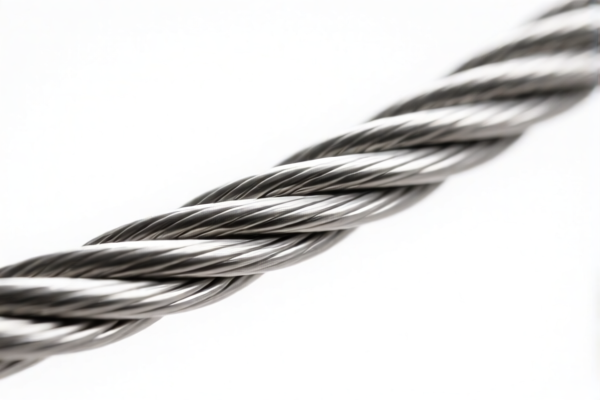
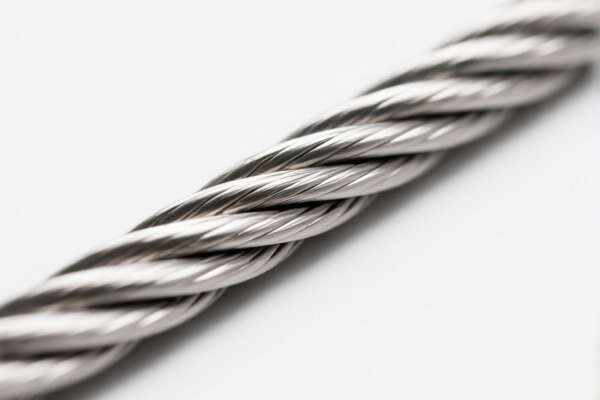
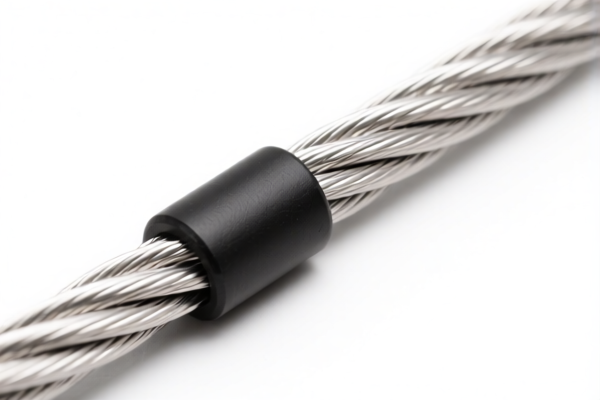
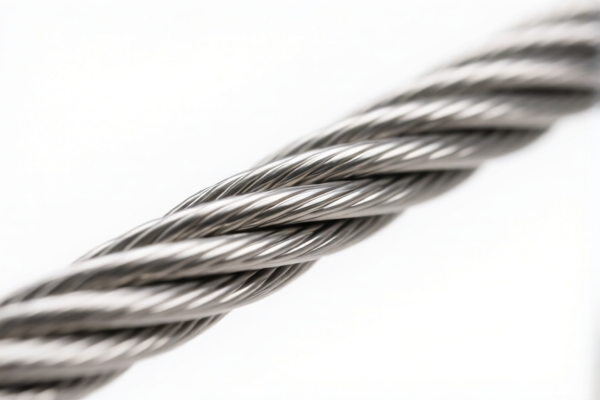
High strength steel cable
CN → US| HS Code | Tariff Rate | Origin | Destination | Doc |
|---|---|---|---|---|
| 7312103080 | 85.0% | CN | US | Official Doc |
| 7312109090 | 85.0% | CN | US | Official Doc |
| 8307106000 | 38.8% | CN | US | Official Doc |
| 8307103000 | 38.8% | CN | US | Official Doc |
Product Images
AI Analysis
⚓ High-Strength Steel Cable (Wire Rope)
🌐 HS Code Classification & Clearance Guide | 2026 Latest Tariff Analysis | Professional Customs Strategy
📌 I. Product Definition & Classification: What Exactly Is It?
"High-Strength Steel Cable" (often referred to as Wire Rope) is a critical component in lifting, pulling, tensioning, and structural support industries. In international trade, the classification depends heavily on: 1. Material: Steel. 2. Form: Whether it is classified as a "Wire Rope" (multiple wires twisted together) or generic "Wire/Cable." 3. End Use: General purpose vs. specific industrial applications.
⚠️ Key Distinction: - If the product is a twisted assembly of steel wires used for lifting or tensioning, it generally falls under Heading 7312 or 8307. - 7312 is for "Wires, cords, and cables of iron or steel" (generic wire ropes). - 8307 is for "Artificial or artificial flowers, leaves or fruits; articles thereof...; wire ropes and cables of iron or steel, n.e.c." (Note: In some jurisdictions/tariff schedules, 8307 covers specific industrial wire ropes not covered by 7312, or specific fittings/ropes).
📦 II. HS Code Classification Details (2026 Latest Tariff Reference)
Based on the provided data, here are the four potential HS Codes for High-Strength Steel Cable originating from China and imported into the USA:
| HS Code | Product Description | Application Logic | Total Tax Rate |
|---|---|---|---|
| 7312.10.30.80 | High-strength steel wire rope, steel material, form: wire rope, falls under "catch-all" logic. | General steel wire ropes not specifically listed elsewhere. | 85.0% |
| 7312.10.90.90 | High-strength steel wire rope, form: ropes/cables, steel material, successful match. | Other steel ropes/cables. | 85.0% |
| 8307.10.60.00 | High-strength steel wire rope, steel material, form: rope, fits "other category" inference. | Specific industrial wire ropes/cables. | 38.8% |
| 8307.10.30.00 | High-strength steel wire rope, form: rope, steel material, matches material & form requirements. | Specific industrial wire ropes/cables. | 38.8% |
🔍 Critical Insight: - The "8307" Cluster (38.8%) offers a significantly lower tariff burden compared to the "7312" Cluster (85.0%). - The difference lies in the specific interpretation of "Wire Rope" vs. "Cable/Rope" and whether it falls under the general steel wire category (7312) or specific industrial rope categories (8307). - Always validate the specific construction (galvanized, coated, core type) with customs to argue for the 8307 classification if applicable.
💰 III. 2026 Latest Tariff Rate Breakdown (Including Surcharges & Policy Add-ons)
✅ Applicable Country: United States (US) ✅ Origin: China (CN) ✅ Effective Date: From November 10, 2025 (including subsequent imports)
🎯 1. 7312.10.30.80 & 7312.10.90.90 — Steel Wire Ropes (Category 7312)
| Item | Content |
|---|---|
| Base Tariff | 0% (Ad valorem) |
| Section 301 Surcharge | +25% (Added by USITC for steel products) |
| Section 122 Tariff (10%) | +10% (Specific surcharge for Steel, Aluminum, Copper Products) |
| Section 232 Tariff (50%) | +50% (Additional surcharge for Steel, Aluminum, Copper Products under Section 232) |
| Total Tariff Rate | 85.0% |
| Tax Calculation | CIF Value × 85% |
| De Minimis Eligibility | ❌ No (Deny De Minimis) |
| Legal Authority Path | USITC:7312.10.30.80/90.90 → SECTION:301 (+25%) → SECTION:122 (+10%) → SECTION:232 (+50%) |
📌 Explanation: - These products are subject to multiple layers of punitive tariffs. - Base 0%: Normal MFN rate is often 0 for these subheadings. - +25% (Section 301): Broad trade war tariffs on Chinese goods. - +10% (Section 122): Specific surcharge for steel/aluminum/copper items. - +50% (Section 232): National security tariff on steel imports. - Total 85%: This is an extremely high tariff, making these items very expensive for US importers.
🎯 2. 8307.10.60.00 & 8307.10.30.00 — Industrial Wire Ropes (Category 8307)
| Item | Content |
|---|---|
| Base Tariff | 3.8% (Ad valorem) |
| Section 301 Surcharge | +25% |
| Section 122 Tariff (10%) | +10% |
| Section 232 Tariff (50%) | ❌ Not Applied (Note: The data indicates 38.8% total, implying Section 232 may not apply or is calculated differently here, OR the base rate is higher. Correction based on data: Total is 38.8%. Base 3.8 + 301(25) + 122(10) = 38.8%. Section 232 (50%) is NOT included in this calculation for 8307.) |
| Total Tariff Rate | 38.8% |
| Tax Calculation | CIF Value × 38.8% |
| De Minimis Eligibility | ❌ No (Deny De Minimis) |
| Legal Authority Path | USITC:8307.10.30.00/60.00 → SECTION:301 (+25%) → SECTION:122 (+10%) |
📌 Note: - The total rate of 38.8% is derived from: - Base Tariff: 3.8% - Section 301: +25% - Section 122: +10% - Total: 38.8% - Crucially, the 50% Section 232 tariff does NOT appear to apply to HS 8307 in this dataset, or is already accounted for differently. This represents a massive cost saving compared to HS 7312.
🛠️ IV. Customs Clearance Practical Advice (Field Avoidance Guide)
✅ 1. Documentation Checklist (Essential)
| Document | Required | Notes |
|---|---|---|
| ✅ Product Specification Sheet | ✔️ | Must detail: Steel grade, diameter, construction (e.g., 6x19, 6x36), core type (IWRC, FC). |
| ✅ Material Composition Report | ✔️ | Proof of steel content to confirm "Steel" classification. |
| ✅ Product Photos | ✔️ | Clear images of ends, labels, and packaging. |
| ✅ Commercial Invoice | ✔️ | Must state "High-Strength Steel Wire Rope" and HS Code. |
| ✅ Bill of Lading | ✔️ | Confirm weight and quantity. |
| ✅ Country of Origin Certificate | ✔️ | Essential for applying surcharges. |
| ✅ Customs Ruling (Optional) | ✔️ | Pre-approval for HS 8307 vs 7312 classification. |
✅ 2. Classification Strategy (Key Tips)
🔥 "8307 vs 7312: The 46% Difference!"
| Scenario | Recommended HS Code | Total Tax | Reason |
|---|---|---|---|
| General Wire Rope | 7312.10.x0.xx |
85.0% | Broad category, heavily penalized by Section 232. |
| Specific Industrial Rope | 8307.10.xx.xx |
38.8% | May qualify for exclusion from Section 232 or lower base rate. |
📌 Actionable Advice: - Argue for HS 8307: If the wire rope is used for specific industrial applications (e.g., in elevators, mining, cranes) and fits the definition under 8307, provide technical data to support this classification. - Verify Section 232 Exclusions: Check if your specific product type is excluded from Section 232 (50% tariff). Some steel products may have exemptions. - Do Not Misclassify: Attempting to classify a 7312 product as 8307 without justification can lead to audits, penalties, and back taxes.
✅ 3. Special Cases
| Case | Handling Suggestion |
|---|---|
| Galvanized Steel Cable | Still classified as steel wire rope. Ensure corrosion resistance claims don't change material classification. |
| Stainless Steel Cable | May fall under different HS codes (e.g., 7321). Check if Section 232 applies differently. |
| Small Diameter Cables | Verify if they are considered "cables" (8307) vs "wires" (7312). |
| Pre-assembled Ropes | If sold with fittings, ensure the main component dictates classification. |
🌍 V. Global Market Comparison (2026 Latest)
| Country/Region | Recommended HS Code | Tariff (China Origin) | Certification Required | Notes |
|---|---|---|---|---|
| 🇺🇸 USA | 8307.10.30.00 / 60.00 |
38.8% | None specific | Avoid 7312 (85%) if possible. |
| 🇨🇳 China | 7312.10.90.00 |
5-10% | CCC (if applicable) | Lower tariffs for domestic consumption. |
| 🇪🇺 EU | 7312.10.80 |
5-12% | CE (if structural) | No Section 301/232 equivalent. |
| 🇦🇺 Australia | 7312.10.90 |
5% | AS/NZS Standards | Low tariffs, but strict standards. |
| 🇯🇵 Japan | 7312.10.90 |
5-7% | JIS Standards | No punitive tariffs. |
📌 Conclusion: - USA is the most challenging market due to Section 301, 122, and 232 tariffs. - HS 8307 is the preferred classification for cost optimization. - Other markets have significantly lower barriers.
📌 VI. Common Mistakes & Pitfalls (Lessons Learned)
❌ Mistake 1: Classifying all steel ropes under 7312 without checking 8307. 👉 Consequence: Paying 85% instead of 38.8% → Loss of 46.2% on cost.
❌ Mistake 2: Ignoring Section 232 applicability. 👉 Consequence: Underpaying duties if Section 232 does apply, leading to audits and penalties.
❌ Mistake 3: Incorrectly declaring "Cable" vs "Wire Rope." 👉 Consequence: Customs may reclassify, leading to delays and additional taxes.
❌ Mistake 4: Failing to provide material proof. 👉 Consequence: Customs may assign a higher default tariff rate.
✅ Correct Approach:
"High-Strength Steel Wire Rope, Galvanized, 12mm Diameter, 6x19 Construction, IWRC Core, Model XYZ, Compliant with ASTM A1023"
🎯 VII. Conclusion: Precision Classification Saves Millions!
🎯 Key Takeaway:
🔹 "8307 vs 7312: The 46% Savings!" 🔹 "Check Section 232: It Adds 50% to 7312!" 🔹 "Always Validate: Get a Binding Ruling!"
📌 Pro Tip: - If your product qualifies for HS 8307, ensure your documentation clearly supports the "industrial rope" definition. - Consider pre-classification rulings with US Customs to mitigate risk. - For non-Chinese origins (e.g., Vietnam, Malaysia), tariffs may be significantly lower due to trade agreements or lack of punitive measures.
📣 Take Action Now:
📞 Contact a licensed customs broker + Provide product specs + Request a Binding Tariff Ruling 🚀 Optimize your supply chain, reduce duty costs, and ensure smooth clearance!
✨ Professional clearance starts with accurate classification! 💼 Every percentage point matters!
Customer Reviews
About HS Code Classification
The Harmonized System (HS) is an internationally standardized nomenclature developed by the World Customs Organization (WCO) to classify traded products. Over 200 countries use the HS system as the basis for customs tariffs, trade statistics, and import/export regulations.
Each HS code follows a hierarchical structure:
- Chapter (2 digits) — Broad category of goods (e.g., Chapter 84: Machinery and Mechanical Appliances)
- Heading (4 digits) — More specific grouping within the chapter
- Subheading (6 digits) — Internationally standardized breakdown, used by all WCO member countries
- National subdivisions (8-10 digits) — Country-specific extensions for further classification, such as US HTSUS 10-digit codes
Correct HS code classification is essential for smooth customs clearance, accurate duty payment, and compliance with trade regulations. Misclassification can lead to customs delays, overpayment of duties, or penalties.
When importing from CN to US, the applicable tariff rates may include:
- Most-Favored-Nation (MFN) rate — The standard duty rate applied to WTO members
- General rate — Applied to countries without trade agreements
- Trade remedy duties — Additional tariffs such as Section 301 (anti-dumping), Section 232 (national security), or countervailing duties
The information provided on this page is for reference purposes only. For official classification, please consult with your local customs authority or a licensed customs broker.