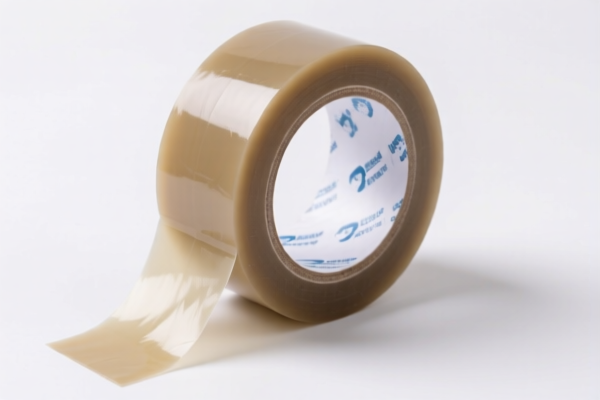
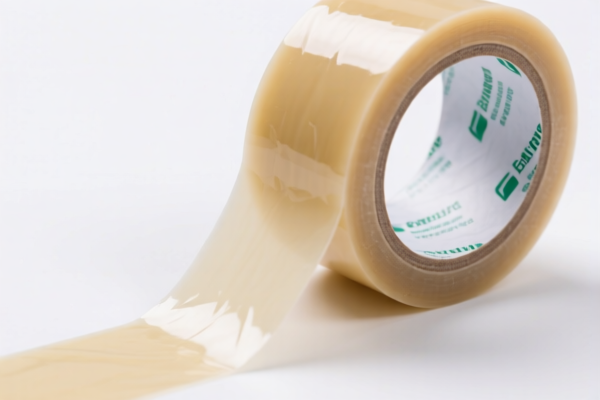
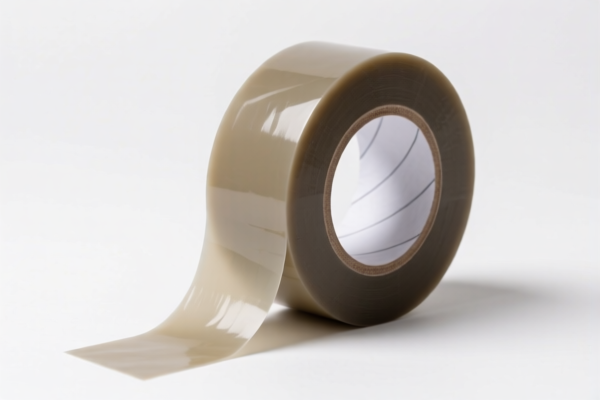
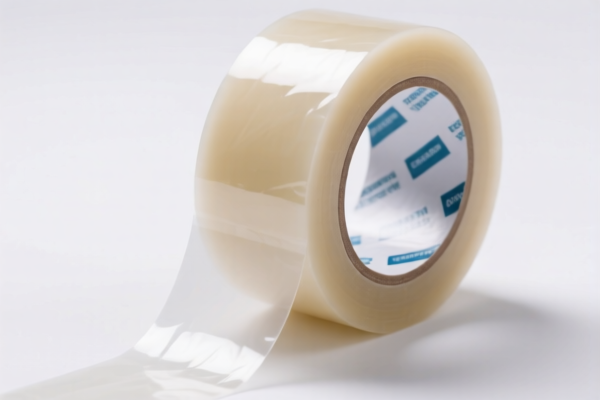
High temperature resistant fiber reinforced tape
CN → US| HS Code | Tariff Rate | Origin | Destination | Doc |
|---|---|---|---|---|
| 3919905020 | 40.8% | CN | US | Official Doc |
| 3926909989 | 22.8% | CN | US | Official Doc |
| 3926905500 | 40.1% | CN | US | Official Doc |
| 3919102010 | 40.8% | CN | US | Official Doc |
| 5603110070 | 35.0% | CN | US | Official Doc |
Product Images
AI Analysis
🛡️ High Temperature Resistant Fiber Reinforced Tape
🌐 HS Code Reference & Customs Clearance Guide | 2026 Latest Tariff Analysis | Professional-Level Strategy for US Imports
📌 I. Product Definition and Classification: Do You Really Understand "Fiber Reinforced Tape"?
High Temperature Resistant Fiber Reinforced Tape is a specialized industrial adhesive tape designed to withstand extreme thermal conditions while providing mechanical strength. It typically consists of a carrier material (such as fiberglass, aramid, or synthetic fiber) impregnated or coated with heat-resistant resins (like silicone, epoxy, or PTFE).
In international trade, the classification depends heavily on the primary material, form factor, and presence of adhesive/self-adhesive properties:
- Reinforced Plastics/Tapes (Chapter 39): If the tape is primarily defined by its plastic/resin matrix and reinforcing fibers, often self-adhesive, it falls under Chapter 39.
- Non-woven Fabrics (Chapter 56): If the primary characteristic is the non-woven fiber structure without significant plastic coating defining the tape's function, it may fall under Chapter 56.
⚠️ Key Distinction Point:
- If the product is a self-adhesive tape with a fiber carrier and plastic/resin coating → Classify under Chapter 39 (Plastics).
- If the product is a plain non-woven fiber sheet (no significant plastic/adhesive function defining it as a "tape" in the customs sense) → Classify under Chapter 56 (Non-wovens).
📦 II. HS Code Classification Details (2026 Latest Tariff Authority Comparison)
Based on the provided data, here are the specific HS Codes applicable to high-temperature fiber-reinforced tapes, their summaries, and tax implications.
| HS Code | Product Summary | Application Scenario | Key Characteristics |
|---|---|---|---|
3919.90.50.20 |
Fiber reinforced tape, material and form match | Industrial bonding, high-temp insulation | Self-adhesive, plastic matrix with fiber reinforcement |
3926.90.99.89 |
Plastic and other material articles, including fiber reinforced tape | General plastic制品, niche tapes | Broad category for plastic articles not specified elsewhere |
3926.90.55.00 |
Plastic articles containing textile fibers, tape form | Textile-plastic composite tapes | Contains textile fibers embedded in plastic |
3919.10.20.10 |
Fiber reinforced tape, roll-shaped self-adhesive tape features | Roll-packaged adhesive tapes | Specific subheading for self-adhesive rolls |
5603.11.00.70 |
Artificial filament/synthetic fiber non-woven products | Non-woven fiber mats/shields | Non-woven fabric, not primarily defined as adhesive tape |
🔍 Critical Reminder:
- Chapters 39 vs. 56: The biggest risk is misclassifying a plastic-coated/reinforced tape as a simple non-woven fabric.
- If the tape has adhesive backing or a plastic coating that defines its function (heat resistance + adhesion), Chapter 39 is usually correct.
- Chapter 56 applies only if the product is essentially a non-woven fiber sheet without significant plastic/adhesive functionality defining it as a "tape" in customs terms.
💰 III. 2026 Latest Tariff Rate Details (Including Surtaxes, Policy Add-ons)
✅ Applicable Country: United States (US)
✅ Origin: China (CN)
✅ Effective Date: Post-November 2025 (Including subsequent imports)
🎯 1. 3919.90.50.20 —— Fiber Reinforced Tape (Material/Form Match)
| Item | Detail |
|---|---|
| Base Tariff | 5.8% (ad valorem) |
| Section 301 Surtax | +25.0% (USITC Footnote) |
| Section 122 Tariff | +10.0% (Specific provision) |
| Total Tariff | 40.8% |
| Tax Calculation | CIF Value × 40.8% |
| De Minimis Exemption? | ❌ No (Not eligible for de minimis) |
| Legal Basis Path | Base: 5.8% → Section 301: 25.0% → Section 122: 10.0% |
📌 Explanation:
- Base Tariff (5.8%): Standard US MFN rate for other self-adhesive plates, sheets, film, foil, tape, strip, and other flat shapes of plastics.
- Section 301 Surtax (25%): Applies to goods from China under the 301 tariff list.
- Section 122 Tariff (10%): Additional surcharge for specific categories.
- Total Cost Impact: 40.8% is a high tariff burden. Must be factored into landed cost calculations.
🎯 2. 3919.10.20.10 —— Fiber Reinforced Tape, Roll-Shaped Self-Adhesive Tape
| Item | Detail |
|---|---|
| Base Tariff | 5.8% |
| Section 301 Surtax | +25.0% |
| Section 122 Tariff | +10.0% |
| Total Tariff | 40.8% |
| Tax Calculation | CIF Value × 40.8% |
| De Minimis Exemption? | ❌ No |
| Legal Basis Path | Base: 5.8% → Section 301: 25.0% → Section 122: 10.0% |
📌 Note:
- This subheading is more specific to self-adhesive rolls.
- Same tariff structure as3919.90.50.20.
- Use this code if the product is clearly marketed and packaged as a roll of self-adhesive tape.
🎯 3. 3926.90.99.89 —— Plastic and Other Material Articles (Including Fiber Reinforced Tape)
| Item | Detail |
|---|---|
| Base Tariff | 5.3% |
| Section 301 Surtax | +7.5% |
| Section 122 Tariff | +10.0% |
| Total Tariff | 22.8% |
| Tax Calculation | CIF Value × 22.8% |
| De Minimis Exemption? | ❌ No |
| Legal Basis Path | Base: 5.3% → Section 301: 7.5% → Section 122: 10.0% |
📌 Important:
- This is a "basket" category for plastic articles not elsewhere specified.
- Lower Surtax (7.5%) compared to Chapter 39 tapes (25%).
- Risk: Customs may challenge this classification if the product fits more specifically under Chapter 39. However, if the tape is considered a "part" or "accessory" rather than a "tape," this may be viable.
- Potential Savings: 18% lower total tariff than Chapter 39 tape classifications.
🎯 4. 3926.90.55.00 —— Plastic Articles Containing Textile Fibers (Tape Form)
| Item | Detail |
|---|---|
| Base Tariff | 5.1% |
| Section 301 Surtax | +25.0% |
| Section 122 Tariff | +10.0% |
| Total Tariff | 40.1% |
| Tax Calculation | CIF Value × 40.1% |
| De Minimis Exemption? | ❌ No |
| Legal Basis Path | Base: 5.1% → Section 301: 25.0% → Section 122: 10.0% |
📌 Note:
- Specifically for plastic articles containing textile fibers.
- If your fiber reinforcement is textile-based (e.g., polyester, nylon), this code may be more accurate than3919.
- High tariff (40.1%) similar to Chapter 39 tapes.
🎯 5. 5603.11.00.70 —— Artificial Filament/Synthetic Fiber Non-Woven Products
| Item | Detail |
|---|---|
| Base Tariff | 0.0% |
| Section 301 Surtax | +25.0% |
| Section 122 Tariff | +10.0% |
| Total Tariff | 35.0% |
| Tax Calculation | CIF Value × 35.0% |
| De Minimis Exemption? | ❌ No |
| Legal Basis Path | Base: 0.0% → Section 301: 25.0% → Section 122: 10.0% |
📌 Important:
- Lowest Base Tariff (0%).
- Total Tariff (35.0%) is the lowest among all options.
- Risk: High risk of misclassification. Only use if the product is primarily a non-woven fiber sheet without significant plastic/adhesive functionality defining it as a "tape."
- Strategy: If the product is a plain high-temp fiber shield (not self-adhesive), this is the best code.
🛠️ IV. Customs Clearance Practical Advice (Real-World Pitfall Avoidance Guide)
✅ 1. Preparation Checklist (All Required)
| Document | Must Provide | Description |
|---|---|---|
| ✅ Product Specification Sheet | ✔️ | Material composition, temperature resistance range, thickness, width, adhesive type |
| ✅ Photos (Label & Cross-Section) | ✔️ | Show fiber structure, plastic coating, and adhesive side |
| ✅ Commercial Invoice | ✔️ | Clearly state: "High Temperature Resistant Fiber Reinforced Tape" |
| ✅ Packing List | ✔️ | Detail roll dimensions, weight, and packaging |
| ✅ Certificate of Origin (CO) | ✔️ | If applicable, for potential FTZ benefits (though limited for China) |
| ✅ Third-Party Test Report | ✔️ | UL, ASTM, or ISO heat resistance test results |
✅ 2. Declaration Tips (Key Mnemonics)
🔥 “Material Dictates Code, Adhesion Defines Chapter, Be Precise to Avoid Delays!”
| Scenario | Correct Declaration | Wrong Practice |
|---|---|---|
| Self-adhesive tape with plastic/fiber | 3919.90.50.20 or 3919.10.20.10 |
Declaring as "Plastic Part" → 22.8% but risk of audit |
| Non-woven fiber mat (no adhesive) | 5603.11.00.70 |
Declaring as "Tape" → 35.0% (correct) or 40% (if misclassified as plastic) |
| Textile-fiber reinforced plastic tape | 3926.90.55.00 |
Declaring as generic plastic → 22.8% (but may be incorrect if textile is key) |
| General plastic article | 3926.90.99.89 |
Declaring as "Tape" when it’s a custom molded part |
✅ 3. Special Case Handling
| Scenario | Handling Advice |
|---|---|
| OEM Custom Tape | Provide customer order + design specs to prove specific use case |
| High-Temp Ceramic Fiber Tape | If ceramic, may fall under 6911 (Ceramic products). Check if fibers are ceramic-based. |
| Adhesive vs. Non-Adhesive | Clearly state "Self-Adhesive" or "Pressure-Sensitive" if applicable. If not, emphasize "Non-Woven Structure." |
| Packaging | Ensure rolls are packed to prevent damage. Include handling instructions for heat-sensitive materials. |
🌍 V. Global Market Customs Comparison (2026 Latest)
| Country/Region | Recommended HS Code | Tariff | Certification | Notes |
|---|---|---|---|---|
| 🇺🇸 USA | 3919.90.50.20 |
40.8% (China) | None specific | High tariffs due to Section 301 & 122 |
| 🇨🇳 China | 3919.90.50.20 |
5.8% | None | Standard import duty |
| 🇪🇺 EU | 3919.90.90 |
~6.5% | REACH, RoHS | Lower surtaxes, but strict REACH compliance |
| 🇬🇧 UK | 3919.90.90 |
~6.5% | UKCA | Post-Brexit rules apply |
| 🇯🇵 Japan | 3919.90.90 |
~5.3% | PSE (if electrical) | Low base tariffs, no major surtaxes |
📌 Conclusion:
- USA has the highest tariff burden (40.8% or 35.0%) for these products.
- EU and Japan offer significantly lower costs.
- Supply Chain Strategy: Consider China+1 sourcing (Vietnam, Thailand) to mitigate Section 301 tariffs if shipping to the US.
📌 VI. Common Errors & Pitfall Guide (Lessons Learned)
❌ Error 1: Classifying self-adhesive tape as "Non-Woven Fabric" (5603) to save tax
👉 Consequence: Customs audit, penalty, and retroactive payment of 5.8% difference + interest. If caught, 40.8% applies.
❌ Error 2: Using 3926.90.99.89 (22.8%) for a standard self-adhesive tape
👉 Consequence: Misclassification. Customs may reclassify to 3919 (40.8%). 18% tax increase risk.
❌ Error 3: Not specifying "High Temperature" in description
👉 Consequence: Customs may classify under standard plastic tape (lower tariff), but if product fails temperature tests, it’s considered fraudulent declaration.
❌ Error 4: Ignoring Section 122 Tariff (10%)
👉 Consequence: Underestimating landed cost by 10%. Budgeting error.
✅ Correct Approach:
"High Temperature Resistant Fiber Reinforced Tape, Self-Adhesive, Fiberglass Carrier with Silicone Coating, Roll Form, 12mm Width, 50m Length, Model XYZ"
🎯 VII. Conclusion: Professional Declaration, Save Time, Reduce Costs!
🎯 Remember the Mnemonics:
🔹 "Self-Adhesive = Chapter 39, Non-Woven = Chapter 56"
🔹 "Chapter 39 Tapes = 40%+ Tax, Non-Woven = 35% Tax"
🔹 "Misclassification = Penalties + Interest + Delays"
📌 Pro Tip:
- If your tape is not self-adhesive and is purely a high-temp fiber shield, use 5603.11.00.70 for 35.0% tariff.
- If it is self-adhesive, you are stuck with ~40% unless you can justify 3926.90.99.89 (22.8%) with strong documentation that it’s a "plastic article" and not a "tape."
- Consider Pre-Ruling: Apply for an Advance Ruling from US Customs (CBP) to lock in the HS Code and avoid disputes.
📣 Immediate Action:
📞 Contact a professional customs broker + Provide product samples + Apply for HS Code Pre-Ruling
🚀 Let your high-temp tape pass customs smoothly, efficiently, and profitably!
✨ Professional Clearance Starts with Accurate Classification!
💼 Every Dollar Saved is Pure Profit!
Customer Reviews
About HS Code Classification
The Harmonized System (HS) is an internationally standardized nomenclature developed by the World Customs Organization (WCO) to classify traded products. Over 200 countries use the HS system as the basis for customs tariffs, trade statistics, and import/export regulations.
Each HS code follows a hierarchical structure:
- Chapter (2 digits) — Broad category of goods (e.g., Chapter 84: Machinery and Mechanical Appliances)
- Heading (4 digits) — More specific grouping within the chapter
- Subheading (6 digits) — Internationally standardized breakdown, used by all WCO member countries
- National subdivisions (8-10 digits) — Country-specific extensions for further classification, such as US HTSUS 10-digit codes
Correct HS code classification is essential for smooth customs clearance, accurate duty payment, and compliance with trade regulations. Misclassification can lead to customs delays, overpayment of duties, or penalties.
When importing from CN to US, the applicable tariff rates may include:
- Most-Favored-Nation (MFN) rate — The standard duty rate applied to WTO members
- General rate — Applied to countries without trade agreements
- Trade remedy duties — Additional tariffs such as Section 301 (anti-dumping), Section 232 (national security), or countervailing duties
The information provided on this page is for reference purposes only. For official classification, please consult with your local customs authority or a licensed customs broker.