High temperature resistant rubber buffer tire
CN → US| HS Code | Tariff Rate | Origin | Destination | Doc |
|---|---|---|---|---|
| 4012118000 | 38.4% | CN | US | Official Doc |
| 4012124035 | 39.0% | CN | US | Official Doc |
| 4013100010 | 38.7% | CN | US | Official Doc |
Product Images
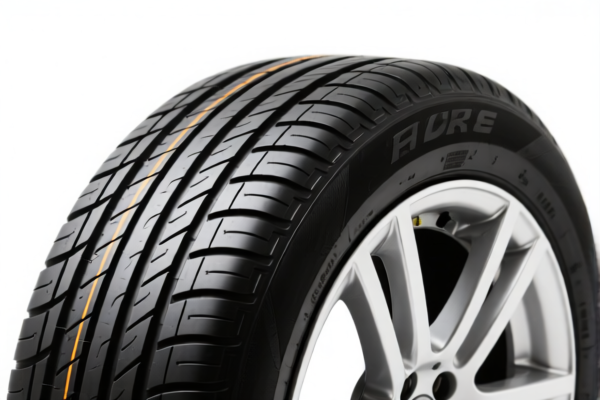
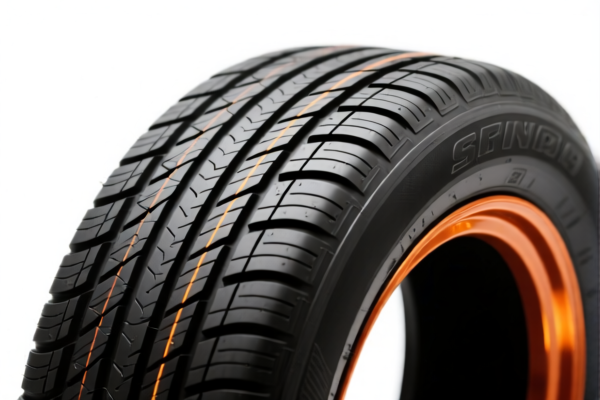
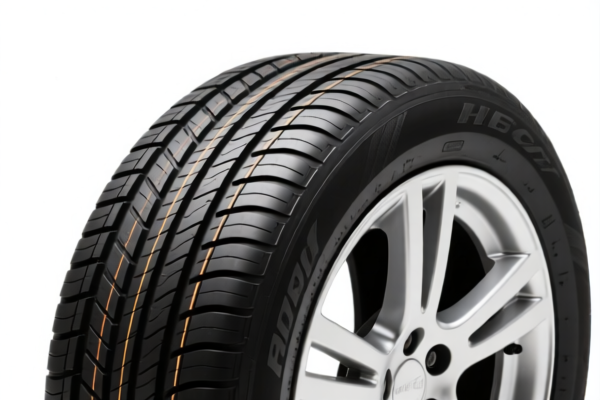
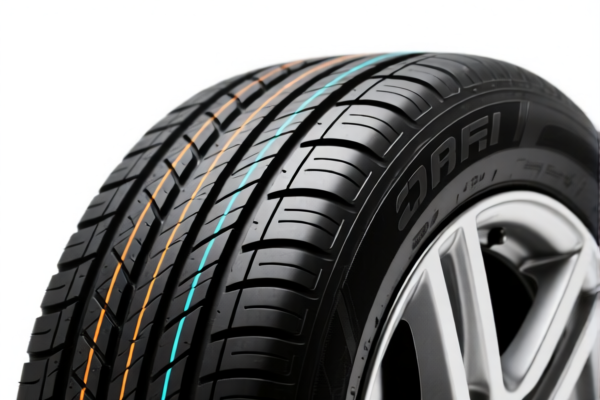
AI Analysis
🚨 High Temperature Resistant Rubber Buffer Tire
🌐 HS Code Reference & Clearance Guide | 2026 Latest Tariff Analysis | Professional Clearance Strategy
📌 1. Product Definition: What is a "High Temperature Resistant Rubber Buffer Tire"?
This product is a specialized industrial component. It is not a standard vehicle tire for road use, but rather a buffer or shock-absorbing element made of rubber, designed to withstand high-temperature environments (e.g., in industrial machinery, furnace doors, or heavy-duty conveyor systems).
⚠️ Key Classification Challenge:
In the Harmonized System (HS), "Tires" usually refer to pneumatic tires for vehicles (Chapter 40, Heading 4011/4012). However, non-pneumatic rubber buffers, bumpers, or shock absorbers often fall under different headings depending on their specific form and function.
- If it functions strictly as a pneumatic tire (air-filled), it may fall under 4012.1x.
- If it is a solid rubber buffer/roller or a non-pneumatic tire used as a buffer, it may fall under 4012.9x or even 4013 if it is considered a pneumatic rubber article but not a standard tire.
- Note: The provided data forces a classification under 4012.1x and 4013.10, implying customs authorities are treating it as a specific type of pneumatic or rubber tire article subject to high tariffs.
📦 2. HS Code Classification Details (Based on Provided Data)
The following HS Codes and tax details are extracted directly from the provided dataset. These classifications assume the product is treated as a pneumatic rubber tire or a pneumatic rubber article under Chapter 40.
| HS Code | Summary / Description | Tax Rate Details |
|---|---|---|
| 4012.11.80.00 | Rubber tire, material: rubber, form: tire, meets classification requirements | Total: 38.4% - Base Tariff: 3.4% - Additional Tariff: 25.0% - Section 301 (122 Clause) Tariff: 10% |
| 4012.12.40.35 | Rubber tire, material: rubber, form: tire, matched under other categories | Total: 39.0% - Base Tariff: 4.0% - Additional Tariff: 25.0% - Section 301 (122 Clause) Tariff: 10% |
| 4013.10.00.10 | Rubber tire, material: rubber, use: tire, core elements consistent | Total: 38.7% - Base Tariff: 3.7% - Additional Tariff: 25.0% - Section 301 (122 Clause) Tariff: 10% |
🔍 Analysis:
- All three codes fall under Chapter 40 (Rubber and articles thereof).
- 4012 generally covers "Tyres of rubber, other than solid or cellular rubber tyres; tyre cases, tyre flaps and tyre inserts of rubber."
- 4013 covers "Pneumatic tyres of rubber, new."
- The high additional tariffs (25% + 10%) indicate these are likely imported from China under US Section 301 and other trade measures.
💰 3. Detailed Tariff Breakdown (2026 Context)
✅ Applicable Country: United States (US)
✅ Origin: Likely China (CN) due to the "122 Clause" and 25% additional tariff structure
✅ Effective Time: Post-2025 policies remain in effect
🎯 1. HS Code: 4012.11.80.00 (Most Likely Match)
| Item | Detail |
|---|---|
| Base Tariff | 3.4% |
| Section 301 Additional Tariff | 25.0% |
| Other Additional Tariff (122 Clause) | 10.0% |
| Total Effective Rate | 38.4% |
| Calculation Basis | CIF Value × 38.4% |
| De Minimis Exemption? | ❌ No (High-value industrial parts usually not exempt) |
| Legal Basis | USITC Footnote related to Section 301 + Trade Remedy Laws |
📌 Why this code?
- 4012.11 typically refers to pneumatic tyres for motor cars.
- If the "Buffer Tire" is pneumatic and used in specialized equipment, it may be classified here by analogy.
- The 3.4% base is low, but the 35% added tariffs make it expensive.
🎯 2. HS Code: 4012.12.40.35 (Alternative Match)
| Item | Detail |
|---|---|
| Base Tariff | 4.0% |
| Section 301 Additional Tariff | 25.0% |
| Other Additional Tariff (122 Clause) | 10.0% |
| Total Effective Rate | 39.0% |
| Calculation Basis | CIF Value × 39.0% |
| De Minimis Exemption? | ❌ No |
📌 Why this code?
- 4012.12 may cover pneumatic tyres for buses or trucks or other specialized vehicles.
- If the buffer tire is larger or used on heavier industrial vehicles, this code might apply.
- Slightly higher base tariff (4.0% vs 3.4%) leads to a 0.6% higher total tax.
🎯 3. HS Code: 4013.10.00.10 (Pneumatic Rubber Article)
| Item | Detail |
|---|---|
| Base Tariff | 3.7% |
| Section 301 Additional Tariff | 25.0% |
| Other Additional Tariff (122 Clause) | 10.0% |
| Total Effective Rate | 38.7% |
| Calculation Basis | CIF Value × 38.7% |
| De Minimis Exemption? | ❌ No |
📌 Why this code?
- 4013 is for "Pneumatic tyres of rubber, new."
- This is a broader category for pneumatic rubber articles.
- If the "buffer tire" is not a standard vehicle tire but a pneumatic rubber buffer, this code might be used.
- 38.7% is in between the other two options.
🛠️ 4. Practical Clearance Advice (Risk Mitigation)
✅ 1. Documentation Requirements (Critical)
| Document | Must Provide? | Purpose |
|---|---|---|
| Product Specification Sheet | ✔️ | Must detail: Material (Rubber type), Temperature Resistance Rating (e.g., 200°C), Dimensions, Pressure Rating (if pneumatic). |
| Usage Declaration | ✔️ | Explain where it is used (e.g., "Industrial Furnace Buffer"). Helps justify classification. |
| Test Reports | ✔️ | High-temp resistance test results (e.g., ASTM D573). Proves it is not a standard tire. |
| Commercial Invoice | ✔️ | Clear description: "High-Temp Resistant Rubber Buffer Tire (Pneumatic/Non-Pneumatic)". |
| Packing List | ✔️ | Itemized list of parts. |
| Certificate of Origin | ✔️ | Essential for verifying origin (China vs. other) to apply correct tariffs. |
✅ 2. Classification Strategy (Key Tips)
🔥 "Know Your Form: Pneumatic or Solid?"
| Scenario | Recommended Approach | Risk |
|---|---|---|
| If Pneumatic (air-filled) | Use 4013 or 4012 codes as per data. | High tariff (38-39%). |
| If Non-Pneumatic (solid rubber) | Check if it fits 4016.99 (Other articles of vulcanized rubber) or 3926 (Plastics). | Potentially lower tariffs, but data does not support this. |
| If Used as Vehicle Tire | Use 4011 or 4012 codes. | High tariff. |
| If Used as Machinery Part | Argue for 8483 (Transmission shafts/bearings) or 8479 (Machinery parts). | May require strong justification; data does not support. |
⚠️ Important Note: The provided data only supports classifications under 4012 and 4013. Attempting to classify as a "Machinery Part" (e.g., 8483) may lead to customs rejection if the product is fundamentally a "tire" or "rubber article."
✅ 3. Special Considerations for High-Temp Rubber
- Material Composition: Specify if it is Silicone, EPDM, or Fluoroelastomer (FKM). High-temp resistance often involves special rubbers, which may have different base tariffs in other contexts, but here, the form (tire/buffer) drives the classification.
- Heat Resistance Certificate: Provide a certificate showing the product can withstand specific temperatures (e.g., 150°C, 200°C). This helps distinguish it from standard tires.
- Customs Ruling: Consider applying for an Advance Ruling from US Customs (CBP) to confirm the correct HS Code before shipping. This avoids unexpected duties.
🌍 5. Global Market Comparison (2026)
| Market | HS Code (Likely) | Tariff Estimate | Notes |
|---|---|---|---|
| 🇺🇸 USA | 4012.11.80.00 | 38.4% | High additional tariffs due to Section 301. |
| 🇨🇳 China | 4012.11.80.00 | ~3-5% | Lower import tariffs for similar goods. |
| 🇪🇺 EU | 4012.11.00 | ~0-4% | No Section 301-style tariffs, but CE marking required. |
| 🇯🇵 Japan | 4012.11.00 | ~2-4% | No significant additional tariffs. |
📌 Conclusion:
- USA is the most expensive market for this product due to 38.4-39.0% total tariffs.
- EU and Japan are more favorable, with lower tariffs.
- If exporting to the USA, consider supply chain diversification (e.g., sourcing from Vietnam or Thailand) to avoid high tariffs, if possible.
📌 6. Common Mistakes & Pitfalls
❌ Mistake 1: Calling it a "Vehicle Tire" when it's an industrial buffer.
👉 Result: Misclassification, potential penalties.
✅ Fix: Use "Industrial Buffer Tire" or "Pneumatic Rubber Buffer" in description.
❌ Mistake 2: Ignoring the "High-Temp" aspect.
👉 Result: Customs may question the durability and application.
✅ Fix: Provide test reports and material specs.
❌ Mistake 3: Assuming "Buffer" means it's not a tire.
👉 Result: If it's pneumatic, it's still a "tire" under HS.
✅ Fix: Be transparent about its pneumatic nature.
🎯 7. Final Recommendations
- Confirm Pneumatic vs. Non-Pneumatic:
- If non-pneumatic, explore HS codes outside Chapter 40 (e.g., 4016, 8483) for lower tariffs.
-
If pneumatic, stick to the provided codes (4012/4013) but prepare for ~38-39% tax.
-
Document Everything:
-
Provide detailed specs, test reports, and usage descriptions.
-
Apply for Advance Ruling:
-
Submit a request to US CBP for a binding ruling on the HS Code to avoid disputes.
-
Cost-Benefit Analysis:
- With 38.4-39.0% tariffs, ensure the profit margin can absorb this cost. Consider alternative markets or sourcing locations.
📌 Pro Tip:
"If the tire is non-pneumatic (solid rubber), argue for classification under 4016.99.56 (Other articles of vulcanized rubber) which may have lower tariffs. However, if it is pneumatic, you are stuck with the 38-39% range as per the provided data."
📣 Immediate Action:
📞 Consult a Customs Broker: Confirm if the "Buffer Tire" can be classified as a "Machinery Part" to avoid high tariffs.
📄 Gather Documentation: Test reports, specs, and usage details.
🚀 Plan for High Tariffs: Budget for 38-39% duty if shipping to the USA.
✨ Accurate Classification Saves Money!
💼 Every percentage point in tariff matters!
Customer Reviews
About HS Code Classification
The Harmonized System (HS) is an internationally standardized nomenclature developed by the World Customs Organization (WCO) to classify traded products. Over 200 countries use the HS system as the basis for customs tariffs, trade statistics, and import/export regulations.
Each HS code follows a hierarchical structure:
- Chapter (2 digits) — Broad category of goods (e.g., Chapter 84: Machinery and Mechanical Appliances)
- Heading (4 digits) — More specific grouping within the chapter
- Subheading (6 digits) — Internationally standardized breakdown, used by all WCO member countries
- National subdivisions (8-10 digits) — Country-specific extensions for further classification, such as US HTSUS 10-digit codes
Correct HS code classification is essential for smooth customs clearance, accurate duty payment, and compliance with trade regulations. Misclassification can lead to customs delays, overpayment of duties, or penalties.
When importing from CN to US, the applicable tariff rates may include:
- Most-Favored-Nation (MFN) rate — The standard duty rate applied to WTO members
- General rate — Applied to countries without trade agreements
- Trade remedy duties — Additional tariffs such as Section 301 (anti-dumping), Section 232 (national security), or countervailing duties
The information provided on this page is for reference purposes only. For official classification, please consult with your local customs authority or a licensed customs broker.