High tenacity Nylon or Other Polyamide Yarn Tire Cord Fabric
CN → US| HS Code | Tariff Rate | Origin | Destination | Doc |
|---|---|---|---|---|
| 5407100090 | 48.6% | CN | US | Official Doc |
| 5407100010 | 48.6% | CN | US | Official Doc |
| 5911101000 | 37.9% | CN | US | Official Doc |
| 5911900080 | 38.8% | CN | US | Official Doc |
| 5407100090 | 48.6% | CN | US | Official Doc |
Product Images
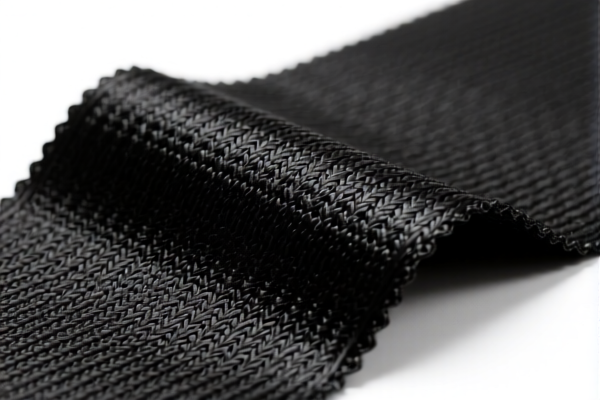
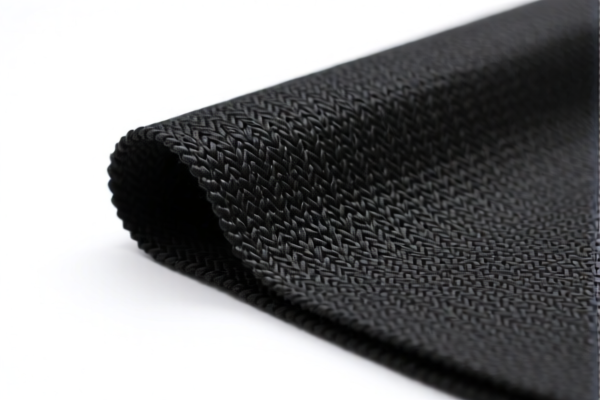
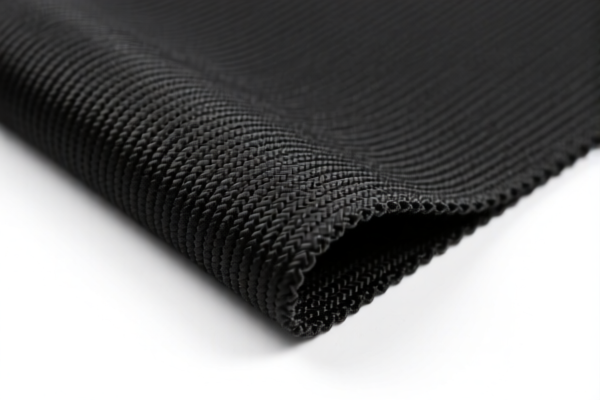
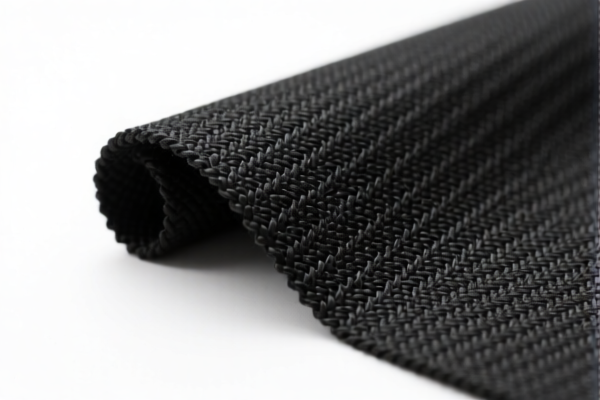
AI Analysis
🚗 High Tenacity Nylon/Polyamide Yarn Tire Cord Fabric
🌐 HS Code Reference & Clearance Guide | 2026 Latest Tariff Analysis | Professional Customs Strategy 📌 Part 1: Product Definition & Classification: What Exactly is "Tire Cord Fabric"?
Tire Cord Fabric, primarily made from High Tenacity Nylon (Polyamide) or other polyamide fibers, is a specialized technical textile used as the reinforcing skeleton in radial and bias-ply tires. It is not a standard fabric for clothing; it is a high-performance engineering material.
In international trade, the classification depends heavily on: 1. Material Composition: Is it 100% Polyamide (Nylon)? Or mixed? 2. Form: Is it a plain weave, cord fabric, or a more complex technical textile? 3. Usage: Specifically for tire reinforcement vs. general industrial use.
⚠️ Critical Distinction Point: * Standard Tire Cord (Chassis Fabric): If it is a simple high-tenacity polyamide yarn woven into a fabric specifically for tires, it often falls under Chapter 54 (Synthetic Filament Yarn & Articles) or Chapter 59 (Textile Impregnated/Coated). * Technical Textile: If it includes specific coatings, treatments, or is part of a composite, it may shift to Chapter 59.
📦 Part 2: HS Code Classification Details (2026 Latest Tariff Authority)
Based on the provided data, here are the four potential HS Codes for High Tenacity Nylon/Polyamide Tire Cord Fabric, ranked by classification logic.
| HS Code | Product Description | Application Scenario | Key Classification Logic |
|---|---|---|---|
5407.10.00.90 |
High Tenacity Polyamide Filament Yarn Fabric | Standard tire cord fabric, plain weave, high strength | ✅ Match: Explicitly covers "High Tenacity Nylon/Polyamide" and "Cord Fabric". Matches material restrictions. |
5407.10.00.10 |
Polyamide/Polyester High Tenacity Filament Yarn Fabric | General synthetic tire reinforcement fabric | ✅ Match: Covers polyamide (nylon) filament fabrics. Fits the "High Tenacity" and "Fabric" criteria. |
5911.10.10.00 |
Textile Fabrics for Technical Uses (Specific) | Industrial textile applications, potential confusion with rubber-coated fabrics | ⚠️ Partial Match: Logic follows textile material + "Cord" form. However, usually applies if impregnated or specific technical treatment is applied. |
5911.90.00.80 |
Other Technical Textile Articles | Tire reinforcing fabric used as a technical article (e.g., if coated/composite) | ✅ Match: "Tire reinforcement" is a classic technical use. Fits the "Technical Textile Product" logic if not classified under Ch. 54. |
🔍 Key Reminder: * Code
5407...is the most direct fit for uncoated high-tenacity nylon/polyamide fabric. * Code5911...applies if the fabric is impregnated, coated, covered, or laminated with rubber or other materials to become a technical article. * Tax Rate Difference: Codes under5407incur a 48.6% total tax, while5911codes incur ~38%. This is a significant cost difference!
💰 Part 3: 2026 Latest Tariff Rate Breakdown (Including Surcharges)
✅ Applicable Country: United States (US) ✅ Origin: China (CN) ✅ Effective Date: From November 10, 2025 (including subsequent imports)
🎯 1. 5407.10.00.90 & 5407.10.00.10 —— High Tenacity Polyamide/Polyester Filament Fabric
| Item | Content |
|---|---|
| Base Tariff Rate | 13.6% (ad valorem) |
| Section 301 Surtax | +25.0% (USITC Footnote 9903.88.01 equivalent for textiles) |
| IEEPA Surtax | +10.0% (Against Chinese/HK products, from Nov 10, 2025) |
| Total Tax Rate | 48.6% |
| Tax Calculation | CIF Value × 48.6% |
| De Minimis Exemption? | ❌ No (deny_de_minimis) |
| Legal Basis Path | IEEPA:9903.01.25 → IEEPA:9903.01.24 → USITC:5407.10.00.90/10 → FOOTNOTE:Section 301 Textiles |
📌 Explanation: * "Base Tariff 13.6%": Standard MFN rate for synthetic filament yarn fabrics. * "Section 301 Surtax 25%": Applied to most Chinese textile goods under trade war measures. * "IEEPA 10%": New/Updated surcharge effective Nov 2025. * Total 48.6%: This is a very high tariff. It significantly impacts profit margins.
🎯 2. 5911.10.10.00 —— Technical Textile Fabrics (Specific)
| Item | Content |
|---|---|
| Base Tariff Rate | 2.9% (ad valorem) |
| Section 301 Surtax | +25.0% |
| IEEPA Surtax | +10.0% |
| Total Tax Rate | 37.9% |
| Tax Calculation | CIF Value × 37.9% |
| De Minimis Exemption? | ❌ No (deny_de_minimis) |
| Legal Basis Path | IEEPA:9903.01.25 → IEEPA:9903.01.24 → USITC:5911.10.10.00 → FOOTNOTE:Section 301 |
📌 Note: * Lower base rate (2.9%) but still hit by heavy surcharges. * Only applicable if the product is classified as a "Technical Textile" under Ch. 59 (e.g., specific treatment/impregnation).
🎯 3. 5911.90.00.80 —— Other Technical Textile Articles
| Item | Content |
|---|---|
| Base Tariff Rate | 3.8% (ad valorem) |
| Section 301 Surtax | +25.0% |
| IEEPA Surtax | +10.0% |
| Total Tax Rate | 38.8% |
| Tax Calculation | CIF Value × 38.8% |
| De Minimis Exemption? | ❌ No (deny_de_minimis) |
| Legal Basis Path | IEEPA:9903.01.25 → IEEPA:9903.01.24 → USITC:5911.90.00.80 → FOOTNOTE:Section 301 |
📌 Note: * Slightly higher base rate than
5911.10.10.00but still lower than Ch. 54 codes. * Used for "Other technical textile articles" including tire reinforcement if not meeting Ch. 54 criteria.
🛠️ Part 4: Customs Clearance Practical Advice (Risk Avoidance Guide)
✅ 1. Documentation Checklist (All Required)
| Document | Required | Description |
|---|---|---|
| ✅ Product Specification Sheet | ✔️ | Must detail: Fiber type (Polyamide 6/66), Denier, Tenacity, Weave structure, Weight. |
| ✅ Material Composition Statement | ✔️ | Explicitly state "100% Polyamide" or "Nylon". |
| ✅ Product Photos | ✔️ | Clear shots of the fabric texture, edges, and any labels. |
| ✅ Commercial Invoice | ✔️ | Must describe item as "High Tenacity Nylon Tire Cord Fabric" NOT just "Fabric". |
| ✅ Packing List | ✔️ | Detail weight, dimensions, and roll length. |
| ✅ Certificate of Origin (CO) | ✔️ | Essential for determining origin-based surcharges. |
| ✅ Test Report | ✔️ | Proof of "High Tenacity" (e.g., breaking strength ≥ X N/tex). |
✅ 2. Declaration Tips (Key Mantra)
🔥 "Material First, Usage Second, Code Accuracy Saves Money!"
| Scenario | Correct Declaration | Error to Avoid |
|---|---|---|
| Plain High-Tenacity Nylon Fabric | HS: 5407.10.00.90 |
Misdeclaring as "Technical Textile" (5911) to save tax → Risk of Penalty if uncoated. |
| Coated/Impregnated Tire Cord | HS: 5911.10.10.00 or 5911.90.00.80 |
Declaring as 5407 → Classification Error (Ch. 59 takes precedence if impregnated). |
| Mixed Material (e.g., Nylon+Polyester) | Check Main Component | If Nylon > 50%, use Polyamide codes. If Polyester > 50%, use Polyester codes (5407.5...). |
| "Tire Cord" vs "General Fabric" | Specify "For Tire Reinforcement" | Vague description → Customs delay for re-classification. |
✅ 3. Special Case Handling
| Scenario | Handling Advice |
|---|---|
| OEM Custom Fabric | Provide customer specs to prove "High Tenacity" requirement. |
| Coated Fabric | If coated with rubber, it MUST be 5911. Do not try to declare as 5407 to avoid lower tax; customs will re-classify and penalize. |
| Origin Shift | If fabric is dyed/finished in Vietnam/Malaysia, check if sufficient processing occurred to change origin to avoid 25%+10% surcharges. |
| Sample Shipments | NO De Minimis. Small samples are still taxed at 38-48.6%. |
🌍 Part 5: Global Market Comparison (2026 Latest)
| Country/Region | Recommended HS Code | Tariff (China Origin) | Certification | Notes |
|---|---|---|---|---|
| 🇺🇸 USA | 5407.10.00.90 / 5911.10.10.00 |
48.6% (Ch 54) 37.9% (Ch 59) |
None specific | Highest Tax. Section 301 + IEEPA applies. |
| 🇨🇳 China | 5407.10.00.90 |
~13.6% | None | No surcharges. |
| 🇪🇺 EU | 5407.49.00 / 5911.10 |
~4-6.5% | REACH Compliance | No Section 301 equivalent. |
| 🇮🇳 India | 5407.10.90 |
~15-20% | BIS (if applicable) | High tariffs on technical textiles. |
| 🇲🇽 Mexico | 5407.10.00 |
~0-5% (USMCA)* | USMCA Certificate | If produced in NAFTA region, 0%. |
📌 Conclusion: * USA is the most expensive market for Chinese-made tire cord fabric due to cumulative surcharges (25% + 10%). * Ch. 59 Codes (
5911) offer a ~10% tax saving vs Ch. 54, BUT only if the product qualifies as a "Technical Textile" (e.g., treated/impregnated). * Risk: Misclassifying Ch. 54 goods as Ch. 59 to save tax is a major red flag for US Customs.
📌 Part 6: Common Mistakes & Pitfalls (Lessons Learned)
❌ Mistake 1: Declaring "High Tenacity Nylon Fabric" as "General Textile" (5208/5407 base rate) to avoid Ch. 59 scrutiny.
👉 Consequence: Customs verifies tenacity level. If it doesn't meet Ch. 54 specs, or if it's coated, you face retroactive tax + penalty.
❌ Mistake 2: Ignoring the IEEPA 10% Surcharge. 👉 Consequence: Underestimating landed cost by 10%. Profit margin evaporates.
❌ Mistake 3: Using "Cord Fabric" without specifying material. 👉 Consequence: Customs requests clarification, causing 7-14 day delays.
❌ Mistake 4: Assuming "Tire Cord" automatically qualifies for 5911.
👉 Consequence: If uncoated, it belongs in 5407. Wrong code = 48.6% vs 38% difference.
✅ Correct Practice:
"High Tenacity Polyamide 66 Filament Yarn Woven Fabric, Uncoated, For Tire Reinforcement, 200 Denier, Breaking Strength 15N/tex"
🎯 Part 7: Conclusion: Precision Saves Money!
🎯 Remember the Mantra:
🔹 "Ch. 54 is Base: 13.6% + 25% + 10% = 48.6%" 🔹 "Ch. 59 is Technical: 2.9% + 25% + 10% = 37.9%" 🔹 "Coated/Impregnated? Go Ch. 59. Uncoated? Stay Ch. 54." 🔹 "Never split the shipment to bypass De Minimis!"
📌 Pro Tip: If your tire cord fabric is dyed in Vietnam or finished in Malaysia, investigate if it qualifies for non-Chinese origin. If yes, you may avoid the 25% Section 301 and 10% IEEPA surcharges, reducing total tax to ~4-13%.
📣 Immediate Action:
📞 Contact a licensed US customs broker. 📤 Provide Technical Data Sheets showing "High Tenacity" specs. 🔍 Request a Binding Ruling (Pre-classification) from US CBP to lock in the HS Code and tax rate before shipment.
✨ Professional Customs Clearance Starts with Accurate Classification! 💼 Every percentage point counts in today’s trade war environment!
Customer Reviews
About HS Code Classification
The Harmonized System (HS) is an internationally standardized nomenclature developed by the World Customs Organization (WCO) to classify traded products. Over 200 countries use the HS system as the basis for customs tariffs, trade statistics, and import/export regulations.
Each HS code follows a hierarchical structure:
- Chapter (2 digits) — Broad category of goods (e.g., Chapter 84: Machinery and Mechanical Appliances)
- Heading (4 digits) — More specific grouping within the chapter
- Subheading (6 digits) — Internationally standardized breakdown, used by all WCO member countries
- National subdivisions (8-10 digits) — Country-specific extensions for further classification, such as US HTSUS 10-digit codes
Correct HS code classification is essential for smooth customs clearance, accurate duty payment, and compliance with trade regulations. Misclassification can lead to customs delays, overpayment of duties, or penalties.
When importing from CN to US, the applicable tariff rates may include:
- Most-Favored-Nation (MFN) rate — The standard duty rate applied to WTO members
- General rate — Applied to countries without trade agreements
- Trade remedy duties — Additional tariffs such as Section 301 (anti-dumping), Section 232 (national security), or countervailing duties
The information provided on this page is for reference purposes only. For official classification, please consult with your local customs authority or a licensed customs broker.