High top Socks
CN → US| HS Code | Tariff Rate | Origin | Destination | Doc |
|---|---|---|---|---|
| 6115309030 | 32.1% | CN | US | Official Doc |
| 6115309010 | 32.1% | CN | US | Official Doc |
| 6117809510 | 32.1% | CN | US | Official Doc |
| 6117809570 | 32.1% | CN | US | Official Doc |
| 6115309030 | 32.1% | CN | US | Official Doc |
Product Images
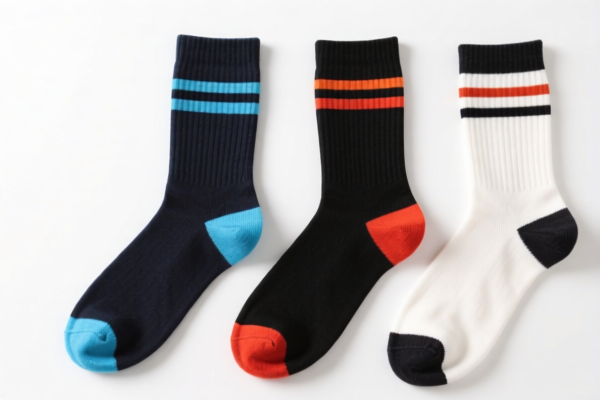
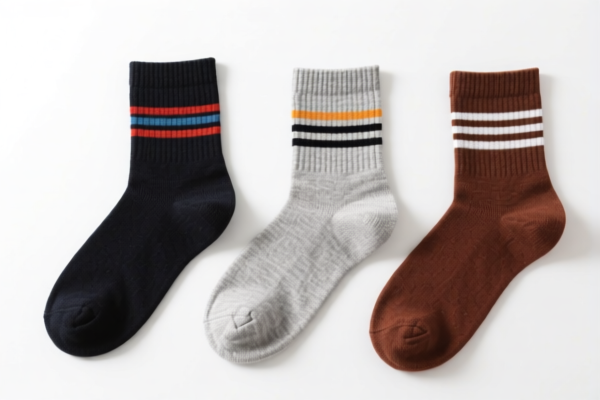
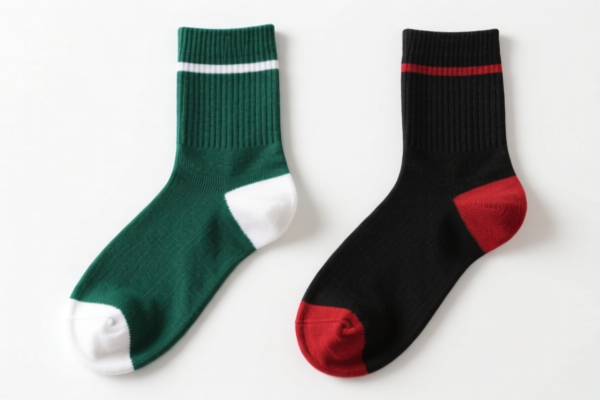
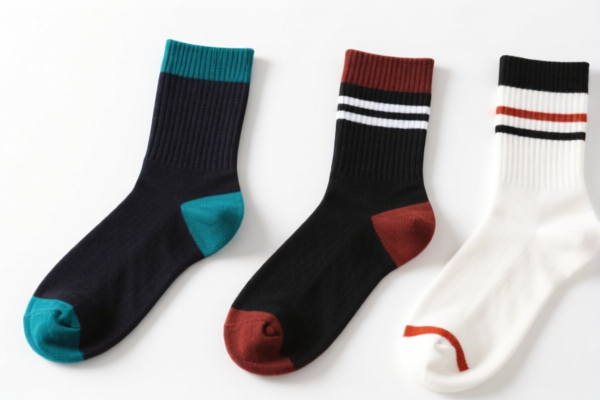
AI Analysis
👟 High Top Socks (Knee-High & Over-The-Calf Socks)
🌐 HS Code Reference & Customs Clearance Guide | 2024-2026 Latest Tariff Analysis | Professional-Level Compliance Strategy
📌 1. Product Definition & Classification: Do You Really Know "High Top Socks"?
High-top socks, commonly known in trade as Knee-High Socks or Over-The-Calf Socks, are essential apparel items primarily categorized under Chapter 61 (Knitted or Crochet Apparel). In international trade, their classification depends heavily on their form factor (length and shape) and material composition (fiber type).
Key Classification Logic: * Form Factor: Items that maintain the shape of a sock (even when not worn) and extend to the knee or above are typically classified under 6115.30 (Knee-high socks or other hosiery). * Accessories: If the item is considered a general accessory rather than specific hosiery (e.g., certain fashion-oriented mid-calf or loose-fitting styles), they may fall under 6117.80 (Other made-up clothing accessories).
⚠️ Critical Distinction:
- Strict Hosiery (6115.30): Tight-fitting, shaped to follow the leg contour up to the knee. Material can be wool, cotton, synthetic fibers, etc.
- General Accessories (6117.80): Broader category, often used for "other" knit accessories. Some customs authorities may misclassify tight socks here, but 6115.30 is the precise code for structured high socks.
📦 2. HS Code Classification Details (Based on Provided Data)
| HS Code | Product Description | Key Characteristics | Material Inference |
|---|---|---|---|
6115.30.90.30 |
Long/Over-the-Calf Socks | Form factor matches long socks; generic category for items not specified elsewhere. | Unspecified, but fits general textile logic. |
6115.30.90.10 |
Long/Over-the-Calf Socks | Form factor matches long socks; specifically inferred as Artificial Fibers or Cotton. | Artificial Fibers / Cotton |
6117.80.95.10 |
Women's Mid-Calf Socks | Form factor matches knit clothing accessories; specifically inferred as Cotton. | Cotton |
6117.80.95.70 |
Women's Mid-Calf Socks | Form factor matches knit clothing accessories; inferred as Non-Cotton, Non-Wool, Non-Fine Animal Hair. | Synthetic / Blends (Non-premium fiber) |
6115.30.90.30 |
Women's Long Socks | Form factor matches knit socks; no material conflict. | Fiber-based (Generic) |
🔍 Key Reminder:
- For strictly shaped knee-high socks, 6115.30 is the primary correct heading.
-6117.80codes are generally for accessories or less structured items. If your product is tight-fitting hosiery, using 6117 may lead to misclassification risks.
- The provided data suggests a uniform tax burden across these codes for the target market (US), but accurate HS codes are vital for legal compliance and potential future changes.
💰 3. 2024-2026 Latest Tariff Rate Breakdown (Including Additional Taxes & Policy Surcharges)
✅ Applicable Country: United States (US)
✅ Country of Origin: China (CN)
✅ Effective Date: Ongoing (Based on Section 301 & IEEPA provisions)
🎯 1. 6115.30.90.30 & 6115.30.90.10 – Long/High Socks (Hosiery)
| Item | Content |
|---|---|
| Base Tariff Rate | 14.6% (General Ad Valorem) |
| Section 301 Surcharge | +7.5% (Trade Remedy Tariff) |
| Section 122 Tariff | +10% (Specific US Trade Provision) |
| Total Tariff Rate | 32.1% |
| Tax Calculation | CIF Value × 32.1% |
| De Minimis Eligibility | ❌ Not Eligible (Standard for textile/hosiery imports from China) |
| Legal Basis Path | HTSUS:6115.30 → Section 301: Footnote 9903 → IEEPA: Section 122 |
📌 Explanation:
- "Base 14.6%": Standard Most Favored Nation (MFN) rate for knitted socks.
- "Section 301 7.5%": This is the punitive tariff imposed on Chinese imports under the Trade Promotion Authority.
- "Section 122 10%": A specific trade remedy tariff often applied to certain textile and apparel categories.
- Total 32.1%: This is a high-cost category. Importers must factor this into their landed cost significantly.
🎯 2. 6117.80.95.10 & 6117.80.95.70 – Women's Mid-Calf Socks (Accessories)
| Item | Content |
|---|---|
| Base Tariff Rate | 14.6% |
| Section 301 Surcharge | +7.5% |
| Section 122 Tariff | +10% |
| Total Tariff Rate | 32.1% |
| Tax Calculation | CIF Value × 32.1% |
| De Minimis Eligibility | ❌ Not Eligible |
| Legal Basis Path | HTSUS:6117.80 → Section 301 → IEEPA: Section 122 |
📌 Note:
- Although the HS Code prefix changes (6115 vs. 6117), the total effective tax rate is identical (32.1%) in this dataset.
- However, misclassification can lead to penalties if customs determines the item is clearly "hosiery" (6115) but declared as "accessory" (6117).
🛠️ 4. Customs Clearance Practical Advice (Real-World Pitfall Avoidance)
✅ 1. Documentation Checklist (Non-Negotiable)
| Document | Required | Notes |
|---|---|---|
| ✅ Product Specification Sheet | ✔️ | Must clearly state: Length (e.g., "Over-the-Calf"), Fit (Tight/Loose), Material (% Cotton, % Nylon, etc.). |
| ✅ Material Composition Label | ✔️ | Photos of the care label inside the sock are crucial for proving fiber content (Cotton vs. Synthetic). |
| ✅ Commercial Invoice | ✔️ | Description should be precise: "Women's Knitted Cotton Knee-High Socks" rather than just "Socks." |
| ✅ Packing List | ✔️ | Details net/gross weight and number of pairs. |
| ✅ Certificate of Origin | ✔️ | Mandatory to verify Country of Origin (China) for Section 301/122 application. |
✅ 2. Declaration Tips (Key Mantras)
🔥 "Be Precise, Be Honest: Hosiery is Hosiery, Accessory is Accessory!"
| Scenario | Correct Declaration | Incorrect Practice |
|---|---|---|
| Tight, Shaped Knee-Highs | 6115.30.90.30 (Hosiery) |
Declaring as 6117.80 (Accessory) → Risk of Misclassification Penalties. |
| Loose, Fashion Mid-Calf | 6117.80.95.x0 (Accessory) |
Declaring as 6115.30 → May delay clearance for verification. |
| Mixed Materials (e.g., Cotton/Nylon) | Specify % in specs | Vague terms like "Textile" → Customs may assign highest duty rate or reject. |
✅ 3. Special Handling Scenarios
| Situation | Recommendation |
|---|---|
| OEM/White Label Socks | Provide the buyer's contract and design specs. Ensure the material composition matches the label. |
| Sample vs. Bulk | Samples still incur the 32.1% tariff if shipped via standard freight. Do not assume samples are duty-free. |
| Material Change | If switching from Cotton (6117.80.95.10) to Synthetic (6117.80.95.70), the HS Code changes, but the tax rate remains 32.1% in this data. However, the HS Code itself must be updated for legal accuracy. |
🌍 5. Global Market Comparison (2024-2026 Snapshot)
| Country/Region | Recommended HS Code | Tariff Rate (China Origin) | Key Requirement | Notes |
|---|---|---|---|---|
| 🇺🇸 USA | 6115.30 / 6117.80 |
32.1% | Section 301 + 122 | High Barrier. Costly entry. |
| 🇨🇳 China | 6115.30 |
5% - 15% (Varies) | Standard Import | Domestic production is low-cost. |
| 🇪🇺 EU | 6115.30 |
12% (Standard) | CE/REACH (if functional) | No Section 301 equivalent, but VAT applies. |
| 🇨🇦 Canada | 6115.30 |
12% | Standard Import | Similar to US but without Section 122/301 if sourced correctly. |
📌 Conclusion:
- The US market is currently the most challenging for Chinese sock exporters due to the 32.1% blended duty.
- Margin Management: Importers must absorb or pass on this cost. Pricing strategies must include the full 32.1% duty calculation.
📌 6. Common Errors & Pitfalls (Lessons Learned)
❌ Error 1: Declaring "Knee-High Socks" as "Other Textile Articles"
👉 Consequence: Customs may reclassify them, leading to back taxes and fines if the original rate was lower or higher.
❌ Error 2: Ignoring the "Section 122" and "Section 301" surcharges
👉 Consequence: Underpaying duties. If the 32.1% is calculated as just 14.6%, you owe 17.5% extra upon audit.
❌ Error 3: Vague Material Description
👉 Consequence: Customs may suspect duty evasion by misclassifying cotton (higher base) as synthetic (lower base), even if the surcharge is the same. Accurate fiber % is mandatory.
❌ Error 4: Using 6117 for obvious Hosiery
👉 Consequence: While the tax is the same in this dataset, it is legally incorrect for shaped hosiery. Repeated misclassification can flag your importer of record for audits.
✅ Correct Practice:
"Knitted Women's Over-The-Calf Socks, 80% Cotton/20% Nylon, Elastic Cuff, Model HKS-01"
🎯 7. Conclusion: Precision Saves Money!
🎯 Remember the Mantra:
🔹 "Hosiery is 6115, Accessory is 6117. Don't guess, check the shape!"
🔹 "32.1% is the US Reality: Plan your pricing accordingly!"
📌 Pro Tip:
If your products are not from China (e.g., Vietnam, Indonesia), you may qualify for lower or zero Section 301 tariffs.
✅ Action:
📞 Consult a licensed customs broker for Pre-Ruling if your supply chain is multi-country.
🚀 Accurate classification is the first step to profitable cross-border trade!
✨ Professional Clearance Starts with Correct HS Codes!
💼 Your Bottom Line Depends on These Decimals!
Customer Reviews
About HS Code Classification
The Harmonized System (HS) is an internationally standardized nomenclature developed by the World Customs Organization (WCO) to classify traded products. Over 200 countries use the HS system as the basis for customs tariffs, trade statistics, and import/export regulations.
Each HS code follows a hierarchical structure:
- Chapter (2 digits) — Broad category of goods (e.g., Chapter 84: Machinery and Mechanical Appliances)
- Heading (4 digits) — More specific grouping within the chapter
- Subheading (6 digits) — Internationally standardized breakdown, used by all WCO member countries
- National subdivisions (8-10 digits) — Country-specific extensions for further classification, such as US HTSUS 10-digit codes
Correct HS code classification is essential for smooth customs clearance, accurate duty payment, and compliance with trade regulations. Misclassification can lead to customs delays, overpayment of duties, or penalties.
When importing from CN to US, the applicable tariff rates may include:
- Most-Favored-Nation (MFN) rate — The standard duty rate applied to WTO members
- General rate — Applied to countries without trade agreements
- Trade remedy duties — Additional tariffs such as Section 301 (anti-dumping), Section 232 (national security), or countervailing duties
The information provided on this page is for reference purposes only. For official classification, please consult with your local customs authority or a licensed customs broker.