Highway Bus Tire
CN → US| HS Code | Tariff Rate | Origin | Destination | Doc |
|---|---|---|---|---|
| 4016996010 | 37.5% | CN | US | Official Doc |
| 4012128050 | 38.4% | CN | US | Official Doc |
| 4011201035 | 39.0% | CN | US | Official Doc |
| 4012206000 | 35.0% | CN | US | Official Doc |
| 4011205050 | 38.4% | CN | US | Official Doc |
Product Images
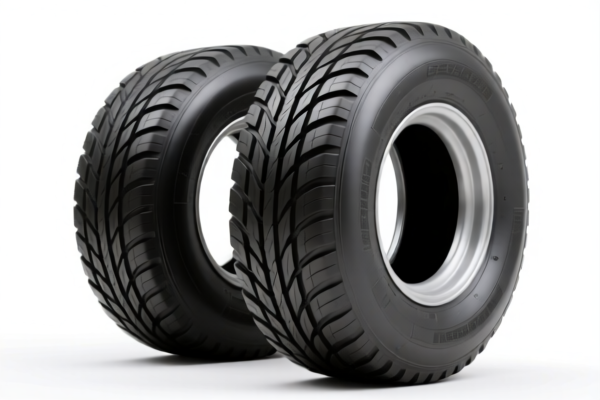
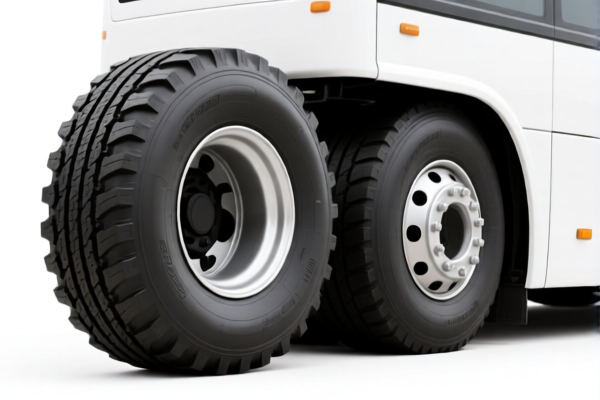
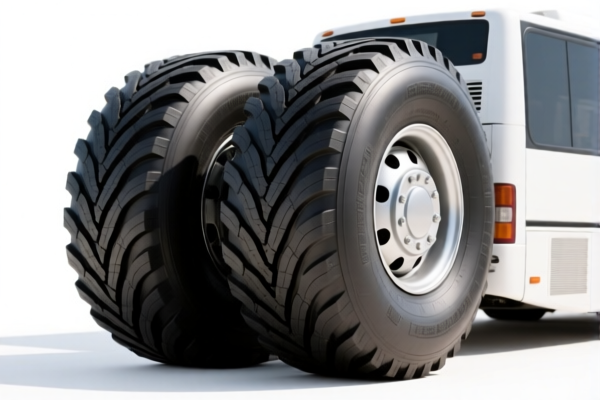
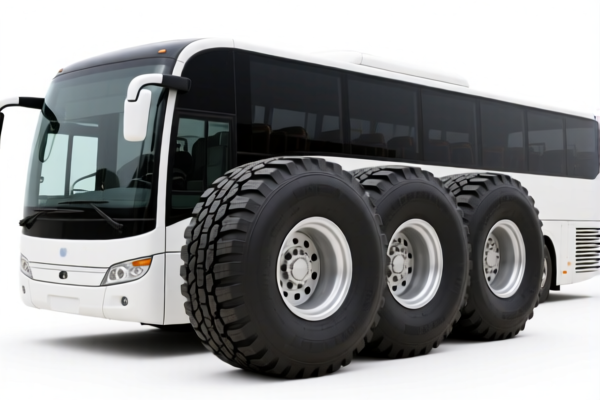
AI Analysis
🚌 Highway Bus Tire (High-Performance Commercial Vehicle Tyres)
🌐 HS Code Reference & Customs Clearance Guide | 2026 Latest Tariff Analysis | Professional Transit Strategy 📌 I. Product Definition & Classification: What Exactly is a "Highway Bus Tire"?
A "Highway Bus Tire" is a specialized pneumatic tire designed specifically for large passenger vehicles (buses) operating primarily on paved roads. In international trade, it is strictly categorized under Chapter 40 (Rubber and Articles Thereof), specifically Heading 4011 (New Pneumatic Tyres).
The classification hinges on three critical factors: 1. Material: Inferable as Vulcanized Rubber (unless otherwise stated, rubber is the standard). 2. Form: New or Retreaded (New/Used distinction drastically changes the HS Code). 3. Vehicle Type: Specifically for "road transport vehicles" (Buses).
⚠️ Key Distinction Point: - New Tyres: Must fall under 4011.xx (e.g., 4011.20). - Retreaded/Used Tyres: Must fall under 4012.20 or 4012.12. - "Off-Road" vs. "Highway": Keywords like "Off-Road" or "4x4" may shift classification to 4012.12 (Other), but "Highway Bus" strongly implies standard road transport use (4011.20).
📦 II. HS Code Classification Details (2026 Latest Tariff Authority Comparison)
Based on the provided data, here are the five possible HS Codes derived from the product name "Highway Bus Tire," along with the logical matching criteria provided in the source text.
| HS Code | Product Description | Matching Logic (Source-Based) | Key Attributes |
|--------|--------------------------|---------------------------------------------------|
| 4016.99.60.10 | Rubber Parts, Machinery Parts | Inference Logic: Goods are tires (rubber products) categorized as "automotive mechanical parts." Material inferred as vulcanized rubber. | • Material: Vulcanized Rubber
• Category: Auto Mechanical Parts |
| 4012.12.80.50 | Retreaded/Other Tyres | Matching Logic: "Bus" matches purpose; "Tire" matches material/form. Since it's unclear if "Retreaded" or "New," it falls under the "Other" catch-all category. No material conflict. | • Status: Retreaded/Other
• Basis: Catch-all principle |
| 4011.20.10.35 | New Tyres for Road Vehicles | Match Success: "Bus" corresponds to purpose; "Highway" implies road use. Material inferred as rubber based on common sense. | • Vehicle: Road Transport
• Condition: New |
| 4012.20.60.00 | Retreaded Pneumatic Tyres | Matching Logic: Form is "tire," material inferred as "rubber." Purpose fits "vehicles for road transport." Follows the logic for Retreaded/Used pneumatic tyres. | • Condition: Retreaded/Used
• Logic: Old tyre classification |
| 4011.20.50.50 | New Tyres for Other Vehicles | Match Success: "Bus" for purpose; "Off-Road" (if present in full description) for non-road use. Material inferred as rubber. | • Vehicle: Other/Agricultural/etc.
• Condition: New |
🔍 Critical Reminder: - If the tire is NEW, it must be classified under 4011 (e.g.,
4011.20.xxxx). - If the tire is RETREADED or USED, it must be classified under 4012 (e.g.,4012.20.xxxxor4012.12.xxxx). - Misclassifying a new tire as a retreaded one (or vice versa) can lead to severe penalties or seizure.
💰 III. 2026 Latest Tariff Rate Breakdown (Including Surcharges)
✅ Applicable Country: USA (US) ✅ Origin: China (CN) ✅ Effective Date: Post-2025/2026 Regulations (Section 301 & IEEPA)
🎯 1. 4016.99.60.10 – Rubber Parts (Machinery Parts)
| Item | Detail |
|---|---|
| Base Duty | 2.5% (ad valorem) |
| USITC Additional Duty | +25.0% (Section 301) |
| IEEPA Additional Duty | +10.0% (122-Clause, targeting China) |
| Total Effective Rate | 37.5% |
| Calculation | CIF Value × 37.5% |
| De Minimis Eligibility | ❌ NO (Denied for Chinese origin goods) |
| Legal Basis | IEEPA:9903.01.25 → USITC:4016.99.60.10 |
📌 Explanation: - This classification treats the tire as a "part" rather than a complete tyre, which is unusual for a full tire but possible if declared as a component. - Total 37.5% is high. Ensure the description accurately reflects "parts" to avoid classification disputes.
🎯 2. 4012.12.80.50 – Retreaded/Other Tyres
| Item | Detail |
|---|---|
| Base Duty | 3.4% |
| USITC Additional Duty | +25.0% |
| IEEPA Additional Duty | +10.0% |
| Total Effective Rate | 38.4% |
| Calculation | CIF Value × 38.4% |
| De Minimis Eligibility | ❌ NO |
| Legal Basis | IEEPA:9903.01.24 → USITC:4012.12.80.50 |
📌 Note: - Applies if the tire is considered "Other" or Retreaded under Heading 4012. - Slightly higher base rate than new tyres in some subcategories due to the "Other" classification.
🎯 3. 4011.20.10.35 – New Tyres for Road Vehicles (Bus)
| Item | Detail |
|---|---|
| Base Duty | 4.0% |
| USITC Additional Duty | +25.0% |
| IEEPA Additional Duty | +10.0% |
| Total Effective Rate | 39.0% |
| Calculation | CIF Value × 39.0% |
| De Minimis Eligibility | ❌ NO |
| Legal Basis | IEEPA:9903.01.25 → USITC:4011.20.10.35 |
📌 Analysis: - This is the most logical code for New bus tires intended for highway use. - Total 39.0% is the highest among the new tyre options, driven by the 4.0% base rate. - "Highway" confirms road use, fitting Heading 4011.20 (Tyres for buses).
🎯 4. 4012.20.60.00 – Retreaded Pneumatic Tyres
| Item | Detail |
|---|---|
| Base Duty | 0.0% |
| USITC Additional Duty | +25.0% |
| IEEPA Additional Duty | +10.0% |
| Total Effective Rate | 35.0% |
| Calculation | CIF Value × 35.0% |
| De Minimis Eligibility | ❌ NO |
| Legal Basis | IEEPA:9901.25 → USITC:4012.20.60.00 |
📌 Key Insight: - Lowest Total Rate (35.0%) due to 0% base duty. - ONLY APPLICABLE IF THE TIRE IS RETREADED OR USED. - WARNING: If you import NEW tires under this code, it is misclassification. Customs will penalize you. Only use if the tire has been retreaded.
🎯 5. 4011.20.50.50 – New Tyres for Other Vehicles
| Item | Detail |
|---|---|
| Base Duty | 3.4% |
| USITC Additional Duty | +25.0% |
| IEEPA Additional Duty | +10.0% |
| Total Effective Rate | 38.4% |
| Calculation | CIF Value × 38.4% |
| De Minimis Eligibility | ❌ NO |
| Legal Basis | IEEPA:9903.01.24 → USITC:4011.20.50.50 |
📌 Note: - Similar to Code 2, but for New tyres not specifically for "Road Transport" (maybe agricultural or industrial use, despite "Bus" in name). - Use only if the tire is NOT for standard highway buses.
🛠️ IV. Customs Clearance Practical Advice (Battle-Tested Pitfall Guide)
✅ 1. Documentation Checklist (Non-Negotiable)
| Document | Mandatory? | Description |
|---|---|---|
| ✅ Product Specification Sheet | ✔️ | Must include: Size (e.g., 12R22.5), Load Index, Speed Rating, Tread Pattern, Material (Vulcanized Rubber). |
| ✅ HS Code Justification Memo | ✔️ | Explicitly state: "New Pneumatic Tyre for Bus (Road Use)" vs. "Retreaded." |
| ✅ Commercial Invoice | ✔️ | Must clearly state: "Pneumatic Rubber Tyres, New, for Buses." Avoid vague terms like "Auto Parts" if using 4011. |
| ✅ Certificate of Origin (CO) | ✔️ | Crucial for proving Chinese origin (triggers 25% + 10% tariffs). If not China, tariffs may differ. |
| ✅ Packing List | ✔️ | Detail number of tires per pallet, gross weight, net weight. |
✅ 2. Declaration Strategy (Key Mantras)
🔥 "Be Specific: New vs. Retreaded. Bus vs. Truck. Highway vs. Off-Road."
| Scenario | Correct Declaration | Wrong Declaration | Consequence |
|---|---|---|---|
| New Bus Tire | 4011.20.10.35 - "New Pneumatic Tyres, for Buses, Rubber" |
"Auto Parts" or 4012.xxxx |
Misclassification Risk. If caught, penalty + back taxes. |
| Retreaded Bus Tire | 4012.20.60.00 - "Retreaded Pneumatic Tyres, for Buses" |
"New Tyres" | Severe Fraud. High fines. |
| Off-Road/4x4 Bus Tire | 4012.12.80.50 or 4011.20.50.50 |
4011.20.10.35 |
Wrong duty rate (38.4% vs 39.0% or base 3.4% vs 4.0%). |
| Vague "Tire" | Always specify: Material, Condition (New/Retreaded), Vehicle Type | "Tire" | Customs will assign highest default duty or hold shipment. |
✅ 3. Special Situation Handling
| Situation | Handling Advice |
|---|---|
| OEM Custom Tires | Provide design drawings and customer PO. Declare exactly as per spec (e.g., "Retreaded" if applicable). |
| "Highway" vs. "Off-Road" | If the tire has "All-Terrain" tread, it may be classified as 4012.12 (Other). Check tread depth and pattern. |
| Mixed Shipment (New + Retreaded) | DO NOT mix in one HS Code. Declare separately. If mixed, Customs may apply the highest duty to the entire shipment. |
| De Minimis ($800) Exemption | ❌ NOT AVAILABLE for Chinese-origin goods under current IEEPA/301 rules. Even small shipments are taxed. |
🌍 V. Global Market Customs Comparison (2026 Update)
| Country/Region | Recommended HS Code | Tariff (China Origin) | Certification | Notes |
|---|---|---|---|---|
| 🇺🇸 USA | 4011.20.10.35 (New) / 4012.20.60.00 (Retreaded) |
39.0% (New) / 35.0% (Retreaded) | No specific DOT required for import, but EPA/CARB may apply for emissions. | Highest tariffs globally. 25% + 10% surcharges are unavoidable for CN origin. |
| 🇨🇳 China | 4011.20 |
~10% | CCC (if applicable) | Lower base duty. No Section 301 equivalent. |
| 🇪🇺 EU | 4011.20 |
4.5% - 6% | E-Mark / ECO Label | No aggressive surcharges. Focus on eco-labels. |
| 🇬🇧 UK | 4011.20 |
4.5% - 6% | UKCA Mark | Post-Brexit rules apply. |
| 🇦🇺 Australia | 4011.20 |
5% | SAA Certification | Moderate duties. |
📌 Conclusion: - USA is the most expensive market due to the 35-39% total duty. - Retreaded tires (
4012.20.60.00) offer the lowest US duty (35%), but only if legally retreaded. - New bus tires (4011.20.10.35) are the standard, but carry the highest base rate (4.0%).
📌 VI. Common Errors & Pitfall Guide (Lessons Learned)
❌ Error 1: Declaring a New tire as a Retreaded tire to save 4% in base duty. 👉 Consequence: Customs inspection will reveal new tread depth. Penalties + Seizure.
❌ Error 2: Using "Rubber Parts" (4016.99.60.10) for a complete tire.
👉 Consequence: Misclassification. Customs may force correction to 4011 or 4012, leading to additional duties and delays.
❌ Error 3: Ignoring the 122-Clause (IEEPA) 10% surcharge. 👉 Consequence: Underpaying taxes by 10%. Back taxes + Interest + Penalties upon audit.
❌ Error 4: Vague Description: "Bus Tyres." 👉 Consequence: Customs cannot determine if New/Retreaded. Shipment held for 30+ days for clarification.
✅ Correct Practice:
"New Pneumatic Rubber Tyres, Size 12R22.5, Load Index 152/149M, for Highway Buses, Origin China"
🎯 VII. Conclusion: Precision Classification Saves Money!
🎯 Remember the Mantra:
🔹 "New = 4011 (39%). Retreaded = 4012 (35%). Parts = 4016 (37.5%)." 🔹 "Base + 25% + 10% = Total Duty. Never forget the IEEPA 10%!" 🔹 "Be Specific. New vs. Retreaded is the KEY."
📌 Pro Tip:
- If you are importing Retreaded tires, ensure you have proof of retreading (certificates from retreading facility).
- For New tires, verify the exact HS Code subheading matches the Load Index and Speed Rating if possible, as some subheadings are vehicle-specific.
- Budget for 39% on new tires. There is no legal way to avoid the 25% + 10% surcharge for China-origin goods.
📣 Immediate Action:
📞 Contact a licensed customs broker. 📄 Prepare Spec Sheets clearly stating "New" or "Retreaded." 🚀 Calculate Landed Cost including the 35-39% duty to ensure profitability.
✨ Professional Clearance Starts with Accurate Classification! 💼 Your bottom line depends on getting the HS Code right!
Customer Reviews
About HS Code Classification
The Harmonized System (HS) is an internationally standardized nomenclature developed by the World Customs Organization (WCO) to classify traded products. Over 200 countries use the HS system as the basis for customs tariffs, trade statistics, and import/export regulations.
Each HS code follows a hierarchical structure:
- Chapter (2 digits) — Broad category of goods (e.g., Chapter 84: Machinery and Mechanical Appliances)
- Heading (4 digits) — More specific grouping within the chapter
- Subheading (6 digits) — Internationally standardized breakdown, used by all WCO member countries
- National subdivisions (8-10 digits) — Country-specific extensions for further classification, such as US HTSUS 10-digit codes
Correct HS code classification is essential for smooth customs clearance, accurate duty payment, and compliance with trade regulations. Misclassification can lead to customs delays, overpayment of duties, or penalties.
When importing from CN to US, the applicable tariff rates may include:
- Most-Favored-Nation (MFN) rate — The standard duty rate applied to WTO members
- General rate — Applied to countries without trade agreements
- Trade remedy duties — Additional tariffs such as Section 301 (anti-dumping), Section 232 (national security), or countervailing duties
The information provided on this page is for reference purposes only. For official classification, please consult with your local customs authority or a licensed customs broker.