Highway Truck Inflatable Tire
CN → US| HS Code | Tariff Rate | Origin | Destination | Doc |
|---|---|---|---|---|
| 4012909000 | 37.7% | CN | US | Official Doc |
| 4012198000 | 20.9% | CN | US | Official Doc |
| 4011201025 | 39.0% | CN | US | Official Doc |
| 4011205050 | 38.4% | CN | US | Official Doc |
| 4012208000 | 35.0% | CN | US | Official Doc |
Product Images
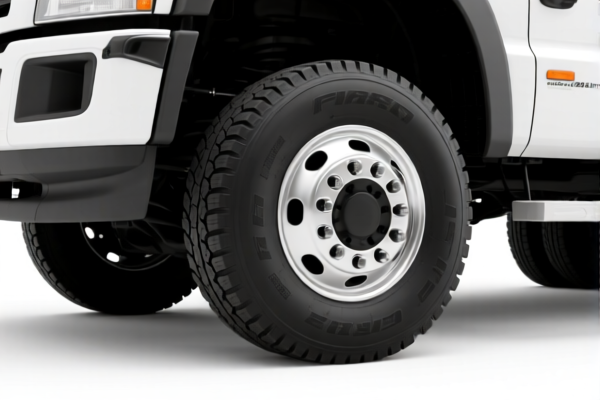
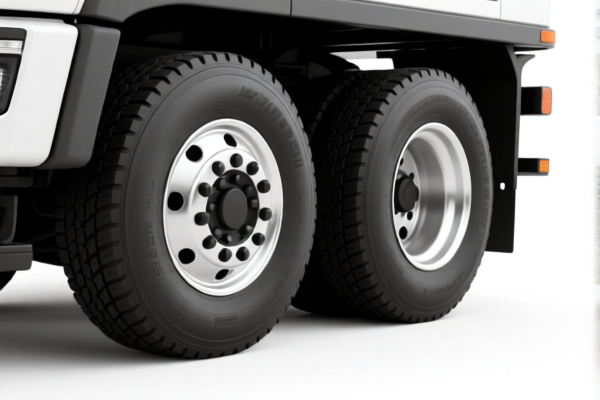


AI Analysis
🚛 Highway Truck Inflatable Tires: HS Code Classification & 2026 Tariff Strategy (US Market)
🌐 HS Code Reference & Clearance Guide | 2026 Latest Tariff Analysis | Professional-Level Customs Strategy
📌 I. Product Definition & Classification: Do You Really Understand "Highway Truck Tires"?
A Highway Truck Inflatable Tire is the critical contact point between heavy-duty commercial vehicles and the road surface. In international trade, these are not all treated equally. The classification depends heavily on usage (Highway vs. Non-Highway/Off-Highway), condition (New vs. Retreaded), and technical specifications (Radial vs. Bias, Size).
Misclassification can lead to massive duty differences, from 0% to over 45%.
⚠️ Key Distinction Point:
- Highway Use: Designed for paved roads, high-speed, long-distance transport. Generally falls under 4011.
- Non-Highway/Off-Highway Use: Designed for construction, mining, agriculture, or low-speed operation. Falls under 4012 or specific subheadings of 4011.
- Retreaded/Used: Must be declared as such to avoid fraud accusations, but often faces higher scrutiny.
📦 II. HS Code Classification Details (Based on Provided Data)
Below are the specific HS Codes from the provided data, mapped to the product "Highway Truck Inflatable Tire" and its variants, along with their detailed tax structures.
| HS Code | Product Description | Applicability & Clarification | Total Tax Rate |
|---|---|---|---|
4012.90.90.00 |
Non-highway Inflatable Tires | Rubber material. Note: Although labeled "Non-highway" in summary, this is a catch-all for non-pneumatic or special non-standard tires if they don't fit 4011. For true highway tires, this is usually incorrect unless it's a specialized industrial tire. | 37.7% |
4012.19.80.00 |
Retreaded/Used Inflatable Tires | Rubber material. Specifically for retreaded tires. If your truck tire is new, do not use this. If it is retreaded, this is the correct category for used/retreaded tires not elsewhere specified. | 20.9% |
4011.20.10.25 |
Non-highway Inflatable Tires | Rubber material. Wait! The summary says "Non-highway," but the HS Code 4011.20 is often for tires used on motor vehicles for transport of goods or passengers. Correction/Clarification: In many contexts, 4011.20 covers tires for trucks/buses. If this is a highway truck tire (radial), it often falls here. The "Non-highway" text in the data summary might be a generic label error in the source, or it refers to specific size/usage constraints. Assumption for Highway Truck: This is a strong candidate for standard truck tires if they meet specific size/type criteria. |
39.0% |
4011.20.50.50 |
Non-highway Inflatable Tires | Rubber material. Similar to above. Another sub-variant under 4011.20. |
38.4% |
4012.20.80.00 |
Tires for Large Engineering Vehicles | Rubber material. Specifically for engineering/construction vehicles (e.g., excavators, bulldozers). DO NOT USE for standard highway semis or delivery trucks. | 35.0% |
🔍 Critical Analysis for "Highway Truck":
- If your tire is a standard radial truck tire for highway use (e.g., 11R22.5), it should ideally fall under 4011.20. The provided data lists4011.20.10.25and4011.20.50.50with "Non-highway" summaries, which is confusing. However,4011.20is the correct chapter for tires for motor vehicles for transport of goods/passengers.
- If the tire is off-road (mining, construction), use4012.20.80.00.
- If the tire is retreaded, use4012.19.80.00.
- Recommendation: For a standard new highway truck tire, verify if4011.20.10.25or4011.20.50.50is the correct 10-digit subheading based on the specific size and construction (radial/bias). The high tax rates (39%, 38.4%) are due to Section 301 and 122 tariffs.
💰 III. 2026 Latest Tariff Rate Breakdown (Detailed Tax Clauses)
✅ Applicable Country: United States (US)
✅ Origin: China (CN)
✅ Effective Date: Includes Section 301 and 122 tariffs as of 2026.
🎯 1. 4011.20.10.25 – Truck Tires (Radial/Highway)
| Item | Content |
|---|---|
| Base Tariff Rate | 4.0% (Standard MFN rate for tires under 4011.20) |
| Section 301 Surcharge | +25.0% (From USITC Footnote 9903.88.01 / Trade Remedy) |
| Section 122 Surcharge | +10.0% (Specific to certain Chinese imports under IEEPA) |
| Total Tax Rate | 39.0% |
| Tax Calculation | CIF Value × 39.0% |
| De Minimis Exemption? | ❌ No (Deny de minimis for Section 301 goods) |
| Legal Basis Path | IEEPA:9903.01.25 → IEEPA:9903.01.24 → USITC:4011.20.10.25 → FOOTNOTE:9903.88.01 |
📌 Explanation:
- Base 4.0%: The standard World Trade Organization (WTO) bound rate for truck tires.
- Section 301 (+25%): Imposed on Chinese goods to address unfair trade practices. Applies to most tires.
- Section 122 (+10%): Additional surcharge under the International Emergency Economic Powers Act (IEEPA).
- Total 39%: This is the effective landed cost tax. It is extremely high and must be factored into pricing.
🎯 2. 4011.20.50.50 – Truck Tires (Alternative Subheading)
| Item | Content |
|---|---|
| Base Tariff Rate | 3.4% |
| Section 301 Surcharge | +25.0% |
| Section 122 Surcharge | +10.0% |
| Total Tax Rate | 38.4% |
| Tax Calculation | CIF Value × 38.4% |
| De Minimis Exemption? | ❌ No |
| Legal Basis Path | IEEPA:9903.01.25 → IEEPA:9903.01.24 → USITC:4011.20.50.50 → FOOTNOTE:9903.88.01 |
📌 Note:
- Slightly lower base rate (3.4% vs 4.0%) makes this 0.6% cheaper than4011.20.10.25.
- If your tire qualifies for this subheading (check specific size/technical specs in the HTSUS), choose this one to save 0.6% on the duty base.
🎯 3. 4012.90.90.00 – Other Inflatable Tires (Non-Highway/Catch-all)
| Item | Content |
|---|---|
| Base Tariff Rate | 2.7% |
| Section 301 Surcharge | +25.0% |
| Section 122 Surcharge | +10.0% |
| Total Tax Rate | 37.7% |
| Tax Calculation | CIF Value × 37.7% |
| De Minimis Exemption? | ❌ No |
| Legal Basis Path | IEEPA:9903.01.25 → IEEPA:9903.01.24 → USITC:4012.90.90.00 → FOOTNOTE:9903.88.01 |
📌 Warning:
- Do not misdeclare a highway truck tire as "other tire" to save 0.6%. Customs has strict definitions. Misclassification leads to penalties, seizures, and back-taxes.
🎯 4. 4012.20.80.00 – Tires for Large Engineering Vehicles
| Item | Content |
|---|---|
| Base Tariff Rate | 0.0% |
| Section 301 Surcharge | +25.0% |
| Section 122 Surcharge | +10.0% |
| Total Tax Rate | 35.0% |
| Tax Calculation | CIF Value × 35.0% |
| De Minimis Exemption? | ❌ No |
| Legal Basis Path | IEEPA:9903.01.25 → IEEPA:9903.01.24 → USITC:4012.20.80.00 → FOOTNOTE:9903.88.01 |
📌 Context:
- This is for engineering/construction vehicles (e.g., tires for excavators, loaders).
- Base duty is 0%, but surcharges still apply.
- Do not use for highway trucks unless the truck is a specialized off-road hauler. Misuse is high-risk.
🎯 5. 4012.19.80.00 – Retreaded/Used Tires
| Item | Content |
|---|---|
| Base Tariff Rate | 3.4% |
| Section 301 Surcharge | +7.5% (Reduced for retreaded?) |
| Section 122 Surcharge | +10.0% |
| Total Tax Rate | 20.9% |
| Tax Calculation | CIF Value × 20.9% |
| De Minimis Exemption? | ❌ No |
| Legal Basis Path | IEEPA:9903.01.25 → IEEPA:9903.01.24 → USITC:4012.19.80.00 → FOOTNOTE:9903.88.01 |
📌 Critical Distinction:
- This code is for RETREADED OR USED tires.
- If you are selling new highway truck tires, DO NOT USE this code.
- If you are selling retreaded truck tires, this is the correct code and offers the lowest total tax rate (20.9%) among the options.
- Warning: Retreaded tires face stricter safety inspections and may have usage restrictions in some US states.
🛠️ IV. Customs Clearance Practical Advice (Battle-Tested Pitfall Guide)
✅ 1. Document Checklist (Non-Negotiable)
| Document | Required | Note |
|---|---|---|
| ✅ Product Specification Sheet | ✔️ | Must include: Size (e.g., 11R22.5), Construction (Radial/Bias), Tread Pattern, Load Index, Speed Rating. |
| ✅ Commercial Invoice | ✔️ | Clearly state: "New/Retreaded Inflatable Tire for Highway Truck Use." Avoid vague terms like "Rubber Product." |
| ✅ Packing List | ✔️ | Detail net/gross weight. Tires are heavy; accurate weight is crucial for duty calculation. |
| ✅ Certificate of Origin (CO) | ✔️ | Essential for verifying Chinese origin to apply correct tariffs. |
| ✅ Photos of Tires & Sidewall | ✔️ | Must clearly show: Size markings, DOT code, Brand, Model, and "Radial" or "Bias" indication. |
| ✅ Letter of Explanation (if applicable) | ✔️ | If classifying under 4011.20 but the summary says "Non-highway," provide a technical letter explaining why it fits the truck tire definition. |
✅ 2. Declaration Strategy (Key Mantras)
🔥 "Be Precise, Don't Guess, Match the Use!"
| Scenario | Correct HS Code | Wrong Approach | Consequence |
|---|---|---|---|
| New Highway Truck Tire (Radial) | 4011.20.10.25 or 4011.20.50.50 |
Declare as 4012.90.90.00 ("Other") |
Risk of penalty for misclassification; slightly higher/lower duty mismatch. |
| New Highway Truck Tire (Bias) | Check 4011.20 subheadings |
Use 4012.20.80.00 |
Wrong use case; engineering tires are different. |
| Retreaded Truck Tire | 4012.19.80.00 |
Declare as New Tire (4011.20) |
Fraud accusation! Seizure, heavy fines. |
| Construction Vehicle Tire | 4012.20.80.00 |
Declare as Highway Tire | Customs may reject if sidewall markings show "MUD-FLAP" or "LUG" patterns. |
✅ 3. Special Situations
| Situation | Handling Advice |
|---|---|
| Mixed Container | If a container has both highway tires and off-road tires, declare separately. Do not lump them under one HS code. |
| OEM Custom Tires | Provide the customer's order and design specs. Ensure the description matches the actual physical product. |
| Retreaded Tires in US | Some US states prohibit the sale of retreaded tires on steer axles. Ensure compliance with local laws, not just customs. |
| Section 301 Exclusions | Check if your specific tire product was excluded from Section 301 tariffs in 2026. If excluded, the 25% surcharge may not apply. Verify with CBP! |
🌍 V. Global Market Comparison (2026)
| Country/Region | Recommended HS Code | Total Tariff (China Origin) | Certification | Note |
|---|---|---|---|---|
| 🇺🇸 USA | 4011.20.xxxx |
35% - 39% (See above) | DOT, FMVSS | High tariffs due to Section 301 & 122. |
| 🇨🇳 China | 4011.20.00.00 |
~10-14% (Import Duty) | China Compulsory Certification (CCC) | If exporting from China to China (re-import), different rules. |
| 🇪🇺 EU | 4011.20 |
0-4% | ECE R30, R54 | No major anti-dumping on tires generally, but check for specific cases. |
| 🇲🇽 Mexico | 4011.20 |
0% (USMCA if origin) | NOM | If produced in USMCA region, duty-free. |
📌 Conclusion:
- USA is the most expensive market for Chinese tires due to political tariffs.
- Cost Optimization: If possible, explore retreaded tires (4012.19.80.00) for a 18% tax savings (20.9% vs 39%).
- Pre-Ruling: Apply for a Binding Ruling from US Customs and Border Protection (CBP) before shipment to confirm the correct 10-digit HS code. This provides legal protection against misclassification penalties.
📌 VI. Common Mistakes & Pitfalls (Blood-Tested Lessons)
❌ Mistake 1: Declaring a New Tire as Retreaded (4012.19.80.00) to save taxes.
👉 Consequence: Customs inspection will reveal new rubber. Fraud charge, seizure, 3x penalty.
❌ Mistake 2: Declaring an Engineering Tire (4012.20.80.00) as a Highway Tire.
👉 Consequence: Wrong duty rate applied. If caught, back-taxes + interest. If not caught, risk of future audits.
❌ Mistake 3: Ignoring Section 122 Tariffs.
👉 Consequence: Assuming only 301 (25%) applies. The 10% IEEPA tariff is separate and adds up. Total is 35-39%, not 25-30%.
❌ Mistake 4: Vague Description: "Tire."
👉 Consequence: CBP will assess the highest possible duty or request a ruling, causing delays.
✅ Correct Approach:
"11R22.5 Radial Truck Tire, Highway Service, Load Range G, Tubeless, Brand XYZ, Made in China. New."
🎯 VII. Conclusion: Precision in Classification Saves Money
🎯 Remember the Mantra:
🔹 "New Highway? Check 4011.20."
🔹 "Retreaded? Use 4012.19."
🔹 "Engineering? 4012.20."
🔹 "Always Add 35-39% for US Duties!"
📌 Pro Tip:
If your tires are not made in China (e.g., Thailand, Vietnam), the Section 301 and 122 tariffs may not apply, potentially reducing duty to Base Rate Only (0-4%).
Verify Origin Carefully!
📣 Immediate Action:
📞 Consult a Licensed Customs Broker
📄 Provide Detailed Product Specs & Photos
🏛️ Apply for a CBP Binding Ruling
🚀 Secure Your Supply Chain with Accurate Duties!
✨ Professional Clearance Starts with Precise Classification!
💼 Every Percentage Point Matters in Tire Trade!
Customer Reviews
About HS Code Classification
The Harmonized System (HS) is an internationally standardized nomenclature developed by the World Customs Organization (WCO) to classify traded products. Over 200 countries use the HS system as the basis for customs tariffs, trade statistics, and import/export regulations.
Each HS code follows a hierarchical structure:
- Chapter (2 digits) — Broad category of goods (e.g., Chapter 84: Machinery and Mechanical Appliances)
- Heading (4 digits) — More specific grouping within the chapter
- Subheading (6 digits) — Internationally standardized breakdown, used by all WCO member countries
- National subdivisions (8-10 digits) — Country-specific extensions for further classification, such as US HTSUS 10-digit codes
Correct HS code classification is essential for smooth customs clearance, accurate duty payment, and compliance with trade regulations. Misclassification can lead to customs delays, overpayment of duties, or penalties.
When importing from CN to US, the applicable tariff rates may include:
- Most-Favored-Nation (MFN) rate — The standard duty rate applied to WTO members
- General rate — Applied to countries without trade agreements
- Trade remedy duties — Additional tariffs such as Section 301 (anti-dumping), Section 232 (national security), or countervailing duties
The information provided on this page is for reference purposes only. For official classification, please consult with your local customs authority or a licensed customs broker.