Hiking Backpack
CN → US| HS Code | Tariff Rate | Origin | Destination | Doc |
|---|---|---|---|---|
| 9506996040 | 21.5% | CN | US | Official Doc |
| 4202923120 | 52.6% | CN | US | Official Doc |
| 4202923900 | 52.6% | CN | US | Official Doc |
| 4202923120 | 52.6% | CN | US | Official Doc |
| 4202923900 | 52.6% | CN | US | Official Doc |
Product Images

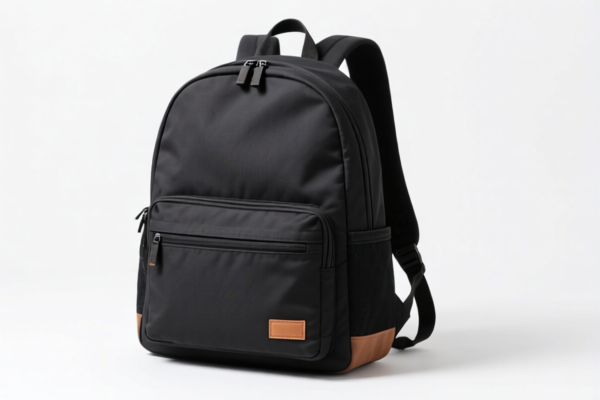
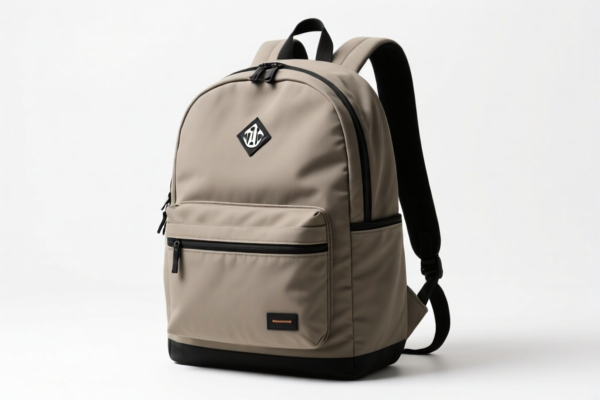
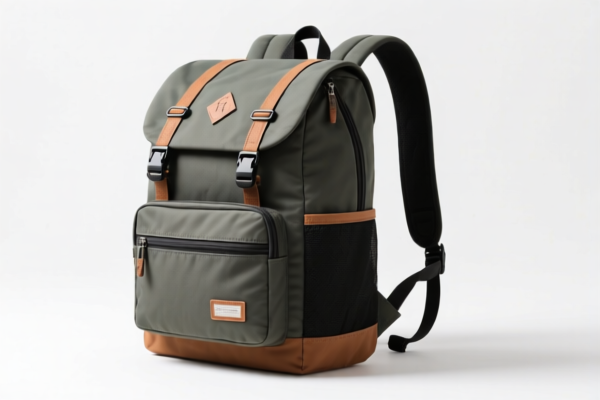
AI Analysis
🎒 Hiking Backpacks: The Ultimate Gear Classification & Tariff Guide
🌐 HS Code Reference & Customs Clearance Strategy | 2026 Updated Tariff Analysis | Professional通关 Tactics
📌 Section 1: Product Definition & Classification: Do You Really Know Your "Hiking Backpack"?
Hiking backpacks are essential outdoor equipment used for trekking, mountaineering, and adventure sports. In international trade, they fall under two primary HS Code categories, depending on design intent, material composition, and functional features:
- Category A (Outdoor Sports Equipment): Backpacks specifically designed for mountaineering or extreme outdoor use, often with specialized suspension systems, hydration ports, and rugged materials.
- Category B (Travel/Sports Bags): General-purpose backpacks for travel or casual sports, made from synthetic fibers (polyester/nylon) but not classified as "sports equipment" under specific subheadings.
⚠️ Critical Classification Rule:
- If the backpack is explicitly marketed for mountaineering with technical features (e.g., ice axe loops, crampon compatibility) → HS 9506.99.60.40 (Outdoor Sports Equipment).
- If the backpack is a general travel/sports bag made of synthetic textiles → HS 4202.92.31.20 / 4202.92.39.00 (Travel/Sports Bags).
📦 Section 2: HS Code Classification Details (2026 Tariff Authority对照)
| HS Code | Product Description | Application Scenario | Material/Feature Match |
|---|---|---|---|
9506.99.60.40 |
Outdoor sports equipment, including hiking/mountaineering backpacks | Mountaineering, extreme trekking | ✅ Technical outdoor gear |
4202.92.31.20 |
Travel/sports bags, synthetic fiber (polyester/nylon) | General travel, casual hiking | ✅ Synthetic material, non-specialized |
4202.92.39.00 |
Sports bags, textile material (nylon/polyester) | Adventure sports, light trekking | ✅ Textile-based, general use |
🔍 Key Differentiator:
- HS 9506.99.60.40 is for specialized mountaineering gear (e.g., high-capacity packs with ice axes, crampons).
- HS 4202.92.31.20 / 4202.92.39.00 are for general travel/sports bags (no specialized outdoor features).
💰 Section 3: 2026 Tariff Rate Breakdown (Including附加税, Policy Surcharges)
✅ Target Market: United States (US)
✅ Origin: China (CN)
✅ Effective Date: 2025 November 10 onwards (including subsequent imports)
🎯 1. HS 9506.99.60.40 – Hiking/Mountaineering Backpacks (Specialized Outdoor Gear)
| Item | Content |
|---|---|
| Base Duty Rate | 4.0% (ad valorem) |
| Additional Duty (Section 301) | +7.5% (China-specific surcharge) |
| 122-Clause Duty | +10% (China-origin surcharge) |
| Total Duty Rate | 21.5% |
| Tax Calculation | CIF Value × 21.5% |
| De Minimis Exemption | ❌ Not Eligible (deny_de_minimis) |
| Legal Basis Path | USITC:9506.99.60.40 → Section 301:7.5% → 122-Clause:10% |
📌 Explanation:
- Base duty (4%) is the standard tariff for outdoor sports equipment.
- Section 301 (7.5%) is a China-specific surcharge under U.S. trade policy.
- 122-Clause (10%) is an additional surcharge for China-origin goods.
- Total 21.5% is moderate but still requires careful cost planning.
🎯 2. HS 4202.92.31.20 – Travel/Sports Bags (Synthetic Fiber)
| Item | Content |
|---|---|
| Base Duty Rate | 17.6% (ad valorem) |
| Additional Duty (Section 301) | +25.0% (China-specific surcharge) |
| 122-Clause Duty | +10% (China-origin surcharge) |
| Total Duty Rate | 52.6% |
| Tax Calculation | CIF Value × 52.6% |
| De Minimis Exemption | ❌ Not Eligible (deny_de_minimis) |
| Legal Basis Path | USITC:4202.92.31.20 → Section 301:25% → 122-Clause:10% |
📌 Critical Note:
- Base duty (17.6%) is already high for general bags.
- Section 301 (25%) is a heavy surcharge for China-origin goods.
- 122-Clause (10%) adds another layer of cost.
- Total 52.6% is extremely high and may render the product uncompetitive in the U.S. market.
🎯 3. HS 4202.92.39.00 – Sports Bags (Textile Material)
| Item | Content |
|---|---|
| Base Duty Rate | 17.6% (ad valorem) |
| Additional Duty (Section 301) | +25.0% (China-specific surcharge) |
| 122-Clause Duty | +10% (China-origin surcharge) |
| Total Duty Rate | 52.6% |
| Tax Calculation | CIF Value × 52.6% |
| De Minimis Exemption | ❌ Not Eligible (deny_de_minimis) |
| Legal Basis Path | USITC:4202.92.39.00 → Section 301:25% → 122-Clause:10% |
📌 Same as Above:
- Identical tariff structure to HS 4202.92.31.20.
- No material-based distinction in tariffs – both synthetic and textile bags face 52.6% total duty.
🛠️ Section 4: Customs Clearance Practical Tips (Avoid Pitfalls)
✅ 1. Documentation Checklist (Non-Negotiable)
| Document | Required | Purpose |
|---|---|---|
| ✅ Product Specification Sheet | ✔️ | Includes capacity, material type, intended use (mountaineering vs. travel) |
| ✅ Material Certification | ✔️ | Proof of synthetic/textile composition (polyester/nylon) |
| ✅ Product Photos | ✔️ | Clear images showing design features (e.g., ice axe loops, hydration ports) |
| ✅ Third-Party Test Reports | ✔️ | ISO, CE, RoHS (if applicable) |
| ✅ Commercial Invoice | ✔️ | Must specify "Hiking Backpack" + HS Code + CIF Value |
| ✅ Certificate of Origin (CO) | ✔️ | Critical for proving China origin (to avoid misclassification) |
| ✅ Packing List | ✔️ | Details on packaging, weight, and contents |
✅ 2. Declaration Strategy (Key Mnemonic)
🔥 "Specialized = 9506, General = 4202; Material Doesn’t Matter, Intent is Key!"
| Scenario | Correct Declaration | Wrong Approach |
|---|---|---|
| Mountaineering Backpack (ice axe loops, high capacity) | 9506.99.60.40 |
Misdeclare as 4202.92.31.20 → 52.6% vs. 21.5% |
| General Travel Backpack (no specialized features) | 4202.92.31.20 or 4202.92.39.00 |
Overdeclare as "mountaineering" → 21.5% vs. 52.6% |
| Mixed Use (some features for hiking, some for travel) | Split Declaration (if applicable) | Single declaration → Risk of audit + penalties |
✅ 3. Special Cases Handling
| Scenario | Recommendation |
|---|---|
| OEM Customization | Provide customer order + design specs to justify "mountaineering" classification |
| Hydration Bladder Included | Still classify under 9506.99.60.40 if intended for outdoor sports |
| Lightweight Travel Bags | Use 4202.92.31.20/39.00 – NOT 9506.99.60.40 |
| Military/Industrial Use | May qualify for special exemptions – contact CBP for pre-ruling |
🌍 Section 5: Global Market Comparison (2026 Tariff Snapshot)
| Country/Region | Recommended HS Code | Total Duty | Certification Required | Notes |
|---|---|---|---|---|
| 🇺🇸 USA | 9506.99.60.40 |
21.5% | No special certs | 52.6% for general bags |
| 🇨🇳 China | 9506.99.60.40 |
5% | CCC + RoHS | No additional surcharges |
| 🇪🇺 EU | 4202.92.31.20 |
0% (if CE) | CE + ErP | No Section 301/122-Clause |
| 🇦🇺 Australia | 4202.92.39.00 |
5% | RCM | No surcharges |
| 🇯🇵 Japan | 4202.92.31.20 |
0% | PSE | No surcharges |
📌 Key Insight:
- USA is the only market with high surcharges (Section 301 + 122-Clause).
- China-origin goods face 21.5% vs. 52.6% – critical to classify correctly!
- EU/Australia/Japan have lower or zero tariffs – ideal for export if possible.
📌 Section 6: Common Mistakes & Avoidance Guide (Lessons Learned)
❌ Mistake 1: Declaring a general travel backpack as 9506.99.60.40
👉 Consequence: Overpayment of 31.1% (52.6% vs. 21.5%) + potential audit.
❌ Mistake 2: Declaring a mountaineering backpack as 4202.92.31.20
👉 Consequence: Underpayment → back taxes + fines + customs hold.
❌ Mistake 3: Not providing material certification
👉 Consequence: CBP may reclassify as "synthetic" → 52.6% vs. 21.5%.
❌ Mistake 4: Using vague terms like "Hiking Bag" without HS Code
👉 Consequence: CBP may assign worst-case rate (52.6%).
✅ Correct Approach:
"Mountaineering Backpack, 60L, Nylon/Polyester Blend, with Ice Axe Loops & Hydration Port, Model XYZ, ISO Certified"
🎯 Section 7: Conclusion: Precise Classification = Cost Savings!
🎯 Remember:
🔹 "Specialized Outdoor Gear = 9506 (21.5%), General Bags = 4202 (52.6%)"
🔹 "Material Doesn’t Matter – Intention is King!"
🔹 "One Wrong Code = 31.1% More Cost!"
📌 Pro Tip:
If your backpacks are originally manufactured in Vietnam, Mexico, or Thailand, you may qualify for IEEPA exemptions – reduce rates to 0%~5%!
Recommendation: Apply for Advance Ruling from CBP to avoid surprises.
📣 Take Action Now:
📞 Contact professional customs brokers + Provide product specs + Apply for HS Code pre-ruling
🚀 Ensure your hiking backpacks clear customs smoothly, save costs, and boost profits!
✨ Professional Classification Starts Here!
💼 Every dollar saved on tariffs is pure profit!
Customer Reviews
About HS Code Classification
The Harmonized System (HS) is an internationally standardized nomenclature developed by the World Customs Organization (WCO) to classify traded products. Over 200 countries use the HS system as the basis for customs tariffs, trade statistics, and import/export regulations.
Each HS code follows a hierarchical structure:
- Chapter (2 digits) — Broad category of goods (e.g., Chapter 84: Machinery and Mechanical Appliances)
- Heading (4 digits) — More specific grouping within the chapter
- Subheading (6 digits) — Internationally standardized breakdown, used by all WCO member countries
- National subdivisions (8-10 digits) — Country-specific extensions for further classification, such as US HTSUS 10-digit codes
Correct HS code classification is essential for smooth customs clearance, accurate duty payment, and compliance with trade regulations. Misclassification can lead to customs delays, overpayment of duties, or penalties.
When importing from CN to US, the applicable tariff rates may include:
- Most-Favored-Nation (MFN) rate — The standard duty rate applied to WTO members
- General rate — Applied to countries without trade agreements
- Trade remedy duties — Additional tariffs such as Section 301 (anti-dumping), Section 232 (national security), or countervailing duties
The information provided on this page is for reference purposes only. For official classification, please consult with your local customs authority or a licensed customs broker.