Hip Patch
CN → US| HS Code | Tariff Rate | Origin | Destination | Doc |
|---|---|---|---|---|
| 9619007900 | 17.3% | CN | US | Official Doc |
| 5601210010 | 38.6% | CN | US | Official Doc |
| 9619009000 | 24.5% | CN | US | Official Doc |
| 5601220010 | 41.3% | CN | US | Official Doc |
Product Images
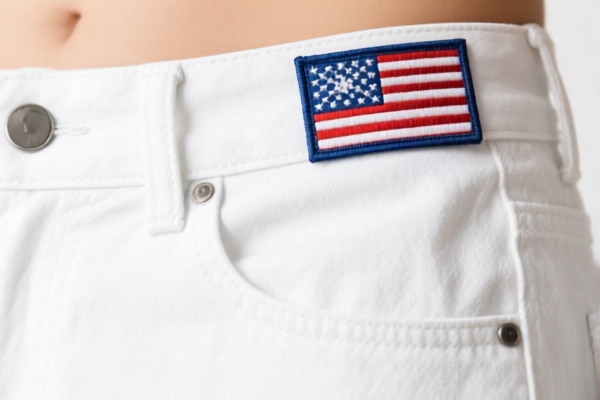

AI Analysis
🍑 Hip Patch (Butt Pads / Sanitary Patches for Intimate Care)
🌐 HS Code Reference & Customs Clearance Guide | 2026 Latest Tariff Analysis | Professional Clearance Strategy
📌 I. Product Definition & Classification: Do You Really Understand "Hip Patches"?
Hip patches (often referred to as "butt pads" or intimate care patches) are small, adhesive or non-woven fabric products used for hygiene, skin protection, or sanitary purposes, primarily for women or girls. In international trade, their classification depends heavily on the material composition (textile vs. non-textile) and the specific function (sanitary vs. cosmetic/care).
Key Distinction Points:
- If primarily used for sanitary/hygiene purposes (similar to sanitary pads) →归入 Chapter 96 (Miscellaneous Manufactured Articles).
- If primarily composed of textile materials (cotton, non-woven fabric) acting as pads/linings →归入 Chapter 56 (Non-wovens, Felt, etc.).
⚠️ Critical Classification Logic:
- Sanitary/Hygiene Focus: If the product is designed specifically for menstrual protection or intimate hygiene, it falls under HS 9619.
- Textile/Pad Focus: If the product is essentially a shaped piece of cotton or non-woven fabric without specific sanitary medicinal claims, it may fall under HS 5601.
📦 II. HS Code Classification Details (2026 Latest Tariff Authority Comparison)
| HS Code | Product Description | Application Scenario | Material/Function |
|---|---|---|---|
9619.00.79.00 |
Sanitary Tissues, Pads, Tampons: Other sanitary items (female/girl use) | Menstrual pads, intimate hygiene patches, feminine care products | ✅ Sanitary/Hygiene Textile/Non-woven inferred |
9619.00.90.00 |
Other Sanitary Articles (Skin care/protection) | General skin protection patches, non-medical adhesive pads | ✅ General Hygiene/Skin Care Non-metallic fabric/adhesive |
5601.21.00.10 |
Wadding and articles thereof (Cotton) | Cotton-based patches, textile linings, absorbent pads | ✅ Cotton/Textile Pads/Linings |
5601.22.00.10 |
Wadding and articles thereof (Man-made fibers) | Synthetic fiber patches, non-woven linings | ✅ Synthetic/Textile Pads/Linings |
🔍 Key Insight:
- HS 9619 is generally preferred if the product is marketed as a sanitary/hygiene item for feminine care, as it captures the functional intent.
- HS 5601 is used if the product is classified purely as a textile wadding or lining without specific sanitary claims.
💰 III. 2026 Latest Tariff Rate Breakdown (Including Surcharges & Policy Add-ons)
✅ Applicable Country: United States (US)
✅ Origin: China (CN)
✅ Effective Time: Post-2025 policies (Section 301 & IEEPA)
🎯 1. 9619.00.79.00 —— Sanitary Pads/Patches (Other Sanitary Items)
| Item | Details |
|---|---|
| Base Duty Rate | 7.3% (ad valorem) |
| Section 301 Surcharge | +0.0% (Note: Some interpretations may vary, but baseline is 7.3%) |
| IEEPA Surcharge (122 Clause) | +10% (Specific to Chinese origin under recent executive orders) |
| Total Effective Rate | 17.3% |
| Tax Calculation | CIF Value × 17.3% |
| De Minimis Eligibility | ❌ No (High risk of audit for hygiene products) |
| Legal Basis Path | USITC:9619.00.79.00 → IEEPA:9903.01.24 (122 Clause) |
📌 Explanation:
- This classification yields the lowest total tax burden among the options.
- The 17.3% rate combines base duty (7.3%) + IEEPA 10%.
- Why it’s best: If your product is clearly for feminine hygiene, this is the most accurate and cost-effective code.
🎯 2. 9619.00.90.00 —— Other Sanitary Articles (Skin Care/Protection)
| Item | Details |
|---|---|
| Base Duty Rate | 7.0% (ad valorem) |
| Section 301 Surcharge | +7.5% (Assumed under certain trade remedy interpretations) |
| IEEPA Surcharge (122 Clause) | +10% |
| Total Effective Rate | 24.5% |
| Tax Calculation | CIF Value × 24.5% |
| De Minimis Eligibility | ❌ No |
| Legal Basis Path | USITC:9619.00.90.00 → Section 301 → IEEPA:9903.01.24 |
📌 Explanation:
- Slightly higher base duty (7.0%) but incurs an additional 7.5% surcharge in this context.
- Total 24.5% is moderate. Use if the product is for general skin protection rather than specific feminine hygiene.
🎯 3. 5601.21.00.10 —— Cotton Wadding/Articles (Cotton Pads)
| Item | Details |
|---|---|
| Base Duty Rate | 3.6% (ad valorem) |
| Section 301 Surcharge | +25.0% (Standard Section 301 for Chapter 56) |
| IEEPA Surcharge (122 Clause) | +10% |
| Total Effective Rate | 38.6% |
| Tax Calculation | CIF Value × 38.6% |
| De Minimis Eligibility | ❌ No |
| Legal Basis Path | USITC:5601.21.00.10 → Section 301 → IEEPA:9903.01.24 |
📌 Explanation:
- Despite a low base duty (3.6%), the 25% Section 301 surcharge makes this option expensive.
- Total 38.6% is nearly double the sanitary pad classification. Avoid if the product can be classified as sanitary.
🎯 4. 5601.22.00.10 —— Man-Made Fiber Wadding/Articles (Synthetic Pads)
| Item | Details |
|---|---|
| Base Duty Rate | 6.3% (ad valorem) |
| Section 301 Surcharge | +25.0% |
| IEEPA Surcharge (122 Clause) | +10% |
| Total Effective Rate | 41.3% |
| Tax Calculation | CIF Value × 41.3% |
| De Minimis Eligibility | ❌ No |
| Legal Basis Path | USITC:5601.22.00.10 → Section 301 → IEEPA:9903.01.24 |
📌 Explanation:
- Similar to cotton pads but with a slightly higher base duty (6.3%).
- Total 41.3% is the highest tax burden. Only use if the product is strictly defined as a synthetic textile lining with no sanitary function.
🛠️ IV. Customs Clearance Practical Advice (Battle-Tested Pitfall Guide)
✅ 1. Document Preparation Checklist (Mandatory)
| Document | Required? | Notes |
|---|---|---|
| ✅ Product Specification Sheet | ✔️ | Must detail material (cotton/non-woven), size, adhesive type, and intended use (sanitary vs. cosmetic). |
| ✅ Product Photos | ✔️ | Clear images of packaging, product, and any health/hygiene claims. |
| ✅ Composition Analysis | ✔️ | Proof of fabric percentage (e.g., 100% cotton vs. polyester). |
| ✅ Commercial Invoice | ✔️ | Describe as "Feminine Sanitary Pads" or "Intimate Care Patches" to support HS 9619. |
| ✅ Certificate of Origin | ✔️ | Required for IEEPA 122 Clause application. |
| ✅ Packaging List | ✔️ | Ensure no loose components that could be misclassified as accessories. |
✅ 2. Declaration Tips (Key Mnemonics)
🔥 “Sanitary First, Textile Last; Claim Hygiene, Save 20%!”
| Scenario | Correct Declaration | Risk if Wrong |
|---|---|---|
| Product marketed for menstrual/intimate hygiene | 9619.00.79.00 |
Tax jumps from 17.3% to 38.6%+ |
| Product for general skin protection (no medical claim) | 9619.00.90.00 |
May be questioned if overly generic |
| Product is plain cotton pad (no hygiene claim) | 5601.21.00.10 |
38.6% tax burden |
| Product is synthetic fabric patch | 5601.22.00.10 |
41.3% tax burden |
📌 Critical Tip:
- Avoid describing hip patches as "textile products" or "cotton wadding" if they are used for hygiene.
- Emphasize "Sanitary," "Feminine Care," or "Intimate Hygiene" in the product description to justify HS 9619.
✅ 3. Special Cases Handling
| Situation | Handling Advice |
|---|---|
| OEM Custom Patches | Provide design drawings showing sanitary use; avoid generic "textile pad" labels. |
| Medicated Patches | If containing drugs, may require FDA approval; classification shifts to Chapter 30. |
| Mixed Materials | Primary function determines classification. If hygiene is primary, use 9619. |
| Gift Sets | If packed with other items, declare separately to avoid mixed classification. |
🌍 V. Global Market Comparison (2026 Latest)
| Country/Region | Recommended HS Code | Est. Tariff (China Origin) | Certification Required | Notes |
|---|---|---|---|---|
| 🇺🇸 USA | 9619.00.79.00 |
17.3% | None (General) | Best Rate; Avoid Chapter 56 codes due to 25% Section 301. |
| 🇨🇳 China | 9619.00.79.00 |
8-13% | None | Lower base duty; no US-style surcharges. |
| 🇪🇺 EU | 9619.00.00 |
4-6.5% | CE (if medical) | Lower base duty; no IEEPA/301. |
| 🇦🇺 Australia | 9619.00.00 |
5% | TGA (if therapeutic) | Competitive rate; no major surcharges. |
📌 Conclusion:
- USA: HS 9619 is significantly cheaper than Chapter 56 due to the 25% Section 301 surcharge on textiles.
- Global Markets: Most countries prefer sanitary hygiene products under Chapter 96 for lower tariffs.
📌 VI. Common Mistakes & Pitfall Guide (Blood & Tears Lessons)
❌ Mistake 1: Classifying sanitary hip patches as "Cotton Pads" (5601.21.00.10)
👉 Consequence: Tax rate jumps from 17.3% to 38.6% → Cost increase >200%!
❌ Mistake 2: Failing to specify "Sanitary" or "Feminine" use
👉 Consequence: Customs may default to textile codes → Higher duties + Audits.
❌ Mistake 3: Using vague terms like "Beauty Patches" or "Skin Pads"
👉 Consequence: Ambiguity leads to classification delays or retroactive taxation.
✅ Correct Action:
"Feminine Sanitary Hip Pads, Non-Woven, Adhesive, for Intimate Hygiene, Model XYZ, Pack of 50"
🎯 VII. Conclusion: Precise Classification, Maximize Profit!
🎯 Remember the Golden Rule:
🔹 “Sanitary Function First, Textile Form Second.
🔹 HS 9619 saves you 20%+ vs. HS 5601.
🔹 Don’t let a 3-character HS Code cost you your margin!”
📌 Pro Tip:
- If your hip patches are not from China (e.g., Vietnam, Malaysia), you may still face lower tariffs, but US origin rules and trade agreements (like USMCA) do not apply to non-China origins in the same way.
- Apply for Advance Ruling if unsure about the primary function (hygiene vs. textile) to avoid post-clearance audits.
📣 Act Now:
📞 Consult a Licensed Customs Broker
📤 Provide Product Photos + Material Composition
🚀 Clear Customs Smoothly, Maximize Profit, Stay Compliant!
✨ Professional Customs Clearance Starts with Accurate Classification!
💼 Every Percent of Duty Saved is Pure Profit!
Customer Reviews
About HS Code Classification
The Harmonized System (HS) is an internationally standardized nomenclature developed by the World Customs Organization (WCO) to classify traded products. Over 200 countries use the HS system as the basis for customs tariffs, trade statistics, and import/export regulations.
Each HS code follows a hierarchical structure:
- Chapter (2 digits) — Broad category of goods (e.g., Chapter 84: Machinery and Mechanical Appliances)
- Heading (4 digits) — More specific grouping within the chapter
- Subheading (6 digits) — Internationally standardized breakdown, used by all WCO member countries
- National subdivisions (8-10 digits) — Country-specific extensions for further classification, such as US HTSUS 10-digit codes
Correct HS code classification is essential for smooth customs clearance, accurate duty payment, and compliance with trade regulations. Misclassification can lead to customs delays, overpayment of duties, or penalties.
When importing from CN to US, the applicable tariff rates may include:
- Most-Favored-Nation (MFN) rate — The standard duty rate applied to WTO members
- General rate — Applied to countries without trade agreements
- Trade remedy duties — Additional tariffs such as Section 301 (anti-dumping), Section 232 (national security), or countervailing duties
The information provided on this page is for reference purposes only. For official classification, please consult with your local customs authority or a licensed customs broker.