Hole Punch Card Positioning Paper
CN → US| HS Code | Tariff Rate | Origin | Destination | Doc |
|---|---|---|---|---|
| 4823903100 | 35.0% | CN | US | Official Doc |
| 4823400000 | 35.0% | CN | US | Official Doc |
| 4821904000 | 35.0% | CN | US | Official Doc |
| 4821902000 | 35.0% | CN | US | Official Doc |
| 4811412100 | 35.0% | CN | US | Official Doc |
Product Images
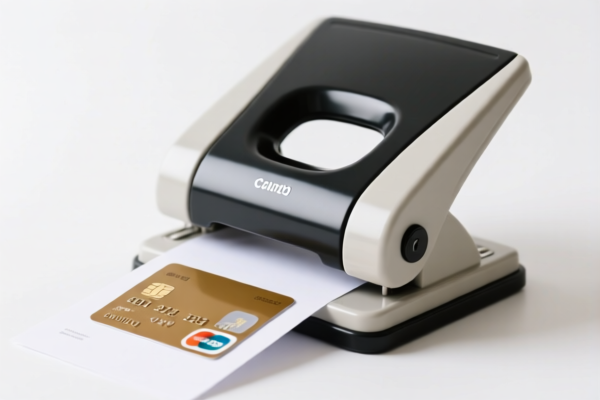
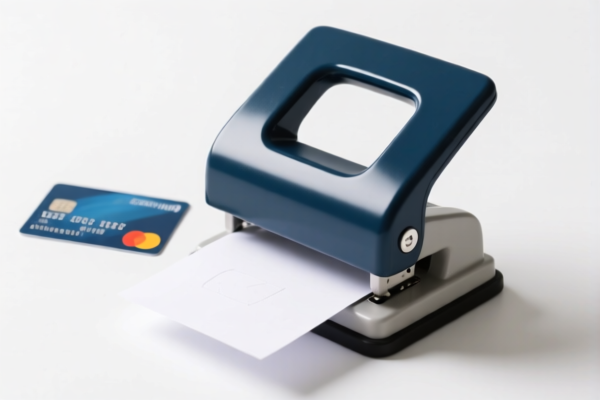
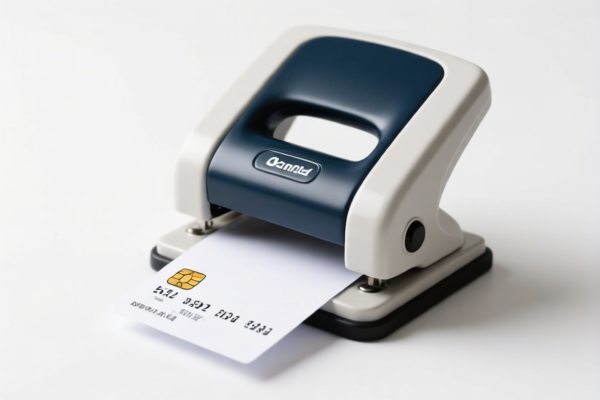
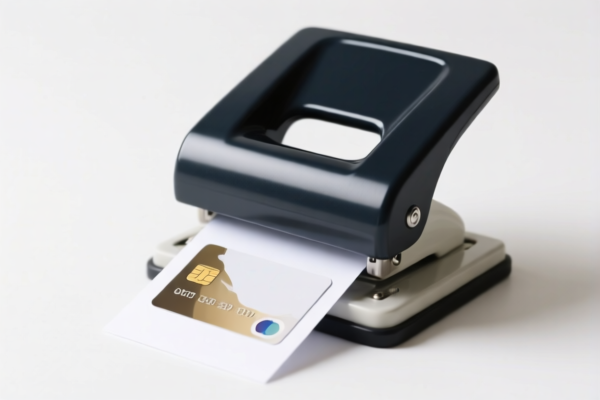
AI Analysis
📇 Hole Punch Card Positioning Paper (Paper Templates for Hole Punching)
🌐 HS Code Reference & Customs Clearance Guide | 2024 Latest Tariff Analysis | Professional-Level Entry Strategy
📌 I. Product Definition & Classification: Do You Really Understand "Positioning Paper"?
Hole Punch Card Positioning Paper is a specialized auxiliary material used in the manufacturing or customization of punched cards, labels, or electronic components. It acts as a template, guide, or carrier for creating precise holes or alignments. In international trade, it is broadly classified based on its physical form (sheet vs. card) and functional attribute (plain paper vs. coated/adhesive).
Core Distinction: * As a Machine Accessory (Consumable): If primarily used as a replaceable part/consumable for a hole-punching machine → Considered an accessory or part of the machine. * As a Plain Paper Product: If used purely as a substrate for printing or simple punching → Classified under Chapter 48 (Paper/Paperboard). * As a Label/Tag Carrier: If the end-use is for labeling or identification → Classified under Heading 4821. * As a Coated/Decorative Paper: If treated with adhesives, coatings, or decorative layers → Classified under Heading 4811.
⚠️ Critical Classification Point: - If the product is simply uncoated/plain paper in card or sheet form → 4823.90 or 4821.90. - If it has adhesive backing, coatings, or specific processing for decoration/adhesion → 4811.41. - Misclassification Risk: Declaring a coated/adhesive paper as "plain paper" may lead to underpayment of duties, as 4811 often carries higher regulatory scrutiny or different baseline rates in some jurisdictions (though here, all listed codes share the same total tax structure).
📦 II. HS Code Classification Details (Authoritative Reference)
| HS Code | Product Description | Application Scenario | Key Characteristics |
|---|---|---|---|
4823.90.31.00 |
Perforated positioning paper, plain paper | Consumable for hole-punching machines; generic paper templates | Plain paper, specific shape (perforated/card), used as machine accessory/consumable |
4823.40.00.00 |
Paper cards, cut to shape | Card-form positioning guides, simple paper cards | Card form, plain paper, cut to specific shape, not necessarily perforated for machine use |
4821.90.40.00 |
Other labels, paper carriers | Positioning paper used as a label carrier or adhesive-backed guide | Label-like, may include adhesive or be used for tagging/labeling applications |
4821.90.20.00 |
Labels, paper supports | Positioning paper acting as a paper-based label or tag | Label/Tag, plain paper support, used for identification or positioning in labeling processes |
4811.41.21.00 |
Coated/decorative paper with adhesive | Positioning paper with adhesive backing, special coatings, or decorative finishes | Processed/Coated, adhesive or decorative property, more complex manufacturing |
🔍 Key Reminder: - All codes above share the same total tax rate (35%) for imports from China to the US in this dataset, but the legal classification differs significantly for regulatory compliance. - 4811.41.21.00 implies a higher level of processing (coating/adhesion), which may require additional safety or chemical compliance documents. - 4823.90.31.00 is the most specific for "perforated positioning" as a machine consumable. - 4821.90 series is best if the paper is used in labeling processes or has adhesive properties.
💰 III. 2024 Latest Tariff Rate Breakdown (Including Additional Duties & Policy Surcharges)
✅ Applicable Country: United States (US)
✅ Origin: China (CN)
✅ Effective Time: Ongoing (Based on current Section 301 & IEEPA regulations)
🎯 1. 4823.90.31.00 – Perforated Positioning Paper (Plain Paper, Machine Consumable)
| Item | Content |
|---|---|
| Base Duty Rate | 0% (ad valorem) |
| Section 301 Additional Duty | +25% (USITC Footnote 9903.48.23) |
| IEEPA Additional Duty | +10% (Targeting Chinese/ Hong Kong products) |
| Total Effective Duty | 35.0% |
| Tax Calculation | CIF Value × 35% |
| De Minimis Exemption | ❌ Not Eligible (deny_de_minimis) |
| Legal Basis Path | IEEPA:9903.01.25 → USITC:4823.90.31.00 → FOOTNOTE:9903.48.23 |
📌 Explanation:
- The 25% Section 301 duty applies to specific paper products from China. - The 10% IEEPA duty is a separate surcharge under the International Emergency Economic Powers Act. - Total 35% is a high duty for simple paper goods, reflecting trade tensions. - No de minimis exemption: Small shipments cannot avoid this tax.
🎯 2. 4823.40.00.00 – Paper Cards (Plain Paper, Card Form)
| Item | Content |
|---|---|
| Base Duty Rate | 0% |
| Section 301 Additional Duty | +25% |
| IEEPA Additional Duty | +10% |
| Total Effective Duty | 35.0% |
| Tax Calculation | CIF × 35% |
| De Minimis Exemption | ❌ Not Eligible |
| Legal Basis Path | IEEPA:9901.25 → USITC:4823.40.00.00 → FOOTNOTE:9903.48.23 |
📌 Note:
- Same tax structure as above. - If the "card" is not perforated but simply cut, this code applies. - Ensure the description clearly states "Plain Paper Card" to avoid confusion with "Plastic Cards" (which may have different codes).
🎯 3. 4821.90.40.00 & 4821.90.20.00 – Labels / Paper Carriers
| Item | Content |
|---|---|
| Base Duty Rate | 0% |
| Section 301 Additional Duty | +25% |
| IEEPA Additional Duty | +10% |
| Total Effective Duty | 35.0% |
| Tax Calculation | CIF × 35% |
| De Minimis Exemption | ❌ Not Eligible |
| Legal Basis Path | IEEPA:9903.01.24 → USITC:4821.90.40.00 / 4821.90.20.00 → FOOTNOTE:9903.48.23 |
📌 Note:
- These codes are appropriate if the paper is used in labeling processes or has adhesive properties (even if mild). - If the product is a simple plain paper template with no adhesive, 4823 is more accurate. Misclassifying plain paper as "label" may trigger audits.
🎯 4. 4811.41.21.00 – Coated/Decorative/Adhesive Paper
| Item | Content |
|---|---|
| Base Duty Rate | 0% |
| Section 301 Additional Duty | +25% |
| IEEPA Additional Duty | +10% |
| Total Effective Duty | 35.0% |
| Tax Calculation | CIF × 35% |
| De Minimis Exemption | ❌ Not Eligible |
| Legal Basis Path | IEEPA:9903.01.25 → USITC:4811.41.21.00 → FOOTNOTE:9903.48.23 |
📌 Note:
- Use this code only if the paper has been coated, laminated, or has an adhesive backing. - This category involves chemical processing, which may require additional MSDS (Material Safety Data Sheet) or environmental compliance documents for customs clearance.
🛠️ IV. Customs Clearance Operational Advice (Practical Pitfall Avoidance)
✅ 1. Required Documentation Checklist (All Items Mandatory)
| Document | Required | Explanation |
|---|---|---|
| ✅ Product Specification Sheet | ✔️ | Must detail material (plain paper vs. coated), dimensions, perforation type, and intended use (machine consumable vs. label). |
| ✅ Product Photos (Clear & Detailed) | ✔️ | Show texture, perforations, and any adhesive/coating. Label should show "Plain Paper" or "Coated Paper" clearly. |
| ✅ Commercial Invoice | ✔️ | Description must match HS code: e.g., "Plain Paper Hole Punch Template" vs. "Adhesive Backed Label Paper". |
| ✅ Packing List | ✔️ | Confirm weight, quantity, and packaging type. |
| ✅ MSDS (If Coated/Adhesive) | ✔️ | Mandatory for 4811.41.21.00 to prove chemical safety and compliance. |
| ✅ Proof of Non-Plastic Content | ✔️ | Crucial to distinguish from plastic cards (which fall under different chapters like 39). |
✅ 2. Declaration Tips (Key Mantra)
🔥 "Plain Paper to 4823, Label to 4821, Coated to 4811, Accurate Description Saves Time!"
| Scenario | Correct Declaration | Incorrect Declaration |
|---|---|---|
| Simple perforated paper for machine | "Plain Paper Perforated Template, No Adhesive" | "Cardboard" or "Plastic Sheet" |
| Paper with adhesive backing | "Adhesive Backed Paper Label/Carrier" | "Plain Paper" |
| Paper with coating/lamination | "Coated Decorative Paper" | "Plain Paper" |
| Generic card shape | "Cut Paper Card, Plain" | "ID Card" (implies plastic/electronic) |
✅ 3. Special Circumstances Handling
| Situation | Handling Advice |
|---|---|
| OEM Custom Perforation | Provide design files + sample photos to prove it's a "consumable" and not a "machine part" (which may have different HS codes). |
| Mixed Packaging (Paper + Plastic) | Do not mix. Declare paper separately. If plastic is included, it may be classified under Chapter 39, leading to complex duty calculations. |
| Adhesive Paper Claims | Ensure the adhesive is paper-compatible. If it's a "sticker," classify under 4821.90.40.00 or similar adhesive label codes. |
| High-Value Coated Paper | For 4811.41.21.00, prepare environmental compliance certificates (e.g., FSC for sustainable sourcing) to speed up clearance. |
🌍 V. Global Market Comparison (2024 Latest)
| Country/Region | Recommended HS Code | Duty Rate (China Origin) | Certification Requirements | Notes |
|---|---|---|---|---|
| 🇺🇸 USA | 4823.90.31.00 (Plain) |
35% (0% Base + 25% 301 + 10% IEEPA) | None for plain paper; MSDS for coated | High duty environment. No de minimis exemption. |
| 🇨🇳 China | 4823.90.31.00 |
5% - 8% (Variable) | None | Lower duty, but export duties may apply. |
| 🇪🇺 EU | 4823.90.90 (Similar) |
6.5% | CE (if adhesive contains hazardous chemicals) | No Section 301 equivalent. |
| 🇬🇧 UK | 4823.90.90 |
6.5% | UKCA (if adhesive) | Post-Brexit rules apply. |
| 🇦🇺 Australia | 4823.90.00 |
5% | None | Favorable trade agreement potential. |
📌 Conclusion:
- The US is the most challenging market for Chinese-origin paper products due to the 35% effective duty rate. - Cost-saving Tip: If possible, source paper products from Vietnam, Thailand, or Malaysia to potentially avoid Section 301 duties (subject to rules of origin). - Pre-Ruling: Apply for an Advance Ruling from US Customs (CBP) if the product's classification is ambiguous (e.g., is it a label or plain paper?).
📌 VI. Common Mistakes & Pitfall Guide (Lessons Learned)
❌ Mistake 1: Declaring "Coated Paper" as "Plain Paper"
👉 Consequence: Customs may classify it under 4811, requiring additional chemical compliance docs → Delay + Possible Penalty.
❌ Mistake 2: Using "Card" to describe plain paper
👉 Consequence: May be confused with "Plastic ID Cards" (Chapter 39) → Wrong HS Code + Higher Duty.
❌ Mistake 3: Ignoring "Adhesive" properties
👉 Consequence: If the paper has backing, it should be 4821.90. If declared as plain paper, customs may reclassify → 35% Duty applies anyway, but risk of audit increases.
❌ Mistake 4: Assuming De Minimis Exemption
👉 Consequence: Small shipments (<$800) do NOT qualify for US IEEPA/Section 301 exemptions for Chinese goods → Full 35% tax still applies.
✅ Correct Practice:
"Plain Paper Perforated Template, 100% Wood Pulp, No Adhesive, No Coating, Model: PT-001, Made in China"
🎯 VII. Conclusion: Professional Declaration, Cost Control, Efficiency!
🎯 Remember the Mantra:
🔹 "Plain Paper: 4823, 35% Duty. Adhesive: 4821. Coated: 4811. No De Minimis for China!"
🔹 "HS Code Accuracy Saves Time, but 35% is a Hard Cost in the US!"
📌 Pro Tip:
If your product is not made in China (e.g., Made in Vietnam, Thailand, India), you may avoid the 25% Section 301 duty, reducing the total tax to 10% (IEEPA only) or 0% (if eligible under other agreements).
Verify Country of Origin carefully!
📣 Immediate Action:
📞 Contact a licensed customs broker + Provide Product Samples + Photos + Apply for HS Code Advance Ruling (US CBP).
🚀 Ensure your "Hole Punch Card Positioning Paper" clears customs smoothly, avoids penalties, and protects your margins!
✨ Professional Customs Clearance Starts with Precise Classification!
💼 Every Dollar of Duty is a Cost Worth Minimizing!
Customer Reviews
About HS Code Classification
The Harmonized System (HS) is an internationally standardized nomenclature developed by the World Customs Organization (WCO) to classify traded products. Over 200 countries use the HS system as the basis for customs tariffs, trade statistics, and import/export regulations.
Each HS code follows a hierarchical structure:
- Chapter (2 digits) — Broad category of goods (e.g., Chapter 84: Machinery and Mechanical Appliances)
- Heading (4 digits) — More specific grouping within the chapter
- Subheading (6 digits) — Internationally standardized breakdown, used by all WCO member countries
- National subdivisions (8-10 digits) — Country-specific extensions for further classification, such as US HTSUS 10-digit codes
Correct HS code classification is essential for smooth customs clearance, accurate duty payment, and compliance with trade regulations. Misclassification can lead to customs delays, overpayment of duties, or penalties.
When importing from CN to US, the applicable tariff rates may include:
- Most-Favored-Nation (MFN) rate — The standard duty rate applied to WTO members
- General rate — Applied to countries without trade agreements
- Trade remedy duties — Additional tariffs such as Section 301 (anti-dumping), Section 232 (national security), or countervailing duties
The information provided on this page is for reference purposes only. For official classification, please consult with your local customs authority or a licensed customs broker.