Holiday Door Ornament Pair
CN → US| HS Code | Tariff Rate | Origin | Destination | Doc |
|---|---|---|---|---|
| 3926400010 | 15.3% | CN | US | Official Doc |
| 3926400090 | 15.3% | CN | US | Official Doc |
| 9505101000 | 17.5% | CN | US | Official Doc |
| 9505102500 | 10.0% | CN | US | Official Doc |
| 4420904500 | 39.3% | CN | US | Official Doc |
| 4420906500 | 35.0% | CN | US | Official Doc |
Product Images

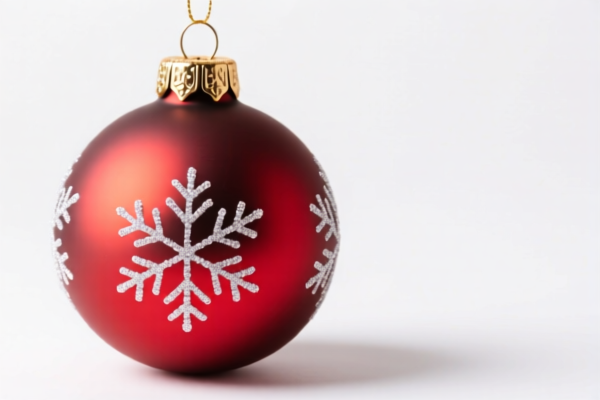
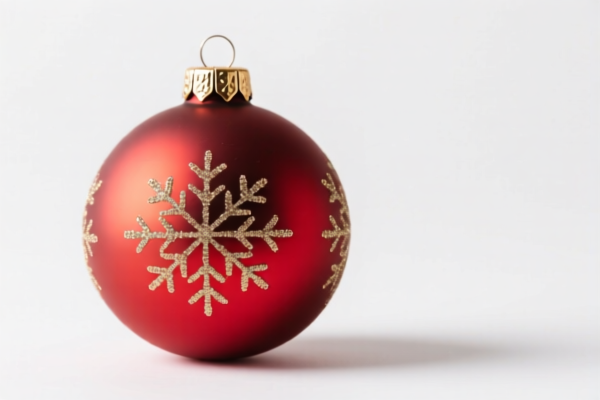

AI Analysis
🎄 Holiday Door Ornament Pair (Christmas Decorations)
🌐 HS Code Reference & Customs Clearance Guide | 2026 Latest Tariff Analysis | Professional Entry Strategy
📌 I. Product Definition & Classification: What Exactly Are "Holiday Door Ornament Pairs"?
Holiday Door Ornament Pairs typically refer to decorative items intended for Christmas festivities, specifically designed to adorn doors, windows, or festive entrances. These items fall under the broader category of Christmas ornaments (festive articles).
In international trade, these are generally classified based on their material composition. The key distinction is whether they are made of glass, which carries a higher tariff burden due to specific trade measures, or other materials (such as plastic, wood, metal, or textile), which may enjoy lower or zero tariffs depending on the specific subheading.
⚠️ Key Distinction Point:
- If the ornaments are primarily glass (e.g., glass baubles, glass icicles, glass snowflakes) →归入 9505.10.10.00
- If the ornaments are other materials (plastic, wood, fabric, etc.) →归入 9505.10.25.00
- Do NOT confuse with wooden jewelry boxes or plastic statuettes (which have completely different headings and higher tariffs).
📦 II. HS Code Classification Details (2026 Latest Tariff Authority Comparison)
| HS Code | Product Description | Applicable Scenario | Material Type |
|---|---|---|---|
9505.10.10.00 |
Christmas ornaments: Of glass | Glass balls, glass stars, glass door hangers, blown glass decorations | 🟢 Glass |
9505.10.25.00 |
Christmas ornaments: Other | Plastic, wooden, fabric, metal, or mixed-material ornaments | 🔵 Non-Glass (Plastic/Wood/etc.) |
🔍 Critical Reminder:
- The term "Holiday Door Ornament" is a functional description. Customs classifies by material.
- If your product is a pair (left and right matching decor), it is still treated as a set of ornaments under heading 9505.
- Avoid misclassifying wooden decorative items as "Jewelry Boxes" (Heading 4420) unless they are specifically functional boxes. Wooden ornaments go to 9505.10.25.00 (0% tariff), whereas wooden boxes go to 4420.90.xxxx (up to 29.3% tariff).
💰 III. 2026 Latest Tariff Rate Detailed Breakdown (Including Additional Duties & Policy Add-ons)
✅ Applicable Country: United States (US)
✅ Origin: China (CN)
✅ Effective Time: 2025/2026 Import Period
🎯 1. 9505.10.10.00 —— Christmas Ornaments: Of Glass
| Item | Content |
|---|---|
| Base Tariff | 0.0% (ad valorem) |
| Additional Tariff (Section 301 / USITC) | +7.5% |
| Total Tariff | 7.5% |
| Tax Calculation | CIF Value × 7.5% |
| De Minimis Exemption | ❌ Not Eligible (Generally, Section 301 goods are not exempt under de minimis if specific thresholds are met, but standard practice for commercial imports applies full duty). |
| Legal Basis Path | HTSUS: 9505.10.10.00 → Section 301 Footnote 9903.88.01 (Applies to specific holiday goods from China) |
📌 Explanation:
- Glass Christmas ornaments from China are subject to a 7.5% additional tariff under Section 301.
- While the base rate is 0%, the 7.5% add-on makes the total cost significant.
- This applies to all glass festive articles, including door ornaments.
🎯 2. 9505.10.25.00 —— Christmas Ornaments: Other
| Item | Content |
|---|---|
| Base Tariff | 0.0% (ad valorem) |
| Additional Tariff (Section 301 / USITC) | 0.0% |
| Total Tariff | 0.0% |
| Tax Calculation | CIF Value × 0.0% |
| De Minimis Exemption | ✅ Eligible (If value is under $800 per shipment, often duty-free and tax-free under Section 321). |
| Legal Basis Path | HTSUS: 9505.10.25.00 → No Section 301 list inclusion for this specific subheading |
📌 Explanation:
- Non-glass Christmas ornaments (plastic, wood, fabric, etc.) currently enjoy a 0% total tariff rate from China.
- This is a major cost advantage for non-glass holiday decor.
- Strategic Tip: If possible, design door ornaments using plastic, resin, or fabric instead of glass to avoid the 7.5% tariff and potential Section 301 scrutiny.
⚠️ Warning: Do Not Misclassify as Wooden Boxes!
Many importers mistakenly classify wooden decorative items as "Wooden Boxes" (Heading 4420) to avoid other codes, but this is incorrect and expensive.
| HS Code | Product Description | Total Tariff | Risk |
|---|---|---|---|
4420.90.45.00 |
Wooden Jewelry/Tool Boxes (Not Lined) | 29.3% (4.3% Base + 25% Additional) | ❌ High Error Risk: If you are importing wooden ornaments, not boxes. |
4420.90.65.00 |
Wooden Jewelry/Tool Boxes (Lined) | 25.0% (0% Base + 25% Additional) | ❌ High Error Risk: If you are importing wooden ornaments, not boxes. |
📌 Advice:
- If your "Door Ornament Pair" is made of wood and is purely decorative (e.g., carved wood angels, snowmen), it belongs in 9505.10.25.00 (0% tariff).
- It only belongs in 4420 if it is a functional box for storing jewelry, cigars, or tools.
- Misclassification Penalty: Fines for false declaration can be 2–5x the duty owed.
🛠️ IV. Customs Clearance Practical Advice (Real-World Pitfall Avoidance)
✅ 1. Documentation Checklist (Non-Negotiable)
| Document | Required | Note |
|---|---|---|
| ✅ Product Specification Sheet | ✔️ | Must clearly state material composition (e.g., "80% Plastic, 20% Ribbon"). Avoid vague terms like "Holiday Decor." |
| ✅ Commercial Invoice | ✔️ | Describe as "Christmas Door Ornament Pair (Plastic)" or "Glass Christmas Bauble." |
| ✅ Photos | ✔️ | Clear images showing the item, especially if it has mixed materials. |
| ✅ Material Breakdown | ✔️ | If mixed material (e.g., Wood base + Glass head), customs may look at the essential character. |
✅ 2. Classification Strategy (Key Mantra)
🔥 "Glass = 7.5%, Plastic/Wood = 0%, Boxes = 25%+!"
| Scenario | Correct HS Code | Tariff | Error Consequence |
|---|---|---|---|
| Glass Door Ornaments | 9505.10.10.00 |
7.5% | None if correct |
| Plastic/Resin Door Ornaments | 9505.10.25.00 |
0.0% | Safe |
| Wooden Door Ornaments (Carved) | 9505.10.25.00 |
0.0% | Do NOT use 4420 |
| Wooden Ornament Box | 4420.90.65.00 |
25.0% | Only if it's a box |
✅ 3. Special Cases & Handling
| Scenario | Recommendation |
|---|---|
| Mixed Material Ornaments (e.g., Glass star with metal hook) | If glass is the essential character, use 9505.10.10.00. If the hook is minor, it may still be classified as glass. Provide detailed photos. |
| Plastic Ornaments with Glass Parts | If the plastic body is the main structure, use 9505.10.25.00. This is often cheaper due to 0% tariff. |
| De Minimis (Section 321) | For shipments under $800 USD, non-glass ornaments (9505.10.25.00) are typically duty-free and tax-free. Glass ornaments (9505.10.10.00) may still be subject to duties but are often cleared quickly. |
| OEM Custom Ornaments | Ensure the design is not copied. Provide proof of origin if claiming non-China origin for lower tariffs. |
🌍 V. Global Market Customs Comparison (2026 Latest)
| Country/Region | Recommended HS Code | Tariff (China Origin) | Certification Required | Notes |
|---|---|---|---|---|
| 🇺🇸 USA | 9505.10.10.00 (Glass) |
7.5% | CPSIA (if for kids), ASTM F963 | High scrutiny on material |
| 🇺🇸 USA | 9505.10.25.00 (Non-Glass) |
0.0% | CPSIA, ASTM F963 | Best Cost Option |
| 🇪🇺 EU | 9505.10 |
0% - 5% | CE, EN71 | Lower tariffs than US |
| 🇨🇳 China | 9505.10 |
0% - 10% | CCC (if electrical) | Import duty varies |
| 🇬🇧 UK | 9505.10 |
0% - 5% | UKCA, EN71 | Post-Brexit rules apply |
📌 Conclusion:
- USA is the only major market with explicit 7.5% additional tariffs on glass Christmas ornaments from China.
- Plastic/Resin/Fabric ornaments are tariff-free in the US, making them highly competitive for "Holiday Door Ornament Pairs."
📌 VI. Common Mistakes & Pitfall Avoidance (Lessons Learned)
❌ Mistake 1: Classifying Wooden Door Ornaments as 4420.90.65.00 (Wooden Boxes)
👉 Consequence: Pay 25% tariff instead of 0%.
✅ Fix: Classify as 9505.10.25.00 (Christmas Ornaments).
❌ Mistake 2: Using "Glass" description for Resin/Polymer ornaments
👉 Consequence: Pay 7.5% instead of 0%.
✅ Fix: Accurately identify material. Resin is not glass.
❌ Mistake 3: Ignoring Material Composition on the Invoice
👉 Consequence: Customs delays, requests for additional info, potential reclassification.
✅ Fix: Clearly state "Plastic" or "Glass" in the product description.
🎯 VII. Conclusion: Smart Classification Saves Money!
🎯 Remember the Mantra:
🔹 "Glass = 7.5%, Plastic/Wood = 0%, Boxes = 25%+!"
🔹 "For Holiday Door Ornaments, choose Non-Glass Materials to Avoid US Tariffs!"
📌 Pro Tip:
If your supplier offers glass and plastic versions of the same design, choose the plastic/resin version for US imports to save 7.5% on every unit.
For shipments under $800, non-glass ornaments are effectively duty-free, maximizing your margin.
📣 Immediate Action:
📞 Confirm material composition with your supplier.
🚀 Update HS Code to9505.10.25.00for non-glass items to optimize costs.
📄 Ensure your Commercial Invoice explicitly states "Christmas Ornaments" and "Material: [Plastic/Wood/Glass]".
✨ Professional Clearance, Precise Classification!
💼 Every cent saved on duty is pure profit!
Customer Reviews
About HS Code Classification
The Harmonized System (HS) is an internationally standardized nomenclature developed by the World Customs Organization (WCO) to classify traded products. Over 200 countries use the HS system as the basis for customs tariffs, trade statistics, and import/export regulations.
Each HS code follows a hierarchical structure:
- Chapter (2 digits) — Broad category of goods (e.g., Chapter 84: Machinery and Mechanical Appliances)
- Heading (4 digits) — More specific grouping within the chapter
- Subheading (6 digits) — Internationally standardized breakdown, used by all WCO member countries
- National subdivisions (8-10 digits) — Country-specific extensions for further classification, such as US HTSUS 10-digit codes
Correct HS code classification is essential for smooth customs clearance, accurate duty payment, and compliance with trade regulations. Misclassification can lead to customs delays, overpayment of duties, or penalties.
When importing from CN to US, the applicable tariff rates may include:
- Most-Favored-Nation (MFN) rate — The standard duty rate applied to WTO members
- General rate — Applied to countries without trade agreements
- Trade remedy duties — Additional tariffs such as Section 301 (anti-dumping), Section 232 (national security), or countervailing duties
The information provided on this page is for reference purposes only. For official classification, please consult with your local customs authority or a licensed customs broker.