Holiday Napkins
CN → US| HS Code | Tariff Rate | Origin | Destination | Doc |
|---|---|---|---|---|
| 4818300000 | 35.0% | CN | US | Official Doc |
| 4818900080 | 17.5% | CN | US | Official Doc |
| 6302591020 | 22.6% | CN | US | Official Doc |
| 6302593020 | 26.3% | CN | US | Official Doc |
| 4823901000 | 35.0% | CN | US | Official Doc |
| 4823690040 | 35.0% | CN | US | Official Doc |
Product Images
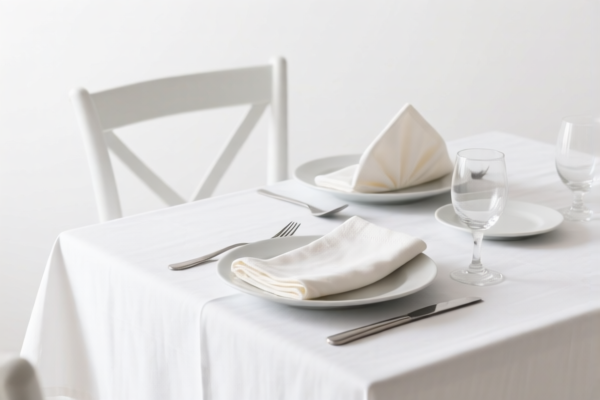
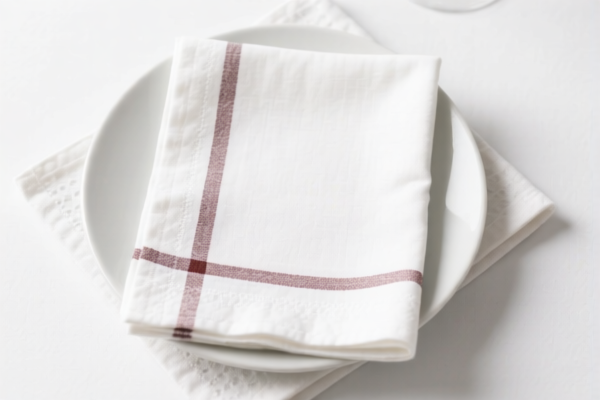
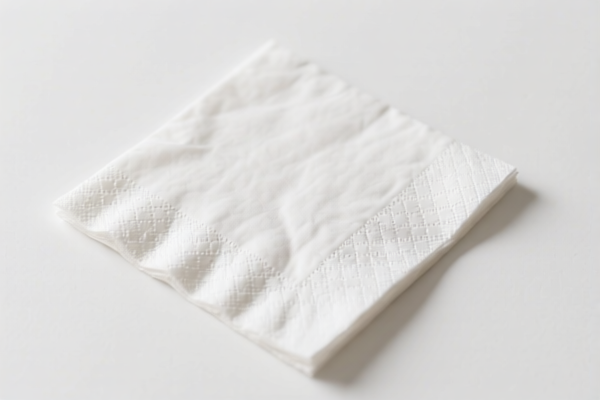
AI Analysis
🎉 Holiday Napkins (Decorative Table Linens for Festive Occasions)
🌐 HS Code Reference & Customs Clearance Guide | 2026 Latest Tariff Analysis | Professional Strategy for Festive Textiles
📌 One, Product Definition and Classification: What Exactly Are "Holiday Napkins"?
Holiday napkins are specialized table linens designed for festive occasions such as Christmas, Thanksgiving, Halloween, or birthdays. In international trade, they are classified based on their material composition and functional nature. The critical distinction lies in whether they are made from paper-based materials or textile fabrics.
⚠️ Key Distinction Point:
- If made from paper pulp, cellulose wadding, or webs of cellulose fibers (disposable, non-woven, or paper-based) → Classified under Chapter 48 (Paper Products).
- If made from flax, cotton, polyester, or other textile materials (reusable, woven, knitted, or non-woven fabric) → Classified under Chapter 63 (Other Made-Up Textile Articles).
📦 Two. HS Code Classification Details (2026 Latest Tariff Authority Comparison)
Based on the provided data, here are the applicable HS Codes for holiday napkins, differentiated by material:
| HS Code | Product Description | Applicable Scenario | Material Type | Tax Rate (Total) |
|---|---|---|---|---|
4818.30.00.00 |
Tablecloths and table napkins, of paper pulp, paper, cellulose wadding or webs of cellulose fibers | Disposable festive napkins, paper handkerchiefs, holiday-themed paper linens | 📄 Paper/Paper-Based | 25.0% |
4818.90.00.80 |
Other articles of paper pulp, paper, cellulose wadding or webs of cellulose fibers (Other) | Non-standard paper napkins, paper table covers not specifically listed as "tablecloths/napkins" in 4818.30 | 📄 Paper/Paper-Based | 7.5% |
4823.90.10.00 |
Other articles of paper pulp, paper, paperboard, etc. (Of paper pulp) | Paper pulp-based decorative items, possibly stiff or molded paper napkins | 📄 Paper Pulp | 25.0% |
4823.69.00.40 |
Trays, dishes, plates, cups... of paper or paperboard | Paper plates/cups used with napkins (if declared separately) | 📄 Paper/Paperboard | 25.0% |
6302.59.10.20 |
Other table linen: Of flax: Tablecloths and napkins Other | Reusable linen napkins made of flax (linen) | 🧵 Textile (Flax) | 0.0% |
6302.59.30.20 |
Other table linen: Of other textile materials: Other Other | Reusable cloth napkins made of cotton, polyester, blended fabrics, etc. | 🧵 Textile (Other) | 0.0% |
🔍 Key Reminder:
- Paper Napkins: Most "holiday napkins" sold for parties are paper-based. They usually fall under 4818.30.00.00 if explicitly described as "table napkins of paper."
- Cloth Napkins: If marketed as "reusable," "linen," "cotton," or "fabric," they fall under Chapter 63 with 0% tariff.
- Do Not Mix Declarations: Declaring paper napkins as textile to avoid tariffs will lead to severe penalties.
💰 Three. 2026 Latest Tariff Rate Details (Including Additional Taxes)
✅ Applicable Country: United States (US)
✅ Origin: China (CN)
✅ Effective Date: 2025/2026 (Subject to current trade policies)
🎯 1. Paper-Based Holiday Napkins (4818.30.00.00)
| Item | Content |
|---|---|
| Base Tariff | 0.0% (Ad Valorem) |
| Section 301 Additional Tariff | +25.0% |
| Total Tariff Rate | 25.0% |
| Tax Calculation | CIF Value × 25% |
| De Minimis Exemption | ❌ Not Applicable (Section 301 goods are excluded from de minimis relief) |
| Legal Basis | USITC HTSUS 4818.30.00.00 + Section 301 Footnotes |
📌 Explanation:
- Although the base tariff is 0%, the 25% Section 301 tariff applies to Chinese-origin paper products.
- High Cost Impact: This makes disposable paper napkins from China significantly more expensive for US importers.
- Clearance Tip: Ensure the commercial invoice clearly states "Paper Napkins" and provides material composition (e.g., "100% Wood Pulp Paper") to justify the HS Code.
🎯 2. Cloth/Textile Holiday Napkins (6302.59.10.20 or 6302.59.30.20)
| Item | Content |
|---|---|
| Base Tariff | 0.0% |
| Section 301 Additional Tariff | 0.0% |
| Total Tariff Rate | 0.0% |
| Tax Calculation | $0 |
| De Minimis Exemption | ✅ Applicable (if under $800 per shipment) |
| Legal Basis | USITC HTSUS 6302.59.xx.xx |
📌 Explanation:
- Textile napkins (cotton, polyester, linen) enjoy 0% tariff under current US-China trade rules for this category.
- Strategic Advantage: Importing reusable cloth napkins avoids the 25% penalty entirely.
- Clearance Tip: Clearly specify the fiber content (e.g., "100% Cotton Napkins") on the invoice. Avoid vague terms like "fabric napkins" without material breakdown.
🎯 3. Other Paper Articles (4818.90.00.80)
| Item | Content |
|---|---|
| Base Tariff | 0.0% |
| Additional Tariff | +7.5% |
| Total Tariff Rate | 7.5% |
| Applicability | Paper items not explicitly classified as "table napkins" (e.g., paper placemats, decorative paper fans) |
🛠️ Four. Customs Clearance Practical Advice (Pitfall Avoidance Guide)
✅ 1. Required Documentation Checklist
| Document | Mandatory? | Description |
|---|---|---|
| ✅ Commercial Invoice | ✔️ | Must specify: "Holiday Napkins," Material (Paper/Cotton), Country of Origin |
| ✅ Packing List | ✔️ | Include net/gross weight, quantity, package dimensions |
| ✅ Product Description | ✔️ | For paper: "Disposable paper napkins, 20x20cm, printed with Christmas pattern." For cloth: "Woven cotton napkins, festive red color, reusable." |
| ✅ Certificate of Origin (CO) | ✔️ | Required for preferential claims (if applicable) |
| ✅ Material Composition Statement | ✔️ | Critical for distinguishing between Chapter 48 and Chapter 63 |
✅ 2. Declaration Tips (Key Mantras)
🔥 "Material First, Use Second, Code Matches, Tariff Clear!"
| Scenario | Correct Declaration | Incorrect Declaration |
|---|---|---|
| Paper Napkins | 4818.30.00.00 - "Paper Table Napkins" |
Misdeclaring as "Textile" to save tax → Fraud |
| Cloth Napkins | 6302.59.30.20 - "Cotton Table Napkins" |
Misdeclaring as "Paper" → Unnecessary 25% tax |
| Mixed Shipment | Separate Lines for Paper and Cloth | Combining paper and cloth in one line → Confusion & Audit |
| Decorative Paper Fans | 4818.90.00.80 (if not napkins) |
Declaring as "Napkins" → Misclassification |
✅ 3. Special Cases & Handling
| Case | Handling Advice |
|---|---|
| Paper Napkins with Foil/Glitter | If >50% by weight/value is paper, still Chapter 48. Declare accurately as "Paper napkins with decorative elements." |
| Cloth Napkins with Embroidery | Still Chapter 63. Embroidery does not change classification. |
| Sample Shipments | If under $800, cloth napkins can enter via Section 321 (De Minimis) with 0% tax. Paper napkins cannot use de minimis due to Section 301. |
| Re-Export | If importing paper napkins, consider Bonded Warehousing if re-exporting to avoid tariffs. |
🌍 Five. Global Market Comparison (2026 Latest)
| Country/Region | Recommended HS Code | Tariff (China Origin) | Key Requirements |
|---|---|---|---|
| 🇺🇸 USA | 4818.30.00.00 (Paper) / 6302.59.30.20 (Cloth) |
25% (Paper) / 0% (Cloth) | Section 301 applies to paper. De minimis excluded for paper. |
| 🇨🇳 China | 4818.30.00.00 / 6302.59.30.20 |
Varies (Usually 5-10%) | Import duties apply. No Section 301. |
| 🇪🇺 EU | 4818.30.00 / 6302.59.00 |
0-6.5% (Paper) / 0-12% (Cloth) | VAT applies. No Section 301 equivalent. |
| 🇬🇧 UK | 4818.30.00 / 6302.59.00 |
0-5% (Paper) / 0-12% (Cloth) | Post-Brexit tariffs apply. |
| 🇨🇦 Canada | 4818.30.00 / 6302.59.00 |
0-5% (Paper) / 0-12% (Cloth) | Most Favored Nation (MFN) rates. |
📌 Conclusion:
- USA is the only major market with a 25% penalty on Chinese paper napkins.
- For US market, cloth napkins are tariff-free (0%), making them more competitive than paper napkins from China.
- Paper napkins face higher costs, so importers may shift sourcing to Vietnam or Mexico to avoid Section 301.
📌 Six. Common Mistakes & Pitfalls (Lessons Learned)
❌ Mistake 1: Declaring paper napkins as "textile napkins" to avoid the 25% tariff.
👉 Consequence: Customs audit, seizure, fines, and blacklisting.
❌ Mistake 2: Not specifying material composition on the invoice.
👉 Consequence: Customs may classify under the highest duty rate or request additional documentation, causing delays.
❌ Mistake 3: Assuming all "napkins" are the same.
👉 Consequence: Mixing paper and cloth in one HS Code line → Misclassification.
❌ Mistake 4: Ignoring Section 301 for paper products.
👉 Consequence: Unexpected 25% tax bill at customs.
✅ Correct Practice:
"Holiday Paper Napkins, 20x20cm, 100% Wood Pulp, Christmas Print, HS Code: 4818.30.00.00"
"Reusable Cotton Holiday Napkins, 30x30cm, Red Embroidery, HS Code: 6302.59.30.20"
🎯 Seven. Conclusion: Smart Classification, Lower Costs!
🎯 Remember the Mantra:
🔹 "Paper = 25% (USA), Cloth = 0% (USA). Material is Key!"
🔹 "De Minimis for Cloth, Not for Paper. Plan Ahead!"
📌 Pro Tip:
If you are importing paper napkins from China to the US, consider:
1. Sourcing from Vietnam/Mexico to avoid Section 301 tariffs.
2. Switching to reusable cloth napkins for the US market to enjoy 0% tariff.
3. Applying for an HTSUS Exclusion if applicable (though rare for consumer goods).
📣 Immediate Action:
📞 Contact a Customs Broker to verify the exact material composition.
📝 Update Your Invoice Template to include "Material: Paper/Cotton" clearly.
🚀 Optimize Your Supply Chain based on tariff differences!
✨ Professional Customs Clearance Starts with Accurate Classification!
💼 Every Dollar Saved in Tariffs is Pure Profit!
Customer Reviews
About HS Code Classification
The Harmonized System (HS) is an internationally standardized nomenclature developed by the World Customs Organization (WCO) to classify traded products. Over 200 countries use the HS system as the basis for customs tariffs, trade statistics, and import/export regulations.
Each HS code follows a hierarchical structure:
- Chapter (2 digits) — Broad category of goods (e.g., Chapter 84: Machinery and Mechanical Appliances)
- Heading (4 digits) — More specific grouping within the chapter
- Subheading (6 digits) — Internationally standardized breakdown, used by all WCO member countries
- National subdivisions (8-10 digits) — Country-specific extensions for further classification, such as US HTSUS 10-digit codes
Correct HS code classification is essential for smooth customs clearance, accurate duty payment, and compliance with trade regulations. Misclassification can lead to customs delays, overpayment of duties, or penalties.
When importing from CN to US, the applicable tariff rates may include:
- Most-Favored-Nation (MFN) rate — The standard duty rate applied to WTO members
- General rate — Applied to countries without trade agreements
- Trade remedy duties — Additional tariffs such as Section 301 (anti-dumping), Section 232 (national security), or countervailing duties
The information provided on this page is for reference purposes only. For official classification, please consult with your local customs authority or a licensed customs broker.