Home Appliance Product Label Paper
CN → US| HS Code | Tariff Rate | Origin | Destination | Doc |
|---|---|---|---|---|
| 4821102000 | 35.0% | CN | US | Official Doc |
| 4821904000 | 35.0% | CN | US | Official Doc |
| 3921904010 | 39.2% | CN | US | Official Doc |
| 4911914040 | 17.5% | CN | US | Official Doc |
| 4911998000 | 17.5% | CN | US | Official Doc |
Product Images
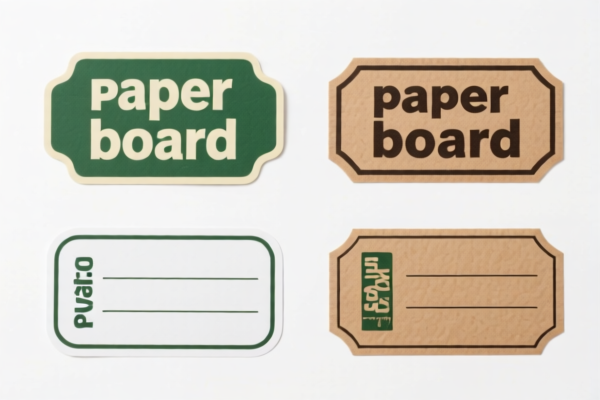
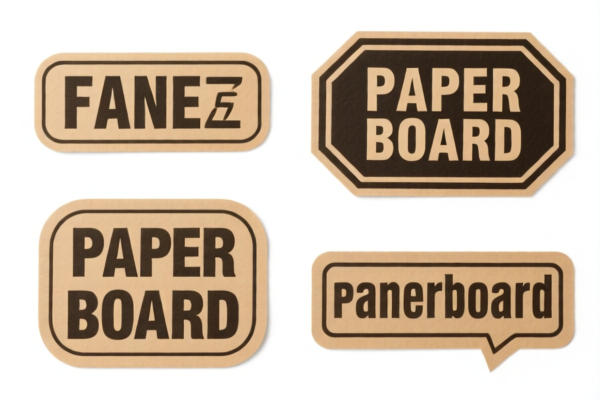
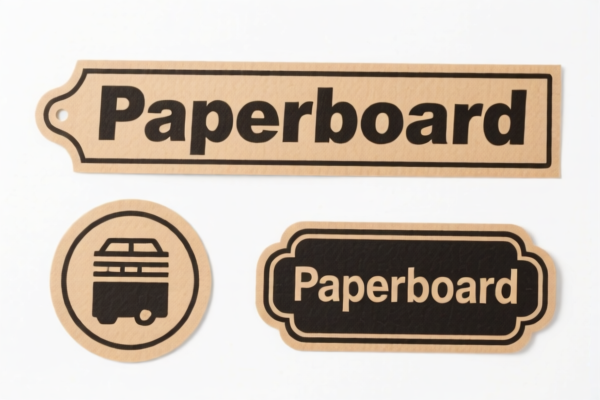
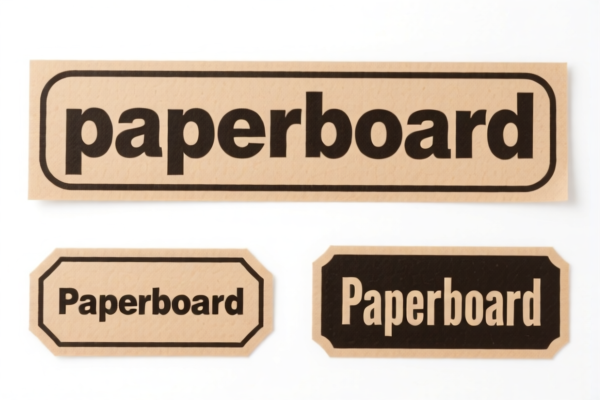
AI Analysis
🏷️ Home Appliance Product Label Paper (Paper Labels for Electronics/Appliances)
🌐 HS Code Reference & Customs Clearance Guide | 2026 Latest Tariff Analysis | Professional Clearance Strategy
📌 I. Product Definition & Classification: Do You Really Understand "Label Paper"?
Home appliance labels are critical compliance and branding components. In international trade, they are not a single unified category but are split based on material composition, function, and printing status. Confusing these can lead to massive tax discrepancies.
In the provided data, four distinct classifications emerge based on specific product attributes:
1. Pure Paper Labels (Generic): Standard paper tags used for identification, made primarily of paper. 2. Printed/Graphic Paper Labels: Labels treated as "printed matter" or design images, often containing complex graphics or safety information. 3. Paper-Enhanced Composite Materials: Labels or backing materials that include paper mixed with other materials (e.g., plastic reinforcement), classified as sheets/films. 4. Other Printed Paper Goods: General printed paper media not fitting specific label definitions.
⚠️ Key Distinction Points:
- If it is pure paper and used strictly for product identification → Likely 4821.10.20.00 or 4821.90.40.00.
- If it is printed with complex graphics (logos, instructions) and considered "printed matter" → Likely 4911.91.40.40 or 4911.99.80.00.
- If it contains non-paper reinforcements (like plastic films or foils) acting as a sheet → Likely 3921.90.40.10.
📦 II. HS Code Classification Details (2026 Latest Tariff Authority Comparison)
| HS Code | Product Description | Applicable Scenario | Material/State Conflict? |
|---|---|---|---|
4821.10.20.00 |
Paper Labels for Electronics: Material is paper, used in the electronics/home appliance field. | Generic product tags, price tags, simple identification labels for appliances. | ❌ No conflict (Pure paper) |
4821.90.40.00 |
Other Paper/Cardboard Labels: Sub-category for "Other," no material or form conflict. | Non-standard shapes, specialty labels, or those not explicitly for electronics. | ❌ No conflict (Pure paper) |
3921.90.40.10 |
Paper-Enhanced Material: Form is sheet/strip, fits description of boards, sheets, films, foils. | Labels with plastic backing/reinforcement, composite materials. | ✅ Has material conflict (Composite) |
4911.91.40.40 |
Printed Paper Labels: Classified under "printed images/designs," not posters. | Labels with detailed graphics, barcodes, safety warnings, branding. | ❌ No conflict (Printed matter) |
4911.99.80.00 |
Other Printed Products: Printed paper media, no material conflict. | Generic printed paper sheets, backing papers, or non-specific printed labels. | ❌ No conflict (Printed media) |
🔍 Key Reminder:
- Pure Paper vs. Printed Matter: While both are paper, 4821 focuses on the object (label/tag), while 4911 focuses on the content (printed image/design). Customs may scrutinize the complexity of printing. - Composite Materials: If your label has a plastic film layer for water resistance, it must move to 3921 or similar plastic codes, not pure paper codes.
💰 III. 2026 Latest Tariff Rate Breakdown (Including Additional Duties & Policy Surcharges)
✅ Applicable Country: United States (US)
✅ Origin: China (CN)
✅ Effective Date: Ongoing (Post-2025 adjustments)
🎯 1. 4821.10.20.00 & 4821.90.40.00 —— Pure Paper Labels
| Item | Content |
|---|---|
| Base Rate | 0.0% (ad valorem) |
| USITC Additional Duty | +25.0% (Section 301 Tariff) |
| 122 Clause Tariff | +10.0% (Specific trade measure) |
| Total Tariff | 35.0% |
| Tax Calculation | CIF Value × 35% |
| De Minimis Exemption | ❌ Not Eligible (High tariff rates usually block de minimis benefits for Chinese goods in this context) |
| Legal Basis Path | Base: 0% → Section 301: 25% → 122 Clause: 10% |
📌 Explanation:
- The 25% is the standard Section 301 tariff on many Chinese manufactured goods.
- The 10% is an additional "122 Clause" tariff, often applied to specific categories of goods from China.
- Total 35% is significant. For a $10,000 shipment, tax is $3,500.
🎯 2. 3921.90.40.10 —— Paper-Enhanced/Composite Materials
| Item | Content |
|---|---|
| Base Rate | 4.2% |
| USITC Additional Duty | +25.0% |
| 122 Clause Tariff | +10.0% |
| Total Tariff | 39.2% |
| Tax Calculation | CIF Value × 39.2% |
| De Minimis Exemption | ❌ Not Eligible |
| Legal Basis Path | Base: 4.2% → Section 301: 25% → 122 Clause: 10% |
📌 Note:
- If your label is a composite (e.g., paper + plastic film), the base rate starts at 4.2%, making the total higher (39.2%).
- Crucial: Do not misdeclare composite labels as pure paper to save tax. Customs checks material composition.
🎯 3. 4911.91.40.40 & 4911.99.80.00 —— Printed Paper Products
| Item | Content |
|---|---|
| Base Rate | 0.0% |
| USITC Additional Duty | +7.5% |
| 122 Clause Tariff | +10.0% |
| Total Tariff | 17.5% |
| Tax Calculation | CIF Value × 17.5% |
| De Minimis Exemption | ❌ Not Eligible |
| Legal Basis Path | Base: 0% → Section 301: 7.5% → 122 Clause: 10% |
📌 Key Advantage:
- If classified as "Printed Images/Designs" (4911) instead of generic labels (4821), the Section 301 surcharge is only 7.5% instead of 25%.
- Total Tariff: 17.5% (vs. 35%). This is a 50% reduction in tax burden.
- Strategy: If the label is heavily printed with design elements, argue for 4911 classification to save costs.
🛠️ IV. Customs Clearance Practical Advice (Field Avoidance Guide)
✅ 1. Required Documentation Checklist (All Mandatory)
| Document | Mandatory? | Description |
|---|---|---|
| ✅ Product Spec Sheet | ✔️ | Details material (pure paper vs. composite), dimensions, adhesive type. |
| ✅ Material Composition Report | ✔️ | Critical. Must specify % of paper, plastic, glue. Determines if it's 4821, 3921, or 4911. |
| ✅ Product Photos | ✔️ | Clear images of the label, including front (printed side) and back (adhesive). |
| ✅ Commercial Invoice | ✔️ | Must explicitly state "Paper Labels" or "Printed Labels" and HS Code. |
| ✅ Packing List | ✔️ | Show weight and quantity. |
| ✅ Origin Certificate | ✔️ | Required for tariff calculation (China origin triggers surcharges). |
✅ 2. Declaration Strategy (Key Mantra)
🔥 "Material Dictates HS, Printing Dictates Duty, Composite is Expensive!"
| Scenario | Correct Declaration | Wrong Approach | Consequence |
|---|---|---|---|
| Pure Paper Tag | 4821.10.20.00 |
Declare as "Printed Matter" (4911) | Risk of rejection for mismatched material. |
| Heavily Printed Label | 4911.91.40.40 |
Declare as "General Label" (4821) | Overpaying 17.5% tax! (35% vs 17.5%) |
| Paper + Plastic Backing | 3921.90.40.10 |
Declare as "Pure Paper" (4821) | Customs Penalty/Rejection. Material mismatch. |
| Generic Printed Sheet | 4911.99.80.00 |
Declare as "Label" | May be accepted, but check if 4911.91 applies. |
✅ 3. Special Circumstances Handling
| Situation | Handling Advice |
|---|---|
| OEM Custom Labels | Provide client design files. If designs are unique, emphasize "Printed Design" (4911) for lower tax. |
| Water-Resistant Labels | If plastic-coated or laminated, MUST declare as composite (3921). Do not hide this. |
| Small Samples | Even small batches from China are subject to these tariffs. No de minimis exemption for these HS codes from China. |
| Multi-Material Labels | If the label has a paper front and plastic back, consult a customs broker. It might be classified under Chapter 39 (Plastics) primarily. |
🌍 V. Global Market Customs Comparison (2026 Latest)
| Country/Region | Recommended HS Code | Tariff (China Origin) | Certification Requirements | Remarks |
|---|---|---|---|---|
| 🇺🇸 USA | 4911.91.40.40 (Best) |
17.5% (Printed) 35% (Pure Label) |
No specific cert, but accurate material declaration | 122 Clause + Section 301 apply. |
| 🇨🇳 China | 4821.10.20.00 |
~5-10% (Import) | N/A | Domestic labels usually not imported. |
| 🇪🇺 EU | 4821.10.20.00 |
~6.5% | CE marking (for appliance, not label) | No 122 Clause. Lower base duty. |
| 🇬🇧 UK | 4821.10.20.00 |
~5.0% | UKCA marking (for appliance) | Post-Brexit rules. |
| 🇯🇵 Japan | 4821.10.20.00 |
~8.0% | PSE (for appliance) | Standard MFN rates. |
📌 Conclusion:
- USA is the most complex market due to layered tariffs (Section 301 + 122 Clause).
- Classification Strategy is Key: Choosing 4911 (Printed) over 4821 (Label) saves 17.5% in US tariffs.
- Material Accuracy is Non-Negotiable: Misdeclaring composite materials leads to fines.
📌 VI. Common Mistakes & Pitfalls (Blood Lessons)
❌ Mistake 1: Declaring a plastic-backed label as "Pure Paper" (4821)
👉 Consequence: Customs inspection reveals plastic layer → Fine + Re-importation or Destruction.
👉 Correct: Declare 3921.90.40.10 (Tax: 39.2%).
❌ Mistake 2: Declaring a simple black-and-white tag as "Printed Design" (4911) to save tax
👉 Consequence: If deemed "simple identification," customs may revert to 4821.
👉 Correct: Ensure substantial printing (colors, graphics, barcodes) to support 4911 classification.
❌ Mistake 3: Ignoring the 122 Clause
👉 Consequence: Calculating only Section 301 (25%) + Base (0%) = 25%. Actual tax is 35%.
👉 Correct: Always include the 10% 122 Clause in cost planning for US imports.
❌ Mistake 4: Splitting "Label + Adhesive" into different HS Codes
👉 Consequence: Ineligible for de minimis, higher admin costs.
👉 Correct: Declare as a complete unit.
✅ Correct Approach:
"Paper Labels, Printed with Graphic Design, for Home Appliances, Origin China, HS 4911.91.40.40"
🎯 VII. Conclusion: Professional Declaration, Cost Saving!
🎯 Remember the Mantra:
🔹 "Printed = 17.5%, Pure = 35%, Composite = 39.2%!"
🔹 "Use 4911 for printed labels to save half the tax!"
🔹 "Always declare material composition accurately!"
📌 Pro Tip:
If your labels are highly graphical (logos, multi-color, safety icons), strongly argue for HS 4911.91.40.40. This reduces your US tariff from 35% to 17.5%.
For simple text-only tags, accept the 35% rate under 4821.
📣 Immediate Action:
📞 Consult a customs broker for a Pre-Ruling on your specific label design.
📄 Ensure your Commercial Invoice matches the HS Code and description exactly.
🚀 Optimize your tax burden through accurate classification!
✨ Professional Customs Clearance Starts with Precise Classification!
💼 Every percent saved is pure profit!
Customer Reviews
About HS Code Classification
The Harmonized System (HS) is an internationally standardized nomenclature developed by the World Customs Organization (WCO) to classify traded products. Over 200 countries use the HS system as the basis for customs tariffs, trade statistics, and import/export regulations.
Each HS code follows a hierarchical structure:
- Chapter (2 digits) — Broad category of goods (e.g., Chapter 84: Machinery and Mechanical Appliances)
- Heading (4 digits) — More specific grouping within the chapter
- Subheading (6 digits) — Internationally standardized breakdown, used by all WCO member countries
- National subdivisions (8-10 digits) — Country-specific extensions for further classification, such as US HTSUS 10-digit codes
Correct HS code classification is essential for smooth customs clearance, accurate duty payment, and compliance with trade regulations. Misclassification can lead to customs delays, overpayment of duties, or penalties.
When importing from CN to US, the applicable tariff rates may include:
- Most-Favored-Nation (MFN) rate — The standard duty rate applied to WTO members
- General rate — Applied to countries without trade agreements
- Trade remedy duties — Additional tariffs such as Section 301 (anti-dumping), Section 232 (national security), or countervailing duties
The information provided on this page is for reference purposes only. For official classification, please consult with your local customs authority or a licensed customs broker.