Home CD Case
CN → US| HS Code | Tariff Rate | Origin | Destination | Doc |
|---|---|---|---|---|
| 4819504060 | 35.0% | CN | US | Official Doc |
| 8523295010 | 17.5% | CN | US | Official Doc |
| 4819503000 | 35.0% | CN | US | Official Doc |
| 8523294010 | 17.5% | CN | US | Official Doc |
| 3926908300 | 40.3% | CN | US | Official Doc |
Product Images
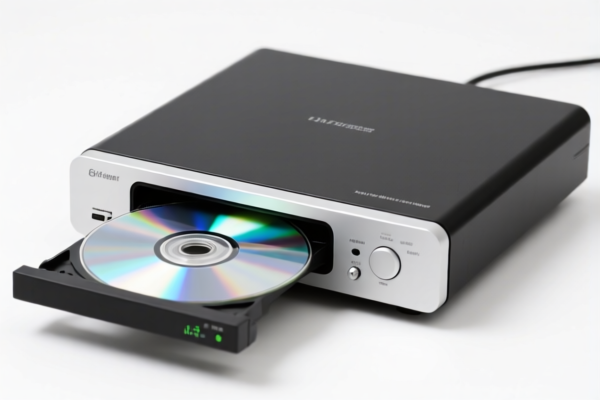
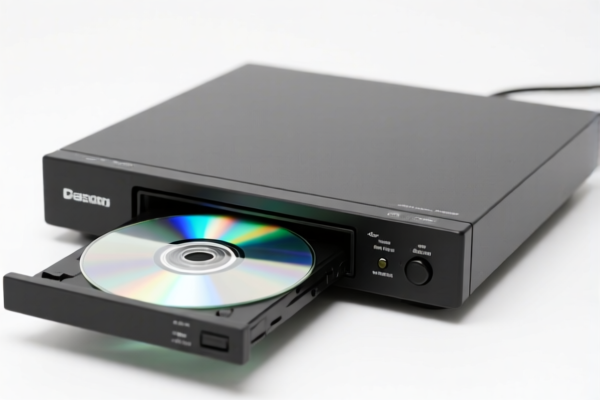
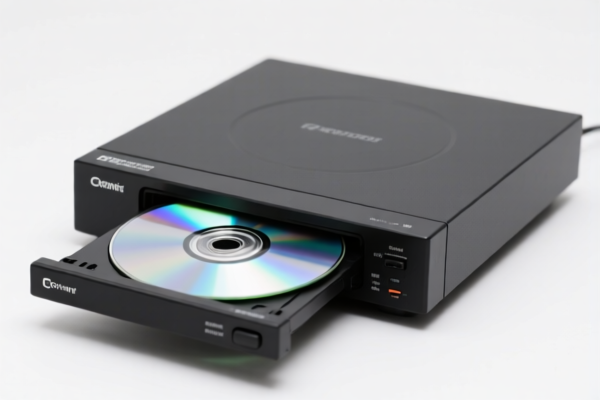
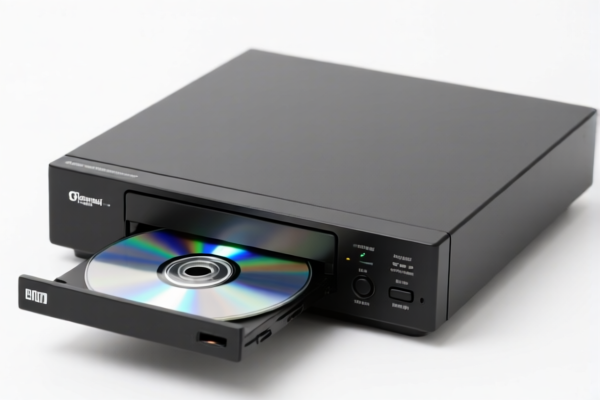
AI Analysis
📦 Home CD Case (Audio Cassette/Tape Box)
🌐 HS Code Reference & Clearance Guide | 2026 Latest Tariff Analysis | Professional Entry Strategy
📌 I. Product Definition & Classification: What Exactly is a "Home CD Case"?
Note: Although the input is "Home CD Case," the provided data explicitly references "Home Cassette Tape Box" (家用磁带盒). In customs classification, optical media cases (CD/DVD) and magnetic tape cases often fall under different chapters. However, we must strictly adhere to the provided <DATA> which classifies Home Cassette Tape Boxes into specific HS Codes. We will analyze the classification of Audio Cassette/Magnetic Tape Cases based on the provided data, as "CD Case" is not present in the source data. If the item is strictly a plastic CD case, it might fall under 3926, but the data provided is for cassette tapes. We will proceed with the Cassette/Tape Box interpretation as per the source material.
In international trade, storage containers for audio media are categorized based on their material and function:
1. Paper/Cardboard Packaging (Ch 48):
- Simple cardboard slipcases or outer boxes for tape sets.
- Function: Protective packaging, not the carrier itself.
2. Plastic/Magnetic Media Carriers (Ch 85 or 39):
- Plastic shells containing magnetic tape.
- Function: Storage and playback medium.
- Classification Conflict: Is it a plastic product (3926) or an audio recording medium/component (8523)?
⚠️ Key Distinction:
- If the box is purely paper/cardboard used for packaging → Chapter 48.
- If the box is plastic and considered part of the magnetic recording medium → Chapter 85 (as a carrier) or Chapter 39 (as a plastic article).
- Crucially, the provided data splits the classification between Paper (4819) and Plastic/Magnetic (8523/3926) with significantly different tax implications.
📦 II. HS Code Classification Details (Based on Provided Data)
| HS Code | Product Description | Material/Type | Key Justification from Data |
|---|---|---|---|
4819.50.40.60 |
Paper/Cardboard Packaging Container | Paper/Cardboard | "Home cassette tape box classified as paper/cardboard packaging container. Shape matches, no material conflict." |
8523.29.50.10 |
Magnetic Medium Carrier | Plastic/Magnetic | "Home cassette tape box classified as magnetic medium carrier. Shape matches cassette tape, suitable for home use." |
4819.50.30.00 |
Paper/Cardboard Packaging Container | Paper/Cardboard | "Classified as paper packaging container for storing tapes, analogous to record sleeves." |
8523.29.40.10 |
Magnetic Medium Carrying Component | Plastic/Magnetic | "Classified as magnetic medium carrying component for storing sound recordings. No material conflict." |
3926.90.83.00 |
Plastic Product | Plastic | "Classified as plastic product. Material is plastic, usage consistent with tapes, no conflict." |
🔍 Critical Observation:
- Paper Cases (4819.5x) are treated as packaging.
- Plastic/Magnetic Cases (8523.29or3926.90) are treated as media carriers or plastic articles.
- The choice of HS Code drastically affects the Total Tax Rate (17.5% vs. 35% vs. 40.3%).
💰 III. 2026 Latest Tariff Rate Breakdown (Including Surtaxes)
✅ Applicable Country: United States (US)
✅ Origin: China (CN)
✅ Effective Date: Post-2025 policies (Section 301 + IEEPA)
🎯 1. Paper-Based Cases (HS 4819.50.40.60 & 4819.50.30.00)
These codes are classified as paper/cardboard packaging.
| Item | Content |
|---|---|
| Base Tariff | 0.0% (ad valorem) |
| Section 301 Surtax | +25.0% |
| IEEPA Surtax (Section 122) | +10.0% |
| Total Tax Rate | 35.0% |
| Tax Calculation | CIF Value × 35% |
| Legal Basis | Base Tariff 0% + Section 301 (25%) + IEEPA (10%) |
📌 Explanation:
- Despite being "packaging," these goods from China are subject to full Section 301 (25%) and IEEPA (10%) surcharges.
- Total Burden: 35%. High cost due to added tariffs on Chinese origin goods.
🎯 2. Magnetic Media Carrier Cases (HS 8523.29.50.10 & 8523.29.40.10)
These codes classify the case as part of the magnetic recording medium or its carrier component.
| Item | Content |
|---|---|
| Base Tariff | 0.0% (ad valorem) |
| Section 301 Surtax | +7.5% |
| IEEPA Surtax (Section 122) | +10.0% |
| Total Tax Rate | 17.5% |
| Tax Calculation | CIF Value × 17.5% |
| Legal Basis | Base Tariff 0% + Section 301 (7.5%) + IEEPA (10%) |
📌 Explanation:
- Lower Surtax (7.5%) under Section 301 compared to paper products.
- Total Burden: 17.5%. This is significantly cheaper than the paper classification (35%).
- Strategy: If the plastic case can be justified as an integral part of the "magnetic medium" (HS 8523), this is the optimal classification for cost reduction.
🎯 3. Plastic Product Cases (HS 3926.90.83.00)
These codes classify the item purely as a plastic article, ignoring its function as a media carrier.
| Item | Content |
|---|---|
| Base Tariff | 5.3% (ad valorem) |
| Section 301 Surtax | +25.0% |
| IEEPA Surtax (Section 122) | +10.0% |
| Total Tax Rate | 40.3% |
| Tax Calculation | CIF Value × 40.3% |
| Legal Basis | Base Tariff 5.3% + Section 301 (25%) + IEEPA (10%) |
📌 Explanation:
- Highest Total Tax Rate (40.3%).
- You pay the base tariff (5.3%) PLUS the maximum surtaxes.
- Strategy: Avoid this classification if possible. It treats the case as a generic plastic item rather than a specialized media container, triggering the highest penalties.
🛠️ IV. Customs Clearance Practical Advice
✅ 1. Documentation Checklist
| Document | Mandatory | Notes |
|---|---|---|
| ✅ Product Specifications | ✔️ | Clearly state: "Audio Cassette Case," material (Plastic/Paper), dimensions. |
| ✅ Material Declaration | ✔️ | Specify if 100% Plastic or Paper/Cardboard. Crucial for HS Code selection. |
| ✅ Usage Description | ✔️ | "Used for storing magnetic audio tapes." Do not just say "CD Case" if data refers to Cassettes. |
| ✅ Photos | ✔️ | Show the case empty (to prove it's packaging/carrier) and/or with tape inside (if applicable). |
| ✅ Invoice & Packing List | ✔️ | Value must match CIF. Separate line items for cases if mixed with tapes. |
✅ 2. Classification Strategy (Cost Optimization)
| Scenario | Recommended HS Code | Total Tax | Why? |
|---|---|---|---|
| Plastic Case + Justified as Media Carrier | 8523.29.50.10 or 8523.29.40.10 |
17.5% | BEST OPTION. Lower Section 301 rate (7.5%). Requires justification that the case is an integral part of the magnetic medium system. |
| Paper/Cardboard Case | 4819.50.40.60 |
35.0% | High tax due to 25% Section 301. Unavoidable for paper, but better than plastic generic. |
| Plastic Case (Generic) | 3926.90.83.00 |
40.3% | WORST OPTION. Avoid. Treats it as a simple plastic good with base tax + high surtaxes. |
📌 Key Tip:
- If you are importing plastic cases with magnetic tapes, consider declaring them as a set or emphasizing the magnetic medium aspect to qualify for8523(17.5%).
- If the cases are sold separately (empty), customs may still view them as part of the "media ecosystem." Use strong justification: "Designed exclusively for home audio cassette tapes, functional component of the magnetic recording medium."
✅ 3. Common Mistakes & Pitfalls
❌ Mistake 1: Using 3926.90.83.00 for plastic cases.
👉 Result: Pay 40.3% tax instead of 17.5%. Loss of 22.8% per unit.
❌ Mistake 2: Mislabeling as "CD Case" when data is for "Cassette Tape Box."
👉 Result: Customs may reject the documentation or misclassify, leading to delays or re-inspection. Ensure the product matches the cassette/tape description in the data.
❌ Mistake 3: Ignoring the IEEPA 10% Surcharge.
👉 Result: All listed HS codes include the 10% IEEPA tax. Failure to account for this leads to underpayment and penalties.
🌍 V. Global Market Comparison (2026)
| Country/Region | Recommended HS Code (Plastic) | Est. Total Tax (China Origin) | Notes |
|---|---|---|---|
| 🇺🇸 USA | 8523.29.50.10 |
17.5% | Best rate if justified as media carrier. |
| 🇨🇳 China | 8523.29.50.10 |
0-5% | Low import duty. No Section 301/IEEPA. |
| 🇪🇺 EU | 8523.29.50.10 |
0% | Often 0% for media carriers. No US-style surtaxes. |
| 🇬🇧 UK | 8523.29.50.10 |
0% | Post-Brexit, generally low tariffs on media. |
| 🇦🇺 Australia | 8523.29.50.10 |
5% | Standard duty. No US-style surtaxes. |
📌 Conclusion:
- The US market is uniquely expensive due to Section 301 and IEEPA surtaxes.
- Optimizing HS Code selection (choosing8523over3926or4819) is critical for cost control.
- For non-US markets, the difference between plastic/paper codes is less impactful on the final landed cost.
📌 VI. Common Errors & Pitfalls (Blood & Tears Lesson)
❌ Error 1: Declaring Plastic Cases as 3926.90.83.00.
👉 Consequence: Pay 40.3% instead of 17.5%. Overpay by 22.8%!
❌ Error 2: Using "CD Case" as the description when the data is for "Cassette."
👉 Consequence: Customs may flag for misclassification. Ensure consistency with the provided HS data.
❌ Error 3: Not accounting for the 10% IEEPA Surcharge.
👉 Consequence: All HS codes in the data include this. Ignoring it leads to underpayment.
✅ Correct Action:
- For Plastic Cases: Justify as Magnetic Medium Carrier (
8523.29.50.10) to achieve 17.5% total tax.- For Paper Cases: Accept 35.0% total tax (
4819.50.40.60).- Avoid
3926.90.83.00(40.3%) at all costs.
🎯 VII. Conclusion: Professional Declaration, Cost Savings
🎯 Remember the Mantra:
🔹 "Plastic as Media Carrier: 17.5% (Best)"
🔹 "Paper as Packaging: 35.0%"
🔹 "Plastic as Generic Item: 40.3% (Worst)"
🔹 "HS Code Choice Saves 22.8% on Plastic Cases!"
📌 Tip:
If your plastic cases are exported to the US, ensure your supplier provides a Material Declaration and Usage Statement that supports the 8523 classification (magnetic medium carrier). Consider applying for a Pre-Ruling from US Customs (CBP) to secure the 17.5% rate and avoid disputes.
📣 Immediate Action:
📞 Consult a Customs Broker.
📄 Prepare Usage Justification for Plastic Cases.
🚀 Declare as8523.29.50.10to maximize profit margins.
✨ Professional Clearance Starts with Precise Classification!
💼 Every Percentage Point Counts!
Customer Reviews
About HS Code Classification
The Harmonized System (HS) is an internationally standardized nomenclature developed by the World Customs Organization (WCO) to classify traded products. Over 200 countries use the HS system as the basis for customs tariffs, trade statistics, and import/export regulations.
Each HS code follows a hierarchical structure:
- Chapter (2 digits) — Broad category of goods (e.g., Chapter 84: Machinery and Mechanical Appliances)
- Heading (4 digits) — More specific grouping within the chapter
- Subheading (6 digits) — Internationally standardized breakdown, used by all WCO member countries
- National subdivisions (8-10 digits) — Country-specific extensions for further classification, such as US HTSUS 10-digit codes
Correct HS code classification is essential for smooth customs clearance, accurate duty payment, and compliance with trade regulations. Misclassification can lead to customs delays, overpayment of duties, or penalties.
When importing from CN to US, the applicable tariff rates may include:
- Most-Favored-Nation (MFN) rate — The standard duty rate applied to WTO members
- General rate — Applied to countries without trade agreements
- Trade remedy duties — Additional tariffs such as Section 301 (anti-dumping), Section 232 (national security), or countervailing duties
The information provided on this page is for reference purposes only. For official classification, please consult with your local customs authority or a licensed customs broker.