Home Metal Mesh Ironing Board
CN → US| HS Code | Tariff Rate | Origin | Destination | Doc |
|---|---|---|---|---|
| 9403200050 | 85.0% | CN | US | Official Doc |
| 7326908688 | 87.9% | CN | US | Official Doc |
| 9403200011 | 85.0% | CN | US | Official Doc |
| 7326908676 | 87.9% | CN | US | Official Doc |
| 9403200050 | 85.0% | CN | US | Official Doc |
Product Images
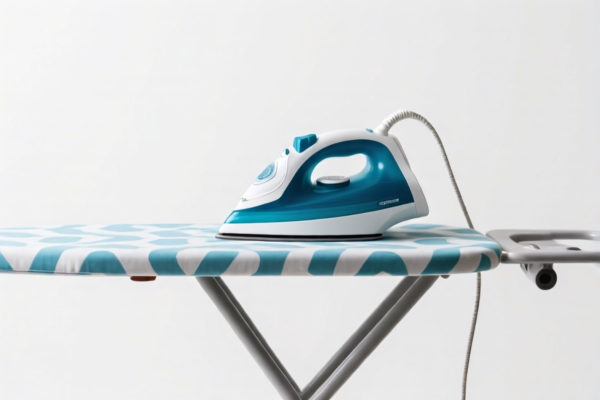
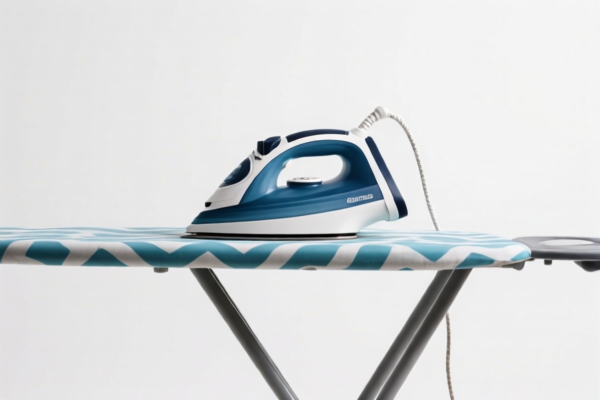
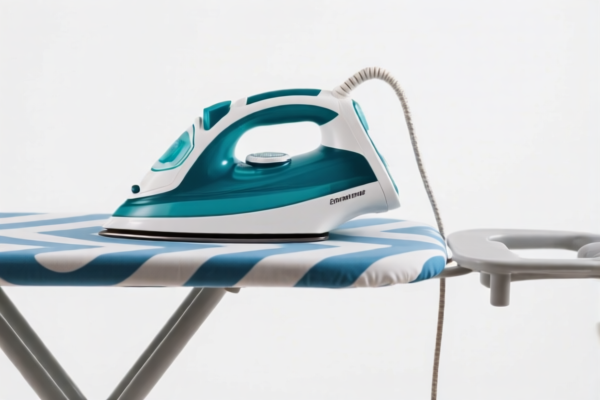
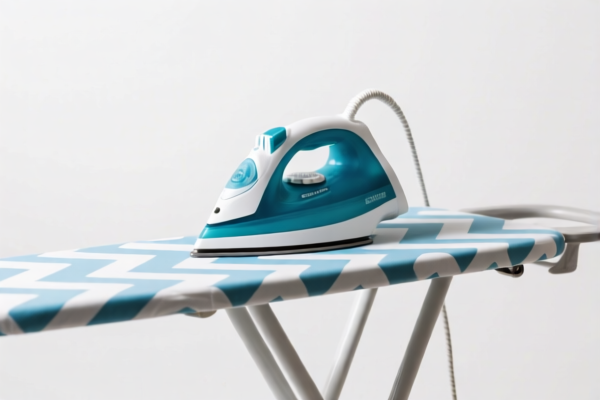
AI Analysis
🏠 Home Metal Mesh Ironing Board (Ironing Boards)
🌐 HS Code Reference & Customs Clearance Guide | 2026 Latest Tariff Analysis | Professional Clearance Strategy
📌 I. Product Definition & Classification: Do You Truly Understand the "Ironing Board"?
The Home Metal Mesh Ironing Board is an essential household appliance used for smoothing wrinkles from fabrics. In international trade, its classification hinges on whether it is viewed primarily as a piece of furniture or as a general metal制品 (article). This distinction drastically impacts the tariff rate.
1. Furniture Category (Chapter 94)
If the ironing board is designed specifically as a standalone unit for domestic use, falling under the logic of "Furniture," it is classified under Heading 9403 ("Other furniture and parts thereof"). Specifically, it often falls under subheadings for metal furniture or other specific furniture types.
2. General Metal Articles Category (Chapter 73)
If the board is viewed as a fabricated metal product (e.g., a simple mesh sheet on legs) without complex furniture characteristics, it may be classified under Heading 7326 ("Other articles of iron or steel").
⚠️ Key Distinction Point:
- If the product is marketed and structured as a stand-alone household item with legs, handles, and storage features → Chapter 94 (Furniture).
- If the product is a basic metal framework/mesh sold as a component or generic metal good → Chapter 73 (General Metal Articles).
📦 II. HS Code Classification Details (2026 Latest Tariff Authority Comparison)
Based on the provided data, here are the specific HS Codes and their corresponding tax implications for Home Metal Mesh Ironing Boards:
| HS Code | Product Summary & Logic | Primary Classification Logic | Total Tax Rate |
|---|---|---|---|
9403.20.00.50 |
Metal Ironing Board, Metal Furniture | Metal Furniture / Appliance Class Application. Fits the logic of furniture used in domestic settings. | 85.0% |
9403.20.00.11 |
Metal Ironing Board, Floor-standing Type | Floor-standing Ironing Board. Fits the functional logic of a standing ironing board. | 85.0% |
7326.90.86.88 |
Metal Ironing Board, Other Metal Articles | Other Articles of Iron/Steel. Classified under general metal制品 rather than furniture. | 87.9% |
7326.90.86.76 |
Metal Ironing Board, Metal Products Category | Other Metal Products. Similar to above, but under a different sub-branch for metal articles. | 87.9% |
🔍 Key Insight:
- Furniture Classification (9403) is generally more favorable (85.0% vs 87.9%).
- Non-Furniture Classification (7326) incurs a higher base tariff (2.9% vs 0.0%), leading to a higher total tax burden.
- Both categories are subject to significant US sanctions tariffs.
💰 III. 2026 Latest Tariff Rate Breakdown (Including Surcharges & Policy Add-ons)
✅ Applicable Country: United States (US)
✅ Country of Origin: China (CN)
✅ Effective Time: Current regulations apply (Section 301 & 122 Measures)
🎯 1. 9403.20.00.50 & 9403.20.00.11 —— Metal Ironing Board (Furniture Class)
These codes fall under Metal Furniture.
| Item | Details |
|---|---|
| Base Tariff | 0.0% (Ad Valorem) |
| Section 301 Surcharge | +25.0% (USITC Footnote 9903.88.01 equivalent logic) |
| Section 122 / 232 Tariff | +10% (Specific to Steel/Aluminum/Copper products under Section 232/122 logic) |
| Steel/Aluminum Surcharge | +50% (Additional duty for steel/aluminum articles) |
| Total Tax Rate | 85.0% |
| Calculation Basis | CIF Value × 85.0% |
| De Minimis Exemption | ❌ Not Eligible |
| Legal Basis Path | Section 301: 9903.88.01 → Section 232: Steel/Aluminum → USITC: 9403.20.00 |
📌 Explanation:
- The Base Rate is 0% because it is considered furniture.
- However, the Surcharge is massive:
- 25% for Section 301 (Trade War tariffs).
- 10% for Section 122/232 (National Security tariffs on raw materials).
- 50% additional surcharge specifically for Steel/Aluminum content.
- Total: 85%. This is an extremely high effective tariff rate.
🎯 2. 7326.90.86.88 & 7326.90.86.76 —— Metal Ironing Board (General Metal Articles)
These codes fall under Other Articles of Iron or Steel.
| Item | Details |
|---|---|
| Base Tariff | 2.9% (Ad Valorem) |
| Section 301 Surcharge | +25.0% |
| Section 122 / 232 Tariff | +10% |
| Steel/Aluminum Surcharge | +50% |
| Total Tax Rate | 87.9% |
| Calculation Basis | CIF Value × 87.9% |
| De Minimis Exemption | ❌ Not Eligible |
| Legal Basis Path | Section 301: 9903.88.01 → Section 232: Steel/Aluminum → USITC: 7326.90.86 |
📌 Explanation:
- The Base Rate is 2.9%, which is higher than the furniture classification.
- The Surcharges are identical (25% + 10% + 50% = 85%).
- Total: 87.9% (2.9% base + 85% surcharges).
- Conclusion: Classifying as "General Metal Articles" is more expensive than classifying as "Furniture."
🛠️ IV. Customs Clearance Operational Advice (Practical Pitfall Guide)
✅ 1. Recommended HS Code Strategy
Recommendation: Use 9403.20.00.50 or 9403.20.00.11
- Reason: The total tax rate is 85.0%, which is 2.9% lower than the 7326 classification.
- Justification: Emphasize that the product is a "Floor-standing Ironing Board" intended for domestic household use. Highlight features like folding mechanisms, storage racks, or specific ergonomic designs that align with "Furniture" definitions rather than simple "Metal Sheets."
🔥 Key Phrase for Declaration:
"Metal Household Ironing Board, Floor-standing, for Domestic Use"
✅ 2. Declaration Tips
| Scenario | Correct Declaration | Wrong Practice |
|---|---|---|
| Standard Ironing Board | 9403.20.00.50 (Metal Furniture) |
Misdeclaring as 7326 → Higher Tax |
| Ironing Board with Storage | 9403.20.00.50 |
Declaring as "Metal Rack" → Potential Audit |
| Raw Ironing Board Top | 7326.90.86.88 (if sold as part) |
Declaring as complete board → Misclassification |
| Non-Chinese Origin | Check for Exclusions | Assuming all Chinese-origin goods are taxed |
✅ 3. Critical Compliance Notes
- Steel/Aluminum Content: Since the board is metal mesh and frame, it likely contains significant steel/aluminum. The 50% surcharge applies regardless of whether it's classified as furniture or metal articles.
- No De Minimis: Small package exemptions (e.g., for direct-to-consumer shipping under $800) do not apply to these HS codes due to the Section 301 and 232 surcharges.
- Documentation: Provide product photos showing the complete structure (legs, mesh, handle) to prove it is a "furniture item" and not just a "metal part."
🌍 V. Global Market Comparison (2026 Latest)
| Country/Region | Recommended HS Code | Tariff Rate | Certification Requirements | Remarks |
|---|---|---|---|---|
| 🇺🇸 United States | 9403.20.00.50 |
85.0% | None specific | High tariff due to Section 301 & 232 |
| 🇨🇳 China | 9403.20.00.50 |
~5-7% | CCC (if applicable) | Lower domestic/import tax |
| 🇪🇺 European Union | 9403.20.00.50 |
~2-4% | CE + RoHS | No Section 301 equivalent |
| 🇨🇦 Canada | 9403.20.00.50 |
~5% | None specific | Moderate tariff |
| 🇦🇺 Australia | 9403.20.00.50 |
~5% | RCM | No major surcharges |
📌 Conclusion:
- The US market is the most challenging due to the 85% total tariff.
- No other major market imposes comparable surcharges on ironing boards.
- Cost Impact: For a $100 CIF value, the US import duty alone is $85.00, compared to ~$5 in other markets.
📌 VI. Common Errors & Pitfall Guide (Lessons Learned)
❌ Error 1: Declaring as 7326.90.86.88 without justification
👉 Consequence: Paying 87.9% instead of 85.0%.
👉 Fix: Prove it is a "finished furniture item" with legs and handles.
❌ Error 2: Assuming "De Minimis" applies to small packages
👉 Consequence: Package seized or backdated duties.
👉 Fix: All shipments to US are subject to full tariffs for these HS codes.
❌ Error 3: Ignoring the Steel/Aluminum Surcharge
👉 Consequence: Underestimating costs by 50%.
👉 Fix: Include the 50% surcharge in all cost calculations.
❌ Error 4: Vague Description "Metal Board"
👉 Consequence: Customs detention for classification review.
👉 Fix: Use precise description: "Metal Mesh Ironing Board, Household, Floor-Standing, Model XYZ"
🎯 VII. Conclusion: Strategic Clearance for Maximum Savings
🎯 Key Takeaway:
🔹 Classify as Furniture (
9403) to save 2.9% compared to Metal Articles (7326).
🔹 Prepare for 85% Total Tax: This is unavoidable due to Section 301 and 232.
🔹 No Loopholes: Small packages are not exempt.💡 Pro Tip:
- If possible, consider supply chain diversification to non-affected countries (e.g., Vietnam, Mexico) to avoid Section 301 and 232 surcharges.
- Apply for Advance Ruling from US Customs (CBP) to confirm the9403classification and mitigate audit risks.
📣 Immediate Action:
📞 Consult with a US Customs Broker for Pre-Classification Review.
📦 Ensure Commercial Invoice clearly states "Metal Furniture Ironing Board."
🚀 Calculate landed cost with 85% tariff to ensure profitability in the US market.
✨ Professional Clearance, Starting from Accurate Classification!
💼 Every Percentage Point Matters!
Customer Reviews
About HS Code Classification
The Harmonized System (HS) is an internationally standardized nomenclature developed by the World Customs Organization (WCO) to classify traded products. Over 200 countries use the HS system as the basis for customs tariffs, trade statistics, and import/export regulations.
Each HS code follows a hierarchical structure:
- Chapter (2 digits) — Broad category of goods (e.g., Chapter 84: Machinery and Mechanical Appliances)
- Heading (4 digits) — More specific grouping within the chapter
- Subheading (6 digits) — Internationally standardized breakdown, used by all WCO member countries
- National subdivisions (8-10 digits) — Country-specific extensions for further classification, such as US HTSUS 10-digit codes
Correct HS code classification is essential for smooth customs clearance, accurate duty payment, and compliance with trade regulations. Misclassification can lead to customs delays, overpayment of duties, or penalties.
When importing from CN to US, the applicable tariff rates may include:
- Most-Favored-Nation (MFN) rate — The standard duty rate applied to WTO members
- General rate — Applied to countries without trade agreements
- Trade remedy duties — Additional tariffs such as Section 301 (anti-dumping), Section 232 (national security), or countervailing duties
The information provided on this page is for reference purposes only. For official classification, please consult with your local customs authority or a licensed customs broker.