Home Straw
CN → US| HS Code | Tariff Rate | Origin | Destination | Doc |
|---|---|---|---|---|
| 4823690040 | 35.0% | CN | US | Official Doc |
| 4016996050 | 37.5% | CN | US | Official Doc |
| 4016990500 | 20.9% | CN | US | Official Doc |
Product Images
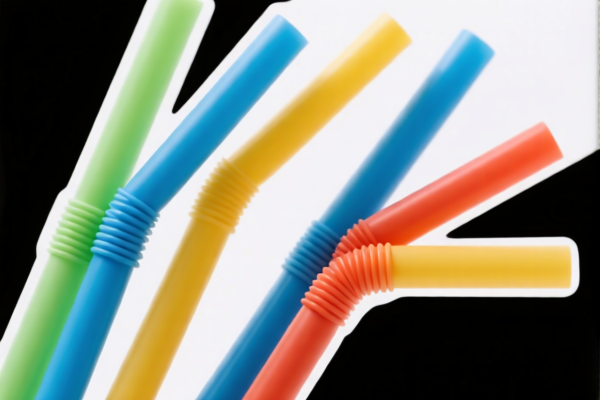
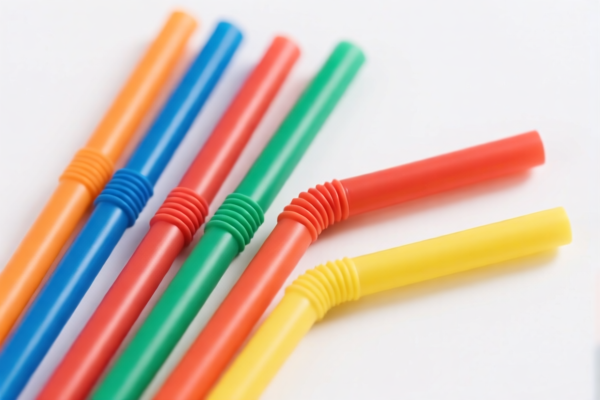
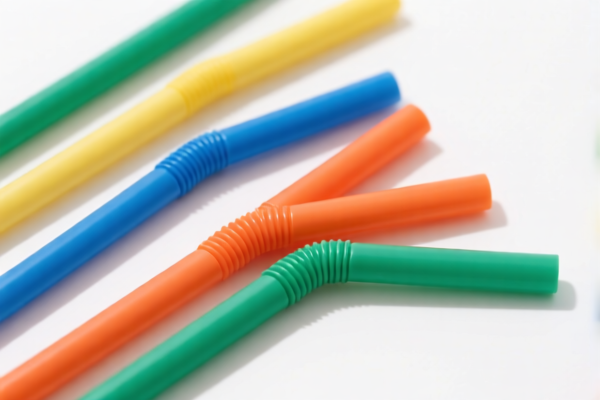
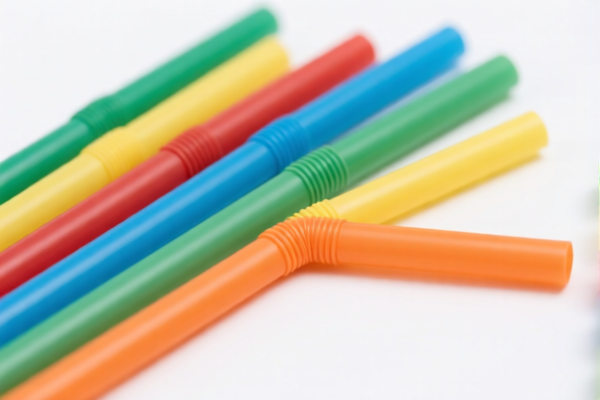
AI Analysis
🥤 Home Straw (Domestic Drinking Straws)
🌐 HS Code Reference & Customs Clearance Guide | 2026 Latest Tariff Analysis | Professional Clearance Strategy
📌 I. Product Definition & Classification: Are You Choosing the Right Material?
"Home Straws" are single-use or reusable utensils used for beverages. In international trade, the HS Code (Harmonized System Code) and resulting Tax Rate depend entirely on the material composition and physical form of the straw. Misclassification is the most common cause of customs delays and unexpected tax liabilities.
The data below categorizes straws into three main material groups: Paper, Plastic, and Rubber.
⚠️ Key Distinction:
- If the straw is made of Paper/Cardboard → It falls under Chapter 48 (Paper).
- If the straw is made of Plastic → It falls under Chapter 39 (Plastics), but the shape (rigid tube vs. flexible tube) determines the sub-heading.
- If the straw is made of Rubber → It falls under Chapter 40 (Rubber).
📦 II. HS Code Classification Details (Based on Provided Data)
| HS Code | Product Description | Material/Shape | Estimated Total Tax Rate |
|---|---|---|---|
4823.69.00.40 |
Paper Straws | Paper/Cup-like structures | 35.0% |
3924.10.40.00 |
Plastic Straws (Household) | Rigid Plastic, Household Use | 13.4% |
3924.90.56.50 |
Plastic Straws (Other) | Plastic, Other Household Items | 20.9% |
3917.29.00.90 |
Plastic Tubes | Plastic Tubes (Non-restrictive length) | 38.1% |
3917.39.00.50 |
Plastic Tubular Structures | Other Plastic Tubes/Hoses | 13.1% |
4016.99.60.50 |
Rubber Straws | Vulcanized Rubber Products | 37.5% |
🔍 Critical Note:
- Paper Straws are taxed at a high flat rate due to specific trade provisions.
- Plastic Straws vary significantly: Standard household straws (3924) have lower rates, while generic "tubes" (3917) may face higher duties depending on interpretation.
- Rubber Straws are niche and carry a high duty burden.
💰 III. Detailed Tariff Breakdown (US Import from China)
✅ Applicable Country: United States (US)
✅ Origin: China (CN)
✅ Effective Date: Post-2025 Trade Policies (Section 301 & IEEPA)
🎯 1. Paper Straws (4823.69.00.40)
| Item | Detail |
|---|---|
| Base Tariff | 0.0% |
| Additional Duty (Section 301) | 25.0% |
| IEEPA Duty (122 Clause) | 10.0% |
| Total Effective Tax | 35.0% |
| De Minimis Exemption? | ❌ No (Subject to full duty calculation) |
| Legal Basis | High tax burden due to "122 Clause" tariff addition on paper products. |
📌 Explanation:
Despite a 0% base tariff, the combination of Section 301 (25%) and the specific 122 Clause (10%) results in a steep 35% total tax. This makes paper straws a high-cost import item for US buyers.
🎯 2. Plastic Straws: Household Use (3924.10.40.00)
| Item | Detail |
|---|---|
| Base Tariff | 3.4% |
| Additional Duty (Section 301) | 0.0% |
| IEEPA Duty (122 Clause) | 10.0% |
| Total Effective Tax | 13.4% |
| De Minimis Exemption? | ❌ No |
| Legal Basis | Favorable treatment for specific household plastic articles; no Section 301 surcharge. |
📌 Explanation:
This is the most cost-effective classification for standard rigid plastic straws. The base tariff is low, and crucially, the Section 301 additional duty is 0%. Only the 122 Clause IEEPA tax applies.
🎯 3. Plastic Straws: Other Household (3924.90.56.50)
| Item | Detail |
|---|---|
| Base Tariff | 3.4% |
| Additional Duty (Section 301) | 7.5% |
| IEEPA Duty (122 Clause) | 10.0% |
| Total Effective Tax | 20.9% |
| De Minimis Exemption? | ❌ No |
| Legal Basis | Intermediate category; catches straws not explicitly defined as primary household utensils. |
📌 Explanation:
If customs officers do not classify the item under3924.10(specific utensils), they may default to "Other" (3924.90), triggering a 7.5% Section 301 surcharge. Always ensure product descriptions explicitly state "Drinking Straws for Household Use".
🎯 4. Plastic Tubes (3917.29.00.90)
| Item | Detail |
|---|---|
| Base Tariff | 3.1% |
| Additional Duty (Section 301) | 25.0% |
| IEEPA Duty (122 Clause) | 10.0% |
| Total Effective Tax | 38.1% |
| De Minimis Exemption? | ❌ No |
| Legal Basis | Classified as industrial/commercial tubes, not consumer utensils. |
📌 Explanation:
⚠️ High Risk! Do not classify drinking straws as "Plastic Tubes." If misclassified as general tubing (3917), you face the maximum 25% Section 301 duty plus IEEPA, totaling 38.1%. This is a common audit trap.
🎯 5. Plastic Tubular Structures (3917.39.00.50)
| Item | Detail |
|---|---|
| Base Tariff | 3.1% |
| Additional Duty (Section 301) | 0.0% |
| IEEPA Duty (122 Clause) | 10.0% |
| Total Effective Tax | 13.1% |
| De Minimis Exemption? | ❌ No |
| Legal Basis | Low duty for specific tubular plastics without Section 301. |
📌 Explanation:
Interestingly, this plastic tube classification has a lower rate (13.1%) than some household straws. However, proving that a drinking straw is a "tubular structure" rather than a "utensil" is legally risky and may lead to disputes.
🎯 6. Rubber Straws (4016.99.60.50)
| Item | Detail |
|---|---|
| Base Tariff | 2.5% |
| Additional Duty (Section 301) | 25.0% |
| IEEPA Duty (122 Clause) | 10.0% |
| Total Effective Tax | 37.5% |
| De Minimis Exemption? | ❌ No |
| Legal Basis | Rubber products attract high Section 301 duties. |
📌 Explanation:
Rubber straws are rare in the US market due to high costs and taste concerns. They are subject to the full 25% Section 301 duty, making them economically unviable for mass import.
🛠️ IV. Customs Clearance Operational Advice
✅ 1. Documentation Checklist (Non-Negotiable)
| Document | Required? | Purpose |
|---|---|---|
| ✅ Commercial Invoice | ✔️ | Must explicitly state "Drinking Straws" and Material (e.g., "Paper," "PLA Plastic," "TPE Rubber"). |
| ✅ Product Photographs | ✔️ | Show cross-sections to distinguish between Paper, Plastic, and Rubber. |
| ✅ Material Safety Data Sheet (MSDS) | ✔️ | Required for plastics/rubbers to confirm chemical composition (e.g., BPA-free). |
| ✅ Country of Origin Certificate | ✔️ | To apply correct base tariffs and verify Section 301 applicability. |
| ✅ Import License | ✔️ | Generally not required for straws, but check FDA requirements for food-contact items. |
📌 FDA Note: Since straws contact food/beverages, they must comply with FDA 21 CFR for food-contact substances. Non-compliance can lead to Refusal of Admission, regardless of HS Code correctness.
✅ 2. Declaration Strategy (Key Keywords)
| Scenario | Recommended Declaration Description | Risk Level |
|---|---|---|
| Paper Straws | "Paper Drinking Straws, Unbleached, for Household Use" | 🟢 Low (Clear material) |
| Plastic Straws (Best) | "Plastic Drinking Straws, Polypropylene, for Beverage Service, Household Use" | 🟢 Low |
| Plastic Straws (Risky) | "Plastic Tubes, General Purpose" | 🔴 High (Misclassification risk → 38.1%) |
| Biodegradable Straws | "Biodegradable PLA Plastic Drinking Straws, Compostable" | 🟡 Medium (May require additional eco-certifications) |
🔥 Pro Tip:
Use the phrase "For Beverage Service" or "Household Utensils" to anchor the classification under HS 3924 (Tableware/Kitchenware), which often benefits from lower or zero Section 301 duties compared to generic "Plastic Articles" (HS 3926) or "Tubes" (HS 3917).
✅ 3. Special Situations
| Situation | Handling Advice |
|---|---|
| Mixed Materials | If a straw has a paper exterior and plastic lining, customs may classify based on the essential character (usually the plastic liner for durability). Assume the higher plastic tax rate. |
| Packaging | Declare straws and packaging separately. Packaging may have different HS codes (e.g., Cardboard boxes 4819). Do not lump them into one line item unless the package value is negligible. |
| Sample Shipments | Even samples are subject to the full tariff rates if declared as commercial goods. Use "Samples - No Commercial Value" only if truly non-saleable, but duties may still apply based on value thresholds. |
🌍 V. Global Market Comparison (2026 Context)
| Market | Recommended HS Code | Est. Tariff (China Origin) | Key Regulation |
|---|---|---|---|
| 🇺🇸 USA | 3924.10.40.00 (Plastic) |
13.4% | FDA + Section 301/IEEPA |
| 🇨🇳 China | 3924.10.00.00 |
5-8% | GB Standards (Food Safety) |
| 🇪🇺 EU | 3924.10.00 |
4-6.5% | REACH + Single-Use Plastics Dir. |
| 🇬🇧 UK | 3924.10.00 |
4-6.5% | UKCA Marking |
📌 Global Trend:
The EU and UK are imposing levies on single-use plastics to combat pollution. While HS codes remain similar, expect additional environmental surcharges in Europe not reflected in standard duty rates. The USA focuses on trade remedies (Section 301/IEEPA).
📌 VI. Common Mistakes & Pitfalls
❌ Mistake 1: Classifying all plastic straws as 3926.90 (Other Articles).
👉 Consequence: Higher duty rate and loss of specific household utensil benefits.
❌ Mistake 2: Ignoring the IEEPA 122 Clause.
👉 Consequence: Underpaying taxes by ~10% on every shipment, leading to penalties upon audit.
❌ Mistake 3: Labeling "Plastic" for Paper Straws.
👉 Consequence: Customs seizure for false declaration. Paper is 4823, not 3924.
✅ Correct Approach:
"Import Paper Straws for
4823.69.00.40(35% tax) OR Plastic Household Straws for3924.10.40.00(13.4% tax). Avoid generic 'Plastic Tube' classifications (3917) to prevent 38.1% tax liability."
🎯 VII. Conclusion: Strategic Sourcing for Home Straws
🎯 Key Takeaway:
For US imports, Plastic Household Straws (3924.10.40.00) are the most tariff-efficient option at 13.4% (due to 0% Section 301).
Paper Straws are heavily taxed at 35.0%.
Rubber Straws are prohibitively expensive at 37.5%.
📌 Action Plan:
1. Select Material Wisely: Choose Plastic (3924) over Paper (4823) if minimizing duty is the priority.
2. Accurate Description: Always use "Drinking Straws" and "Household Use" in commercial invoices.
3. Compliance: Ensure all plastic products meet FDA food-contact standards.
4. Audit Trail: Keep samples and material test reports for 5 years.
📣 Immediate Action:
📞 Consult a licensed customs broker to confirm the essential character of your specific straw design.
🚀 Optimize your HS Code to3924.10.40.00for the best tax efficiency in the US market.
✨ Smart Importing Starts with the Right Code!
💼 Don’t let a 0.1% classification error cost you 25% in duties!
Customer Reviews
About HS Code Classification
The Harmonized System (HS) is an internationally standardized nomenclature developed by the World Customs Organization (WCO) to classify traded products. Over 200 countries use the HS system as the basis for customs tariffs, trade statistics, and import/export regulations.
Each HS code follows a hierarchical structure:
- Chapter (2 digits) — Broad category of goods (e.g., Chapter 84: Machinery and Mechanical Appliances)
- Heading (4 digits) — More specific grouping within the chapter
- Subheading (6 digits) — Internationally standardized breakdown, used by all WCO member countries
- National subdivisions (8-10 digits) — Country-specific extensions for further classification, such as US HTSUS 10-digit codes
Correct HS code classification is essential for smooth customs clearance, accurate duty payment, and compliance with trade regulations. Misclassification can lead to customs delays, overpayment of duties, or penalties.
When importing from CN to US, the applicable tariff rates may include:
- Most-Favored-Nation (MFN) rate — The standard duty rate applied to WTO members
- General rate — Applied to countries without trade agreements
- Trade remedy duties — Additional tariffs such as Section 301 (anti-dumping), Section 232 (national security), or countervailing duties
The information provided on this page is for reference purposes only. For official classification, please consult with your local customs authority or a licensed customs broker.