Honey Cutting Knife
CN → US| HS Code | Tariff Rate | Origin | Destination | Doc |
|---|---|---|---|---|
| 8211929030 | 0.0% | CN | US | Official Doc |
| 8211922000 | 0.0% | CN | US | Official Doc |
Product Images
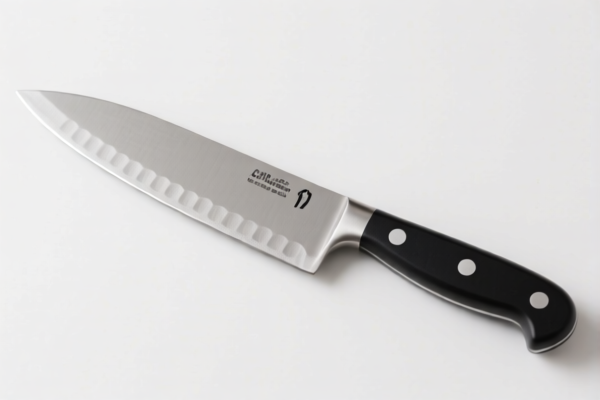
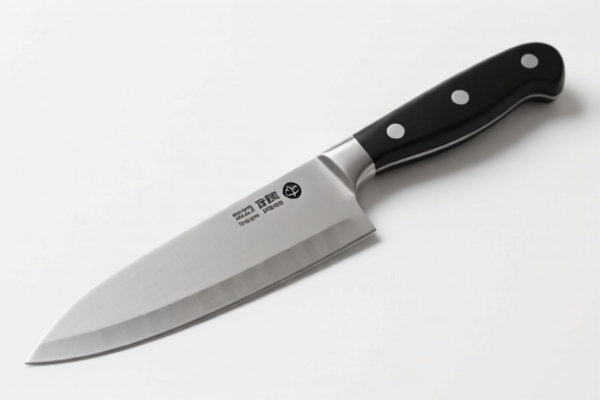
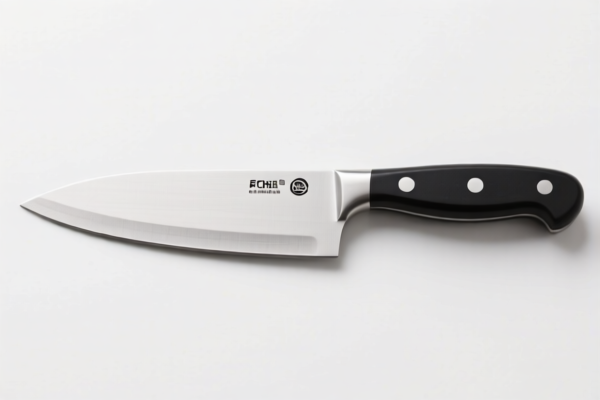
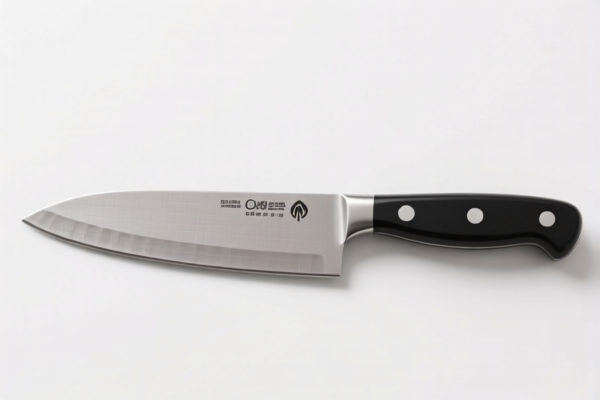
AI Analysis
🔪 Honey Cutting Knife (Honey Harvesting Tools)
🌐 HS Code Reference & Customs Clearance Guide | 2026 Latest Tariff Analysis | Professional Entry Strategy
📌 I. Product Definition & Classification: What is a "Honey Cutting Knife"?
A Honey Cutting Knife is a specialized tool used in beekeeping to cut and remove the wax caps from honeycomb frames before extracting honey. It is distinct from kitchen knives, butcher knives, or general-purpose utility knives.
In international trade, these tools fall under Heading 82.11, which covers "Knives with cutting blades, serrated or not... other than knives of heading 8208."
⚠️ Key Distinction Point:
- If the knife has a fixed blade (non-folding) and is used for kitchen/butchery purposes → It is treated as a Kitchen/Butcher Knife under 8211.92.
- If the knife is a folding knife or a serrated blade specifically for general use, it may fall under different subheadings, but most standard fixed-blade honey knives are classified as Other Knives Having Fixed Blades.
📦 II. HS Code Classification Details (2026 Latest Tariff Authority)
Based on the provided <DATA>, the Honey Cutting Knife (assuming it is a standard fixed-blade knife used in the apiary) falls into the following categories depending on its handle material and specific blade type.
📊 Category 1: Knives with Fixed Blades, Rubber/Plastic Handles
| HS Code | Product Description | Application Scenario | Handle Material |
|---|---|---|---|
8211.92.20.00 |
Other knives having fixed blades: With rubber or plastic handles: Kitchen and butcher knives | Standard Honey Knives with non-wooden handles (often preferred for hygiene and corrosion resistance) | Rubber or Plastic |
🔍 Note:
- Although the name says "Kitchen and Butcher Knives," HS Code 8211.92.20.00 is commonly used for small fixed-blade knives with rubber/plastic handles that are not specifically designated as "serrated" or "pruning" knives in more specific subheadings.
- Honey knives are often small, sharp, and used for cutting wax. If they have rubber/plastic handles, this code is frequently applied by customs brokers.
📊 Category 2: Knives with Fixed Blades, Other (No Specific Handle Material Specified)
| HS Code | Product Description | Application Scenario | Handle Material |
|---|---|---|---|
8211.92.90.30 |
Other: Other knives having fixed blades: Other: Other Kitchen and butcher knives | Specialized or Wooden-Handled Honey Knives that do not fit the "rubber/plastic" category | Wood, Metal, or Composite |
🔍 Note:
- If the honey knife has a wooden handle or a metal handle, it does not fit into8211.92.20.00.
- It then falls under "Other" (8211.92.90), specifically "Other Kitchen and butcher knives" (8211.92.90.30).
- Even though it is used for beekeeping, if it is a fixed-blade knife with a non-rubber/plastic handle, it is often grouped with "other kitchen/butcher knives" unless a more specific "beekeeping tool" code exists in your local tariff (which is rare; most fall under 82.11).
💰 III. 2026 Latest Tariff Rate Details (Including Additional Duties)
✅ Applicable Country: China (CN)
✅ Import Destination: United States (US)
✅ Effective Date: 2025-2026
✅ Origin: China (CN)
🎯 1. HS Code: 8211.92.20.00 (Rubber/Plastic Handle)
| Item | Content |
|---|---|
| Base Tariff Rate | 0.0% (Most Favored Nation / General) |
| Additional Tariff (Section 301) | 0.0% (Not subject to current 301 List 4B/301 additions for this specific subheading) |
| Total Tax Rate | 0.0% |
| Tax Calculation | CIF Value × 0.0% = $0 |
| De Minimis Exemption | ✅ Yes (Under $800, typically exempt for de minimis shipments, but commercial shipments still pay 0%) |
| Legal Basis | HTSUS 8211.92.20.00 |
📌 Explanation:
- Honey knives with rubber or plastic handles currently enjoy a 0% total tariff rate when imported from China to the US.
- This is a low-risk, low-cost classification.
🎯 2. HS Code: 8211.92.90.30 (Other Handles, e.g., Wooden/Metal)
| Item | Content |
|---|---|
| Base Tariff Rate | 0.0% |
| Additional Tariff (Section 301) | 0.0% |
| Total Tax Rate | 0.0% |
| Tax Calculation | CIF Value × 0.0% = $0 |
| De Minimis Exemption | ✅ Yes (Under $800, typically exempt) |
| Legal Basis | HTSUS 8211.92.90.30 |
📌 Explanation:
- Even for wooden or metal-handled honey knives, the current tariff rate is 0.0%.
- There are no additional anti-dumping duties or Section 301 tariffs currently applied to these specific subheadings of knives.
🛠️ IV. Customs Clearance Practical Advice (Avoid Pitfalls)
✅ 1. Documentation Checklist (Mandatory)
| Document | Required | Explanation |
|---|---|---|
| ✅ Product Specifications | ✔️ | Clearly state: "Honey Cutting Knife, Fixed Blade, [Handle Material], Stainless Steel Blade." |
| ✅ Material Composition | ✔️ | Specify blade material (e.g., Stainless Steel 420/440) and handle material (Wood, Rubber, Plastic). |
| ✅ Function Description | ✔️ | Describe use: "Used to cut wax caps from honeycomb frames." |
| ✅ Commercial Invoice | ✔️ | Must match the HS Code and clearly describe the item. Avoid vague terms like "Tool." |
| ✅ Photos of the Product | ✔️ | Show the knife, including handle material, to prove it is not a "pruning knife" (which may have different classifications). |
✅ 2. Classification Strategy (Key Tips)
🔥 "Handle Matters! Rubber/Plastic = .20.00, Wood/Metal = .90.30"
| Scenario | Correct HS Code | Reason |
|---|---|---|
| Honey knife with rubber or plastic handle | 8211.92.20.00 |
Fits "With rubber or plastic handles" |
| Honey knife with wooden handle | 8211.92.90.30 |
Falls under "Other" knives |
| Honey knife with metal handle | 8211.92.90.30 |
Falls under "Other" knives |
| Serrated honey knife | 8211.92.20.00 or 8211.92.90.30 |
Depends on handle material. If serrated, ensure it's not classified as a "pruning knife" (Heading 82.11.20). Most small honey knives are not pruning knives. |
⚠️ Critical Warning:
- Do NOT classify as "Pruning Knives" (8211.20.00.00) unless the knife is specifically designed for garden pruning and is larger/heavier. Honey knives are generally small and light. Misclassification can lead to delays.
- Do NOT classify as "Kitchen Knives" (8211.91.00.00) if it is a non-fixed or folding knife. If it is a fixed blade, it goes to 8211.92.
✅ 3. Special Handling for Beekeeping Tools
| Scenario | Recommendation |
|---|---|
| OEM Custom Knives | Provide design specs to confirm handle material. |
| Sets (Knife + Scrapers) | If sold as a kit, classify the knife separately or as a set based on the principal item. Usually, the knife determines the class. |
| Importing from China | Ensure the supplier provides accurate material declarations. If the handle is "composite," clarify if it's primarily rubber/plastic (for .20.00) or other (for .90.30). |
🌍 V. Global Market Comparison (2026 Latest)
| Country/Region | Recommended HS Code | Tariff Rate (China Origin) | Notes |
|---|---|---|---|
| 🇺🇸 USA | 8211.92.20.00 or 8211.92.90.30 |
0.0% | No additional Section 301 duties for these subheadings. |
| 🇨🇳 China (Import) | 8211.92.20.00 or 8211.92.90.30 |
0.0% - 5% | Check local Chinese tariff for imports into China. |
| 🇪🇺 EU | 8211.92.20 or 8211.92.90 |
0.0% - 4.5% | Varies by member state. Generally low for small knives. |
| 🇬🇧 UK | 8211.92.20 or 8211.92.90 |
0.0% - 4.5% | Post-Brexit tariff, similar to EU. |
| 🇯🇵 Japan | 8211.92.20 or 8211.92.90 |
0.0% - 3.5% | Check specific JETRO tariff schedule. |
📌 Conclusion:
- USA is the most favorable market for honey knives from China, with 0% total tariff.
- EU/UK have low but non-zero tariffs.
- No major trade barriers (like high anti-dumping duties) currently affect small fixed-blade honey knives.
📌 VI. Common Errors & Pitfalls (Lessons Learned)
❌ Error 1: Classifying honey knives as "Pruning Knives" (8211.20.00.00)
👉 Consequence: Higher scrutiny, potential misclassification penalty. Honey knives are not for pruning branches.
❌ Error 2: Not specifying handle material in the commercial invoice
👉 Consequence: Customs may classify as "Other" (8211.92.90.30) by default, or request further info, causing delays.
❌ Error 3: Using vague terms like "Metal Tool" or "Knife Set"
👉 Consequence: Customs may assign a generic, higher-tariff code. Always specify "Honey Cutting Knife, Fixed Blade, [Handle Material]."
✅ Correct Practice:
"Honey Comb Knife, Fixed Blade, Stainless Steel Blade, Plastic Handle, Used for Beekeeping, Model XYZ"
🎯 VII. Conclusion: Professional Classification for Cost Savings
🎯 Key Takeaway:
🔹 Honey knives are NOT pruning knives.
🔹 Handle material determines the subheading:
- Rubber/Plastic →8211.92.20.00
- Wood/Metal →8211.92.90.30
🔹 Total Tariff Rate: 0.0% for both in the US.
🔹 No additional Section 301 duties apply.
📌 Pro Tip:
- Ensure the commercial invoice clearly states "Fixed Blade" and "Handle Material".
- If importing in bulk, consider pre-classification rulings from US CBP if unsure about the handle material classification.
- For de minimis shipments (under $800), these goods enter the US with 0% duty and minimal paperwork.
📣 Action Required:
📞 Confirm Handle Material with your supplier.
📄 Update Commercial Invoice to reflect "Honey Cutting Knife, Fixed Blade, [Handle Type]."
🚀 Ship with Confidence – 0% tariff means maximum profit!
✨ Precision in Classification, Freedom in Trade!
💼 Your Honey Knife Deserves the Right Code!
Customer Reviews
About HS Code Classification
The Harmonized System (HS) is an internationally standardized nomenclature developed by the World Customs Organization (WCO) to classify traded products. Over 200 countries use the HS system as the basis for customs tariffs, trade statistics, and import/export regulations.
Each HS code follows a hierarchical structure:
- Chapter (2 digits) — Broad category of goods (e.g., Chapter 84: Machinery and Mechanical Appliances)
- Heading (4 digits) — More specific grouping within the chapter
- Subheading (6 digits) — Internationally standardized breakdown, used by all WCO member countries
- National subdivisions (8-10 digits) — Country-specific extensions for further classification, such as US HTSUS 10-digit codes
Correct HS code classification is essential for smooth customs clearance, accurate duty payment, and compliance with trade regulations. Misclassification can lead to customs delays, overpayment of duties, or penalties.
When importing from CN to US, the applicable tariff rates may include:
- Most-Favored-Nation (MFN) rate — The standard duty rate applied to WTO members
- General rate — Applied to countries without trade agreements
- Trade remedy duties — Additional tariffs such as Section 301 (anti-dumping), Section 232 (national security), or countervailing duties
The information provided on this page is for reference purposes only. For official classification, please consult with your local customs authority or a licensed customs broker.