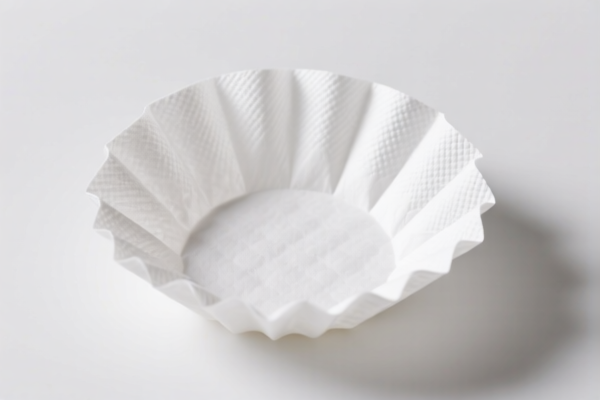
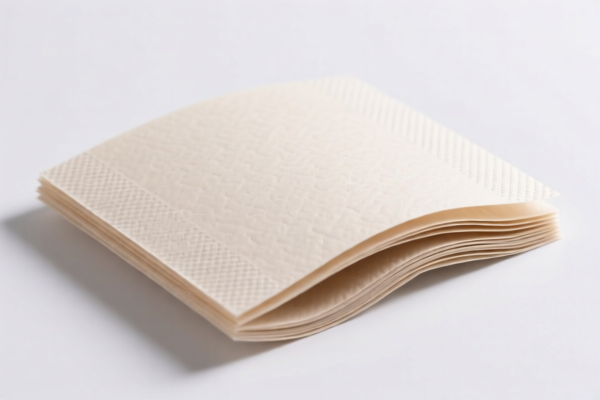
Honeycomb Paper Filter Net
CN → US| HS Code | Tariff Rate | Origin | Destination | Doc |
|---|---|---|---|---|
| 4823209000 | 35.0% | CN | US | Official Doc |
| 8421290015 | 35.0% | CN | US | Official Doc |
| 4823201000 | 35.0% | CN | US | Official Doc |
Product Images


AI Analysis
🕸️ Honeycomb Paper Filter Net (蜂窝纸过滤网)
🌐 HS Code Reference & Customs Clearance Guide | 2026 Latest Tariff Analysis | Professional Clearance Strategy
📌 I. Product Definition & Classification: What Exactly is a "Honeycomb Paper Filter Net"?
The Honeycomb Paper Filter Net is a specialized filtration material characterized by its unique hexagonal structural support, which provides high mechanical strength, low pressure drop, and high dust-holding capacity. In international trade, it sits at the intersection of Paper Products and Mechanical Filtration Equipment, leading to potential classification disputes.
The core distinction lies in whether the product is viewed as a raw material/consumable (Paper) or a functional component/device (Filtration Apparatus).
⚠️ Key Classification Distinction:
- If classified under Chapter 48 (Paper): It is viewed as a sheet/board used for filtering, emphasizing its material (paper) and form (net/sheet).
- If classified under Chapter 84 (Machinery): It is viewed as a component or part of a filtration device, emphasizing its function (liquid/gas filtration apparatus).
📦 II. HS Code Classification Details (2026 Latest Tariff Authority Comparison)
Based on the provided data, here are the three specific HS Codes associated with this product. Note that all three share the same total tax rate, but the classification logic differs.
| HS Code | Product Description | Classification Logic | Applicable Scenario |
|---|---|---|---|
4823.20.90.00 |
Honeycomb paper filter net, material is paper, use is for filtration, classified under filtering paper and paperboard. | Material-Based: Focuses on the fact that it is a paper product made into a net shape. | Raw filter media, sheets of honeycomb paper intended for further processing or installation. |
8421.29.00.15 |
Honeycomb paper filter net, form is a filtering apparatus, belongs to components in the field of liquid or gas filtration. | Function-Based: Focuses on its role as a functional component of a filtration system. | Pre-assembled filter elements, cartridge inserts, or specific components for industrial gas/liquid filters. |
4823.20.10.00 |
Honeycomb paper filter net, material is paper, use is for filters/screens, meets classification requirements. | Specific Use-Based: A more specific sub-category of paper filter nets designated for filter/screen applications. | Standardized filter nets used directly as screen elements in air or liquid filtration systems. |
🔍 Critical Reminder:
-4823.20series implies the product is primarily treated as Paper/Board.
-8421.29implies the product is treated as a Machinery Part/Component.
- Despite different chapters, the effective tariff burden is identical in this specific context (see Tax Details below).
💰 III. 2026 Latest Tariff Rate Breakdown (Including Surcharges & Policy Add-ons)
✅ Applicable Country: United States (US)
✅ Origin: China (CN)
✅ Total Tax Rate: 35.0% for all three HS Codes
✅ Effective Time: Current applicable rates (2025/2026 framework)
🎯 1. Universal Tax Structure for Honeycomb Paper Filter Nets
For all listed HS Codes (4823.20.90.00, 8421.29.00.15, 4823.20.10.00), the tariff structure is identical:
| Item | Detail | Value |
|---|---|---|
| Base Tariff (MFN) | Most Favored Nation Rate | 0.0% |
| Section 301 Surcharge | Additional Tariff on Chinese Goods | 25.0% |
| Section 122 Tariff | Specific US Trade Law Surcharge | 10.0% |
| Total Effective Tax Rate | Sum of all applicable taxes | 35.0% |
| Tax Calculation Basis | CIF Value (Cost, Insurance, Freight) | CIF × 35% |
| De Minimis Exemption | Eligible for $800 Threshold? | ❌ NO (deny_de_minimis) |
📌 Explanation of Tax Components:
- "Base Tariff: 0.0%": Paper products and certain filtration components often enjoy zero base duty under MFN.
- "Additional Tariff: 25.0%": This is the standard Section 301 tariff applied to a wide range of Chinese-manufactured goods, including paper products and machinery parts.
- "Section 122 Tariff: 10%": This refers to tariffs imposed under Section 122 of the Trade Act of 1974, often used for national security or economic balance-of-payments reasons. Note: While less common than Section 301, this 10% add-on is explicitly listed in the provided data, adding to the total cost.
🛠️ IV. Customs Clearance Practical Advice (Battle-Tested Pitfall Avoidance)
✅ 1. Documentation Checklist (Non-Negotiable)
| Document | Required | Explanation |
|---|---|---|
| ✅ Product Specification Sheet | ✔️ | Must clearly state: "Honeycomb Paper Filter Net," material composition (100% paper or blend), pore size, and dimensions. |
| ✅ Technical Data Sheet | ✔️ | Detail the filtration efficiency, pressure drop, and intended medium (air/water/gas). |
| ✅ Product Photos | ✔️ | Clear images showing the honeycomb structure and any packaging labels. |
| ✅ Commercial Invoice | ✔️ | Must NOT use vague terms like "Paper." Use "Honeycomb Paper Filter Net" to match HS code summaries. |
| ✅ Packing List | ✔️ | Specify net weight, gross weight, and quantity. |
| ✅ Certificate of Origin (CO) | ✔️ | Required to prove China origin, which triggers the 35% tax. |
✅ 2. Declaration Strategy (Key Mantra)
🔥 "Define Form, Specify Use, Match HS Code, Avoid Misclassification!"
| Scenario | Recommended Declaration | Risk of Error |
|---|---|---|
| Selling as Raw Material | "Honeycomb Paper Filter Net, for filtration, Paper Material" → 4823.20.10.00 or 90.00 |
Low risk if clearly paper-based. |
| Selling as Filter Element | "Honeycomb Paper Filter Net, Liquid/Gas Filtration Component" → 8421.29.00.15 |
High risk if customs deems it "paper." |
| Vague Description | "Paper Mesh" or "Filter Paper" | ⚠️ High Risk: Customs may assign a different HS code, leading to audits or penalties. |
💡 Pro Tip: Since the tax rate is identical (35%) for all three codes, the choice of HS Code should be driven by consistency with your product's physical nature and marketing description rather than tax savings. However,
8421.29.00.15is more specific to "filtration apparatus," which may be preferred if the net is pre-cut to fit specific industrial filters.
✅ 3. Special Handling Tips
| Situation | Advice |
|---|---|
| Pre-Commercial Sample | Even samples are subject to duties if declared as "Commercial Goods." Use proper HS code. |
| Bulk vs. Retail | Ensure the declaration matches the unit of sale. Bulk rolls vs. individual cut nets. |
| Customs Inquiry | If asked, emphasize the functional purpose (filtration) and material (paper) to align with the chosen HS Code summary. |
🌍 V. Global Market Comparison (2026 Context)
| Country/Region | Recommended HS Code | Total Duty | Key Requirement |
|---|---|---|---|
| 🇺🇸 United States | 4823.20.90.00 / 8421.29.00.15 |
35% | Must pay 301 + 122 surcharges. No de minimis. |
| 🇨🇳 China (Import) | 4823.20 series |
~5-10% | Standard MFN rates apply; no US-style surcharges. |
| 🇪🇺 European Union | 4823.20 or 8421.29 |
0-6.5% | VAT applies (19-27%). No Section 301/122. |
| 🇨🇦 Canada | 4823.20 |
0-5% | MFN rates apply; low duty. |
📌 Conclusion:
- The 35% total tax rate is specific to imports into the USA from China.
- This high rate is due to the combination of Section 301 (25%) and Section 122 (10%).
- For non-US markets, duties are significantly lower.
📌 VI. Common Mistakes & Pitfalls (Lessons Learned)
❌ Mistake 1: Declaring as "General Paper" (4802 or 4810)
👉 Consequence: Misclassification. Customs will reclassify to 4823.20 or 8421.29, potentially adding penalties or delaying clearance.
❌ Mistake 2: Ignoring the "Section 122" component
👉 Consequence: Under-declaring taxes. If the 10% surcharge is missed, you face back-taxes and interest upon audit.
❌ Mistake 3: Using "De Minimis" for small shipments
👉 Consequence: Strictly Prohibited. The data indicates deny_de_minimis. Even a 1-unit sample must declare full duties (35%).
❌ Mistake 4: Vague Description "Filter Paper"
👉 Consequence: Customs ambiguity. Always use the full descriptive name: "Honeycomb Paper Filter Net."
✅ Correct Declaration Example:
"Honeycomb Paper Filter Net, Material: Paper, Function: Liquid/Gas Filtration Component, HS Code: 8421.29.00.15"
🎯 VII. Conclusion: Professional Clearance, Cost Control, and Efficiency
🎯 Remember the Mantra:
🔹 "Honeycomb Paper Net, Three Codes, Same Rate!"
🔹 "Base 0% + 301 25% + 122 10% = 35% Total!"
🔹 "No De Minimis, Pay Up Full CIF!"
📌 Pro Tip:
If your supply chain is vulnerable to US-China tariff wars, consider:
1. Third-Country Assembly: Minor processing in a non-China country (check Rules of Origin carefully!).
2. Advance Ruling: Apply for a US CBP Advance Ruling to lock in the HS Code classification before shipping.
📣 Immediate Action:
📞 Contact your customs broker with the exact product summary provided.
🚀 Ensure your commercial invoice matches one of the three HS Codes exactly.
💼 Your profit margin depends on accurate classification!
✨ Professional Clearance Starts with Precise Classification!
💼 Every percentage point of tax is a direct impact on your bottom line!
Customer Reviews
About HS Code Classification
The Harmonized System (HS) is an internationally standardized nomenclature developed by the World Customs Organization (WCO) to classify traded products. Over 200 countries use the HS system as the basis for customs tariffs, trade statistics, and import/export regulations.
Each HS code follows a hierarchical structure:
- Chapter (2 digits) — Broad category of goods (e.g., Chapter 84: Machinery and Mechanical Appliances)
- Heading (4 digits) — More specific grouping within the chapter
- Subheading (6 digits) — Internationally standardized breakdown, used by all WCO member countries
- National subdivisions (8-10 digits) — Country-specific extensions for further classification, such as US HTSUS 10-digit codes
Correct HS code classification is essential for smooth customs clearance, accurate duty payment, and compliance with trade regulations. Misclassification can lead to customs delays, overpayment of duties, or penalties.
When importing from CN to US, the applicable tariff rates may include:
- Most-Favored-Nation (MFN) rate — The standard duty rate applied to WTO members
- General rate — Applied to countries without trade agreements
- Trade remedy duties — Additional tariffs such as Section 301 (anti-dumping), Section 232 (national security), or countervailing duties
The information provided on this page is for reference purposes only. For official classification, please consult with your local customs authority or a licensed customs broker.